Ivan Evgenevich Prosianoi (1924–Present)
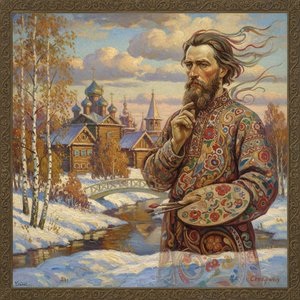
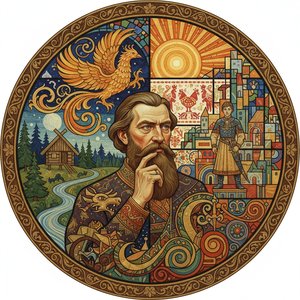
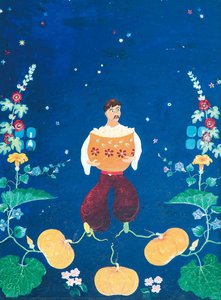
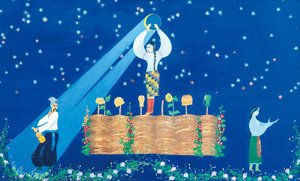
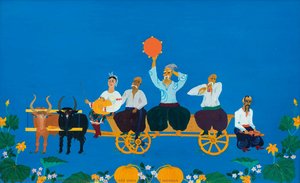
Ivan Evgenevich Prosianoi, also known as Ivan Prosianyk, was born in Petropavlovsk village, Russian Federation, in 1924. His life unfolded against the backdrop of significant historical events, notably World War II and the Soviet era, profoundly shaping his artistic trajectory. As a gunner of the 4th Guards Motorcycle Battalion during the war, he gained invaluable combat experience and intelligence insights—a formative influence on his worldview and creative vision. Following the conflict, Prosianoi pursued academic pursuits, earning a degree in art history from Leningrad State University (now Saint Petersburg State University), equipping him with critical understanding of artistic traditions and movements. He subsequently served as secretary of the Petropavlovsk Regional Committee of the All-Union Leninist Young Communist League and instructor of the Kalacheevsky District Committee of the CPSU, roles that instilled in him a commitment to socialist ideals and engaged him in cultural activism. His artistic journey culminated in establishing himself as a painter in Kalach, where he honed his craft and cultivated a distinctive style characterized by meticulous observation and expressive brushwork. Prosianoi’s oeuvre is marked by a preoccupation with themes of rural life, folklore, and the human condition—particularly poignant depictions of aging men and familial bonds. He achieved considerable acclaim for his paintings “Three Old Men on One Old Woman” (1986) and “Birth of Sun” (2016), works that exemplify his ability to convey complex emotions through subtle visual cues. These pieces stand as testament to his artistic sensitivity and profound engagement with the spirit of his time. Prosianoi’s art gained recognition beyond Russia's borders, notably at the Taganrog Art Museum, where “They Boiled Varenyky” (1987) resides—a captivating portrayal of Ukrainian peasant life imbued with symbolic resonance. The museum’s collection showcases a rich tapestry of artistic heritage from across Europe and Russia, highlighting Prosianoi's contribution to the broader canon of 20th-century art. His work has been exhibited internationally, furthering his reputation as a respected artist and storyteller. Notable artworks by Ivan Evgenevich Prosianoi can be found at https://Mus3ums.com/@@/d8g7xn-ivan-evgenevich-prosianoi-they-boiled-varenyky. The Chernihiv Regional Art Museum in Ukraine houses a significant collection of his paintings, demonstrating the artist’s enduring influence on Ukrainian art history. Prosianoi's artistic legacy continues to inspire artists and scholars alike. ## Artistic Style & Technique Prosianoi’s distinctive style is rooted in realism—a meticulous approach to depicting subjects with unwavering accuracy while simultaneously conveying emotional depth. He favored oil paints on canvas, utilizing layering techniques and subtle tonal gradations to achieve remarkable luminosity and textural richness. His brushstrokes are deliberate and expressive, capturing the nuances of human gesture and facial expression with exceptional sensitivity. Prosianoi’s compositions often incorporate elements of visual symbolism—drawing upon folklore motifs and traditional Ukrainian iconography to enrich their narrative power. He meticulously researched his subjects, immersing himself in the cultural context of his time—a practice that informed both his artistic vision and his thematic concerns. ## Influences & Inspirations Prosianoi’s artistic sensibilities were nurtured by exposure to the works of prominent Russian artists such as Vladimir Orlovsky, Vasily Maximov, Efim Efimovich Volkov, Jan Van Goyen, Ivan Aivazovsky, and Ivan Ivanovich Shishkin—artists who championed realism and explored themes of landscape and human experience. Furthermore, he drew inspiration from classical music, particularly the compositions of Nikolai Rimsky-Korsakov, whose melodic structures mirrored the emotional intensity of his paintings. The influence of Ukrainian folklore and peasant traditions is palpable in Prosianoi’s oeuvre—reflecting a deep appreciation for the cultural heritage of his homeland. ## Major Achievements & Recognition Ivan Evgenevich Prosianoi achieved considerable acclaim within Russia's artistic community, securing prestigious awards and exhibitions that cemented his reputation as a leading painter of his generation. His paintings were recognized for their stylistic integrity, emotional resonance, and intellectual depth—establishing him as a significant voice in the discourse on Russian art history. The Taganrog Art Museum honored Prosianoi’s contribution to visual culture by enshrining “They Boiled Varenyky” among its celebrated holdings. His enduring legacy continues to resonate with artists and scholars alike, ensuring that his work remains accessible to future generations. ## Legacy & Significance Ivan Evgenevich Prosianoi's artistic output stands as a poignant reflection of the Soviet era—capturing the spirit of resilience, dignity, and cultural continuity amidst periods of upheaval and transformation. His paintings serve as invaluable documents of social life in rural Ukraine—offering insights into the traditions and values of ordinary people. Prosianoi’s unwavering commitment to realism—combined with his masterful technique and evocative storytelling—established him as a pivotal figure in Russian art history, securing his place among the most respected artists of the 20th century. His enduring influence can be discerned in subsequent generations of painters who embraced similar stylistic approaches and thematic concerns.Запитання та відповіді
До якого історичного періоду належить творчість Іван Євгенович Просіаній?
Іван Євгенович Просіаній працював у період — Модерн. Цей період визначає місце творчості митця в історії.
Де і в якому році народився/народилася Іван Євгенович Просіаній?
Іван Євгенович Просіаній народився/народилася в Петропавловск, у 1924 році.
У якому місті та країні народився/народилася Іван Євгенович Просіаній?
Іван Євгенович Просіаній народився/народилася у Петропавловск, Росія.