Johann Michael Rottmayr (1654 - 1730): Austrian Baroque Master
Johann Michael Rottmayr, born in Lauf an der Pegnitz, Germany around 1654 (sources vary between 1654 and 1656), stands as a pivotal figure in the transition from the High Baroque to the Rococo styles in Central Europe. He wasn’t merely a painter; he was a conduit, skillfully channeling the vibrant energy of Italian Renaissance masters through the lens of burgeoning Austrian artistic sensibilities. Rottmayr's journey began within a family already touched by artistry, providing fertile ground for his innate talents to blossom. His formal training commenced under Johann Carl Loth in Venice – a formative experience that would indelibly shape his aesthetic vision. Loth’s tutelage wasn’t simply about technique; it was an immersion into the world of Titian, Veronese, and Tintoretto, instilling within Rottmayr a deep appreciation for coloristic richness, dramatic composition, and the masterful use of light and shadow. This Venetian influence would remain a cornerstone of his style throughout his career. He wasn’t alone in absorbing Italian influences; Hans Adam Weissenkircher, a contemporary from Lauf, also played a crucial role in bringing these artistic currents northwards, fostering a shared aesthetic dialogue that enriched the region's art scene.Early Life and Artistic Education
Rottmayr’s early life was marked by familial artistic tradition. His mother possessed considerable painting skills, nurturing his initial fascination with visual arts from a young age. Recognizing his exceptional potential, he embarked on his formal artistic education under Johann Carl Loth in Venice around 1675. This encounter proved transformative; Loth introduced Rottmayr to the monumental achievements of Venetian masters – Titian, Veronese, and Tintoretto – fostering an unwavering devotion to their stylistic principles. More than just mastering technique, Loth instilled within Rottmayr a profound understanding of how to evoke emotion through color and form—a cornerstone of his artistic philosophy. This Venetian influence would permeate every subsequent endeavor, shaping the very essence of his oeuvre.The Venetian Influence: Mastering Color and Composition
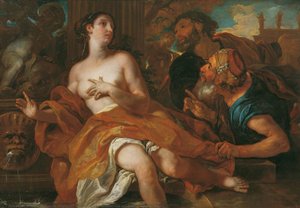
Loth’s guidance wasn’t merely academic; it was experiential. Rottmayr spent considerable time studying the techniques employed by Venetian luminaries, meticulously analyzing their use of chiaroscuro—the dramatic interplay between light and dark—and observing how they orchestrated compositions to maximize visual impact. He absorbed lessons from Tintoretto's masterful manipulation of perspective and color, mirroring his approach in numerous paintings that would solidify his reputation as a virtuoso artist. This dedication to observation and emulation ensured that Rottmayr’s artistic vision remained firmly rooted in the traditions of the High Baroque—a stylistic hallmark that distinguishes him from many of his contemporaries.Salzburg Service and Collaboration with Fischer von Erlach
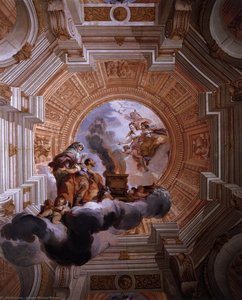
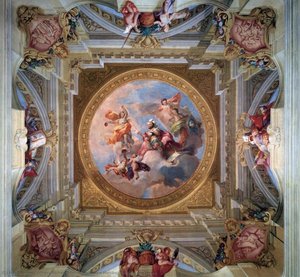
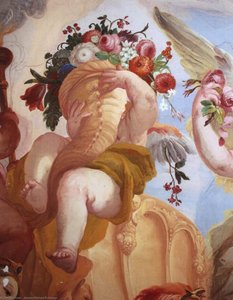
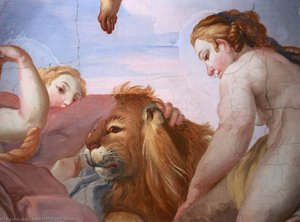
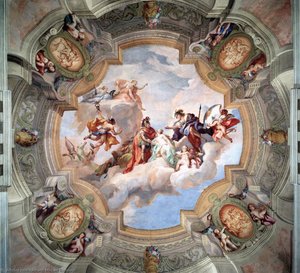
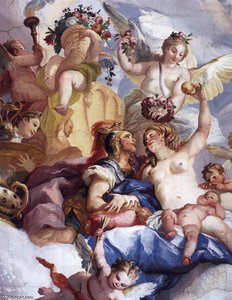
Rottmayr’s burgeoning talent swiftly garnered recognition, securing a prestigious position as the general painter to the Prince-Bishop of Salzburg in 1689. This patronage afforded him unparalleled access to resources and provided consistent commissions—a crucial factor in propelling his artistic career forward. He flourished under Thun’s stewardship, producing both secular and religious works that showcased his growing mastery. Perhaps his most enduring partnership was with Johann Bernhard Fischer von Erlach, a visionary architect who championed the fusion of architecture and painting as an art form. Together they undertook ambitious projects—primarily at Schloss Frain an der Thaya (now Vranov nad Dyjí)—creating immersive spaces where Rottmayr’s skill in illusionistic ceiling painting truly shone. The resulting frescoes are not merely decorative embellishments; they actively engage with the architectural structure, generating a harmonious and dynamic whole—a testament to their collaborative genius.Melk Abbey Dome: A Triumph of Illusionism
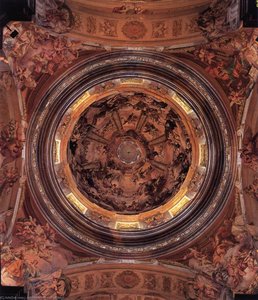
Rottmayr's magnum opus remains undeniably the fresco adorning the central dome of Melk Abbey in Austria. Completed with breathtaking precision, this monumental artwork depicts a sublime vision of heaven—a swirling vortex of luminous figures and radiant colors that transcends earthly boundaries. The sheer scale of the undertaking demanded masterful command of perspective and illusionistic techniques—skills Rottmayr honed to perfection. He skillfully employed atmospheric perspective to convey depth and grandeur, creating an overwhelming sense of awe and spiritual transcendence. This achievement cemented his place among Austria’s most celebrated artists and secured his legacy as a pioneer of Baroque illusionism—a technique that continues to inspire admiration centuries later.Legacy and Influence
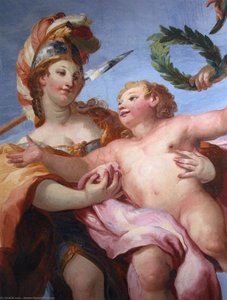
Johann Michael Rottmayr's significance extends far beyond the individual masterpieces he produced; he played an instrumental role in bridging the gap between Italian Renaissance traditions and the evolving Baroque style in Central Europe. He wasn’t simply imitating Italian art; he was adapting it, infusing it with a distinctly Austrian character—a synthesis that elevated Austrian baroque painting to unprecedented heights. His work embodies a dynamic interplay of light and shadow, vibrant color palettes, and dramatic compositions—hallmarks of the Baroque aesthetic. Yet, his paintings also reveal a burgeoning sensitivity to form and detail, foreshadowing the elegance and refinement of the Rococo period. Rottmayr’s influence resonated throughout subsequent generations of Austrian artists, shaping the artistic landscape of Austria and beyond—a testament to his enduring contribution to European art history.Запитання та відповіді
У якому місті та країні народився/народилася Йоганн Михаель Ротмайр?
Йоганн Михаель Ротмайр народився/народилася у Лауфен, Німеччина.
До якого історичного періоду належить творчість Йоганн Михаель Ротмайр?
Йоганн Михаель Ротмайр працював у період — Ранньомодерна епоха. Цей період визначає місце творчості митця в історії.