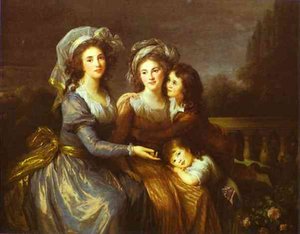
Louise Élisabeth Vigée Le Brun: A Life Painted in Light and Grace
Louise Élisabeth Vigée Le Brun, a name that echoes through the halls of 18th-century French art, was more than simply a painter; she was a chronicler of an era, a master of capturing not just likeness but also the very essence of her subjects. Born in Paris in 1755, her artistic journey began within a family already deeply rooted in the world of creative expression. Her father, Louis Vigée, a celebrated pastel portraitist known for his delicate touch and ability to capture fleeting moments, recognized and nurtured Louise’s innate talent from an early age, providing her with invaluable instruction that would shape her distinctive style. This familial encouragement proved particularly crucial following her father's untimely death when she was just twelve years old, prompting her mother to tirelessly seek further training for Louise with some of Paris’s most respected artists – Doyen and Davesne, and Gabriel Briard – ensuring she received a comprehensive foundation in technique and artistic principles. These formative years instilled within her not only technical mastery but also an acute understanding of light, color, and composition—elements that would become the hallmarks of her unforgettable portraits. Even as a young woman, Vigée Le Brun demonstrated remarkable commercial acumen, establishing herself as a professional artist capable of earning a living through her art, showcasing a precocious talent and unwavering dedication to her craft.Royal Patronage and Artistic Flourishing
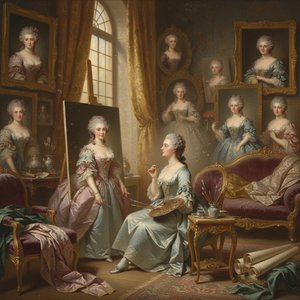
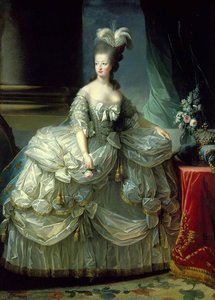
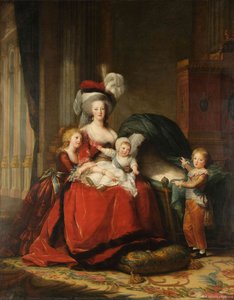
The pivotal moment in Vigée Le Brun’s career arrived with her commission to paint Marie Antoinette in 1778. This wasn't merely an artistic endeavor; it was a gateway into the very heart of French society, a world brimming with opulent courts, discerning patrons, and intricate social dynamics. The Queen, initially hesitant about sitting for a portrait, quickly recognized and appreciated Vigée Le Brun’s unique ability to portray her with both dignity and approachability – a delicate balance that few artists could achieve. This commission ignited a cascade of further royal portraits, firmly establishing Vigée Le Brun as the official portraitist to Marie Antoinette and solidifying her position within the French aristocracy. Her studio transformed into a vibrant hub for the elite, attracting members of high society eager to have their likenesses immortalized on canvas. She possessed an extraordinary gift for capturing not only physical resemblance but also the personality and social standing of her subjects – a skill that resonated deeply with her clientele. Combined with her innate charm and diplomatic finesse, this talent allowed her to navigate the complex world of courtly patronage with remarkable success, securing commissions from influential figures across Europe. Her style during this period skillfully blended elements of Rococo’s playful elegance with the emerging Neoclassical sensibility, resulting in portraits that were both fashionable and timeless, reflecting the changing tastes of the era.A Style Defined by Grace, Naturalism, and Intimacy
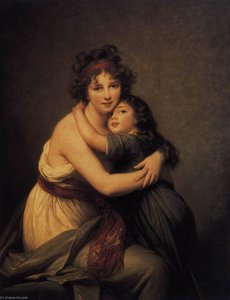
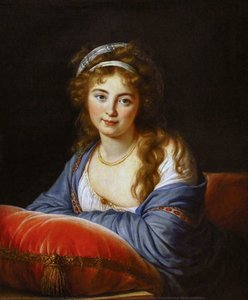
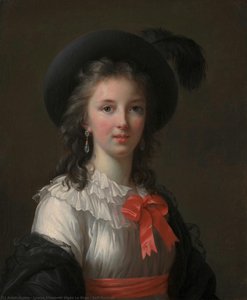
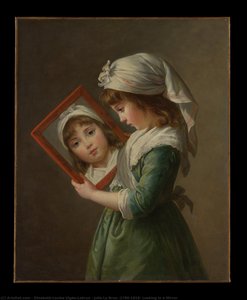
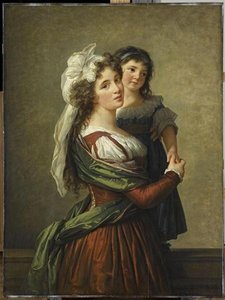
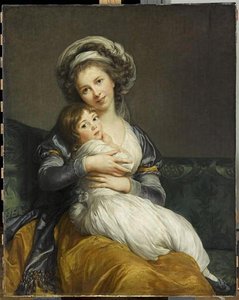
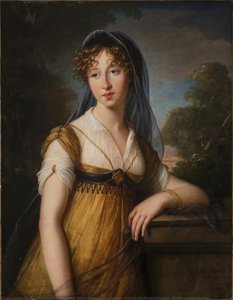
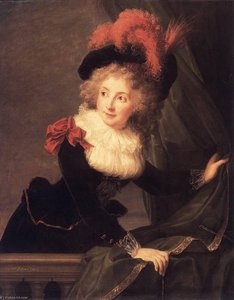
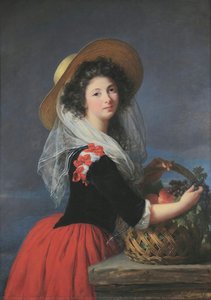
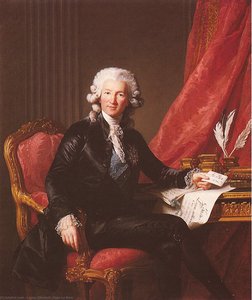
Vigée Le Brun's artistic approach was characterized by a remarkable ability to infuse her portraits with life and emotion. She deliberately moved away from the stiff formality often associated with earlier portraiture, opting instead for more natural poses and expressions that captured genuine moments of interaction. Her brushwork was fluid and delicate, creating a sense of softness and luminosity in her paintings—a technique that drew comparisons to the masters of the Dutch Golden Age. She paid meticulous attention to detail, particularly in the rendering of fabrics, jewelry, and hairstyles – elements that served as subtle indicators of status and refinement. While undeniably influenced by Rococo’s emphasis on pastel shades and decorative flourishes, she also embraced Neoclassical principles of clarity and balance, resulting in a unique style that was both elegant and sophisticated. Notable works such as *Self-Portrait with Her Daughter, Julie*, offer compelling evidence of her mastery in capturing intimate moments and conveying profound maternal affection. The numerous portraits of Marie Antoinette – including the iconic depiction of the Queen holding a rose – showcased her ability to portray royalty not just as figures of power but also as complex human beings. Beyond portraiture, Vigée Le Brun also explored landscape and genre scenes, demonstrating her versatility as an artist and expanding her artistic repertoire.Exile, Resilience, and Enduring Legacy
The French Revolution dramatically altered the course of Vigée Le Brun’s life. As a close associate of the royal family, she faced increasing scrutiny and ultimately fled France in 1789 to avoid persecution. This marked the beginning of a period of exile that spanned over twelve years, taking her across Europe – from the opulent courts of Russia and Italy to the refined salons of England, Switzerland, and beyond. Despite the upheaval and uncertainty, Vigée Le Brun remained remarkably resilient, continuing to paint prolifically and securing commissions from European aristocrats, demonstrating her adaptability and unwavering dedication to her craft. Her travels broadened her artistic horizons, exposing her to diverse styles and techniques, which she skillfully incorporated into her evolving style. Upon returning to France in 1809, following the restoration of the monarchy, she resumed her career with renewed vigor, though the political landscape had undergone a profound transformation. She published her memoirs, *Souvenirs*, offering a fascinating and candid account of the art world during her time – a valuable historical document that provides invaluable insights into her life, experiences, and artistic philosophy. Vigée Le Brun’s legacy extends far beyond her technical skill; she stands as a pioneering figure for women in the arts, achieving remarkable success in a field historically dominated by men. Her paintings remain celebrated for their beauty, elegance, and enduring historical significance, offering a captivating window into the world of 18th-century France and solidifying her place as one of history’s most accomplished portraitists. Her ability to capture not just appearances but also the inner lives of her sitters ensures that her work continues to resonate with audiences today.Key Works
- *Self-Portrait with Julie* (1783) - Demonstrates her skill in capturing intimate family moments.
- Portraits of Marie Antoinette (series, 1778-1783) – Arguably her most famous work, showcasing her ability to portray royalty with both grandeur and humanity.
- Portrait of Madame Grand (1783) - A striking example of her talent for capturing personality and social status.
Запитання та відповіді
Які псевдоніми або інші імена має Луїза Елізабет Віже-Лебрен?
Луїза Елізабет Віже-Лебрен також відомий під іншими іменами: Елізабет Віже Лебрен, Луїза Емілія Віже Лебрен.
Де і в якому році народився/народилася Луїза Елізабет Віже-Лебрен?
Луїза Елізабет Віже-Лебрен народився/народилася в Париж у 1755 році.
До якого історичного періоду належить творчість Луїза Елізабет Віже-Лебрен?
Луїза Елізабет Віже-Лебрен працював у період — Ранньомодерна епоха. Цей період визначає місце творчості митця в історії.