Early Life and Education
- Born: Marie Anne Caroline Quivoron, December 1, 1840, Argenton-en-Landunvez, Brittany, France
- Died: January 17, 1916
- Early life marked by instability due to her father's death and subsequent remarriage of her mother.
- Received initial art lessons from M. Auguste Vassort, an old painter who restored paintings.
- Studied under Jean-Auguste-Dominique Ingres, a prominent Neoclassical painter, gaining valuable technical skills but also experiencing his doubts about women's artistic capabilities.
Artistic Development and Impressionism
- Initially painted in an academic style influenced by Ingres.
- Married Félix Bracquemond, a printmaker who introduced her to Japanese art (Japonisme) and encouraged her exploration of new techniques.
- Around 1887, significantly shifted towards Impressionism under the influence of Monet, Degas, and particularly Paul Gauguin.
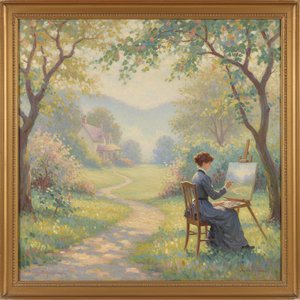
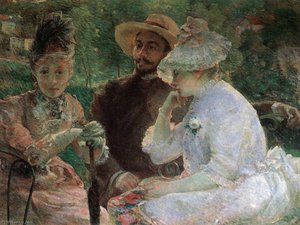
- Embraced en plein air painting, capturing fleeting moments and light effects in her garden at Sèvres.
- Developed a vibrant palette, influenced by Gauguin's advice to intensify colors.
Major Works and Style
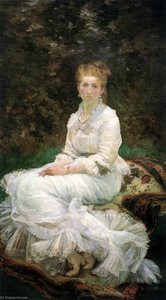
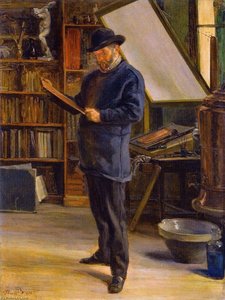
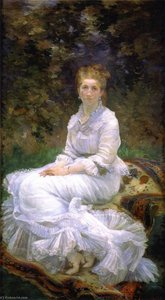
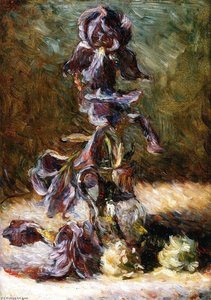
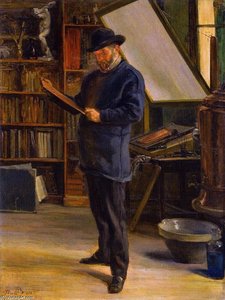
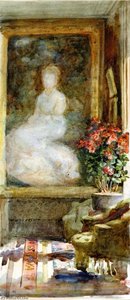
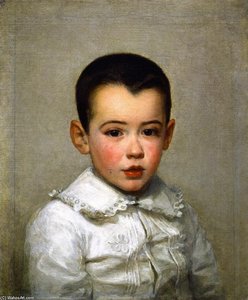
- Notable Paintings: "Felix Bracquemond in His Studio" (1886), "Child Pierre" (undated), "On the Terrace at Sèvres" (1880), "The Lady in White" (1880), "Afternoon Tea" (1887).
- Style: Characterized by loose brushstrokes, vibrant colors, and a focus on domestic scenes and garden views.
- Her paintings often depict intimate moments of family life and the beauty of nature.
- Demonstrated a meticulous approach to composition despite her Impressionistic style, planning pieces through sketches and drawings.
Recognition and Historical Significance
- Participated in three Impressionist exhibitions (1879, 1880, 1886).
- Her work was initially overshadowed by her husband's efforts to downplay her artistic achievements.
- Rediscovered as a significant figure in the Impressionist movement in the 20th century, particularly through Henri Focillon’s recognition of her as one of "les trois grandes dames" alongside Cassatt and Morisot.
- Represents an important contribution to female representation within the male-dominated art world of the 19th century.
Later Life and Legacy
- Continued painting until her death in 1916, despite declining health.
- Her son, Pierre Bracquemond, wrote a biography of his parents that provides valuable insights into their lives and artistic collaboration.
- Although fewer than 35 of her works are currently located and catalogued, her legacy as a talented Impressionist painter is increasingly recognized and celebrated.
- Marie Bracquemond's story highlights the challenges faced by women artists in gaining recognition and underscores the importance of rediscovering overlooked figures in art history.
Запитання та відповіді
У якому місті та країні народився/народилася Marie Bracquemond?
Marie Bracquemond народився/народилася у Argenton-en-Landunvez, France.
Які псевдоніми або інші імена має Marie Bracquemond?
Marie Bracquemond також відомий під іншими іменами: Marie Anne Caroline Quivoron, Marie Anne Caroline Bracquemond.
Звідки родом Marie Bracquemond?
Marie Bracquemond народився у France.