René-Antoine Houasse (1645 - 1710): French Baroque Painter
René-Antoine Houasse, a name perhaps less immediately recognized than some of his Baroque contemporaries, nevertheless occupies a significant place in the artistic landscape of 17th-century France. Born in Paris in 1645, Houasse’s career unfolded against the backdrop of Louis XIV’s opulent reign, an era defined by a relentless pursuit of magnificence and a fervent patronage of the arts. His journey began under the tutelage of Charles Le Brun, the preeminent figure of French Baroque painting and first painter to the King. This formative period at the Manufacture des Gobelins proved crucial, immersing Houasse in the creation of grand tapestries and decorative schemes that would shape his aesthetic sensibilities and technical prowess. The Gobelins wasn’t merely a workshop; it was an incubator for artistic talent, fostering a collaborative spirit and demanding meticulous execution – qualities that became hallmarks of Houasse's own work. He absorbed Le Brun’s emphasis on dramatic composition, vibrant color palettes, and narrative clarity, but would ultimately forge his own distinct path within the Baroque tradition.Early Training and Influence of Charles Le Brun
Houasse’s artistic development was inextricably linked to that of Charles Le Brun, arguably the most influential painter of his time. Recognizing Houasse's prodigious talent early on, Le Brun took him under his wing at the Manufacture des Gobelins, where he honed his skills in tapestry weaving and decorative painting—a discipline that demanded both precision and imaginative vision. This association proved invaluable, exposing Houasse to Le Brun’s revolutionary approach to Baroque art: a masterful blend of classical ideals and theatrical grandeur. Le Brun championed dynamic movement, intense emotion, and monumental scale, principles that profoundly impacted Houasse's artistic sensibilities. The Manufacture des Gobelins served as a crucible for talent, encouraging experimentation and fostering a shared commitment to excellence—a legacy that would extend far beyond Houasse’s own lifetime.Versailles and the Decorative Arts
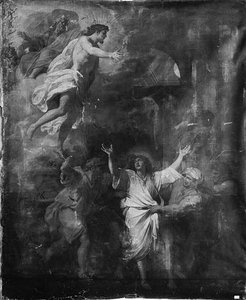
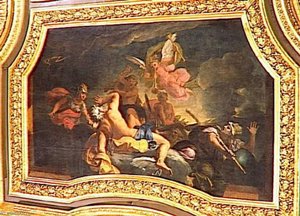
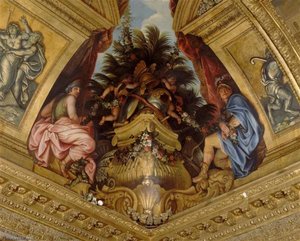
Houasse swiftly ascended through the ranks of Louis XIV’s court, becoming deeply involved in the ambitious decoration projects at Versailles – a project designed to solidify the King's absolute authority and proclaim his divine right. He wasn’t merely applying paint to walls; he was crafting an entire visual narrative that conveyed royal power and piety. His contributions spanned diverse artistic mediums—painting, sculpture, stucco work—each meticulously executed according to Le Brun’s exacting standards. Notably, Houasse spearheaded the decoration of the Salon de l’Abondance, where he employed a masterful use of color and light to evoke feelings of grandeur and splendor. He skillfully blended mythological themes with allegorical representations, creating images that resonated with the intellectual fervor of the era—a period marked by renewed interest in classical learning and its incorporation into contemporary artistic expression.The Mythological Pantheon: Athena as Emblematic Figure
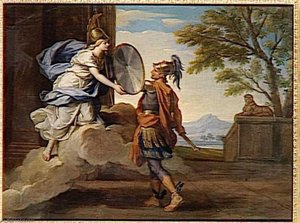
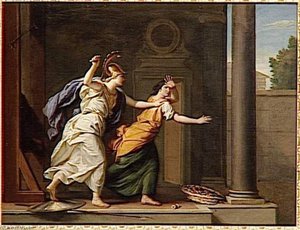
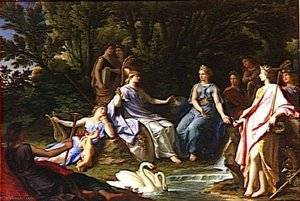
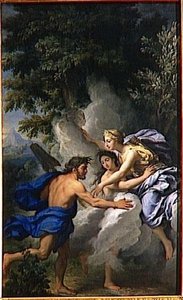
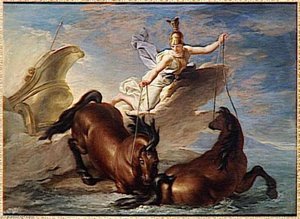
A recurring motif in Houasse’s oeuvre was his fascination with Athena/Minerva – the Greek goddess of wisdom, warfare, and crafts – whom the Romans venerated as Minerva. He repeatedly revisited this figure across numerous paintings, exploring her multifaceted nature through various myths and attributes. Paintings like Minerve Donne Son Bouclier À Persee exemplify not only Houasse’s technical virtuosity in depicting classical forms but also his deeper engagement with the intellectual currents of the time—the revival of interest in classical learning and its integration into contemporary artistic expression. His depictions weren’t simply illustrations of ancient tales; they were carefully considered statements about intellect, strategy, and divine favor – qualities Louis XIV actively sought to embody. The symbolism inherent in Athena’s imagery—her shield, her spear, her owl—served as potent emblems of royal authority and intellectual prowess.Legacy and Artistic Significance
Houasse's artistic style is characterized by a compelling blend of elegance, dynamism, and meticulous detail. He synthesized classical principles with Baroque exuberance, creating compositions that were both visually striking and intellectually stimulating. While undeniably influenced by Le Brun’s teachings, Houasse developed a distinctive artistic voice—one marked by refined gracefulness and subtle sophistication. His son, Michel Ange Houasse, continued the family tradition, becoming a painter specializing in genre scenes and upholding his father's commitment to artistic excellence. René-Antoine Houasse remains an important figure in French Baroque art history, demonstrating how artists can engage with both classical ideals and theatrical grandeur—a testament to the enduring power of artistic innovation and cultural patronage during Louis XIV’s reign. His paintings are not merely decorative embellishments; they are powerful expressions of royal authority, religious devotion, and the transformative potential of humanist scholarship.Запитання та відповіді
У якому місті та країні народився/народилася Рене-Антуан Уасс?
Рене-Антуан Уасс народився/народилася у Париж, Франція.
Де і в якому році народився/народилася Рене-Антуан Уасс?
Рене-Антуан Уасс народився/народилася в Париж, у 1645 році.
Звідки родом Рене-Антуан Уасс?
Рене-Антуан Уасс народився у Франція.