Utagawa Kunimasa: A Master of Edo Period Drama and Elegance
Utagawa Kunimasa (歌川 国政; 1773 – December 26, 1810) stands as a pivotal figure in the history of Japanese ukiyo-e art, specifically within the influential Utagawa school. Born in Aizuwakamatsu, Iwashiro Province, Kunimasa’s artistic journey began humbly—working initially in a dye shop—before attracting the mentorship of Utagawa Toyokuni, arguably the most celebrated artist of his time. This formative relationship profoundly shaped Kunimasa's distinctive style, characterized by an ambitious synthesis of Sharaku’s dramatic intensity and Toyokuni’s refined decorative sensibilities.Early Life and Artistic Formation
Kunimasa’s early life was marked by a dedication to craftsmanship and artistic training. His apprenticeship under Toyokuni wasn’t merely about technical skill; it instilled in him an understanding of the broader aesthetic goals of ukiyo-e—to capture fleeting moments of beauty and emotion with unparalleled precision. Toyokuni's influence ensured Kunimasa wouldn’t simply replicate his mentor’s style but would forge a path toward originality, blending stylistic elements into a cohesive artistic vision. He diligently honed his skills in woodblock printing techniques, mastering the meticulous process required to reproduce images with remarkable accuracy and vibrancy—a testament to his commitment to excellence.A Distinctive Artistic Style
Kunimasa’s artistic signature is instantly recognizable: a masterful command of color and composition that elevates ukiyo-e prints beyond mere depictions to immersive experiences. Critics debate whether he fully achieved Sharaku's visceral impact, yet Kunimasa undeniably succeeded in conveying dynamism and psychological depth—traits that distinguish his oeuvre from many contemporaries. His use of bold hues and carefully orchestrated perspectives created a palpable sense of drama, particularly evident in his yakusha-e portraits and bijin-ga paintings. He skillfully employed techniques like gradation shading and meticulous detail to imbue his subjects with life and emotion. This approach mirrored Toyokuni’s emphasis on creating visually arresting images that captivated the viewer's imagination—a stylistic hallmark of the Utagawa school.Notable Works: Kabuki Actors and Beautiful Women
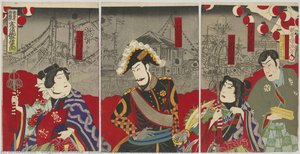
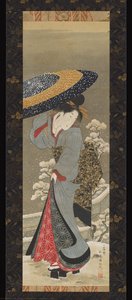
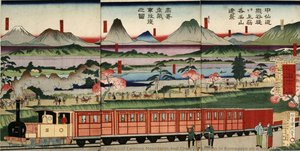
Kunimasa’s artistic output produced several iconic pieces that continue to captivate audiences today. Among the most celebrated are his yakusha-e portraits of Kabuki actors, notably Sawamura Sojuro III as Kiyomori (Beauty in Snow), which exemplifies his ability to capture the essence of theatrical performance—the subtle expressions and gestures conveying profound emotion. The print powerfully portrays the protagonist's inner turmoil amidst a serene winter landscape, demonstrating Kunimasa’s masterful command of visual storytelling. Similarly, his bijin-ga paintings showcase an exquisite appreciation for feminine beauty, portraying women with grace and sophistication. His depiction of “The Snow Viewing Woman” exemplifies this aesthetic ideal—a portrait imbued with delicate coloration and nuanced shading that captures the contemplative mood of a wintry occasion. The Shintomiza Joruri, Constitution Festival Picture is another remarkable achievement, demonstrating Kunimasa’s talent for capturing complex narratives within a single image.Legacy and Influence
Utagawa Kunimasa's influence extends far beyond his own lifetime. He served as an inspiration to subsequent generations of ukiyo-e artists who embraced his stylistic innovations—a harmonious blend of intensity and elegance—solidifying his place as one of the Utagawa school’s foremost masters. His meticulous attention to detail, combined with a profound understanding of theatrical conventions and visual storytelling, established standards that continue to resonate within Japanese art history. Today, Kunimasa's works reside in prestigious museums worldwide, guaranteeing his enduring legacy as a cornerstone of Edo period artistic achievement. He remains revered for elevating ukiyo-e beyond mere illustration into emotionally resonant artworks—a testament to his artistic vision and lasting contribution to the visual arts.Запитання та відповіді
До якого історичного періоду належить творчість Утагава Кунімаса?
Утагава Кунімаса працював у період — XIX століття. Цей період визначає місце творчості митця в історії.
Де і в якому році народився/народилася Утагава Кунімаса?
Утагава Кунімаса народився/народилася в Аizu у 1773 році.


![Neko No Shibai 猫の芝居 [cat Theatre] — Утагава Кунімаса](/media/artworks/images-thumb/94/a5/94a54e4879ac44853d6307509f6732d0.jpg)