



A Spiraling Revelation: The Solomon R. Guggenheim Museum
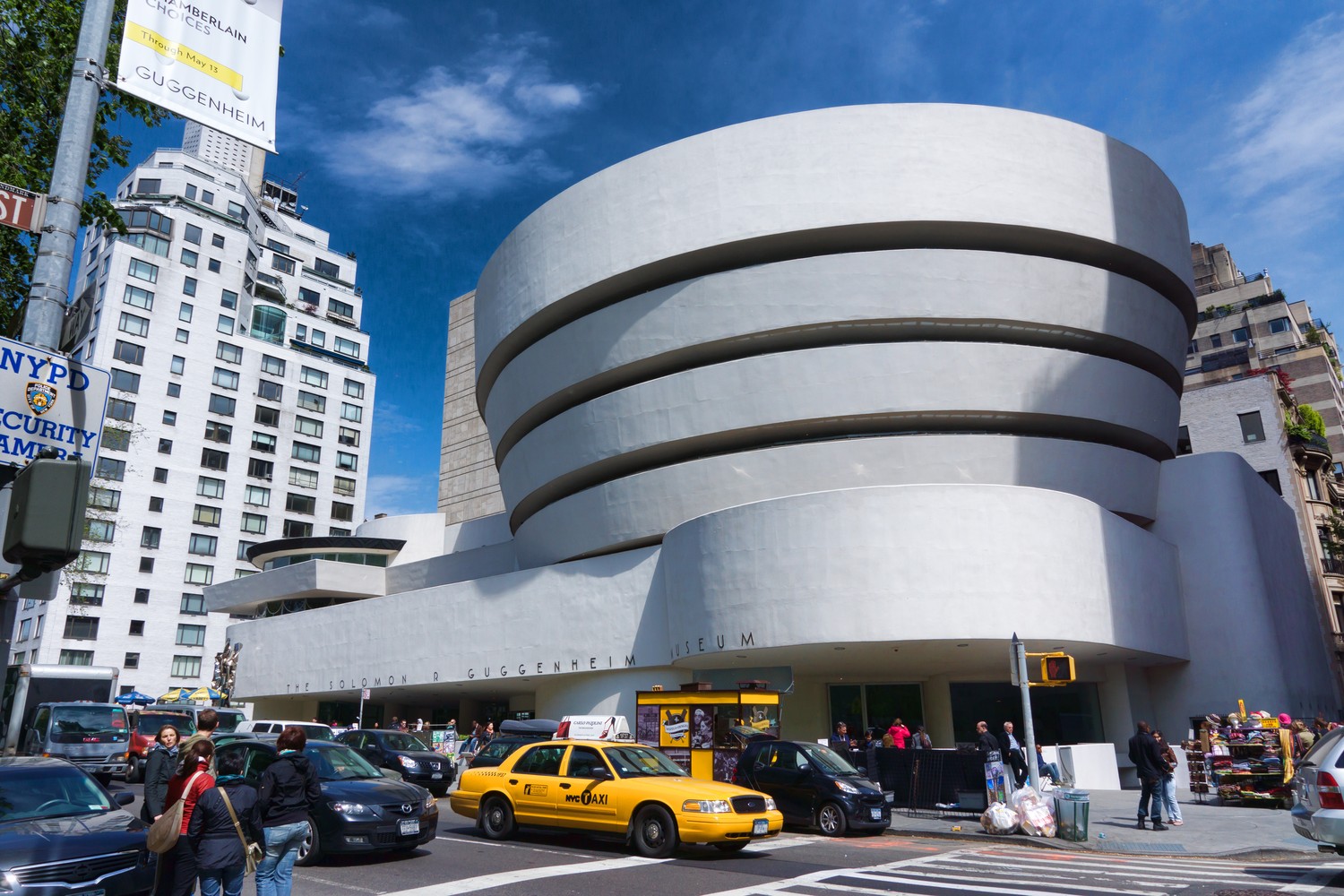
The Solomon R. Guggenheim Museum in New York City isn’t merely a building housing art; it's an immersive experience, a profound dialogue between architectural vision and artistic expression. From the moment you step onto Fifth Avenue, the museum announces itself as something extraordinary – a monumental spiral defying conventional notions of how a museum should look and feel. Rising from the Upper East Side like a sculpted dream, its titanium and glass façade seems to shimmer in the sunlight, hinting at the vibrant world within. This architectural marvel began not with bricks and mortar, but with a radical shift in perspective: Solomon R. Guggenheim’s initial fascination with Old Masters evolved dramatically through his encounter with Hilla von Rebay, an artist deeply committed to exploring non-objective art – a pivotal moment that birthed the Guggenheim Foundation and this truly unique landmark in 1937.
Frank Lloyd Wright's design, completed just six months before his passing in 1959, stands as a testament to how we perceive and interact with visual experience. It’s a deliberate choreography, a carefully orchestrated journey designed to elevate our senses and invite contemplation. The building itself is arguably the most compelling artwork within its walls – a swirling vortex of light and space that seems to defy gravity, beckoning visitors upwards through a monumental central skylight. This wasn't simply about displaying art; it was a profound declaration on how we experience beauty, a bold statement against the rigid grid of Manhattan’s surrounding landscape.
A Collection of Bold Visions
The Guggenheim’s collection is a breathtaking panorama spanning centuries and continents. It’s not just a chronological survey; rather, it's a carefully curated dialogue between artists, movements, and ideas – revealing the interconnectedness of artistic expression across time. You’ll discover luminous Impressionist landscapes by Monet, capturing fleeting moments of light and color with an almost palpable vibrancy. Picasso’s groundbreaking Cubist portraits dissect reality into fragmented planes, challenging our perceptions of form and space. Notably, the Thannhauser Collection brought German Expressionism to the museum's heart – featuring powerful works by Kirchner, Heckel, and Nolde that pulsate with raw emotion and social critique.
Bold explorations of Fauvism in Matisse’s canvases burst with vibrant hues and distorted forms, while the surreal dreamscapes of Dalí invite us to delve into the subconscious. The collection also showcases significant pieces from early modernists like Piet Mondrian and Paul Klee – pioneers who redefined artistic boundaries. Key highlights include Kandinsky's abstract compositions, central to the museum’s mission, alongside works that exemplify the dynamism of American art throughout the 20th century. It’s a testament to the Guggenheim’s commitment to showcasing not just established masters but also emerging talents and pushing the boundaries of contemporary expression.
Architectural Innovation: A Masterpiece of Organic Design
Frank Lloyd Wright's “organic architecture” is unparalleled, and the Guggenheim embodies this philosophy perfectly. Constructed from titanium and glass, the building eschews conventional design principles, mirroring the natural curves of a nautilus shell or a swirling vortex. Its helical ramp offers panoramic city views while simultaneously guiding visitors through the collection in an ascending sequence – a subtle yet powerful way to engage the eye and mind. The building’s form seems to defy gravity, its lightness and fluidity creating an illusion of movement and suggesting a continuous flow between interior and exterior space.
The central skylight, a breathtaking expanse of light, floods the galleries with an ethereal glow, transforming the museum into a luminous sanctuary for art appreciation. It’s a testament to Wright's belief that architecture could actively shape our perception of art, creating an environment where beauty and contemplation thrive. The building is more than just a structure; it’s a carefully orchestrated experience designed to stimulate the senses and foster a deeper connection with the artwork on display – a place where you don’t simply *look* at art, but *feel* it.
A Legacy of Global Influence
Recognized for its architectural significance, the Guggenheim stands as one of the 20th century's most influential buildings—a beacon of artistic inspiration. Beyond New York, the Guggenheim Foundation actively collaborates with sister institutions in Bilbao, Spain, and Venice, Italy, fostering a global network dedicated to promoting modern and contemporary art. The success of the Guggenheim Museum Bilbao demonstrated the transformative power of architecture and art in revitalizing urban spaces – a model that continues to inspire cultural development around the world.
Currently, the museum is undergoing renovations to improve accessibility and enhance visitor experience, ensuring its continued relevance as a vital center for art and architecture for generations to come. It remains a place where visitors can lose themselves in the beauty of artistic expression, marvel at architectural ingenuity, and connect with the enduring power of human creativity.