The Art of the Carriage and the Motorcar
In the heart of Milan, where the streets once echoed with the rhythmic clip-clop of horses, the name Cesare Sala became synonymous with a particular kind of elegance. He was not a painter of canvases, but a master of form and function, a coachbuilder who understood how to clothe a vehicle in prestige. His workshop, Carrozzeria Italiana Cesare Sala, began its life long before the engine replaced the horse, rooted in the traditions of fine craftsmanship that defined the mid-nineteenth century. The family’s skill was evident even in their earliest days, as they shaped wood, metal, and leather into objects of immense beauty for those who moved through the world with distinction.
The early years of this workshop were dedicated to the art of the carriage. These were not mere tools for transport but moving sculptures designed for the highest echelons of society. The Sala name carried weight across borders, reaching the courts of Europe. They crafted gilded state coaches that caught the light of imperial processions and delicate vehicles for the most intimate of royal needs. One might find a seashell-shaped three-wheeled carriage, carved and gilded with a blue interior, created specifically for a young Prince of Naples. Such whimsy and precision showed a craftsman who could balance the heavy requirements of durability with the light touch of fantasy.
As the nineteenth century drew to a close, the world began to change speed. The arrival of the automobile presented a new challenge and a new canvas for the Milanese artisans. In 1897, the workshop transitioned its focus, presenting automobile bodies that carried the same spirit of luxury found in their horse-drawn predecessors. This shift required a mastery of new materials and a deep understanding of the burgeoning technology of the internal combustion engine. The transition was seamless because the underlying principle remained unchanged: every surface must be as refined as the mechanics beneath it.
A Legacy of Metal and Silk
The workshop’s reputation grew through its work for some of the most significant names in Italian motoring. They became a preferred choice for manufacturers like Isotta Fraschini, Alfa Romeo, Lancia, and Fiat. When an elite client commissioned a body from Sala, they were seeking more than a shell; they were seeking a marriage of engineering and artistry. The interiors often featured pearl silk, blue velvet, and intricate capitonné upholstery, creating a sanctuary of comfort within the machine. These bodies were built to endure, yet they possessed a lightness of design that reflected the dynamism of the era.
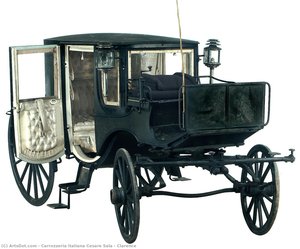
The decline of this era of coachbuilding was brought about by the harsh realities of global economics. The Great Depression of 1929 cast a long shadow over the industry, making the production of such opulent, bespoke vehicles increasingly difficult. By 1932, the workshop’s operations reached their end, marking the close of a chapter in Milanese industrial history. Though the physical workshop ceased to function, the objects they created survived. Today, pieces like the Clarence city vehicle or the royal carriages held in museums serve as the only remaining witnesses to the skill of the men who worked in Corso Sempione and Porta Nuova.
- Notable Works: The seashell-shaped carriage for the Prince of Naples and the black five-windowed city vehicle known as Clarence.
- Key Collaborations: Isotta Fraschini, Alfa Romeo, Lancia, and Fiat.
- Craftsmanship Elements: Wood carving, metalworking, gilding, and fine upholstery in silk and velvet.
问答详情
Carrozzeria Italiana Cesare Sala 来自哪里?
Carrozzeria Italiana Cesare Sala 出生于 Italy。
Carrozzeria Italiana Cesare Sala 还有哪些别名?
Carrozzeria Italiana Cesare Sala 也被称为 Cesare Sala。