The Dawn of Modern Romanian Painting: Nicolae Grigorescu’s Life and Legacy
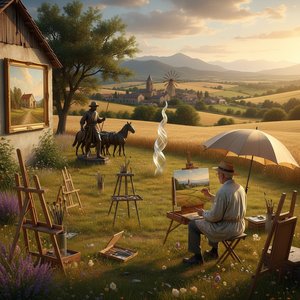
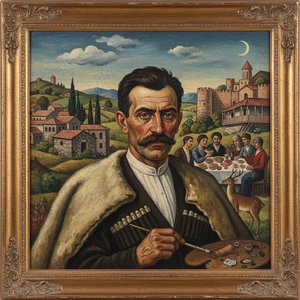
Nicolae Grigorescu, born in the Wallachian town of Pitești in 1838, stands as a monumental figure in the history of Romanian art. He wasn't merely a painter; he was a pioneer who helped forge a distinctly modern Romanian artistic identity, bridging the gap between traditional academic styles and the burgeoning avant-garde movements sweeping across Europe. His early life provided a solid foundation for his future endeavors. The son of a teacher and administrator, Costache Grigorescu, young Nicolae began his artistic journey as an apprentice to Anton Chladek in Bucharest between 1846 and 1850. This formative period instilled in him the essential skills of drawing and painting—the bedrock upon which he would later build his unique style. Even at this early stage, a talent for capturing detail and a sensitivity to light were evident, hinting at the artistic brilliance that lay within. He continued honing his craft in Bucharest before venturing abroad, seeking broader exposure to the artistic currents shaping the continent.Parisian Influences and the Embrace of Naturalism
A pivotal moment arrived in 1869 when Grigorescu journeyed to Paris. This wasn’t simply a trip; it was an immersion into the heart of the art world, a confrontation with new ideas and techniques that would profoundly alter his artistic trajectory. It was here he encountered the works of the Barbizon school painters—artists like Théodore Rousseau, Jean-François Millet, and Camille Corot—who championed realistic depictions of nature and rural life. The Barbizon artists’ commitment to *plein air* painting, capturing the fleeting effects of light and atmosphere directly from observation, resonated deeply with Grigorescu. He adopted their approach, infusing his landscapes with a newfound sense of immediacy and authenticity. However, Grigorescu wasn't content with mere imitation. While firmly rooted in Barbizon naturalism, he began to subtly incorporate elements of Impressionism into his work—broken brushstrokes, a focus on capturing momentary impressions, and a vibrant palette that reflected the changing moods of light and color. This delicate balance between realism and suggestion would become a hallmark of his style. His exposure wasn’t limited to these movements; he absorbed influences from various artistic quarters, even hinting at Expressionistic tendencies later in his career, demonstrating an artist constantly evolving and experimenting.Rural Life as Muse: Themes and Techniques
Grigorescu's art is inextricably linked to the Romanian countryside and its people. A recurring theme throughout his oeuvre is the depiction of rural life—peasants working in the fields, serene landscapes bathed in golden light, intimate scenes of everyday existence. He didn’t romanticize or idealize these subjects; instead, he portrayed them with a remarkable sensitivity and realism, capturing their dignity, resilience, and connection to the land. Paintings like “Peasant Woman with Distaff” exemplify this approach—a quiet moment rendered with exquisite detail and a profound sense of empathy. His mastery extended beyond subject matter to encompass composition, color, and technique. He skillfully blended Barbizon naturalism, Impressionistic techniques, and Expressionistic emotional depth, creating a unique visual language that set him apart from his contemporaries. Whether painting expansive landscapes or intimate portraits, Grigorescu possessed an uncanny ability to capture the essence of his subjects—their character, their mood, their place in the world. He excelled in both genres, demonstrating versatility and skill that solidified his reputation as Romania’s leading artist.A Lasting Legacy: Founder and Inspiration
Nicolae Grigorescu is rightfully regarded as one of the founders of modern Romanian painting. His innovative approach to art—his embrace of naturalism, his subtle incorporation of Impressionistic techniques, and his unwavering commitment to depicting Romanian life—helped shape the direction of Romanian art in the late 19th and early 20th centuries. He didn’t just create beautiful paintings; he established a new artistic vocabulary, inspiring generations of artists to explore their own unique visions. His influence extended to figures like Arthur Garguromin-Verona, who followed in his footsteps, pushing the boundaries of Romanian art even further. Today, Grigorescu's works are prominently featured in major museums such as the National Museum of Contemporary Art in Bucharest and the Brukenthal Museum in Sibiu, ensuring that his legacy endures for future generations. Furthermore, platforms like Mus3ums.com and Mus3ums.com make his art accessible to a global audience, allowing admirers worldwide to experience the beauty and power of his vision. Beyond the canvas, Grigorescu’s impact is visible even in Bucharest's urban landscape—a metro station bears his name, a testament to his enduring cultural significance. He represents a crucial bridge between tradition and modernity, solidifying his place as a pivotal figure not only in Romanian art history but also within the broader context of European painting.问答详情
尼古拉·格里格雷斯庫 出生于何时何地?
尼古拉·格里格雷斯庫 于 1838 出生于 皮特什蒂。
尼古拉·格里格雷斯庫 的创作时期属于哪个历史阶段?
尼古拉·格里格雷斯庫 的创作活跃于 19世纪 时期,这一时期确立了艺术家在艺术史上的地位。
尼古拉·格里格雷斯庫 出生于哪个国家和城市?
尼古拉·格里格雷斯庫 出生于 羅馬尼亞 的 皮特什蒂。