The Painter of Art Galleries: The Life and Legacy of Willem van Haecht
Willem van Haecht (1593 – 1637) stands as a singular figure in the artistic landscape of Antwerp and the broader Dutch Golden Age, celebrated primarily for his extraordinary depictions of art galleries—a genre that captured not merely visual splendor but also intellectual curiosity and the burgeoning fascination with collecting artworks. Born into a family steeped in artistic tradition, Willem was the son of Tobias Verhaecht, a prominent landscape painter who served as Peter Paul Rubens’ first teacher, establishing him within a lineage of artistic excellence. This formative influence undoubtedly shaped his own aesthetic sensibilities and propelled him toward a career dedicated to portraying the world of connoisseurship.
His early training under his father instilled in him a meticulous attention to detail and an understanding of atmospheric perspective—skills that would become hallmarks of his distinctive style. Following Tobias’s footsteps, Willem embarked on his artistic journey in Paris from 1615 to 1619, immersing himself in the vibrant intellectual atmosphere of the French court and absorbing influences from Mannerism and Caravaggio. This period fostered experimentation with dramatic lighting and expressive brushwork, preparing him for his subsequent travels to Italy between 1620 and 1624 where he encountered the artistic titans of the Renaissance and Baroque eras—Rubens himself being among them.
A Curator's Eye and the Antwerp Masterpiece
Returning to Antwerp in 1626, Willem achieved mastership within the Guild of St. Luke, securing a respected position in the city’s artistic community. Crucially, he became curator of Cornelis van der Geest's art collection, an undertaking that cemented his reputation as a scholar and collector alongside his artistic prowess. This unique role allowed him to peer intimately into one of the most prestigious collections of the era, providing him with both the subject matter and the profound insight required to document the intersection of art and aristocracy.
This commission resulted in two monumental paintings that remain his most enduring legacies:
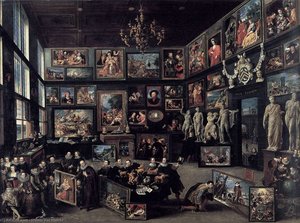
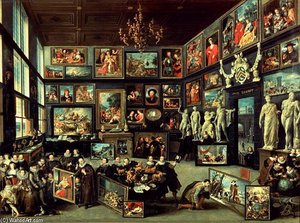
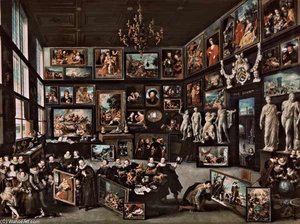
- The Gallery of Cornelis van der Geest (1628): A lavish Baroque masterpiece depicting an art collection and the surrounding aristocratic society, where every corner reveals intricate details and opulent beauty.
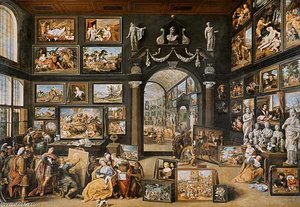
- Alexander the Great Visiting the Studio of Apelles (circa 1630): A work that bridges the gap between classical antiquity and contemporary Flemish culture through a sophisticated allegorical lens.
Historical Significance and Artistic Vision
The significance of Van Haecht’s work lies in its ability to act as a visual archive of the 17th-century art world. His paintings are more than mere landscapes of rooms; they are complex narratives populated by contemporary figures, including Infanta Isabella Clara of Spain and Archduke Albert of Austria, woven together with the masterpieces they admired. Through his brush, the act of viewing art becomes a grand, theatrical event, celebrating the intellectual prestige of the collector.
By blending the meticulousness of his father's landscape tradition with the dramatic flair learned in Italy and France, Willem van Haecht created a sub-genre that remains unparalleled. He did not just paint paintings; he painted the very concept of connoisseurship, capturing a moment in history when the gathering of beauty was seen as a profound expression of human wisdom and status.
问答详情
Willem van Haecht 来自哪里?
Willem van Haecht 出生于 Belgium。
Willem van Haecht 出生于哪个国家和城市?
Willem van Haecht 出生于 Belgium 的 Antwerp。
Willem van Haecht 出生于何时何地?
Willem van Haecht 于 1593 出生于 Antwerp。