The Bronze Revival: Reclaiming Lost-Wax Techniques
 10 Iconic Bronze Sculptures That Redefined the World of Art
Introduction Imagine walking through a space where the air feels heavy with history, where every shadow cast by a metallic silhouette tells a story of fire, molten metal, and human obsession. Bronze is not just a medium; it is an elemental force. Whe...
The transition from the Middle Ages to the Renaissance was marked by a deliberate recovery of forgotten methods, particularly the complex art of bronze casting. For centuries, the technical knowledge required to execute large-scale bronze works had diminished in Europe. However, artists like Donatello sought to bridge this gap by studying classical antiquity, reviving the lost-wax process to achieve a level of detail and fluidity previously unseen. This method involves creating a wax model that is encased in clay; as the wax melts away, it leaves a void ready for molten metal. The result is a sculpture that captures the subtle textures of skin or the heavy drape of fabric with remarkable precision.
This historical recovery finds a modern parallel in our continued reliance on the lost-wax method for high-quality bronze reproductions. Just as Donatello utilized this technique to bring life to his
Bronze David, contemporary artisans use the same fundamental principles to ensure that every muscle and contour is preserved in the final cast. The weight and permanence of the metal remain a constant, providing a sense of stability that digital mediums cannot replicate.
Marble and the Science of Light: Capturing Flesh in Stone
 Marble sculpture
Marble has been the preferred material for stone monumental sculpture since ancient times, with several advantages over its more common geological "parent" limestone, in particular the ability to absorb light a small distance into the surface before ...
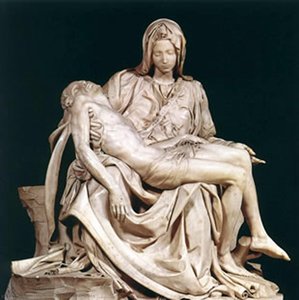
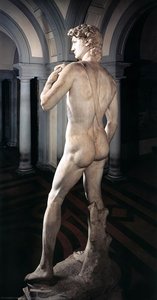
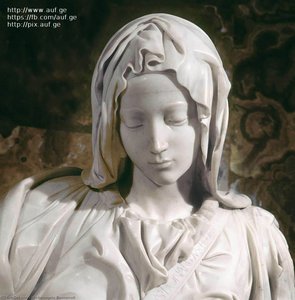
While bronze offers strength, marble provides a unique translucency that allows sculptors to mimic the soft appearance of human skin. This is achieved through a phenomenon known as subsurface scattering, where light penetrates the surface of the stone slightly before being reflected back. Sculptors like Michelangelo mastered the use of Carrara marble, utilizing tools such as the point chisel and mallet to "rough out" large masses of stone before refining them into delicate forms. The ability to polish the stone to a high sheen allows for a play of light that gives the figure an internal glow, making the cold stone appear warm and alive.
We see this same appreciation for material properties in our selection of marble-based works. When we offer sculptures mounted on polished black marble bases, we are honoring that classical tradition of contrast. The interplay between the matte texture of a bronze figure and the reflective surface of the base mirrors the Renaissance pursuit of visual depth. Understanding how light interacts with different surfaces remains essential for any professional decorator or collector seeking to create a balanced atmosphere in a commercial or residential space.
Anatomical Truth: The Humanist Pursuit of Realism
 Renaissance humanism
Renaissance humanism is a worldview centered on the nature and importance of humanity that emerged from the study of classical antiquity. Renaissance humanists sought to create a citizenry able to speak and write with eloquence and clarity, and thus ...
The intellectual movement known as Renaissance humanism placed the human experience at the center of artistic inquiry. This was not merely a stylistic choice but a philosophical commitment to studying nature, anatomy, and the
studia humanitatis. Sculptors moved away from the stiff, idealized figures of the Gothic era toward a more naturalistic representation of the body. By observing the tension in a limb or the weight of a slumped shoulder, artists like Michelangelo and Donatello were able to imbited their works with profound psychological depth. The goal was to reflect the dignity and agency of the individual through anatomical accuracy.
This dedication to realism is a standard we uphold in our custom portrait commissions. When a client requests a "period shift"—transforming a modern photograph into a work reminiscent of the 16th century—our artists focus on the structural integrity of the subject. We do not aim for mere likeness, but for the same anatomical truth and emotional resonance that defined the humanist era. The pursuit of capturing the essence of a person through precise form remains the core of our craftsmanship.
Narrative Depth: The Evolution of Relief Sculpture
 Entombment
Donatello’s ‘Entombment’: A Bronze Testament of Grief and Grace Donatello's “Entombment,” completed around 1465 in Florence, stands as a monumental achievement within the Early Renaissance—a sculpture that transcends mere representation to embody pro...
Sculpture in the Renaissance was not limited to freestanding figures; it also flourished in the shallow planes of relief work. Donatello pioneered the
rilievo schiacciato, or extremely shallow relief, which used subtle changes in depth to create an illusion of vast distance. His
Entombment, completed around 1465, demonstrates how a compressed space can still convey immense emotional weight and narrative complexity. Through the careful arrangement of figures like Mary Magdalene and St. John, the artist guides the viewer's eye through a landscape of grief, using perspective to expand a small bronze surface into a profound theological scene.
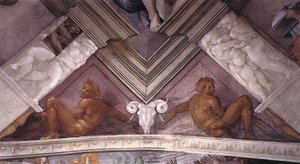
This mastery of narrative within a limited space finds an echo in our large-format architectural murals and friezes. For hospitality professionals or architects designing expansive corridors, the ability to use relief-style textures to tell a story is invaluable. Whether through a hand-painted fresco or a textured wall installation, we provide the means to integrate historical storytelling into modern structural design, ensuring that even a flat surface can possess the narrative gravity of a Renaissance altarpiece.
Material Permanence: Integrating Classical Form into Modern Interiors
The enduring appeal of Renaissance sculpture lies in its ability to anchor a space with physical and historical weight. These works were never intended to be fleeting; they were created to withstand centuries, much like the bronze and marble pieces we supply for large-scale procurement projects. The durability of these materials ensures that an investment in classical form remains relevant across changing interior trends. A heavy bronze figure or a substantial marble bust provides a grounding element in a room, acting as a focal point around which other design elements can revolve.
In the contemporary professional landscape—whether furnishing a hotel lobby or a corporate headquarters—the demand for reliable, high-quality art is constant. At Mus3ums.com, we specialize in providing these much-needed anchors of permanence. Our ability to supply consistent, high-volume orders of classical-style reproductions allows designers to implement cohesive, sophisticated themes across multiple locations. We understand that for the professional buyer, the value lies in the intersection of historical authority and operational reliability, ensuring that every piece arrives with the precision and durability required for long-term architectural integration.