Introduction
To walk through a gallery of architectural art is to witness the dialogue between human ambition and the physical world. Buildings are more than mere shelters of stone, steel, and glass; they are the silent witnesses to our history, the vessels of our culture, and the structural embodiments of our collective dreams. When an artist turns their gaze toward a skyline, a cathedral, or a humble cottage, they are not simply documenting masonry and mortar, but capturing the very pulse of civilization itself.
Throughout history, the depiction of architecture has evolved from the rigid, symbolic structures of ancient civilizations to the emotive, light-drenched facades of the Impressionists, and finally to the deconstructed, gravity-defying forms of the modern era. Each movement has used the built environment to reflect its unique zeitgeist—using shadows to evoke mystery in Baroque works, or sharp, geometric lines to represent the industrial precision of the twentieth century. These artworks serve as a visual archive of how we have perceived our place within the urban and rural landscapes across centuries.
Today, these masterpieces remain profoundly meaningful because they remind us that our environments shape our identities. In an age of rapid urbanization and shifting skylines, seeing a centuries-old monument rendered with such intimacy allows us to reconnect with the permanence and the fragility of our creations. They offer a sense of continuity in an ever-changing world.
In the following selection, we invite you to journey through ten extraordinary works that transcend mere architectural study. From sweeping urban panoramas to quiet, solitary structures, these paintings explore the soul of the built environment, inviting us to look closer at the walls that surround us and the stories they hold within.
Stadtbild SA (219/1) - Gerhard Richter
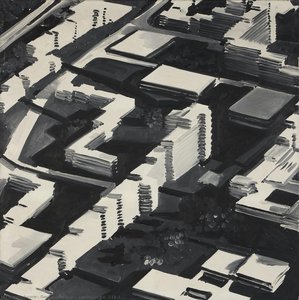 Stadtbild SA (219/1) - Gerhard Richter
In Gerhard Richter’s Stadtbild SA (219/1) , the urban landscape transcends mere architecture to become a profound meditation on memory and the fractured nature of reality. This monumental black and white canvas presents a dense, sprawling cityscape where buildings emerge from a sea of grey tones, their countless windows hinting at lives lived behind layers of historical shadow. Richter utilizes a technique that blurs the line between photographic precision and painterly abstraction, creating a visual language that feels both intimately familiar and hauntingly distant.
As one of the top 10 artworks that explore the theme of buildings , this piece holds a unique position by stripping away the distraction of color to focus on the raw texture of the built environment. The composition, reminiscent of aerial perspectives, evokes a sense of quiet melancholy and structural complexity. In contemporary curated spaces, Richter’s ability to capture the weight of history through urban forms remains a powerful cultural talking point, resonating with modern interests in how our constructed environments reflect our collective psychological landscapes.
Landscape - Amedeo Clemente Modigliani
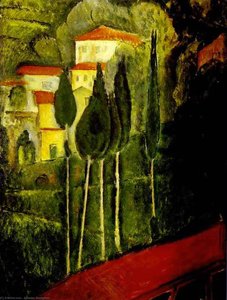 Landscape - Amedeo Clemente Modigliani
While Amedeo Modigliani is globally renowned for his hauntingly elongated portraits, his Landscape reveals a profound, often overlooked architectural sensitivity. Amidst the personal hardships of his life in Paris, Modigliani turned to the structural simplicity of Mediterranean forms to anchor his emotional expressionism. In this work, buildings are not merely backdrops but essential geometric anchors; their flat roofs and stark white walls provide a rhythmic stability against the vibrant, heavy impasto of a striking red foreground element.
The technical genius of this piece lies in its ability to balance tension and tranquility. The artist utilizes a bold, asymmetrical composition where the architecture meets a clear, moonlit sky, creating a sense of space that feels both vast and intimate. The interplay of cool blues and warm reds invites a meditative gaze, transforming a simple scene of structures into a complex study of light and shadow. For the modern professional, such a masterpiece serves as more than decoration; its disciplined composition and serene atmosphere provide an ideal focal point for a sophisticated home office or study, fostering an environment of deep focus and intellectual clarity.
Death of the Virgin (detail) - Andrea Mantegna
 Death of the Virgin (detail) - Andrea Mantegna
In the detailed view of Andrea Mantegna’s Death of the Virgin , the viewer is immediately struck by a profound sense of stillness and architectural gravity. While the scene centers on the solemnity of the Virgin's passing, the background serves as a masterful exploration of the theme of buildings and classical structures. Mantegna utilizes his signature sculptural precision to render distant, Roman-inspired edifices that rise against the water, grounding the spiritual narrative in a tangible, historical reality.
The interplay between the heavy, stone-like figures and the receding perspective of the background architecture creates a psychological depth that is truly universal. This piece does not merely depict a moment in time; it invites us to contemplate the permanence of stone against the transience of life. For collectors and decorators, integrating such a powerful work into a residential or corporate space can transform a room into a sanctuary for profound reflection. The muted tones and structured composition offer a calming, intellectual anchor, making it an essential inclusion in any curated collection focused on the intersection of human emotion and architectural grandeur.
L'Estaque with Red Roofs - Paul Cézanne
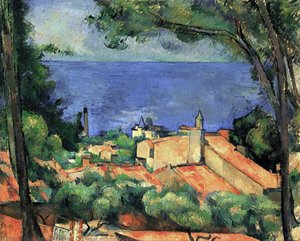 L'Estaque with Red Roofs - Paul Cézanne
In L'Estaque with Red Roofs , Paul Cézanne masterfully orchestrates the Mediterranean sun to define the very essence of architectural form. The light does not merely illuminate the coastal buildings; it sculpts them. Through a brilliant command of color temperature, Cézanne uses the warmth of the terracotta roofs to contrast against the cool, receding blues of the sea and sky, creating a rhythmic play of light that gives these structures a monumental presence. This deliberate use of illumination was revolutionary, moving away from fleeting impressions toward a structured, geometric permanence that secured this work's place among the greatest explorations of buildings in art history.
For professionals furnishing high-end hospitality or corporate spaces, a faithful reproduction of this piece offers more than decoration; it provides a structural anchor. The way the light interacts with the textured, earthy tones of the village creates a sense of depth and stability. When placed on a contemporary wall, the painting’s balanced composition and vibrant Mediterranean palette add layers of sophisticated luxury and a timeless, sun-drenched atmosphere to any large-scale architectural project.
Untitled (D2X2MZ) - Pierre-Auguste Renoir
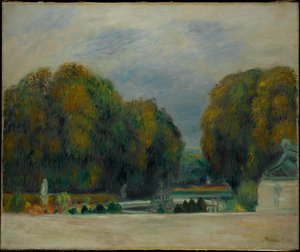 Untitled (D2X2MZ) - Pierre-Auguste Renoir
In Pierre-Auguste Renoir’s 1905 work, Untitled (D2X2MZ) , we encounter a profound moment of stillness where the boundaries between man-made structures and the natural world dissolve. This piece earns its place among the top artworks exploring buildings through its ability to integrate architecture not as a cold, imposing force, but as a harmonious element of a living landscape. Renoir uses dappled sunlight and soft, impressionistic strokes to weave residential silhouettes into a lush tapestry of verdant foliage.
The painting captures a universal longing for tranquility, where the presence of buildings suggests a peaceful coexistence with nature. The way light filters through the leaves to touch the distant structures creates an emotional resonance that has endured for over a century. At Mus3ums.com, we honor this legacy by offering hand-painted oil reproductions that preserve Renoir's signature texture and luminous color palette. Our master artists use thick, visible brushstrokes on 100% cotton canvas to ensure that the atmospheric depth and the serene spirit of this architectural landscape are faithfully brought into your professional or private space.
View from the Apartment in the Rue Lepic - vincent willem van gogh
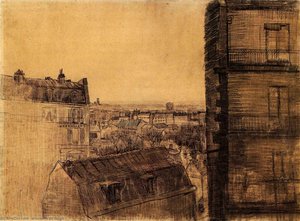 View from the Apartment in the Rue Lepic - vincent willem van gogh
In View from the Apartment in the Rue Lepic , Vincent van Gogh utilizes a palette of warm, sunset-infused tones that cast a tranquil, golden glow over the Parisian cityscape. This mastery of light and shadow is precisely why this work stands out among the top 10 artworks exploring buildings ; it does not merely depict architecture, but captures the very soul of urban life as day transitions to dusk. The soft, amber hues interacting with the structural silhouettes create a sense of profound peace and domesticity.
For professionals looking to curate sophisticated environments, this piece offers unparalleled inspiration for emotional lighting design. Integrating a reproduction of this cityscape into a modern dining room or hotel lounge can establish a serene atmosphere, using its warm color scheme to complement soft ambient lighting. The way Van Gogh captures the intersection of man-made structures and natural light makes it an essential reference for anyone designing spaces that require a balance of architectural strength and inviting, atmospheric warmth.
Triptych - Pieter Bruegel the Elder
 Triptych - Pieter Bruegel the Elder
Pieter Bruegel the Elder’s Triptych stands as a monumental achievement in our exploration of architectural narratives, offering much more than a mere backdrop of stone and timber. In this Northern Renaissance masterpiece, buildings are not static objects but living participants in the social fabric of the sixteenth-century Low Countries. From the rugged, rocky outcrops in the left panel to the bustling urban structures in the right, Bruegel uses architecture to frame the rhythmic pulse of human existence.
This work earns its place among the top artworks exploring buildings through its profound ability to weave structural elements into scenes of communal feasts and scholarly contemplation. The artist’s mastery of light and earthy ochres brings a tactile reality to every window and roofline, inviting viewers to reflect on how our built environments shape our shared humanity. For the professional decorator or collector, integrating a multi-panel piece like this provides a sophisticated architectural depth, creating a timeless conversation between historical urbanity and modern interior design.
Staircase 19 - Fernand Léger
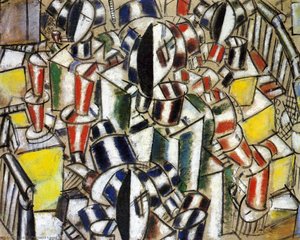 Staircase 19 - Fernand Léger
In Fernand Léger’s 1914 masterpiece, Staircase 19 , the rigid architecture of a stairwell is transformed into a rhythmic dance of geometric fragments. There is a profound, quiet energy in how Léger captures the structural essence of a building, turning a simple interior descent into a complex exploration of space and form. As a quintessential example of Cubism, this work earns its place among the top artworks exploring buildings by deconstructing the physical world into a dynamic arrangement of cups, bottles, and shadows.
The painting moves beyond mere depiction, using fragmented perspectives to invite the viewer to experience the structural soul of the space. It is this very depth—the interplay of light on geometric planes and the tactile tension of the composition—that makes such works so enduring. At Mus3ums.com, we specialize in preserving this profound emotional resonance through our hand-painted oil reproductions. Our artists meticulously recreate every visible brushstroke and tonal shift, allowing you to bring the revolutionary spirit of Léger’s architectural vision into your own professional or private space with museum-grade precision.
Yellow City - Egon Schiele
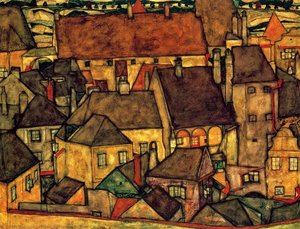 Yellow City - Egon Schiele
Step into the vibrant, pulsating energy of 1914 Vienna through Egon Schiele’s Yellow City . The canvas immediately envelops you in a warm, rhythmic dance of ochre, amber, and deep sienna, where the architecture does not merely sit on the landscape but breathes with it. Schiele moves away from traditional realism, using thick, impasto brushstrokes to create a tactile urban mosaic. The buildings, with their steep roofs and interlocking geometric forms, create a sense of dense, architectural movement that captures the very heartbeat of city life.
This masterpiece stands out in our exploration of artworks exploring buildings because it transforms cold stone and mortar into an emotional experience. The jagged, angular lines and overlapping structures evoke a beautiful tension between stability and chaos. For the modern collector, integrating such an expressive cityscape into a professional or residential space offers more than decoration; it provides a focal point of profound creativity and historical depth. Whether placed in a corporate lobby or a private study, the bold, sun-drenched palette of Yellow City brings a sophisticated, energetic warmth to any interior design.
On the Outskirts of Paris - vincent willem van gogh
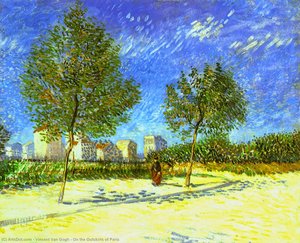 On the Outskirts of Paris - vincent willem van gogh
In On the Outskirts of Paris , Vincent van Gogh demonstrates that architectural elements need not be rigid to command attention; here, the lines of the distant structures aren’t merely drawn—they are choreographed . This 1887 masterpiece captures a pivotal moment in Van Gogh's evolution, where the encroaching urban landscape meets the untamed fringes of nature. The buildings in the background appear as soft, rhythmic suggestions of civilization, nestled against a backdrop of sun-drenched trees and sandy paths.
This is not just a landscape; it is a dance frozen in time . Through short, broken brushstrokes and a vibrant, experimental palette, Van Gogh makes the industrial expansion of Paris feel like a harmonious part of the natural movement. The composition achieves a rare equilibrium between the organic texture of the foliage and the structural presence of the outskirts. What if your corporate space or hotel lobby could hold that same balance? By introducing such works into your interior design, your walls can breathe rhythm , transforming a static room into a space of profound emotional depth and historical resonance.
Conclusion
As we draw the curtain on this exploration of architectural marvels, we find that these paintings are far more than mere depictions of stone, brick, and mortar. They are silent witnesses to the human spirit, capturing the way light dances across a facade at dawn or how a cityscape breathes with the rhythm of life. These masterpieces do not belong solely to the halls of museums; they remain living presomences, capable of shaping the atmosphere of our modern sanctuaries and sparking quiet moments of wonder within our daily lives.
At Mus3ums.com , we believe that the profound emotion captured by these historical titans should be felt tangibly in your own space. Every stroke of a brush and every layer of pigment in our hand-painted reproductions is an act of devotion to the original's soul. Our skilled artists work to honor the precise textures and enduring legacies of these works, allowing you to bring the timeless majesty of the world's most iconic structures into the intimacy of your home or office. We invite you to continue your journey through the history of human creativity by exploring our full collection , where every canvas is a bridge between the greatness of the past and the beauty of your present.