
Introduction
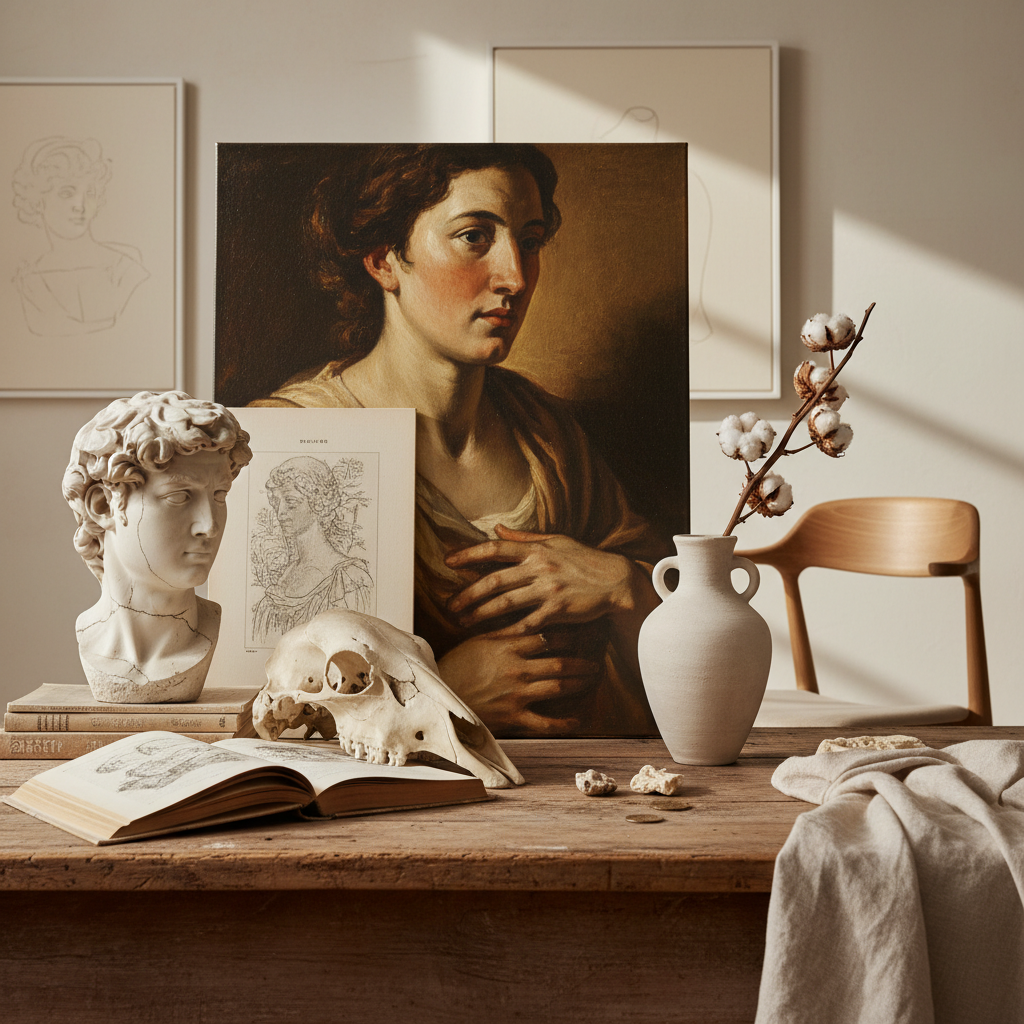
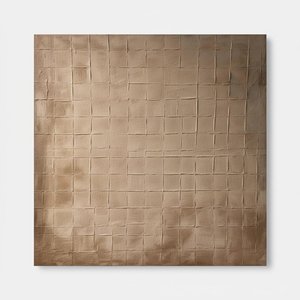
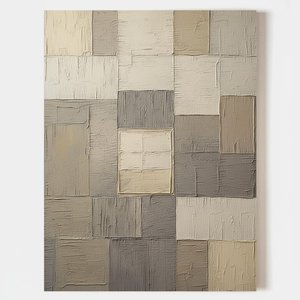
There’s a quiet power in restraint, a haunting beauty in what is not immediately visible. Consider the masterpieces that whisper rather than shout – paintings where shades of ivory, cream, sepia, and umber take center stage, evoking a sense of timelessness and profound introspection. These aren't canvases ablaze with color; they are worlds built on nuance, on the delicate dance between light and shadow, often dominated by what we might call 'bone tones'.
Throughout art history, the use of limited palettes has been a deliberate choice, frequently tied to specific cultural contexts and artistic movements. From the somber realism of 17th-century Dutch Masters – where ochres and browns reflected the austerity of Protestant life and the meticulous study of light – to the muted elegance of Spanish Golden Age paintings, these tonal choices weren’t accidental. They spoke to religious devotion, social status, or a philosophical embrace of simplicity. Even in later periods, artists like Whistler and Sargent employed restrained palettes to create atmospheric effects and explore themes of memory and emotion.
But beyond historical context, these paintings possess an enduring quality that transcends time. The 'bone tones' – the subtle variations of off-white, beige, and gray – invite us in. They encourage a slower viewing experience, demanding we look closer, feel deeper. These are works that resonate not through spectacle but through suggestion, through the echoes of human experience captured in layers of paint. They tap into something primal within us, evoking feelings of nostalgia, melancholy, or quiet contemplation.
In what follows, we’ll embark on a journey through ten such masterpieces – paintings where 'bone tones' aren’t merely a stylistic choice but the very soul of the work. Prepare to be captivated by their subtle power and discover why these artworks continue to move and inspire audiences centuries after their creation.
The Great Wave off Kanagawa - Katsushika Hokusai
 The Great Wave off Kanagawa - Katsushika Hokusai
Katsushika Hokusai’s The Great Wave off Kanagawa (1831) isn't simply a depiction of the sea; it’s an embodiment of nature’s raw power and humanity’s fragile existence. Its inclusion in our list of paintings dominated by 'bone tones' might seem surprising, yet look closer. Beyond the iconic Prussian blue, notice the masterful interplay of whites, creams, and subtle grays that define the wave’s cresting foam, the distant shoreline, and the ethereal mist. These muted shades aren’t secondary; they are fundamental to the print’s emotional resonance.
As a pivotal work within the ukiyo-e tradition – “pictures of the floating world” – Hokusai revolutionized woodblock printing with his innovative use of color and perspective. The wave, part of his larger series “Thirty-six Views of Mount Fuji,” isn’t isolated but framed by the distant, snow-capped permanence of the mountain. This contrast—impermanence versus stability—deepens the artwork's symbolic weight.
Today, The Great Wave continues to captivate with its dramatic composition and limited palette. Its aesthetic versatility makes it a timeless addition to modern interiors, complementing minimalist spaces or adding a touch of serene power to more eclectic settings. The swirling patterns and evocative use of 'bone tones' evoke feelings of both awe and humility—a reminder of nature’s beauty and our place within it. This enduring appeal solidifies its position as one of the world’s most beloved artworks, and a striking example of paintings with subtle yet profound tonal dominance.
The Farm - Joan Miró
 The Farm - Joan Miró
Joan Miró’s The Farm (1922) is less a depiction of rural life and more a distillation of memory, emotion, and the Catalan landscape. Its presence on our list of paintings dominated by 'bone' tones might not be immediately obvious, but look beyond the vibrant blues and oranges. The artwork’s foundation lies in the warm ochres, creams, and sepia hues that define the buildings, fields, and earth – a palette evoking sun-baked soil and rustic simplicity.
Miró masterfully bridges Naive art with Surrealism, creating a dreamlike world where recognizable forms—animals, tools, architecture—float alongside enigmatic symbols. This unconventional composition challenges traditional perspective, inviting viewers to decode the artwork’s personal language. The flattened planes and bold lines contribute to its unique aesthetic.
Today, The Farm resonates with a modern sensibility that favors authenticity and handcrafted textures. Its earthy palette and playful forms translate beautifully into contemporary interiors—think terracotta accents, natural wood furnishings, and organic textiles. This artwork isn’t just a historical masterpiece; it's a timeless expression of connection to the land, rendered in shades that evoke warmth, nostalgia, and a quiet sense of belonging. The subtle dominance of 'bone tones' grounds the fantastical elements, creating a harmonious balance between imagination and reality.
Girl with ball - Roy Lichtenstein
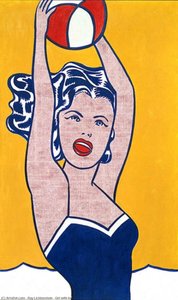 Girl with ball - Roy Lichtenstein
Imagine a sun-drenched afternoon, the carefree energy of summer, and the simple joy of play. Roy Lichtenstein’s Girl with Ball (1961) doesn't just depict this scene; it encapsulates it in a burst of bold color and graphic precision. While celebrated for its vibrant hues, a closer look reveals a subtle foundation of 'bone tones' – the soft pink of skin, the creamy white of the waves—that ground the artwork’s dynamism.
Inspired by an advertisement, Lichtenstein transformed a fleeting image into a timeless commentary on American culture and idealized femininity. The stylized forms, thick black outlines, and Ben-Day dots aren't merely aesthetic choices; they are a deliberate rejection of traditional artistic conventions, mirroring the mass-produced imagery of the era.
Its inclusion in our list highlights how even within seemingly bold palettes, nuanced shades can create emotional depth. Girl with Ball ’s enduring appeal lies in its ability to evoke nostalgia and capture a specific moment in time. Today, this artwork translates beautifully into modern interiors—think playful accents, vibrant textiles, or statement pieces that inject energy and optimism into any space. It's a reminder that art can be both visually striking and deeply resonant, enriching our daily lives with a touch of carefree joy.
Yellow, Red, Blue - Wassily Kandinsky
 Yellow, Red, Blue - Wassily Kandinsky
Wassily Kandinsky’s Yellow, Red, Blue (1925) isn't simply an abstract composition; it’s a visual symphony—a testament to the power of color and form to evoke emotion. While celebrated for its vibrant primary hues, look closer and you’ll discover a subtle grounding in 'bone tones': the creamy whites that serve as a canvas for these bold expressions, the soft ochres hinting at underlying structure.
Created during Kandinsky's influential tenure at the Bauhaus school, this artwork embodies his belief in the spiritual power of art and its ability to transcend representation. The dynamic interplay of geometric shapes and expressive lines isn’t random; it’s a carefully orchestrated exploration of inner harmony and balance.
Its inclusion in our list speaks to Kandinsky's enduring legacy—his pioneering spirit paved the way for generations of abstract artists. Today, Yellow, Red, Blue continues to inspire with its timeless energy. Its essence translates beautifully into modern environments, adding a touch of intellectual sophistication and vibrant optimism. Consider it not just as a painting, but as a conversation starter—a reminder that art can be both deeply personal and universally resonant.
Tuna Fishing, 1967 - Salvador Dalí
 Tuna Fishing, 1967 - Salvador Dalí
Before you stands a scene of controlled chaos—Salvador Dalí’s Tuna Fishing (1967). This monumental canvas isn't merely a depiction of a naval battle; it’s a swirling vortex of energy, a meditation on the human condition and our place within the cosmos. Its inclusion in our list of paintings dominated by 'bone' tones might seem unexpected given its vibrant palette, yet look closer.
Beneath the fiery oranges and reds lies a foundation of creamy whites and subtle beiges—the flesh tones of countless figures immersed in the tumultuous sea. These muted shades provide a grounding force amidst the surreal frenzy, evoking a sense of both vulnerability and primal struggle. Dalí masterfully blends elements of classicism with his signature surrealist style, creating a unique visual language that challenges traditional representation.
Tuna Fishing is a testament to Dalí’s artistic ambition—a fusion of scientific inquiry, historical homage, and deeply personal symbolism. Today, this artwork continues to captivate with its dynamic composition and emotional intensity. Its essence translates beautifully into modern interiors, adding a touch of intellectual curiosity and dramatic flair. Consider it not just as a painting, but as a portal—an invitation to explore the depths of the subconscious mind.
Campbell'S Soup Can (tomato) - Andy Warhol
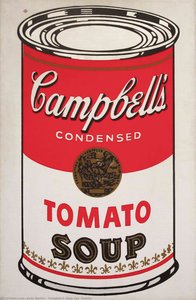 Campbell'S Soup Can (tomato) - Andy Warhol
Unveiled to a world grappling with consumerism, Andy Warhol’s Campbell's Soup Can (Tomato) isn't simply an image; it’s a cultural touchstone. Its inclusion in our list of paintings dominated by 'bone' tones might seem surprising, yet the artwork’s power lies in its subtle interplay of shades—the creamy white background that allows the iconic red to truly pop, the delicate beige of the label details.
Warhol masterfully elevated an everyday object into a symbol of American culture, challenging traditional notions of art and prompting us to question the value we place on mass production. The silkscreen technique—with its precise lines and flat planes—mimics commercial printing, blurring the boundaries between high art and popular imagery.
Today, Campbell's Soup Can (Tomato) continues to resonate with a modern sensibility that appreciates irony, nostalgia, and bold design. Its essence translates beautifully into refined interiors—think minimalist spaces accented with vibrant pops of color or curated collections that celebrate the intersection of art and everyday life. It’s a reminder that beauty can be found in the most unexpected places.
Of This Men Shall Know Nothing - Max Ernst
 Of This Men Shall Know Nothing - Max Ernst
A whisper of dreams, a haunting echo of the subconscious—Max Ernst’s Of This Men Shall Know Nothing (1923) is a portal into a world beyond reason. Its inclusion in our list of paintings dominated by 'bone' tones isn’t about absence of color, but rather the masterful use of muted shades to create an atmosphere of profound mystery.
Ernst, a pioneer of Dada and Surrealism, blends dreamlike imagery with symbolic depth in this captivating work. The elongated figures suspended amidst celestial bodies—connected by delicate strings—evoke a sense of vulnerability and introspection. The cool blues punctuate the dominant beige and browns, adding to the ethereal quality.
Today, Of This Men Shall Know Nothing continues to resonate with its enigmatic power. Its subtle palette and dreamlike composition translate beautifully into modern interiors—think minimalist spaces accented with organic textures or curated collections that celebrate the subconscious mind. It’s a reminder that art can be both deeply personal and universally resonant, inviting us to explore the hidden depths of our own imagination.
Left - Portrait of Battista Sforza, Duc - Piero della Francesca
 Left - Portrait of Battista Sforza, Duc - Piero della Francesca
Before you stands a testament to Renaissance grace—Piero della Francesca’s Left - Portrait of Battista Sforza, Duc (1465). This isn't merely a depiction of a noblewoman; it’s an embodiment of serenity and dignity. Its inclusion in our list of paintings dominated by 'bone' tones speaks to the artist’s masterful use of subtle shades—the creamy paleness of skin, the muted browns and golds that define her attire.
Della Francesca revolutionized portraiture with his meticulous realism and pioneering perspective. The profile view, inspired by ancient coinage, allows for a clear presentation of Battista's features, while the harmonious color palette underscores her noble stature. The smooth, almost luminous surface—achieved through layered glazes—enhances the naturalistic portrayal of her subject.
Today, Portrait of Battista Sforza continues to inspire with its timeless elegance and quiet power. Its essence translates beautifully into modern interiors—think refined spaces accented with classic textures or curated collections that celebrate Renaissance artistry. It’s a reminder that art can be both deeply personal and universally resonant, inviting us to reflect on the enduring beauty of human character.
Untitled from Sunset - Andy Warhol
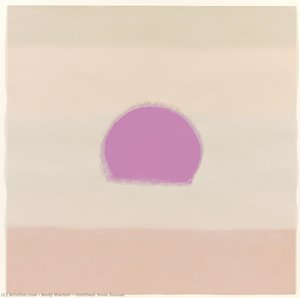 Untitled from Sunset - Andy Warhol
A luminous orb suspended against a radiant field—Andy Warhol’s Untitled (from Sunset) (1972) isn't simply a depiction of the setting sun; it’s a distillation of light, color, and perception. Its inclusion in our list of paintings dominated by 'bone' tones might seem unexpected, yet look closer at the subtle interplay of shades—the creamy yellows that evoke warmth and optimism, the soft purples hinting at twilight’s embrace.
Created as part of a larger portfolio, this work embodies Warhol’s revolutionary approach to art. He embraced mechanical reproduction, generating hundreds of unique iterations from just three screens, each subtly different due to deliberate variations in ink and registration. This wasn't about creating the singular masterpiece; it was about democratizing art, making it accessible and ubiquitous.
Today, Untitled (from Sunset) continues to resonate with its quiet power. Its essence translates beautifully into modern interiors—think minimalist spaces accented with vibrant color or curated collections that celebrate the beauty of imperfection. It’s a reminder that art can be found in the most unexpected places, and that even within mass production, there is room for individuality.
Touch me not - Fra Angelico
 Touch me not - Fra Angelico
A whisper of divine encounter—Fra Angelico’s “Touch Me Not” (1442) is a masterpiece of early Renaissance serenity. Its inclusion in our list of paintings dominated by 'bone' tones isn’t about starkness, but rather the luminous quality achieved through delicate layers of pigment and a masterful use of light. The soft pinks, oranges, and greens create an ethereal atmosphere, drawing us into this pivotal moment from the Gospel of John.
Angelico’s skill lies in his ability to convey profound spirituality with quiet grace. The fresco technique—applying paint to wet plaster—results in enduring vibrancy, while subtle shading creates volume and form. The composition, contained within an arched frame reminiscent of religious icons, lends itself to contemplation.
Today, “Touch Me Not” evokes feelings of peace and reverence. Its muted color scheme and harmonious composition create a calming atmosphere, making it an ideal addition to contemplative spaces. It’s a reminder that art can be both deeply personal and universally resonant, inviting us to reflect on the enduring power of faith.
Conclusion
As the light fades on these ten masterpieces, we’re left not with a collection of historical artifacts, but with living presences—echoes of human emotion and aspiration that continue to resonate across centuries. From the somber dignity of Holbein's portraits to the ethereal grace of Fra Angelico’s vision, each artwork offers a unique window into the soul, reminding us of our shared capacity for beauty, sorrow, and wonder.
These paintings are not confined to museum walls; they inhabit our imaginations, shape our interiors, and inspire our own creative endeavors. The subtle palettes—the bone tones that lend these works their distinctive character—have a remarkable ability to evoke tranquility, contemplation, and a sense of timeless elegance in any space. They whisper stories of resilience, faith, and the enduring power of the human spirit.
Perhaps it’s this very connection—this ability to transcend time and circumstance—that makes these paintings so profoundly meaningful today. They are not merely objects to be admired, but companions on our own journeys, offering solace in times of darkness and inspiration in moments of joy. To explore more artworks that share this captivating sensibility, we invite you to discover our full collection —and perhaps find a new companion for your own heart and home.