


The Luminous Revolution: Breaking Free from Academic Shadows
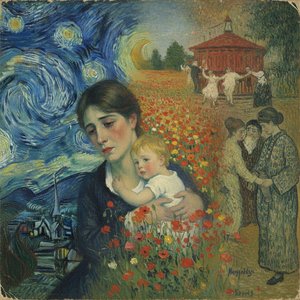 Capturing the Soul: The Most Emotionally Moving Impressionist and Post-Impressionist Masterpieces
The Luminous Revolution: How Impressionism Redefined the Art of Seeing Impressionistic Landscapes: 10 Masterpieces That Changed Art & Decor Introduction To gaze upon these ten canvases is to step directly into a world transformed by light, color, and...
To step into the world of the Impressionists is to leave behind the heavy, somber shadows of academic tradition and enter a realm bathed in dappled sunlight. In the mid-19th century, a group of courageous rebels in France sought to dismantle the rigid constraints of the Salon, turning their gaze away from historical grandeur and mythological drama toward the ephemeral beauty of the present moment. Before this revolution, art was often a pursuit of the monumental—a search for perfection in frozen, idealized figures that felt distant from the beating hearts of the people. The Impressionists, however, dared to suggest that truth could be found in the transient.
This movement was not merely a shift in painting technique; it was a profound revolution in perception. It was a bold declaration that reality is not a fixed, static entity, but rather a shimmering, subjective experience. As photography began to challenge the painter’s role as a precise recorder of reality, artists like Monet, Renoir, and Degas found a new freedom. They were no longer bound to replicate every meticulous detail. Instead, they embraced the optical moment, capturing the way light dances across a river's surface or shimmers through a summer breeze before it inevitably changes. This was the birth of an aesthetic that valued individual sensation over academic accuracy, inviting us to see the world not as it is, but as it is felt.
Beyond the Surface: Capturing Fleeting Moments of Everyday Life
 La Poste at Cagnes
A Glimpse into Provençal Life: Pierre-Auguste Renoir’s *La Poste at Cagnes* Pierre-Auguste Renoir's *La Poste at Cagnes*, painted in 1905, is more than just a depiction of a rural scene; it’s an evocative distillation of the French Impressionist aest...
The true genius of the Impressionist masters lay in their ability to find the extraordinary within the ordinary. They turned away from the exotic and the epic, choosing instead to celebrate the beauty of modern life as it was lived. We see this in the quiet, sun-drenched corners of Provençal life, such as Pierre-Auguste Renoir’s La Poste at Cagnes. In this work, there is no grand narrative, only a profound sense of tranquility and contentment found in a rural scene. Renoir captures the warmth of the sun on stone and the way light filters through foliage, distilling an entire atmosphere into a single, evocative moment.
This focus on the everyday extended to the vibrant energy of urban landscapes—the bustling boulevards, the cozy cafés, and the rhythmic movement of train stations. By prioritizing the impression of a scene over its literal structure, these artists allowed us to experience the pulse of their era. Even in still life, such as Renoir’s Bouquet in front of a Mirror, we feel a joyful abundance. The flowers are not merely botanical specimens; they are a celebration of vitality and the fleeting beauty of nature. Through this lens, the mundane is elevated to the level of the sublime, reminding us that every passing second holds its own unique, luminous grace.
The Painter's Eye: Light, Color, and the Subjective Experience
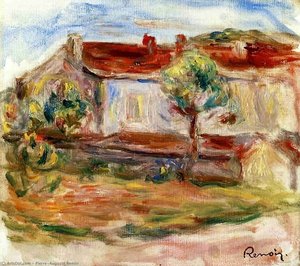 White House
Captivating Rural Scene in Impressionist Style This enchanting landscape captures a serene countryside at sunset, rendered in the luminous and vibrant style of Impressionism. The scene features a quaint cluster of trees and rustic buildings, evoking ...
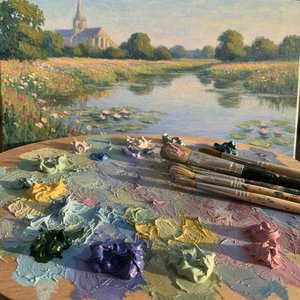
To gaze upon these canvases is to enter a world perpetually bathed in light, where color does not simply sit on the surface but seems to vibrate with life. The technical innovations of the movement—the use of broken brushstrokes and a vibrant, often unblended palette—were essential to this effect. By applying small strokes of pure pigment side-by-side, the Impressionists allowed the viewer’s eye to perform the work of blending them optically. This technique creates a luminous quality that mimics the natural shimmer of sunlight, making the canvas feel alive and immediate.
The practice of en plein air painting, made possible by the invention of portable paint tubes, allowed these visionaries to work directly under the vast sky. This direct engagement with the atmosphere meant they could capture the subtle tonal variations of twilight or the intense heat of midday. In works like Renoir’s landscapes at sunset, we see warm hues of pink, orange, and gold blending seamlessly to evoke the emotional warmth of the setting. It is a subjective, almost dreamlike experience where the artist's brushwork creates a texture that seems to move before our very eyes, inviting us to participate in the sensory experience of seeing.
From Impressionism to Post-Impressionism: The Evolution of Raw Emotion
 10 Post-Impressionist Masterpieces That Changed Art Forever
Introduction To step into the world of Post-Impressionism is to leave behind the mere observation of light and enter a realm where color breathes, shapes vibrate, and the artist's inner psyche dictates the landscape. While the Impressionists sought t...
As we move from the soft, hazy edges of Impressionism into the era of Post-Impressionism, we witness a fascinating evolution of the artist's intent. While the Impressionists were masters of the optical moment—capturing how light hits the eye—the Post-Impressionists sought to capture something much more visceral: the soul. They decided that art should do more than reflect the eye; it should speak to the inner psyche. The soft, sun-drenched afternoons of Monet gave way to a realm where color breathes and shapes vibrate with structural depth.
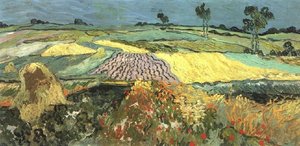
Artists like Vincent van Gogh took the foundations laid by his predecessors and infused them with raw, unadutered emotion. In his depictions of nature, such as his iconic Irises, we see bold, swirling brushstrokes that bring the garden to life with a dynamic visual rhythm. The vivid blues and violets are not just colors; they are expressions of energy and movement. This era traded realistic accuracy for expressive power, using thick, textured impasto to convey a sense of urgency and feeling. It was a high-voltage rebellion that fundamentally altered the course of art history, moving us from the observation of light to the expression of the human spirit.
The Eternal Resonance: Why These Masterpieces Still Speak to the Soul
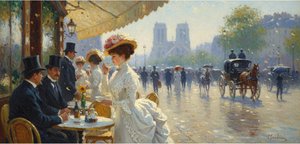 Impressionistic Realism's Finest: 10 Masterpieces for Your Home | Mus3ums
Introduction To gaze upon these ten canvases is to step into a world perpetually bathed in light, a realm where fleeting moments are captured with an immediacy that still resonates across the centuries. The 'Impressionistic Realism' movement—a label ...
Why do we, decades or even centuries later, find ourselves drawn back to these canvases with such enduring passion? It is because the Impressionist and Post-Impressionist masters captured a universal truth: the ephemeral nature of existence. Their work serves as a poignant reminder of the beauty found in the fleeting, the transient, and the temporary. In a world that often feels heavy and permanent, their light-drenched landscapes offer a sanctuary of peace and a celebration of presence.
These paintings do not merely depict a place or a person; they capture the very sensation of being alive within a moment. Whether it is the tranquil contentment of a rural post office or the vibrant, emotional intensity of a blooming garden, these works resonate with our shared human experience. They teach us to find beauty in the ordinary and to cherish the light before it fades. At Mus3ums.com, we hold this legacy dear, continuing the tradition of celebrating these masters through hand-painted reproductions that strive to preserve the texture, the color, and the very soul of these timeless masterpieces.