
The Primal Connection: Understanding the Emotional Resonance of Wildlife Art
To gaze upon a masterfully rendered depiction of the natural world is to engage in a silent dialogue with the primordial forces of our planet. Wildlife art, at its most profound, transcends mere biological documentation; it serves as a window into the very soul of the wilderness. For the discerning collector, these works offer more than aesthetic pleasure—they provide a visceral connection to the untamed, a sense of presence that bridges the gap between the modern, structured human experience and the raw, rhythmic pulse of the earth. There is an inherent tension in a well-executed piece, a captured moment of breath held in anticipation or the sudden, electric stillness before a predator strikes.
This emotional resonance is rooted in our shared evolutionary history. When we observe the focused gaze of a deer in a sun-dised meadow or the powerful silhouette of an eagle against a storm-tossed sky, we are not merely looking at animals; we are witnessing the embodiment of survival, grace, and instinct. The symbolism within these works often touches upon themes of strength, fragility, and the cyclical nature of life itself. By bringing such imagery into our private sanctuaries, we invite a sense of wonder and a reminder of the magnificent, often overlooked, complexity of the ecosystems that sustain us.
Masters of the Wild: Analyzing Iconic Techniques from Classical to Contemporary Naturalism
The history of wildlife art is a testament to the evolution of human perception and technical mastery. In the classical tradition, artists sought to achieve a level of hyper-realism that celebrated the anatomical precision of their subjects. One might look to the works of Arthur Fitzwilliam Tait, whose piece 'Startled' exemplifies the ability to capture the sudden, kinetic energy of deer within a lush, atmospheric wilderness. Such painters utilized light and shadow not just to define form, but to create a sense of depth and environmental immersion that feels almost tactile.
As we move through the centuries, the approach has shifted from strict naturalism toward more expressive, contemporary interpretations. The influence of masters like Benson B. Moore, known for his detailed and soulful depictions of owls and deer, demonstrates how a focus on character and atmosphere can be just as impactful as anatomical accuracy. In more recent decades, artists such as Siddhesh Dinesh Lad have introduced new narratives, blending wildlife with human elements to create compelling, often symbolic, compositions like 'Striker'. This progression from the observational to the conceptual allows collectors to find works that resonate with their specific intellectual and emotional sensibilities, whether they prefer the quiet realism of the past or the bold, narrative-driven styles of the present.
The Texture of Life: How Impasto and Layering Breathe Vitality into Animal Portraits
The true magic of a high-end wildlife reproduction lies in its ability to mimic the physical presence of an original masterpiece. This is achieved through the meticulous application of medium, where the artist uses impasto techniques to build a three-dimensional topography on the canvas. When light hits a surface treated with thick, visible brushstrokes, it creates micro-shadows that dance across the fur of a predator or the delicate feathers of a songbird, much like the work seen in Richard John Spare’s 'Stonechat'. This tactile depth is what separates a true painting from a mere flat print; it provides a sense of movement and life that is perceptible even from a distance.
The process of building these works involves a disciplined, multi-layered approach. Artists apply anywhere from five to ten layers of oil paint, allowing each stratum to dry before the next is introduced. This layering technique does more than just add texture; it creates a luminosity known as glazing, where light penetrates the upper transparent layers and reflects back from the deeper pigments. The result is a vibrant, breathing quality—a way for the artist to capture the subtle sheen on a wet nose or the translucent glow of an eye. It is this technical complexity that ensures the artwork retains its "living" quality, preserving the spirit of the original subject through the sheer physical weight of the paint.
Curating the Wilderness: Integrating Wildlife Masterpieces into Sophisticated Interiors
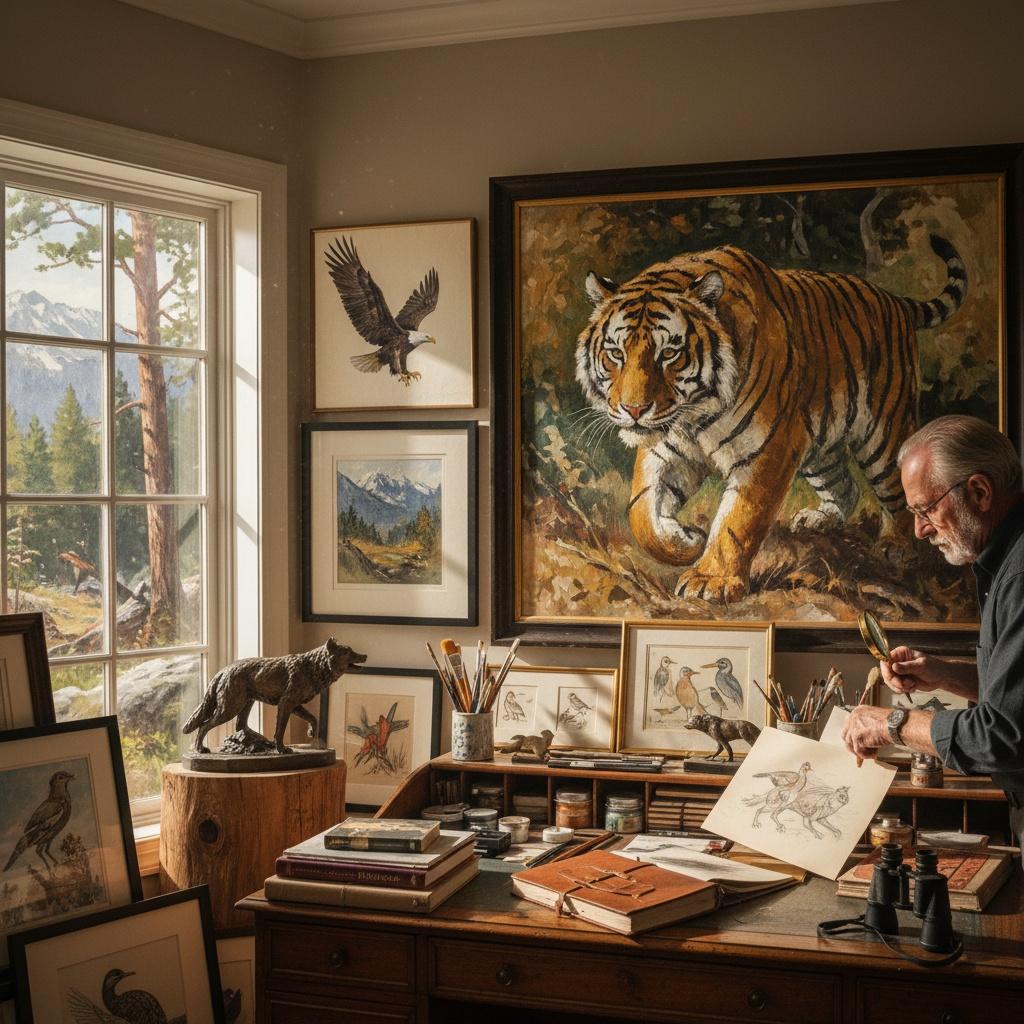
Integrating wildlife art into a curated interior requires a delicate balance between boldness and cohesion. For the sophisticated collector, a large-scale animal portrait can serve as a powerful focal point, an anchor for a room that commands attention and dictates the tonal direction of the space. When selecting pieces, one must consider the interplay between the subject matter and the existing architectural elements. A heavy, dark-toned depiction of a forest predator might find its perfect home in a library lined with mahogany, while a lighter, more ethereal depiction of birds can breathe life into a bright, modern sunroom.
Modern curation often embraces the multi-panel trend, where a single expansive landscape or wildlife scene is split across three, four, or even five panels. This approach allows for a grander scale that works harmoniously with wide walls or dramatic staircases, creating a cinematic experience that wraps around the viewer's field of vision. Furthermore, the ability to customize art—such as requesting a specific color palette to match bespoke upholstery or using Professional Digital Mockup Services to visualize a piece before it is commissioned—allows for a seamless integration of nature and design. The goal is not merely to hang a picture, but to create an environment where the wildness of the subject complements the refinement of the home.
Preserving the Legacy: The Science of Longevity in Fine Art Reproductions and Giclée
For any serious collector, the longevity of an acquisition is paramount. The preservation of beauty requires a deep understanding of the chemistry behind the art. In premium oil reproductions, the use of heavy-duty cotton canvas and high lightfastness pigments ensures that the colors remain as vibrant decades from now as they are upon arrival. The application of a final coat of Damar varnish serves as a vital shield, protecting the delicate surface from dust, moisture, and the slow degradation caused by atmospheric pollutants.
For those who prefer the precision of Giclée prints, the science of longevity is found in the use of 12-color pigment-based inks. These prints are engineered to last between 75 and 100 years without fading, provided they are housed in a stable environment. To elevate these works, collectors often opt for Textured Prints, where an artist hand-applies clear acrylic gel to replicate the tactile sensation of oil paint. Regardless of the medium, proper care—such as using acid-free matting and avoiding direct, harsh sunlight—ensures that these windows into the natural world remain clear, vibrant, and breathtaking for generations to come.
At Mus3ums.com, we are dedicated to this legacy of excellence. From our roots in 2004 to our current global presence, our mission has remained unchanged: to make the grandeur of the Old Masters and the beauty of contemporary wildlife art accessible to collectors worldwide through unparalleled craftsmanship and a commitment to museum-grade quality.