Introduction
To step into the world of Paul Cézanne is to witness the very moment art learned to breathe structure into light. There is a profound, quiet gravity in his canvases, a sense that we are not merely looking at a landscape or a bowl of fruit, but at the very architecture of existence itself. Born in the sun-drenched landscapes of Aix-en-Provence, Cézanne occupied a singular space in art history—a bridge between the fleeting, luminous impressions of his contemporaries and the fractured, analytical brilliance of the modern era.
While the Impressionists sought to capture the ephemeral dance of sunlight across water, Cézanne turned his gaze toward the permanent. He looked past the surface to find the fundamental forms —the cones, the spheres, and the cylinders that constitute our visual reality. His evolution from the dramatic, emotive shadows of Romanticism to a meticulously layered, geometric technique revolutionized the canvas, providing the essential blueprint for the Cubist movement that would follow decades later.
These twenty-five selected works remain deeply resonant today because they offer more than a mere window into the past; they offer a new way of seeing. Through his rhythmic brushstrokes and masterful use of color, Cézanne invites us to find stability and depth within the natural world. As we journey through this collection, we invite you to experience the enduring legacy of a master who taught us that true beauty lies in the structural truth beneath the surface.
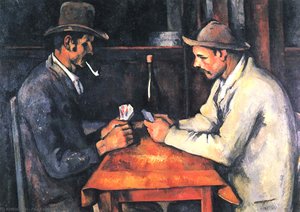
The Card Players - Paul Cézanne
 The Card Players - Paul Cézanne
There’s a gaze in "The Card Players by Paul Cézanne" that follows you—not with judgment, but with understanding . This isn’t a portrait; it’s a mirror . Its spot in the Top 25 is a testament to its power to make the invisible visible. Now, imagine that gaze in your space. Not watching you, but reminding you : you are seen. You are part of the story.
In this profound exploration of Provençal life, Cézanne captures more than a mere game; he distills the very essence of human connection and quiet dignity. The composition is anchored by heavy, geometric forms and a palette of deep ochre, muted greens, and somber browns that lend an incredible sense of permanence to the scene. Through his signature layered brushwork and textured impasto, the artist transforms a simple tavern moment into a monumental study of structure and fate. As the men focus intensely on their cards, we feel the weight of life’s uncertainties—a masterful precursor to Cubism that invites us to find beauty in the grounded, the tactile, and the eternal.
Large Bathers (Philadelphia) - Paul Cézanne
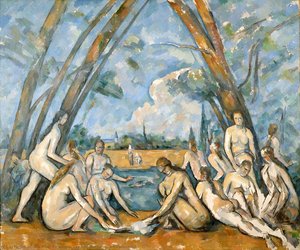 Large Bathers (Philadelphia) - Paul Cézanne
In Large Bathers (Philadelphia) , Paul Cézanne achieves a profound, almost sacred equilibrium between the human form and the natural world. This monumental work transcends mere landscape painting; it is a philosophical meditation on permanence. Rather than capturing a fleeting moment of light, Cézanne meticulously constructs a universe of geometric stability, reducing figures and trees to essential cones, spheres, and cylinders. The cool palette of blues and greens creates a tranquil, slightly melancholic atmosphere that invites deep contemplation.
As one of the most significant works among his top 25 masterpieces , it serves as the vital bridge from the ephemeral beauty of Impressionism to the structured revolution of Cubism. Today, this painting finds a striking resonance in modern, minimalist interiors. Its sophisticated interplay of organic shapes and architectural rhythm offers a timeless aesthetic for the discerning collector, proving that Cézanne’s vision of structural harmony remains an enduring cornerstone of contemporary elegance and curated design.
Mont Sainte-Victoire Seen from the Bibemus Quarry - Paul Cézanne
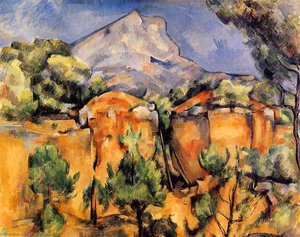 Mont Sainte-Victoire Seen from the Bibemus Quarry - Paul Cézanne
To gaze upon the rugged landscapes of Provence is to witness the very heartbeat of nature, a sensation captured with unparalleled structural depth in Mont Sainte-Victoire Seen from the Bibemus Quarry by Paul Cézanne. As a cornerstone of our curation of the top 25 artworks of Paul Cézanne, this 1897 masterpiece represents the artist's profound transition from the ephemeral light of Impressionism toward a more permanent, geometric reality.
The canvas is alive with tactile, impasto brushstrokes that layer warm earth tones—burnt oranges and sun-drenched yellows—against cool, atmospheric blues. Cézanne does not merely paint a mountain; he deconstructs it into essential planes and volumes, prefiguring the Cubist revolution through his mastery of form. The interplay of light and heavy texture creates a sense of monumental stability that transcends time. For the discerning collector or interior designer, this work offers more than decoration; it provides an anchor of historical significance, bringing the enduring strength of Post-Impressionism into the modern architectural space.
Curtain, Jug and Fruit - Paul Cézanne
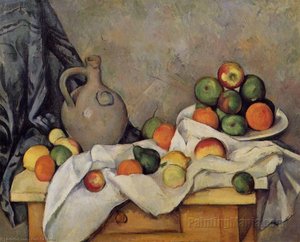 Curtain, Jug and Fruit - Paul Cézanne
Acquiring Curtain, Jug and Fruit by Paul Cézanne is an exquisite investment in both artistic legacy and refined taste for the discerning collector. This 1894 masterpiece stands as a cornerstone of Post-Impressionism, representing the pivotal moment where Cézanne began deconstructing reality into geometric essentials. Its inclusion in the top 25 of his most influential works is justified by its profound impact on the evolution of Cubism, offering a masterclass in structural composition and color theory.
The painting breathes life into a quiet domestic scene through a sophisticated palette of muted greens, warm ochres, and sun-drenched oranges. The visible, rhythmic brushstrokes create a tactile richness that transcends the canvas. For the curator of modern luxury interiors , this work provides an unmatched sense of prestige. A high-quality, hand-painted oil reproduction carries the same aesthetic authority as the original, allowing the timeless elegance and architectural depth of Cézanne’s vision to anchor a contemporary space with unparalleled sophistication.
The bay from l'estaque - Paul Cézanne
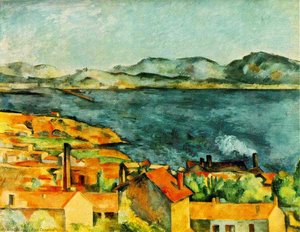 The bay from l'estaque - Paul Cézanne
In The bay from l'estaque , the eye is immediately captivated by the rhythmic, textured application of pigment that defines Paul Cézanne’s revolutionary approach. The way the artist layers warm ochres and vibrant reds for the village rooftops against the cool, atmospheric blues of the Mediterranean creates a structural depth that transcends mere landscape painting. This piece stands as a vital entry in the top 25 artworks of Paul Cézanne because it captures the precise moment where Impressionist light meets the geometric permanence of Post-Impressionism.
At Mus3ums, we believe the true essence of such a masterpiece lies in its materiality—the way light catches the raised surface of the paint. Our master artists meticulously recreate these visible brushstrokes and impasto textures on fine cotton canvas, ensuring that the three-dimensional vitality and soul of Cézanne’s vision are preserved for your collection, far beyond the flat surface of a mere print.
Chateau Noir - Paul Cézanne
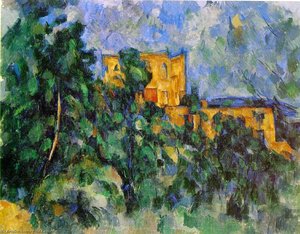 Chateau Noir - Paul Cézanne
Chateau Noir by Paul Cézanne is not merely a landscape captured in 1904; it is an invitation to inhabit a moment of profound equilibrium. In this masterpiece, the artist orchestrates a breathtaking dialogue between the man-made and the organic. One cannot help but be drawn into the vibrant tension where sun-drenched ochres and warm oranges of the architecture collide with the deep, rhythmic greens of the Provençal foliage. Cézanne’s signature Post-Impressionist technique—characterized by thick, tactile brushstrokes and a revolutionary approach to geometric form—gives the scene an almost sculptural weight. As the dynamic sky swirls above, the flattened perspective pulls you directly into the heart of the composition. To possess such a work is to transcend mere decoration; it is to transform your private sanctuary into a gallery of the soul , where the enduring stability of the chateau meets the untamed vitality of the natural world.
Jourdan’s Shed - Paul Cézanne
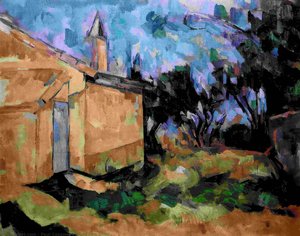 Jourdan’s Shed - Paul Cézanne
In Jourdan’s Shed , the lines aren’t merely drawn; they are choreographed. This is not just a landscape composition; it is a dance frozen in time, marking a pivotal moment among the top 25 artworks of Paul Cézanne . Here, the ephemeral light of Provence meets a profound structural rigor. While his contemporaries chased fleeting shadows, Cézanne used sun-drenched yellows and deep, verdant greens to build a world of geometric stability.
The shed itself acts as an anchor, its planes arranged with a rhythmic precision that anticipates the Cubist revolution. As you observe the patch-like brushstrokes and the interplay of warm earth tones against a whimsical blue sky, you realize this piece offers more than scenery—it offers balance. What if your living room could hold that same equilibrium? What if your walls could breathe rhythm through such a masterful arrangement of form and color? It is an invitation to find harmony in the architecture of nature.
Rocks at Fontainebleau - Paul Cézanne
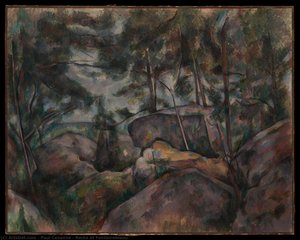 Rocks at Fontainebleau - Paul Cézanne
In the quiet, shadowed corridors of the Fontainebleau Forest, Rocks at Fontainebleau stands as a profound meditation on the permanence of nature. This masterpiece earns its place among the top 25 artworks of Paul Cézanne by capturing the precise moment where Impressionist light meets the structural rigor of modernism. Cézanne orchestrates a symphony of earth tones, where rugged, weathered boulders are bathed in a delicate, dappled sunlight that seems to breathe life into the stone. The interplay of deep purples and cool blues within the shadows creates an architectural depth, transforming mere rocks into sculptural masses that possess a palpable weight and presence.
For the discerning collector or interior designer, this work offers more than historical significance; its rhythmic composition and tranquil, somber mood bring a sense of grounded sophistication to any modern space. It is a piece that invites quiet contemplation, providing a timeless anchor of stability and grace within the contemporary home.
The House with the Cracked Walls - Paul Cézanne
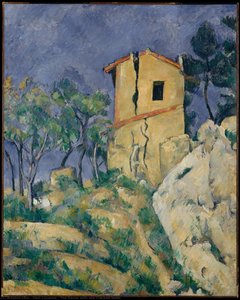 The House with the Cracked Walls - Paul Cézanne
In The House with the Cracked Walls , Paul Cézanne invites us to look far beyond the surface of a rustic dwelling. The interplay of sun-drenched ochres and rugged, textured greens captures a moment where nature and structure collide in a profound meditation on perception.
This masterpiece earns its place among the top 25 artworks of Paul Cézanne by demonstrating his radical shift toward geometric permanence—transforming a simple landscape into a foundational study of form. What if I told you that this work was born from a moment of rebellion—a stroke of defiance against the ordinary? This is not art; it’s a manifesto . Its place in history is not just earned; it’s demanded .
Now, imagine this rebellion hanging within your home or office, turning every glance into a reminder: your space is not just a room. It’s a statement. At Mus3ums.com, we allow you to curate this legacy through our premium hand-painted oil reproductions, bringing the revolutionary soul of the masters into your personal sanctuary.
Still Life with Jar, Cup, and Apples - Paul Cézanne
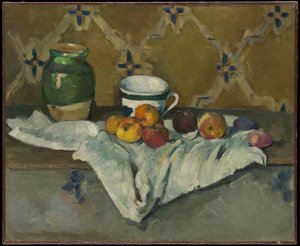 Still Life with Jar, Cup, and Apples - Paul Cézanne
In Still Life with Jar, Cup, and Apples , Paul Cézanne does not merely capture light; he composes it like a silent sonata. Within this 1877 masterpiece, light is a language of texture and weight. The vibrant green ceramic jar stands as a sentinel, its cool tones providing a striking counterpoint to the sun-drenched, rhythmic hues of the apples. These are not just fruits; they are spheres of color, meticulously layered to suggest a three-dimensional presence that anticipates the Cubist revolution.
Cézanne’s deliberate, tactile brushwork bridges the fleeting impressions of his era with a new, geometric rigor. He finds extraordinary beauty in the ordinary—the simple geometry of a white cup and the patterned backdrop weaving a cohesive visual tapestry. This painting is more than a depiction of objects; it is an invitation to experience profound stillness. When this light spills into your home, it does not just illuminate a room; it transforms your walls into portals of inspiration, bringing the structured elegance of Post-Impressionism into the modern day.
The Eternal Woman - Paul Cézanne
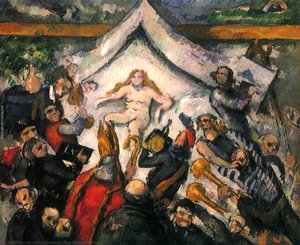 The Eternal Woman - Paul Cézanne
Before the world recognized him as the father of modern art, Paul Cézanne struggled to capture something more permanent than a passing shadow. In The Eternal Woman , we witness this profound metamorphosis. Painted in 1877, this masterpiece serves as a vital bridge, where the fleeting light of Impressionism begins to solidify into the structural, geometric foundations that would later define Cubism. The central figure, enveloped in an enigmatic atmosphere, is surrounded by a fragmented assembly of musicians and thinkers, their forms built through meticulous layers of color and rhythmic, deliberate brushstrokes. It is not merely a scene of admiration; it is a study in architectural depth and symbolic weight. To feature such a work within a modern study or home office is to invite that same disciplined, visionary focus into your professional sanctuary, fostering an atmosphere of intellectual ambition and timeless aesthetic grace.
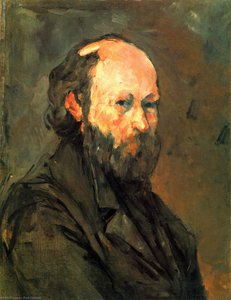
Self-Portrait - Paul Cézanne
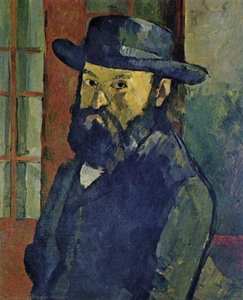 Self-Portrait - Paul Cézanne
When you encounter the Self-Portrait of 1882, you are not merely observing a likeness; you are meeting the architect of modern vision. In this pivotal work, light is far more than mere illumination—it is a language . Cézanne did not simply paint light; he composed it , much like a master musician crafting a complex, emotive sonata.
Observe the way the diffused glow from the window settles upon his features, caught within the rhythmic, textured brushstrokes of his beard and hat. The deliberate placement of the red door and the structured chairs reveals his transition from Impressionist fleetingness toward a more permanent, geometric reality. This masterpiece stands among the top 25 artworks of Paul Cézanne because it does not just reflect light; it invents it .
Now, open your eyes. That very light, captured through his revolutionary gaze, is waiting to spill into your home, transforming your walls into profound portals of inspiration and timeless elegance.
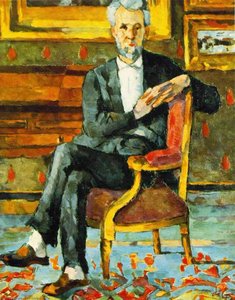
Portrait of Gustave Geffroy - Paul Cézanne
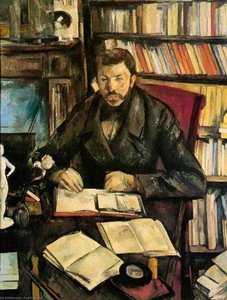 Portrait of Gustave Geffroy - Paul Cézanne
Before the world recognized his monumental genius, Paul Cézanne found an unlikely ally in the critic Gustave Geffroy, whose unwavering advocacy prompted this profound gesture of gratitude. In this Portrait of Gustave Geffroy , we witness the artist’s transition from capturing fleeting light to constructing a structural reality. Rather than a mere likeness, Cézanne employs meticulous, repetitive brushstrokes and subtle tonal shifts to build volume and presence, transforming the subject's study into a landscape of intellectual rigor. The scattered books and quiet greenery serve as symbols of deep contemplation, rendered with a tactile depth that defies simple representation.
As one of the top 25 artworks of Paul Cézanne , this piece embodies a sense of permanence and scholarly weight. Its balanced, triangular composition and rich textures are ideal for those seeking to inspire a productive, sophisticated atmosphere within a modern home office or private study.
Basket of Apples - Paul Cézanne
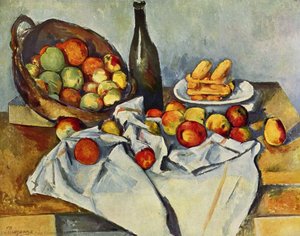 Basket of Apples - Paul Cézanne
What story does the quiet, draped table in Basket of Apples by Paul Cézanne tell us about the profound beauty hidden within the mundane? This masterpiece does more than capture a simple still life; it serves as a revolutionary manifesto of form. Emerging at a pivotal moment in art history, Cézanne broke away from the fleeting, light-drenched impressions of his predecessors to seek the permanent, geometric essence of reality—a structural breakthrough that paved the way for the Cubist movement. Through visible, expressive brushstrokes , he breathes life into the warm reds of the fruit and the cool, atmospheric blues of the cloth, creating a sculptural depth that feels both tactile and timeless. For the modern collector, integrating this piece into a curated space offers a sophisticated escape, bringing a sense of historical weight and tranquil permanence to your home. As one of the top 25 artworks of Paul Cézanne , it remains an indispensable cornerstone for any refined interior.
Uncle Dominique as a Lawyer - Paul Cézanne
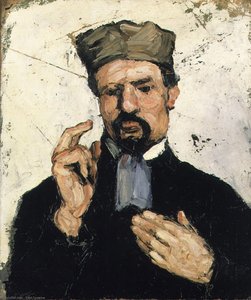 Uncle Dominique as a Lawyer - Paul Cézanne
In the grand tapestry of the top 25 artworks of Paul Cézanne , Uncle Dominique as a Lawyer serves as a profound window into the artist's formative years. Painted in 1866, this portrait transcends mere familial tribute; it captures the tension between the heavy traditions of the past and the burgeoning structural revolution that would later define modern art. Through the somber, muted tones and the subject’s introspective, upward gaze, Cézanne invites us to contemplate the quiet dignity found in moments of deep reflection.
The work's mastery lies in its early use of thick impasto and a palette of deep browns and blacks, hinting at the geometric precision that would eventually birth Cubism. For the discerning collector or interior designer, this piece offers an unparalleled sense of gravity and historical weight. It is a timeless addition to any curated space, providing a sophisticated, soulful anchor that bridges the gap between classical portraiture and the avant-garde.
untitled (7260) - Paul Cézanne
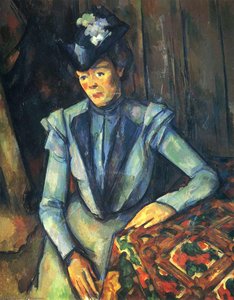 untitled (7260) - Paul Cézanne
In the quietude of untitled (7260) , Paul Cézanne captures a moment where time seems to hold its breath, suspended in a sea of cerulean and indigo. This work earns its place among the top 25 artworks of Paul Cézanne through its masterful ability to bridge the ephemeral beauty of Impressionism with a profound, structural permanence. The sitter, adorned in a floral-embellished hat and a deep blue dress, is not merely a portrait but an architectural study of color and form. One can almost feel the tactile energy of the impasto brushstrokes, where thick layers of pigment create ridges that catch the light, lending a physical weight to her serene repose. The cool palette whispers of introspection, turning the canvas into a rhythmic arrangement of shapes and shadows. For the discerning collector or interior designer, this piece serves as a sophisticated anchor for a modern interior, bringing an atmosphere of tranquil dignity and historical depth to any curated space.
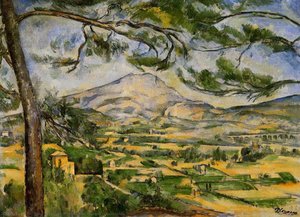
Landscape with Viaduct - Mont Sainte-Victoire - Paul Cézanne
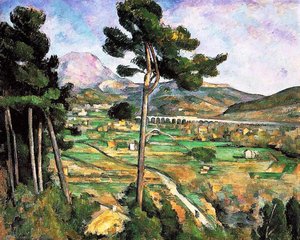 Landscape with Viaduct - Mont Sainte-Victoire - Paul Cézanne
In Landscape with Viaduct - Mont Sainte-Victoire by Paul Cézanne, the deep, earthy ochres and mossy greens evoke a mood of profound permanence and grounded serenity. This work is a cornerstone of the top 25 artworks of Paul Cézanne because it transcends simple scenery; it is a masterclass in using color to construct reality. By replacing fleeting light with structured, rhythmic planes of pigment, Cézanne captures the very bones of the landscape.
For the sophisticated homeowner or interior designer, this painting serves as an exquisite anchor for a modern living space or dining room. The muted, organic palette can be used to curate an atmosphere of quiet prestige, bringing a sense of historical weight and architectural stability to a room. Whether paired with minimalist decor or classic furnishings, the painting's ability to balance rugged nature with human engineering provides a timeless, soulful focal point that elevates any curated collection.
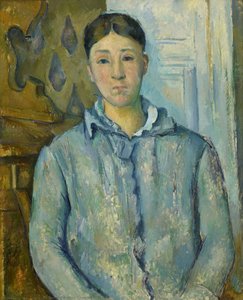
Madame Cezanne in a Yellow Chair - Paul Cézanne
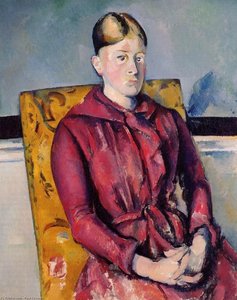 Madame Cezanne in a Yellow Chair - Paul Cézanne
In Madame Cezanne in a Yellow Chair , Paul Cézanne orchestrates a masterful symphony of geometric stability. The composition is anchored by the striking, vibrant yellow armchair, which serves as a focal point of structural weight against the deep, rhythmic planes of the mottled blue wall and dark red wainscoting. There is a profound sense of balance here; the heavy, impasto strokes and the deliberate placement of forms—the solid silhouette of Hortense Fiquet set against architectural elements—create a feeling of timeless permanence. This meticulous arrangement of shapes and colors is precisely why this piece remains a cornerstone among the top 25 artworks of Paul Cézanne .
Beyond its historical significance, the painting’s internal harmony resonates deeply with the principles of modern minimalist design. Its clean, structured aesthetic and bold color blocking offer a sophisticated grounding for contemporary interiors, proving that Cézanne's revolutionary vision continues to inform the elegant, uncluttered beauty of today's most refined spaces.
Bather and Rocks - Paul Cézanne
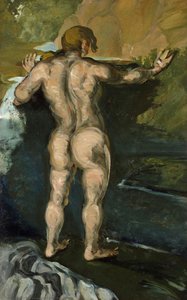 Bather and Rocks - Paul Cézanne
Close your eyes. Can you feel the cool, damp air and the heavy, sun-warmed stone in Bather and Rocks by Paul Cézanne?
It is not merely light hitting a surface; it is a language . The artist did not simply paint the scene; he composed its very weight. In this pivotal 1866 work, Cézanne begins his revolutionary journey, moving away from fleeting impressions toward a structured, geometric reality. A solitary figure stands anchored by monumental rocks, where blues, greens, and ochres are layered with thick, deliberate brushstrokes to define volume rather than just shadow.
As a cornerstone of the top 25 artworks of Paul Cézanne , this piece does not just reflect light—it invents it, breaking the landscape into the fundamental cylinders and spheres that would later inspire Cubism. Now, open your eyes. That profound sense of permanence is waiting to spill into your home, turning a simple wall into a portal of timeless inspiration.
View of Auvers-sur-Oise - Paul Cézanne
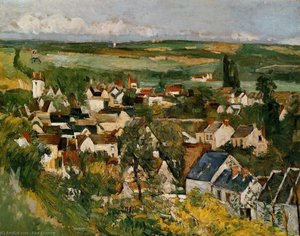 View of Auvers-sur-Oise - Paul Cézanne
In View of Auvers-sur-Oise , time seems to pause, capturing the quiet, rhythmic pulse of the French countryside as if frozen in a moment of eternal stillness. This masterpiece stands prominently within the top 25 artworks of Paul Cézanne because it marks the profound transition from the fleeting light of Impressionism to the structured, geometric soul of Cubism. It is not merely a landscape; it is an architectural reconstruction of nature.
Through a muted palette of earthy ochres, deep greens, and soft blues, Cézanne breathes life into the village, using deliberate, layered brushstrokes to transform houses into interlocking volumes and trees into textured planes. The light does not just illuminate; it shapes the very substance of the earth. For the discerning collector, this piece brings a sense of structured tranquility to a modern interior, offering a sophisticated focal point that invites contemplation and celebrates the enduring beauty of form and color.
A Turn in the Road - Paul Cézanne
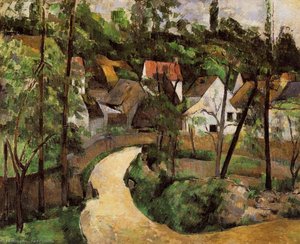 A Turn in the Road - Paul Cézanne
In A Turn in the Road , the deep, mossy greens establish a mood of enduring tranquility, grounding the viewer in the quiet, rhythmic pulse of the French countryside. Cézanne’s innovative use of this muted palette—interwoven with earthy browns and soft, atmospheric blues—is precisely what secures its place among the top 25 artworks of Paul Cézannee . Rather than merely capturing fleeting light, he utilizes these tones to construct a sense of geometric solidity, transforming a simple country lane into a monumental study of form and weight.
For the discerning collector or interior designer, this painting offers an unparalleled opportunity to curate emotional depth within a modern space. The organic, earthy color scheme serves as a sophisticated anchor for a contemporary dining room or a serene living area, effortlessly harmonizing with natural textures like linen or dark wood to provide a window into a world of structured, painterly elegance.
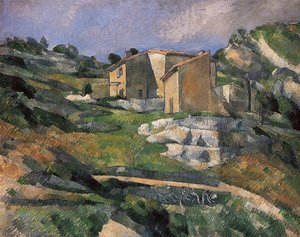
Houses in Provence - Paul Cézanne
 Houses in Provence - Paul Cézanne
At Mus3ums, we believe that the profound beauty of history’s greatest masterpieces should never be confined to museum walls; our mission is to democratize this elegance, making the sublime accessible to every discerning collector. Houses in Provence by Paul Cézanne earns its prestigious place among the top 25 artworks for its revolutionary role in bridging the fleeting light of Impressionism with the structural rigor of Cubism.
In this 1880 masterpiece, Cézanne moves beyond mere representation to capture the very architecture of perception, using rhythmic, layered brushstrokes to define the sun-drenched buildings and the enduring presence of Mont Sainte-Victoire. The painting’s harmonious balance of earthy textures and geometric stability offers a timeless tranquility that breathes life into contemporary interiors, serving as a sophisticated anchor for modern design. Through our meticulous, hand-painted oil reproductions, you can bring this transformative, museum-grade presence into your own home, office, or private gallery, ensuring Cézanne’s visionary spirit remains a living part of your personal collection.
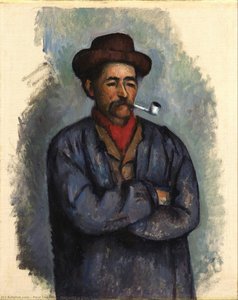
Man with a Pipe (L - Paul Cézanne
 Man with a Pipe (L - Paul Cézanne
A profound stillness settles over the canvas in Man with a Pipe (L) , where time seems to pause amidst the quiet breath of a Provencal afternoon. This masterpiece earns its prestigious place among the top 25 artworks of Paul Cézanne by masterfully bridging the gap between the fleeting light of Impressionism and the structural revolution of Cubism. The painting invites a sensory journey; one is drawn to the tactile depth of his rhythmic brushstrokes, where earthy, grounded browns are punctuated by a sudden, vibrant flash of vermilion in the subject's scarf. Cézanne does not merely paint a man; he sculpts form through color, using geometric planes to create an enduring sense of weight and permanence. For the modern connoisseur, integrating such a piece into a curated space brings an atmosphere of contemplative sophistication and architectural calm, offering a timeless connection to the very foundations of modern art.
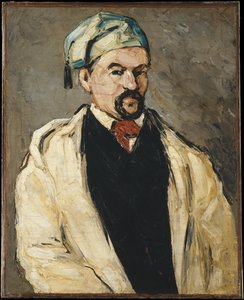
Antoine Dominique Sauveur Aubert (born 1817), the Artist's Uncle - Paul Cézanne
 Antoine Dominique Sauveur Aubert (born 1817), the Artist's Uncle - Paul Cézanne
Imagine stepping into a quiet, sun-drenched studio in Aix-en-Provence, where the air is heavy with the scent of linseed oil and the weight of family legacy. In this 1866 portrait, Cézanne captures his uncle, Antoine Dominique Sauveur Aubert, not merely as a relative, but as a profound study in emerging structure.
The work vibrates with a "gutsy" energy; rather than the polished finish of traditional academic portraiture, we encounter the raw, tactile application of paint via palette knife on coarse canvas. A striking blue cap with a delicate tassel provides a sudden splash of color against a muted gray backdrop, while a vibrant red tie pierces through the dark jacket and crisp white shirt, creating a captivating tension between light and shadow.
As a pivotal piece within the top 25 artworks of Paul Cézanne , this portrait offers an undeniable sense of presence. Its textured, sculptural quality brings an architectural depth to a sophisticated modern interior, inviting a moment of quiet reflection and a direct connection to the very foundations of modern art.
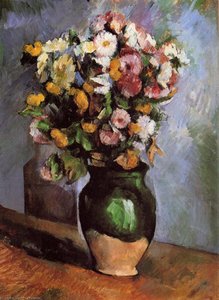
Flowers in an Olive Jar - Paul Cézanne
 Flowers in an Olive Jar - Paul Cézanne
What if I told you that Flowers in an Olive Jar by Paul Cézanne was born from a moment of rebellion—a stroke of defiance against the ordinary? This is not merely a still life; it is a manifesto . Its place in our top 25 artworks is not just earned; it is demanded by history. In this 1880 masterpiece, Cézanne transcends the fleeting impressions of his era, using vibrant pinks and the deep, earthy tones of an olive jar to construct a world of permanent, geometric beauty.
Now, imagine this profound interplay of color and structure hanging in your private study or a grand salon, turning every glance into a moment of reflection. At Mus3ums, we specialize in bringing this level of museum-grade excellence to your doorstep. Through our meticulous hand-painted oil reproductions, we ensure that the revolutionary spirit of Post-Impressionism becomes a living, breathing part of your personal sanctuary, transforming any room into a curated gallery.
Conclusion
As we step out from the quiet halls of this retrospective, leaving the soft glow of the gallery behind, the true magic of Cézanne’s work begins to settle. His canvases do not merely capture a moment in time; they hold the very pulse of the earth, vibrating with a structural permanence that defies the passing years. To look upon his mountains and still lifes is to realize that these are not mere historical treasures, but living presences—whispers of color and form that continue to shape our perception of beauty and strength today. They offer an invitation to find order in the organic and soul in the geometric, bridging the gap between the fleeting impression and the eternal. We invite you to carry this sense of wonder into your own surroundings and explore the enduring legacy found within our full collection .