
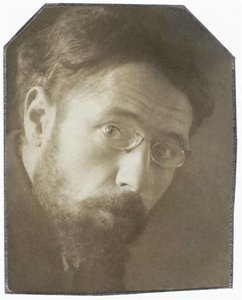

The first museum dedicated to Pierre Bonnard
Located in Le Cannet, France, the musée Bonnard occupies a space of singular importance for those who follow the evolution of modern painting. It holds the distinction of being the first museum in the world dedicated entirely to the work of Pierre Bonnard. The institution was awarded the Musée de France label in December 2006, a recognition of its specialized focus and its role in preserving the legacy of the artist.
The museum opened its doors to the public in June 2011. It is situated near Le Bosquet, the area that became a central part of the artist's life and surroundings. This proximity to the landscape that shaped his later years allows the museum to exist in a direct relationship with the light and colors of the region.
The architecture of the Saint-Vianney hotel
The museum occupies the Hôtel Saint-Vianney, a building that remains a witness to the Belle-Époque architecture of Le Cannet. The structure offers a sense of permanence, its walls having been restored and adapted to house these collections. The space is organized across five levels, creating a vertical progression through the site.
Within these levels, the layout includes dedicated exhibition rooms where the light of the Mediterranean finds its way into the viewing spaces. Beyond the primary galleries, the building contains a projection room and a pedagogical room, allowing for different ways of experiencing the artist's presence. The architecture provides a quiet framework for the works, much like the private spaces the artist once inhabited in the hills of the South.
The collections and artistic inspiration
The collections focus primarily on the period between 1922 and 1947, a time when the artist found a profound connection to the light and landscapes of the South of France. This era, centered around the residence in Le Cannet, provided the visual language for much of the late-career work. The museum explores the specific universe and the various sources of inspiration that shaped this period, tracing how the Mediterranean environment influenced the painter's perception of color and form.
The presence of the artist is felt through the nearly 300 works created in Le Cannet. These paintings capture the particularity of the local light and the shifting atmosphere of the hills. The works reflect a departure from strict reality, opting instead to combine color and light in a way that feels both personal and detached from the everyday. The influence of the surrounding landscape is constant, appearing in the way light modulates across surfaces and how the colors of the Mediterranean are translated onto canvas.
The museum holds several significant pieces that illustrate this relationship with the local environment:
- Vue du Cannet, 1925
- La Promenade des nourrices (Cannet Landscape on a Windy Day), 1922
- Southern landscape in mistral weather, 1922
Masterpieces and notable works
The presence of the artist's vision is felt most strongly in the works that capture the specific light of the South. Vue du Cannet (1925) offers a study of the hillside, where the houses seem to tumble down the slope, modulated by the shifting effects of the Mediterranean sun. This work demonstrates a particular mastery of color, using subtle variations of reds, violets, and blues to define the landscape. Nearby, La Promenade des nourrices (1922) provides a glimpse into the atmosphere of the period when the artist first began to settle into this environment.
Interior and exterior spaces often merge in these canvases. L’Atelier au Mimosa, Baignoir and L’Amandier exist as quiet observations of light and form. These pieces reflect a pictorial expression that moves away from strict reality, favoring a composition where color and light take precedence. The works held here allow for a close study of how the artist translated the intense, contrasting light of the French Riviera into a private, personal language of pigment.
- Vue du Cannet (1925)
- La Promenade des nourrices (1922)
- L’Atelier au Mimosa, Baignoir
- L’Amandier
Exhibitions and cultural activities
The museum presents a series of thematic exhibitions that explore the nuances of the artist's vision. Past and present displays have included Bonnard et Le Cannet, Dans La Lumière de La Méditerranée, and Entre Chiens et Chats. Bonnard et l’animalité has examined the presence of animals in his work, while other exhibitions have focused on specific relationships, such as Bonnard/Vuillard or the influence of Henri Manguin in Henri Manguin. Un fauve chez Bonnard has also been part of the museum's programming.
Beyond the permanent collections, the space functions as a place for active engagement through various workshops. For children and families, the museum organizes sessions designed to foster familiarity with art from an early age. Adults can participate in Parenthèse d'Art, a dedicated workshop series. These sessions allow for the exploration of drawing and color, providing a space to practice the specific techniques employed by the artist.


