
Introduction
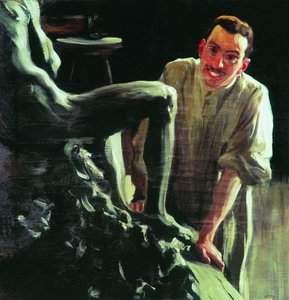
Russian realist painters captured the soul of a changing nation by turning their gaze toward the truth of everyday life. During the 19th and early 20th centuries, these artists moved away from idealized, mythological subjects to embrace the raw, unvarnished reality of the people, the vast landscapes, and the social complexities of their homeland. Rather than embellishing their subjects to fit a grand narrative, they sought to document the world exactly as it was, finding profound beauty in the quiet dignity of a peasant's labor or the sweeping, melancholic light of the Russian countryside.
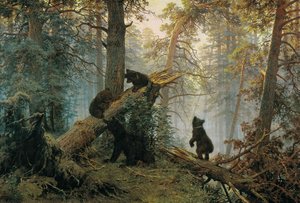
This movement was deeply intertwined with the cultural awakening of the era, reflecting a period of intense social thought and a desire for artistic honesty. By focusing on the tangible—the texture of a heavy wool coat, the specific play of light through a forest canopy, or the weary expression of a worker—these painters bridged the gap between the canvas and the human experience. Their work served as a mirror to a society in transition, capturing moments of both profound struggle and serene natural majesty.
Today, these works remain deeply resonant because they speak to the universal human condition. The emotional depth found in their brushwork and the sincerity of their compositions continue to captivate viewers, offering a sense of timelessness that transcends the era in which they were painted. As we walk through this collection, we will encounter the masters who defined this era, including the landscape visionary Ivan Shishkin, the soulful portraitist Ivan Kramskoi, and the vibrant storyteller Boris Kustodiev, each contributing a unique chapter to the rich tapestry of Russian realism."
Ivan Shishkin
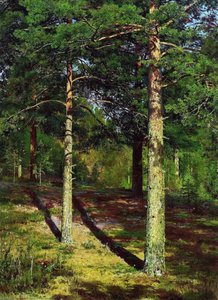 The Sun lit Pines - Ivan Shishkin
Ivan Shishkin stands as a monumental figure among Russian realist painters, a master who dedicated his life to capturing the raw, unadorned majesty of the natural world. Born in 1832 in Yelabuga to a merchant family, his journey from the First Kazan Boys' Gymnasium to the Saint Petersburg Imperial Academy of Arts shaped a precision that defined his career. Under the guidance of Professor Sokrat Vorobyov and bolstered by an imperial scholarship that allowed him to study in Munich and Switzerland, Shishkin developed a technical mastery that elevated landscape painting to a profound study of truth.
His work is a cornerstone of the Realism movement because he eschewed romanticized idealization in favor of meticulous naturalism. He did not merely paint trees; he rendered the very soul of the forest, focusing on the intricate textures of bark, the play of light through needles, and the vastness of the Russian wilderness. His 1886 masterpiece, The Sun-lit Pines, exemplifies this approach. In this work, the dappled sunlight and the diagonal composition of towering conifers create a sense of tranquil awe, inviting the viewer to experience the forest exactly as it exists in nature.
Boris Kustodiev
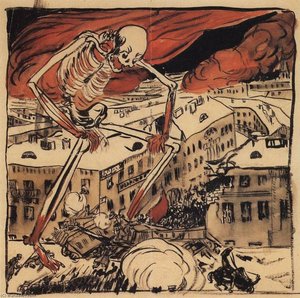 Moscow in 1905 - Boris Kustodiev
Boris Kustodiev stands as a vital figure among Russian realist painters due to his unparalleled ability to document the social fabric and shifting political tides of his era. While his work often dances on the edge of Art Nouveau with its vibrant color palettes, his core remains firmly rooted in the realist tradition of portraying the lived experience of the people. His childhood in Astrakhan, spent observing the lively customs and traditions of the merchant class, provided him with a profound understanding of the everyday life that defines the realist movement.
In his evocative work, Moscow in 1905, Kustodiev demonstrates this mastery by capturing a moment of intense historical upheaval. Rather than idealizing the scene, he presents a gritty, dramatic vision of a city in turmoil. The composition uses powerful symbolism—such as a skeletal figure brandishing a red flag amidst urban rubble—to confront the viewer with the raw reality of revolutionary fervor. Through his training at the Imperial Academy of Arts, Kustodiev developed a technical precision that allowed him to balance the chaotic energy of the streets with a sophisticated handling of light and shadow, ensuring his depictions of social reality remained both visceral and deeply human.
Vasily Surikov
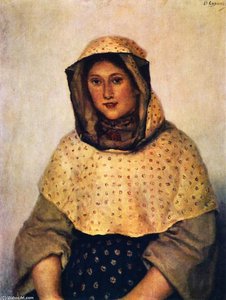 T. Domozhilova - Vasily Surikov
In the evocative portrait T. Domozhilova, we encounter the profound sense of intimacy and quiet dignity that defines much of the era's psychological depth. The subject’s direct gaze and the delicate interplay of light across her features create a compelling connection, while the rich, tactile textures of her shawl demonstrate a masterful command of oil paint. This ability to capture the spirit of a person through subtle expression and meticulous detail is a hallmark of his approach to the human form.
Vasily Surikov (1848–1916) stands as a monumental figure among Russian realist painters, known for his ability to translate the soul of a nation onto canvas. His work is characterized by an unwavering commitment to portraying the realities of Russian life, moving beyond mere visual representation to explore the profound emotional resonance of historical and social truths. Born in Siberia, his formative years deeply influenced his dedication to depicting the honest, unvarnished realities of rural society. After honing his skills at the St. Petersburg Academy of Arts under masters like Ivan Kramskoy, Surikov became a leading voice in the Realism movement. He specialized in grand, dramatic historical canvases that captured pivotal moments of national identity, utilizing a sophisticated understanding of light, color, and atmosphere to bring the complexities of the Russian past to life.
Nikolai Ge
 Portrait of Nikolai Nekrasov - Nikolai Ge
Nikolai Ge (1831–1894) occupies a profound space in the Russian realist movement, bridging the gap between strict academic precision and a deep, philosophical exploration of the human soul. His work is instantly recognizable through its dramatic use of light and a somber, contemplative atmosphere. Unlike artists who sought to idealize their subjects, Ge utilized the realist approach to capture the psychological weight of his figures, often employing a chiaroscuro-like technique where light emerges from a dark, indistinct void to illuminate the textures of skin, fabric, and expression.
His mastery of the medium is exemplified in the 1872 Portrait of Nikolai Nekrasov. In this piece, Ge moves beyond mere physical likeness to achieve a study in substance and stillness. The subject is enveloped in heavy, dark tones and muted earth colors, with light falling sharply across the forehead and eyes to create an intimate, almost heavy air. This focus on the internal life of the individual, rendered with precise brushwork and a restrained palette, defines his contribution to realism. Whether through his religious commissions or his intimate portraits, Ge’s art remains a quiet, powerful testament to the dignity of the human experience.
Ivan Kramskoi
 Portrait of Empress Maria Feodorovna - Ivan Kramskoi
A monumental figure in the history of Russian art, Ivan Kramskoi (1837–1887) served as the intellectual soul of the Realism movement. His commitment to portraying life exactly as it was—unvarnished and truthful—led him to spearhead the historic "Revolt of Fourteen" against the restrictive standards of the St. Petersburg Academy of Arts. This act of defiance helped pave the way for the Peredvizhniki, or Wanderers, a movement dedicated to bringing art to the people and reflecting the social realities of the era. Unlike those who sought to idealize their subjects, Kramskoi believed art held a moral duty to champion social truth, a principle that deeply influenced his contemporaries.
His technical mastery is perhaps most elegantly captured in his 1881 work, Portrait of Empress Maria Feodorovna. In this piece, he demonstrates the height of academic realism through a meticulous devotion to texture and light. The painting presents a study of imperial dignity, where the crispness of fine lace and the brilliant glint of pearls emerge from a somber, dark background. Through precise anatomical accuracy and a sophisticated use of high-contrast lighting, Kramskoi transforms a formal likeness into a profound reflection of an era's quiet luxury and regal presence.
Konstantin Makovsky
 Peter the Great in His Studio - Konstantin Makovsky
Konstantin Makovsky (1839–1915) was a central figure in the evolution of Russian art, bridging the gap between academic tradition and the raw, narrative power of the Realism movement. Born into a creative Moscow family, his talent was evident early, leading him to the Moscow School of Painting, Sculpture, and Architecture at age twelve. Under the guidance of masters like Karl Bryullov, Makovsky developed a sophisticated command of light and composition that would later define his most celebrated works. His involvement in the historic "Revolt of the Fourteen" in 1863 marked a pivotal shift in his career, steering him toward the Peredvizhniki (Wanderers) circle and a commitment to depicting the authentic essence of Russian life.
Makovsky’s contribution to Realism lies in his ability to elevate everyday scenes and historical moments into profound psychological studies. In his representative work, Peter the Great in His Studio, he eschews the grandiosity of imperial portraiture to focus on the grit of labor. Through masterful chiaroscuro, he captures the Tsar as a focused apprentice, surrounded by the textures of wood shavings and parchment. This focus on the human condition and the tactile reality of a moment is what secures his legacy among the great Russian realist painters.
Nicholas Chevalier
 Memorandum of the Start of the Exploring Expedition - Nicholas Chevalier
Nicholas Chevalier represents a unique facet of the Russian realist tradition, bringing a cosmopolitan perspective to the movement's commitment to truthful, unembellished observation. Born in St. Petersburg in 1828, his Russian heritage and early life in the imperial capital provided the foundation for a career that would eventually bridge the gap between European academic precision and the rugged realities of colonial landscapes. His work aligns with the realist ethos through its dedication to documenting the tangible world—whether it be the social hierarchies of a formal expedition or the vast, unadorned textures of a new frontier.
In his 1860 masterpiece, Memorandum of the Start of the Exploring Expedition, Chevalier demonstrates the technical mastery acquired during his studies in Lausanne and Munich. The painting is a profound study of human ambition set against the indifferent expanse of the desert. Rather than romanticizing the journey, he captures the grit and atmospheric tension of the moment, from the dust kicked up by horses to the specific, everyday details of the travelers' attire. Through his precise rendering of light and landscape, he transforms a historical tableau into a living, breathing moment of exploration.
Vladimir Makovsky
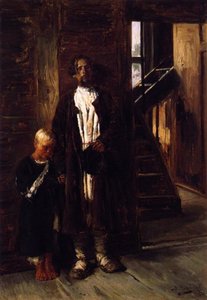 Off to Get Medicine - Vladimir Makovsky
Vladimir Makovsky (1846–1920) was a cornerstone of the Peredvizhniki movement, a group dedicated to bringing art to the people through honest, unvarnished depictions of life. Born into a distinguished artistic dynasty in Moscow, Makovsky’s training at the Moscow School of Painting, Sculpture, and Architecture provided the technical foundation for a career defined by social responsibility. Rather than pursuing the idealized subjects favored by imperial academies, he chose to use his canvas as a mirror for the complexities of 19th-century Russian society.
His place within the Russian realist movement is cemented by his ability to blend rustic humor with profound social observation. He eschewed the dramatic flourishes of Romanticism to focus on the quiet dignity of the peasantry and the subtle ironies of urban existence. In his poignant work, Off to Get Medicine (1884), Makovsky exemplifies this commitment to truth. Through a soft, diffused light, he captures a tender yet melancholic moment of a father escorting his unwell son from a modest, sparsely furnished room. By focusing on the worn textures of everyday life and the genuine expressions of his subjects, Makovsky transformed the mundane into a powerful medium for human connection.
Alexei Harlamov
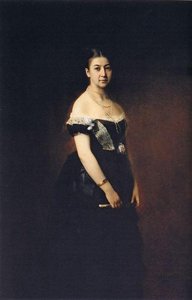 Portrait of E. A. Tretyakova - Alexei Harlamov
Alexei Harlamoff’s journey from a humble family of serfs near the Volga River to the prestigious salons of Paris is a profound testament to the transformative power of talent. His ascent through the Imperial Academy of Arts in Saint Petersburg provided him with a rigorous classical foundation, but it was his deep engagement with the Old Masters that truly defined his vision. By studying the works of Rembrandt in Paris, Harlamoff learned to marry the dramatic chiaroscuro of the Dutch tradition with a delicate, emotive sensibility, a hallmark of his contribution to the Russian Realism movement.
His 1875 Portrait of E. A. Tretyakova serves as a masterful example of this stylistic fusion. In this work, Harlamoff moves beyond mere likeness to capture the quiet dignity and unspoken narratives of the Russian elite. He utilizes a sophisticated play of light and shadow to envelop his subject in an atmosphere of mystery and intimacy. This ability to depict ordinary human emotion and character with such psychological depth and technical precision is precisely why Harlamoff remains a vital figure among Russian Realism painters, bridging the gap between classical tradition and the soulful, observational truth of the late 19th century.
Viktor Vasnetsov
 Russian Bishops - Viktor Vasnetsov
Viktor Vasnetsov (1848–1926) occupies a singular space within the Russian realist movement by bridging the gap between the tangible world and the mystical soul of the nation. While his early training at the Imperial Academy of Arts in St. Petersburg and his engagement with the Peredvizhniki (Wanderers) movement grounded him in the realist tradition of depicting peasant life, Vasnetsov evolved to infuse this realism with the epic spirit of Russian folklore and Byzantine-inspired mythology. He did not merely paint scenes; he reconstructed the cultural identity of his people through a lens of historical truth and spiritual depth.
His mastery is perhaps most profoundly felt in his ability to render the weight of tradition and the texture of sacred history. In his evocative work, Russian Bishops, Vasnetsov demonstrates this unique intersection of styles. The painting captures a solemn assembly of clergy, where the heavy, ornate textures of their vestments and the architectural grandeur of the Orthodox church are rendered with a meticulous, realist precision. By anchoring these figures in a specific, recognizable cultural landscape, he elevates a historical moment into something timeless, blending the earthly presence of the men with the ethereal atmosphere of their faith.
Conclusion
The legacy of these masters lies in their ability to capture the profound truth of the human experience, whether through the quiet majesty of a vast landscape or the intimate, unvarnished details of daily life. From the sweeping, atmospheric forests of Shishkin to the vibrant, soulful character studies of Kustodiev, these artists moved beyond mere decoration to find the extraordinary within the ordinary. They did not seek to idealize their subjects, but rather to honor the authentic textures of reality, creating a visual language that remains deeply resonant today.
Bringing this sense of history and depth into your own home allows you to connect with these powerful narratives on a personal level. Whether you are drawn to the dramatic lighting of a dramatic portrait or the serene stillness of a natural vista, you can explore our full collection to find the piece that speaks to you. We invite you to transform your living space into a gallery of meaning by choosing one of our museum-quality, hand-painted reproductions, crafted by skilled artists to preserve the soul and brushwork of these Russian realist treasures.


