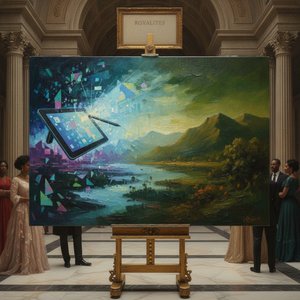
The Language of Non-Objectivity: Deciphering Form, Color, and Texture
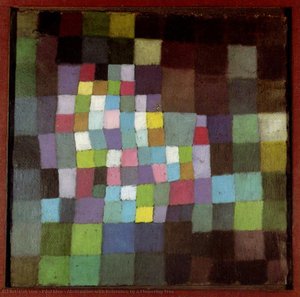
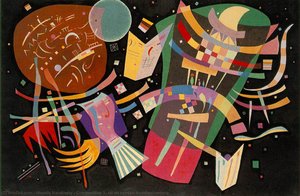
To the uninitiated eye, the abstract canvas may appear as a chaotic departure from the recognizable world; yet, for the discerning collector, it represents a profound return to the fundamental elements of visual language. Abstract art strips away the narrative crutch of figuration, demanding that the viewer engage directly with the raw vocabulary of form, color, and texture. When we move beyond the depiction of a landscape or a portrait, we enter a realm where a single, sweeping line can convey the same gravity as a mountain range, and a sudden burst of crimson can evoke the visceral intensity of a heartbeat. This is not an absence of meaning, but rather a purification of it.
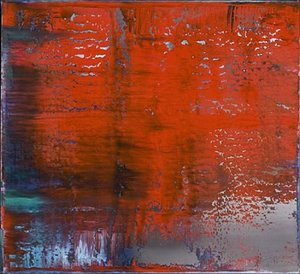
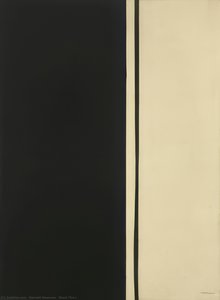
The power of this non-objective language lies in its ability to bypass the intellect and speak directly to the subconscious. Consider the tactile allure of impasto—the thick, sculptural application of paint that creates a physical topography on the canvas. In works such as those by wah wah teh go nay ga bo, the texture itself becomes a protagonist, inviting the eye to wander over ridges and valleys of pigment that catch the light in ever-changing patterns. Similarly, the interplay of weight and void—the tension between a dense, dark mass and an expansive area of white—creates a rhythmic pulse within the composition. By mastering these elemental building blocks, abstract artists construct a silent dialogue that requires no translation, only presence.
The Emotional Resonance of the Canvas: From Abstract Expressionism to Color Field Painting
The history of abstraction is, at its core, a history of human emotion rendered visible. The mid-2chin century witnessed a seismic shift with the rise of Abstract Expressionism, a movement that transformed the canvas from a window into a stage for psychological drama. Artists like Clyfford Still utilized vertical, jagged brushstrokes in works such as PH-535 to evoke a sense of primordial energy and existential struggle. Here, the act of painting is an event; the drips, splatters, and aggressive gestures are traces of a lived moment, capturing a state of being that transcends mere representation.
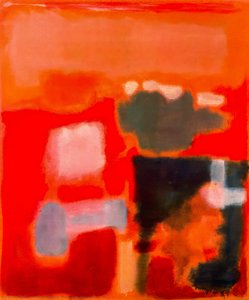
As the movement evolved, the intensity shifted from the gestural to the meditative through Color Field Painting. In this sub-genre, the focus moved away from the "action" of the artist toward the immersive power of expansive color. Collectors often find themselves mesmerized by the works of artists like Willem Joseph Laquy, whose canvases utilize vast planes of hue to envelop the viewer in a state of contemplative stillness. This approach relies on the subtle vibrations between adjacent colors—a phenomenon where a lilac might seem to float atop an Indian blue, creating an optical depth that feels infinite. It is a pursuit of the sublime, where the boundaries between the viewer and the artwork begin to dissolve into a sea of pure pigment.
The Intellectual Architecture of Abstraction: Geometry, Balance, and Composition
While emotion provides the soul of abstraction, geometry and composition provide its skeletal structure. Beneath the surface of even the most fluid works lies a rigorous intellectual architecture designed to guide the eye and maintain equilibrium. The sophisticated collector understands that abstraction is often a study in mathematical harmony and structural tension. Whether it is the calculated precision found in the geometric explorations of Victor Pasmore or the more organic, balanced arrangements of modern masters, the arrangement of shapes is never accidental.
The concept of balance in an abstract work can be achieved through symmetry, yet the most captivating pieces often utilize asymmetrical equilibrium. This involves placing a small, high-contrast element in a corner to counterbalance a large, muted shape on the opposite side, creating a dynamic tension that keeps the viewer’s gaze in constant motion. The use of negative space—the "empty" areas of a painting—is equally vital; it acts as the breath between notes in a musical composition, providing the necessary respite that allows the primary forms to resonate. To study an abstract composition is to witness a silent orchestration of weight, scale, and spatial relationships.
Curating the Unseen: Integrating Abstract Masterpieces into Sophisticated Interiors
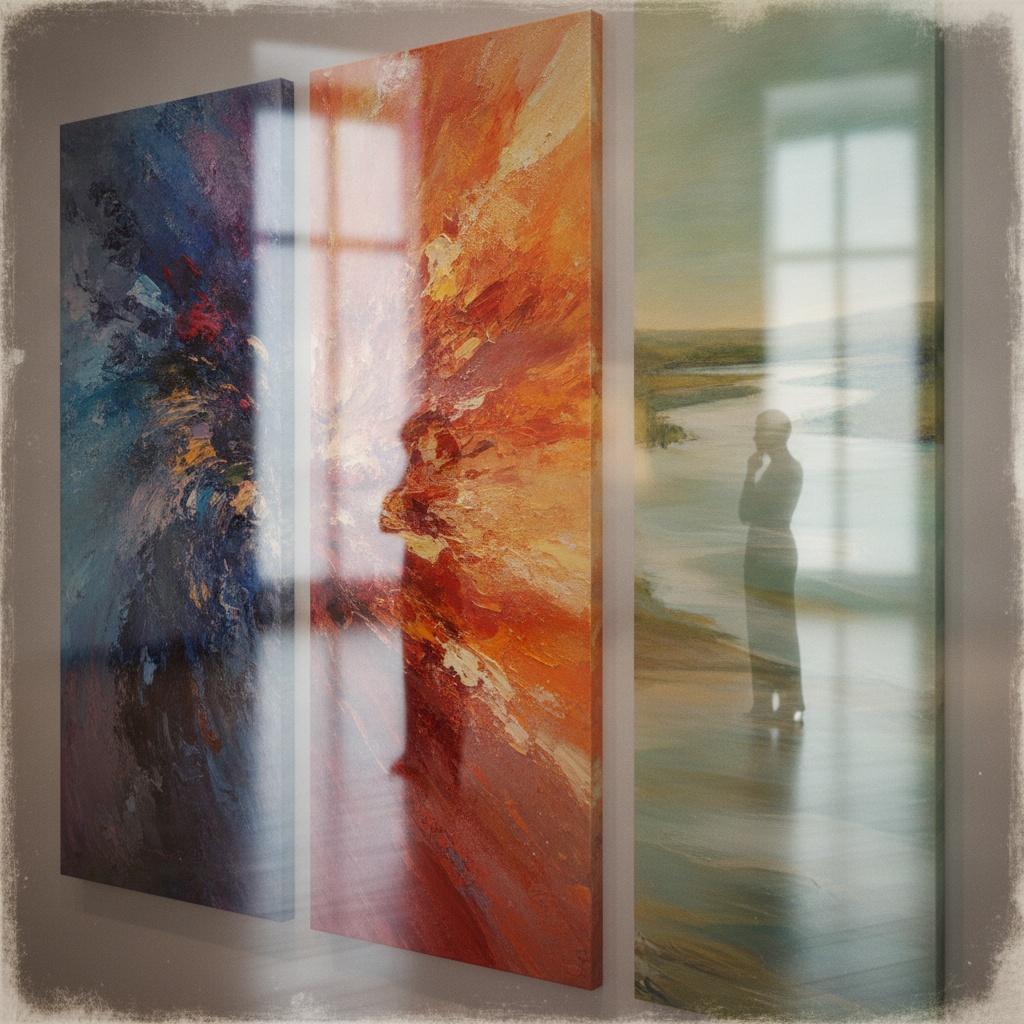
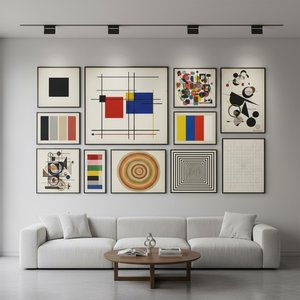
Integrating abstract art into a curated interior requires a delicate balance between boldness and cohesion. An abstract masterpiece does not merely decorate a wall; it defines the atmosphere of a room. For the professional decorator or the private connoisseur, the challenge lies in selecting pieces that complement the architectural language of the space. A large-scale, multi-panel installation—often referred to as a multi-panel trend—can serve as a powerful focal point in a wide hallway or a grand salon, breaking up the monotony of a flat surface and adding a sense of modern movement.
When selecting works, one must consider the existing color palette and the interplay of light within the room. A piece with high-contrast, dark tones can anchor a minimalist space, providing much-needed gravity, while lighter, ethereal compositions can expand the perceived boundaries of a smaller study. The choice of framing also plays a critical role; a gold leaf frame might lend a sense of classical prestige to a contemporary work, whereas a MirrorWrap or ExtendedWrap technique allows the painting to bleed into the very edges of the architecture, creating a seamless, immersive environment. Ultimately, the goal is to create a dialogue between the physical space and the emotional landscape of the art.
The Evolution of Perception: How Abstract Art Redefines the Collector's Experience
For the modern collector, the acquisition of abstract art represents an ongoing journey of perception. Unlike representational art, which offers a fixed subject, abstraction offers an evolving experience; a painting may reveal new depths or different emotional resonances upon every subsequent viewing. This fluidity makes the collection a living entity, one that grows in complexity alongside the collector's own life experiences and changing aesthetic sensibilities.
In an era where technology and tradition intersect, the way we interact with these masterpieces continues to expand. From the ability to reimagine personal photographs through AI-driven stylistic transformations to the meticulous craftsmanship of hand-painted oil reproductions, the boundaries of what can be collected are being redefined. The true value of an abstract collection lies not merely in its market appreciation, but in its capacity to challenge our perceptions, provoke thought, and provide a sanctuary for the imagination. As we continue to explore the "beyond reality" offered by these works, we find that abstraction is perhaps the most honest reflection of the human condition—complex, multifaceted, and infinitely profound.
At Mus3ums.com, we are dedicated to preserving this legacy of human creativity. Whether you are seeking a bespoke commission that transforms a personal memory into an abstract masterpiece or looking to acquire a museum-quality reproduction of a historical icon, our mission is to bring the profound power of fine art to collectors across the globe. Through our commitment to academic excellence and meticulous hand-painted techniques, we ensure that every piece in your collection serves as a lasting testament to the enduring beauty of the abstract spirit.