

The Twilight of Harmony: Transitioning from Renaissance Idealism to Mannerist Tension
To understand the breathtaking departure of Mannerism, one must first sit quietly with the memory of the High Renaissance. For decades, the art world breathed in the balanced air of Leonardo, Raphael, and the early Michelangelo—a period defined by an almost divine pursuit of equilibrium, proportion, and a profound clarity of form. There was a sense that humanity had finally decoded the language of nature, capturing it in its most idealized, harmonious state. Yet, as we move into the 1520s, a subtle tremor began to disturb this serene landscape. The absolute certainty of classical beauty started to feel, to some, like a finished book, its pages exhausted by the very perfection they sought to achieve.
This was not a sudden rebellion, but rather a sophisticated evolution born from a sense of cultural exhaustion and a growing restlessness. The artists who would become the pioneers of Mannerism did not seek to destroy the Renaissance; instead, they sought to transcend it. They looked at the perfect circles and stable pyramids of their predecessors and felt a yearning for something more complex, more intellectually stimulating, and perhaps, more humanly uncertain. It was a shift from naturalism—the faithful imitation of the world—to artifice—the celebration of the artist's subjective vision and technical virtuosity.
The Beauty of Artifice: Exploring Elongated Forms and Sophisticated Compositions
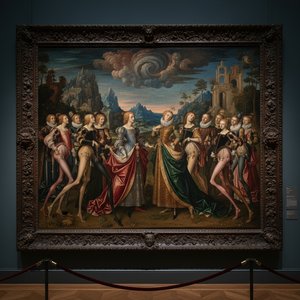
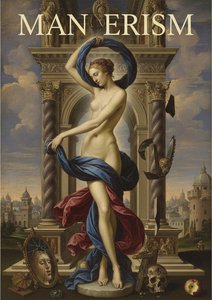
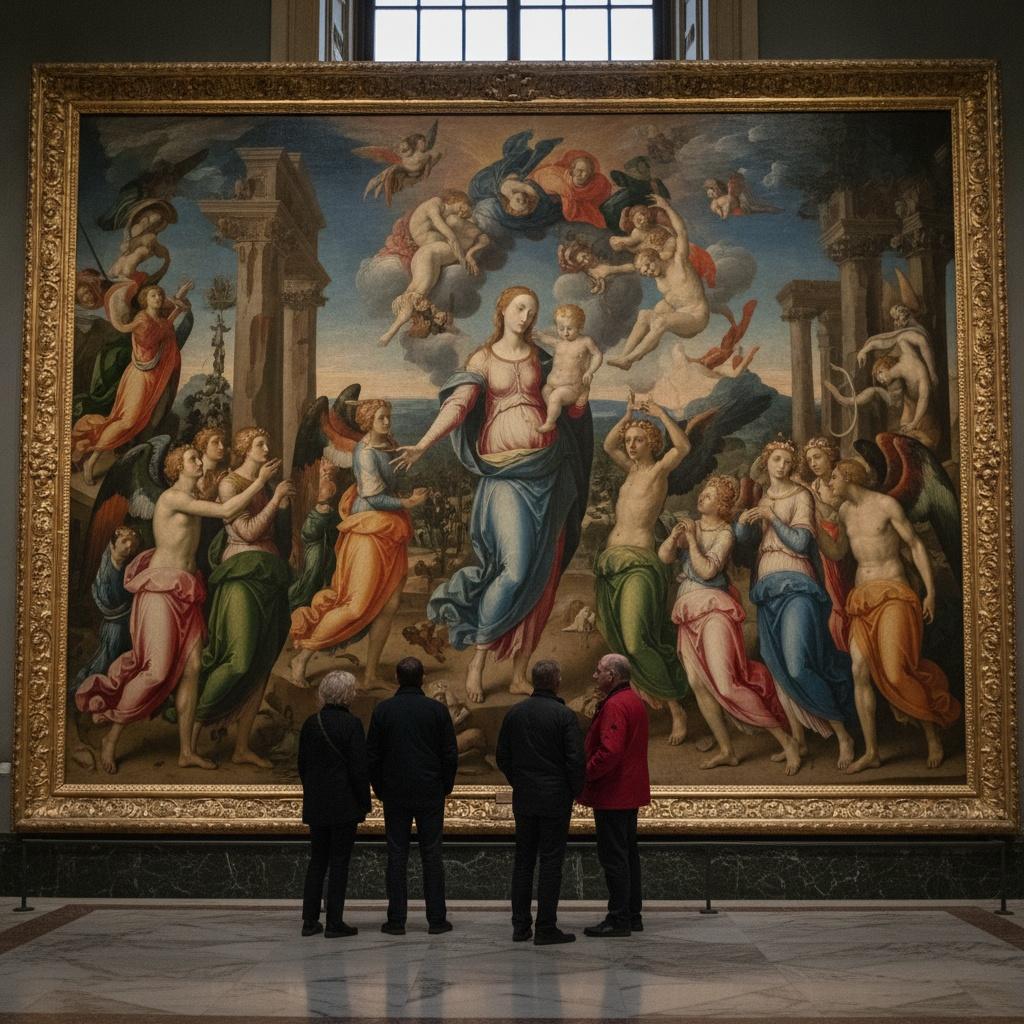
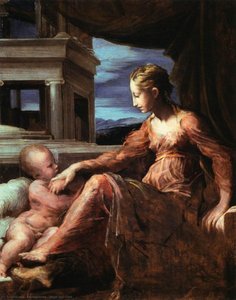
In the hands of a Mannerist master, the human figure undergoes a poetic transformation. The soft, anatomical accuracy of the previous era gives way to an elegant distortion. Limbs become unnaturally elongated, necks stretch with a swan-like grace, and poses twist into the figura serpentinata—a serpentine movement that leads the eye in a continuous, spiraling dance across the canvas. This was not a failure of skill, but a deliberate choice to prioritize grace over gravity. The goal was to achieve an aesthetic of sophisticated elegance, where the beauty lies in the stylized, almost impossible refinement of the subject.
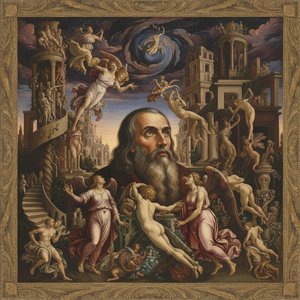
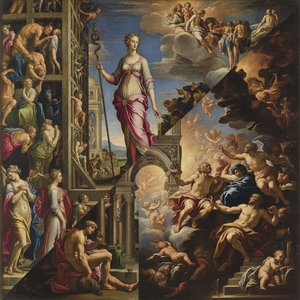
Compositionally, the stability of the Renaissance pyramid is replaced by a sense of dynamic tension and instability. Figures are often crowded into shallow, compressed spaces, or scattered across the canvas in asymmetrical arrangements that defy easy navigation. Colors, too, undergo a metamorphosis; the warm, earthy palettes of the past are frequently exchanged for cool, iridescent, and sometimes jarringly acidic tones. This use of color creates an atmosphere that feels dreamlike and detached from reality, inviting the viewer into a realm where the boundaries between the tangible world and the imaginative spirit begin to blur.
A World of Unease: The Historical Shadows of the Sack of Rome and Political Instability
We must remember that art does not exist in a vacuum; it is the mirror of its era's soul. The transition into Mannerism was deeply shadowed by the profound political and religious upheavals of the 16th century. Perhaps no event cast a longer shadow than the Sack of Rome in 1527. This brutal violation of the Eternal City shattered the cultural and psychological foundations of the Renaissance. The sense of stability, faith in human reason, and the perceived order of the universe were suddenly replaced by a pervasive sense of anxiety, disillusionment, and fragmentation.
This historical instability found its perfect expression in the Mannerist style. The tension in a contorted limb or the unsettling asymmetry of a composition reflected the very real tensions of a Europe torn by conflict and religious reformation. The art became a vessel for the collective unease of an age that could no longer rely on the old certainties. In this way, Mannerism serves as a poignant historical document, capturing the psychological complexity of a society navigating the turbulent waters between the golden age of the Renaissance and the dramatic fervor of the coming Baroque.
Masters of the Unnatural: The Enigmatic Legacies of Parmigianino and Giulio Romano
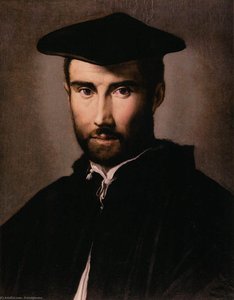
To truly encounter Mannerism, one must gaze upon the works of its most captivating protagonists. Consider the enigmatic Parmigianino, a painter whose life was as whirlwind and complex as his canvases. A pivotal bridge between eras, he possessed an unparalleled ability to infuse classical grace with a haunting, individualistic tension. His work often features figures of such exquisite, elongated beauty that they seem to belong to a higher, more ethereal plane of existence, yet there is always an underlying psychological depth—a subtle melancholy that lingers in the eyes of his subjects.
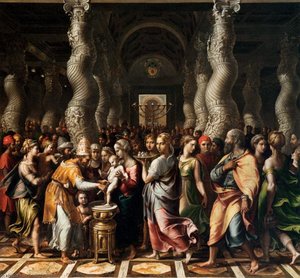
Similarly, we find the brilliant Giulio Romano, a pupil of Raphael who took his master's lessons and pushed them toward the spectacular. In his hands, architecture and painting merged to create immersive environments of illusion and power. While he inherited the monumental scale of the High Renaissance, he infused it with a playful, almost subversive approach to form and shadow. Alongside figures like the later Giulio Cesare Amidano, who brought a sense of atmospheric, melancholic landscape to the movement, these masters redefined what it meant to represent reality, proving that there is profound beauty to be found in the distorted and the unexpected.
Architectural Drama: The Immersive Illusionism of Palazzo del Te and Oratorio del Gonfalone
The Mannerist spirit was not confined to the canvas; it breathed through the very stones of Italy's most innovative structures. Palazzo del Te in Mantua stands as a breathtaking testament to this architectural audacity. Designed by Giulio Romano for the Gonzaga family, the palace is a symphony of controlled chaos. Its asymmetrical facades and irregular spans reject the rigid formality of traditional Renaissance design, opting instead for an experience of surprise and visual delight. Within its walls, the frescoes transform every surface into a theatrical stage where myth and allegory collide.
In Rome, tucked away in the labyrinthine streets, the Oratorio del Gonfalone offers a different kind of Mannerist wonder. Often whispered to be the “Sistine Chapel” of Mannerism, this oratory reveals a treasure trove of frescoes that blend religious devotion with dynamic, swirling expression. Here, the collective work of various artists creates a cohesive narrative of passion and movement. These spaces were designed to overwhelm the senses, using light, shadow, and complex ornamentation to create an immersive experience that pulls the viewer into a world of spiritual and artistic drama.
The Bridge to Baroque: How Mannerist Elegance Paved the Way for Emotional Grandeur
As we reflect on this era of "beyond perfection," we see that Mannerism was far more than a mere stylistic detour. It was the essential bridge that connected the balanced idealism of the Renaissance to the explosive, emotional intensity of the Baroque. By breaking the rules of proportion and embracing tension, Mannerist artists expanded the vocabulary of Western art, providing the tools for future generations to explore the depths of human emotion and theatricality.
The movement taught us that art could be a tool for subjective exploration—that the artist's intellect and hand could manipulate reality to evoke profound psychological responses. The elegance of Mannerism, with its sophisticated artifice and controlled drama, laid the groundwork for the grand, sweeping narratives of the 17th century. It reminds us that even in moments of great uncertainty and cultural shift, there is a capacity for extraordinary creativity to emerge, transforming the shadows of instability into a lasting legacy of beauty.