
Introduction
The 18th century in the Netherlands marked a sophisticated transition from the dramatic intensity of the Golden Age toward a refined, elegant aesthetic that embraced the nuances of light, texture, and botanical precision. As the Dutch Republic navigated shifting economic landscapes, its painters moved with grace between the grandiosity of international Baroque influences and a meticulous, almost scientific observation of the natural world. This era was defined by a mastery of specialized genres, where the quietude of a still life could carry as much emotional weight as a sweeping maritime vista or a luminous portrait.
What unites these masters is a shared devotion to technical excellence and the ability to capture the fleeting qualities of atmosphere and light. Whether documenting the intricate petals of a rare flower or the rhythmic movement of a ship at sea, these artists elevated their subjects through a profound understanding of color theory and composition. Their works serve as a visual record of a period characterized by intellectual curiosity and a burgeoning appreciation for the beauty found in the domestic and the natural alike.
Today, these painters remain vital to the art historical canon because they represent the pinnacle of European craftsmanship. Their influence persists in the way we perceive light and the delicate interplay of shadow, offering a timeless window into the aesthetic sensibilities of a transformative century. In the following sections, we examine ten essential figures of this movement, including the botanical brilliance of Rachel Ruysch, the maritime precision of Willem van de Velde the Younger, and the evocative portraiture of Godfried Schalcken, each embodying the unique spirit of 18th-century Dutch artistry.
Willem van de Velde the Younger
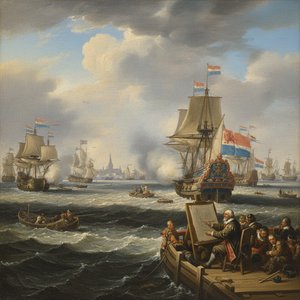
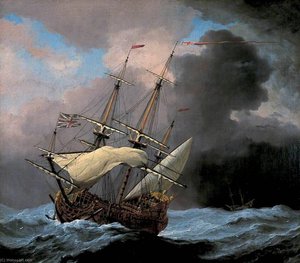 An English Ship 'Hampton Court' in a Gale - Willem van de Velde the Younger
Born in Leiden in 1633, Willem van de Velde the Younger emerged from a distinguished artistic lineage, the son of the painter Willem van de Velde the Elder. While his father specialized in precise, monochrome ink studies of naval vessels, the younger Van de Velde expanded this maritime legacy through the medium of oil. His technical foundation was built upon his father's rigorous instruction, later refined through an apprenticeship with Simon de Vlieger and influenced by the atmospheric light of Jan van de Cappelle. This lineage of expertise ensures his place among the essential painters from the Netherlands, as his work bridged the meticulous documentation of the Golden Age with the dramatic sensibilities that continued to influence maritime art into the 18th century.
His mastery is exemplified in An English Ship 'Hampton Court' in a Gale. This work captures the visceral reality of naval warfare, utilizing a sophisticated application of chiaroscuro to depict a tempestuous sea battle. Through his spirited handling of oil on canvas, he moved beyond mere draughtsmanship to achieve a profound sense of movement and atmospheric depth, immortalizing the turbulent relationship between man and the sea.
Jan van Huysum
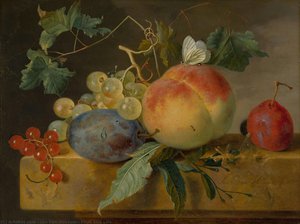
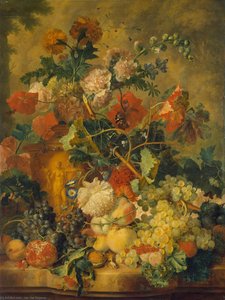
In the quiet grandeur of the Rijksmuseum Amsterdam, there exists a window into a world of perpetual spring. Jan van Huysum’s “Flowers and Fruit,” completed in 1723, is far more than a mere arrangement of botanical specimens; it is a breathtaking triumph of the Dutch Baroque. To gaze upon this canvas is to enter a realm where the ephemeral beauty of nature is captured with such profound precision that one can almost sense the cool moisture on a petal or the sweet, heavy scent of ripening fruit.
Born in Amsterdam, Van Huysum was destined to become the preeminent voice of floral still life. As a master whose career flourished during the transition into the 18th century, he represents the pinnacle of Dutch botanical art from this era. The son of Justus van Huysum the Elder, he inherited a legacy of excellence but revolutionized the genre by moving beyond static arrangements toward idealized, vibrant compositions. His technique is characterized by smooth, glossy brushstrokes and a meticulous layering of paint that creates an enamel-like surface. This mastery of light and color allows him to render petals and droplets with a breathtaking realism that defines the elegance of 18th-century Dutch painting.
Adriaen van der Werff
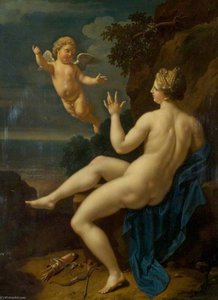 Venus and Cupid - Adriaen van der Werff
In the captivating work Venus and Cupid, completed around 1716, we witness the pinnacle of a style that bridged the gap between the Dutch Golden Age and the refined elegance of the 18th century. As a prominent figure whose career extended into the early decades of the 1700s, Adriaen van der Werff remains a vital link to this era, serving as a highly lauded court painter whose influence shaped the aesthetic sensibilities of the burgeoning Rococo movement.
Born in The Hague in 1659, Van der Werff developed a signature technique characterized by meticulous grace and a profound command of light. Under the tutelage of Eglon van der Neer, he mastered the art of rendering exquisite, silken textures and sculptural drapery, a skill that defines his most celebrated mythological and erotic scenes. His compositions often utilize a dramatic chiaroscuro to elevate biblical and classical narratives, imbuing them with psychological depth and a palpable sense of human emotion. Whether depicting the delicate skin of a goddess or the intricate folds of a garment, his brushwork achieved a level of precision that captivated the European aristocracy, cementing his legacy as a master of the Baroque transition.
Jan van der Heyden
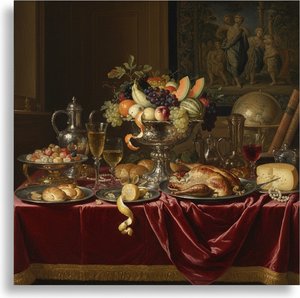
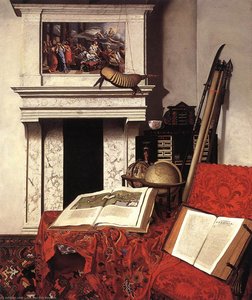 Still-Life with Rarities - Jan van der Heyden
In his 1712 work, Still-Life with Rarities, Jan van der Heyden demonstrates a profound mastery over texture and light, capturing a collection of exotic curiosities within a richly furnished interior. This composition, featuring a bird, celestial globes, and fine Chinese silk, showcases the artist's ability to render diverse materials with remarkable precision. While he is celebrated for his architectural precision, this late-career masterpiece highlights his skill in the still-life genre, utilizing a palette of muted, putty tones to create a reflective and calm atmosphere.
Born in Gorinchem in 1637, Van der Heyden was a pivotal figure whose career bridged the Dutch Golden Age and the dawn of the 18th century. His technical foundation, likely influenced by his early exposure to reflective surfaces and potential training under glass painter Jacob van der Ulft, allowed him to become a pioneer of the urban landscape. He was among the first to specialize in meticulously detailed townscapes, capturing the bustling streets and stately canals of Amsterdam and other European centers. As a painter active during the transition into the 1700s, his legacy is defined by this unique intersection of architectural draftsmanship and the ability to document the material splendor of the era.
Hieronymus Van Der Mij
 Portrait of Theodoor van Snakenburg, Jurist and Poet in Leiden - Hieronymus Van Der Mij
Born in Leiden in 1687, Hieronymus Van Der Mij represents a significant chapter in the evolution of 18th century Dutch painters. His artistic journey was deeply rooted in a lineage of technical precision, being the son of a skilled sculpture caster. This early exposure to the physical properties of form and material informed his transition into the fine arts, where he eventually refined his mastery under the guidance of the esteemed Willem van Mieris. His formal entry into the professional sphere was marked by his enrollment in the Leiden Album Studiosorum in 1710 and his subsequent admission to the Guild of St. Luke in 1724.
Van Der Mij’s oeuvre is characterized by a sophisticated command of portraiture and religious themes, often utilizing a restrained palette to convey status and character. A notable example of his technical prowess is the 1743 work, Portrait of Theodoor van Snakenburg, Jurist and Poet in Leiden. Executed on a copper support, this bust-length composition utilizes a subtle chiaroscuro to define the subject's features and voluminous powdered wig. Through his ability to capture the likenesses of influential figures, Van Der Mij solidified his place among the prominent masters of the Dutch Republic during this era.
Arent de Gelder
 Circumcision of Christ - Arent de Gelder
Arent de Gelder stands as a vital link to the golden age of Dutch art, carrying the torch of the Baroque into the 18th century. Born in Dordrecht in 1645, his artistic identity was forged in the intense, shadow-drenched atmosphere of Rembrandt’s studio. As one of the master's final pupils, De Gelder did not merely mimic his teacher; he internalized a profound method of light and emotion that he would carry throughout his long career. While the artistic tides of the 18th century began to drift toward the clarity of classicism, De Gelder remained a steadfast practitioner of the expressive, dramatic style that defined his heritage.
His 1705 masterpiece, Circumcision of Christ, serves as a testament to this enduring legacy. In this work, the heavy, tactile textures of oil on canvas create a sense of sacred gravity. Deep shadows press against the edges of the composition, allowing a soft, flickering light to emerge from the gloom and illuminate the pale swaddling of the infant. Through a palette of earthy ochres and deep umbers, De Gelder captures a moment of quiet, solemn devotion, ensuring his place among the most emotive painters of the Netherlands during this transformative era.
Rachel Ruysch
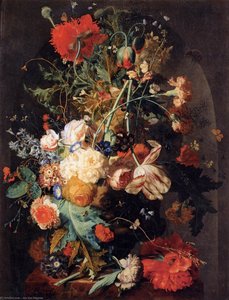
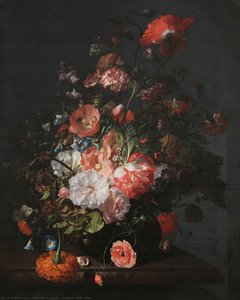 Flower Still Life - Rachel Ruysch
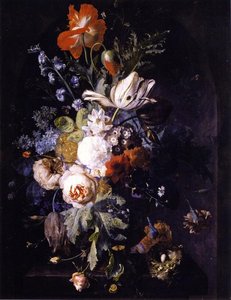
A visitor can immediately recognize a work by Rachel Ruysch through her masterful command of botanical realism and dramatic, high-contrast compositions. Her paintings are characterized by a profound sense of movement, often featuring asymmetrical arrangements where stems curve and petals droop with a lifelike, almost fragile vitality. She utilized deep, shadowed backgrounds to allow vibrant colors—from the fiery reds of poppies to the soft whites of roses—to emerge with startling clarity, creating a tactile sense of texture that invites close inspection.
As a prominent figure whose career spanned the transition into the 18th century, Ruysch represents the pinnacle of Dutch floral expertise. Her work exemplifies the sophisticated botanical traditions of the Netherlands during this era, blending scientific precision with artistic elegance. This is perfectly captured in her 1726 masterpiece, Flower Still Life, which showcases her ability to render intricate details like the delicate veins of a leaf or the velvety surface of a bloom.
Born in 1664 in The Hague, her eye for detail was nurtured in her father’s botanical laboratory. After apprenticing under the esteemed Willem van Aelst, she emerged as a groundbreaking force, defining the aesthetic of her time through her unparalleled ability to capture the fleeting essence of nature.
Jan Weenix
 Peacock and Hunting Trophies - Jan Weenix
Jan Weenix stands as a monumental figure in the transition of Dutch art, bridging the gap between the Golden Age and the refined sensibilities of the 18th century. Born in Amsterdam in 1641, he was trained in the workshop of his father, Jan Baptist Weenix, inheriting a profound mastery of animalier subjects and still life. His work is a cornerstone of the 18th-century Dutch tradition because it elevated the hunting still life into a genre of aristocratic elegance, blending meticulous realism with the dramatic flair of the Baroque.
His technical virtuosity is most vividly captured in his 1708 masterpiece, Peacock and Hunting Trophies. This expansive composition serves as a theatrical display of abundance, showcasing the iridescent plumage of a peacock alongside a curated collection of game birds. Weenix’s ability to render textures—the softness of fur and the sheen of feathers—creates a tactile experience that defines the era's pursuit of idealized beauty. By placing these trophies within a grand, formal setting, Weenix transformed the depiction of nature into a sophisticated language of wealth and leisure, securing his legacy among the premier painters of the Netherlands during this transformative period."
Godfried Schalcken
 Portrait of Countess Natalya Andreevna Matveeva as a Child - Godfried Schalcken
A master of the fijnschilder tradition, Godfried Schalcken (1643–1706) achieved a level of technical refinement that allowed his influence to bridge the Golden Age into the early 18th century. Trained under Samuel van Hoogstraten and later the celebrated Gerard Dou, Schalcken became a specialist in the delicate manipulation of light. His ability to capture the soft, flickering glow of candlelight against velvet textures and luminous skin made him a sought-after portraitist for the European elite.
His work, such as the Portrait of Countess Natalya Andreevna Matveeva as a Child (1702), exemplifies the transition of Dutch artistry into the 18th century. In this piece, the subject is bathed in a dramatic, intimate light that emerges from a deep, shadowy background, creating a sense of quiet prestige. The composition, featuring a young girl and a small dog, showcases the meticulous detail and atmospheric depth characteristic of his style. By mastering the subtle nuances of chiaroscuro, Schalcken ensured his place among the most polished painters from the Netherlands, leaving a legacy of elegance that resonated well into the 1700s.
Adriaen Coorte
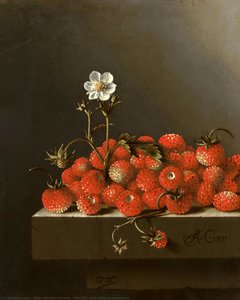 Still Life with Wild Strawberries - Adriaen Coorte
In Still Life with Wild Strawberries, painted around 1705, a quiet miracle of nature unfolds within a dark, indeterminate space. This exquisite work captures a fleeting breath of life preserved in oil, centering upon a rustic wooden box filled with vibrant red strawberries and a single, ethereal white flower. The composition is a triumph of tactile realism, where the smooth, juicy skin of the fruit contrasts sharply with the weathered grain of the container and the fragile texture of the floral stem.
Adriaen Coorte, active during the transition into the 18th century, was a master of this intimate, minimalist aesthetic. While his early training under Melchior d'Hondecoeter in Amsterdam introduced him to the flamboyant depictions of birds, Coorte eventually moved toward a more restrained and profound vision. His work is defined by a masterful use of chiaroscuro, allowing light to pulse against velvety shadows. By focusing on humble organic matter, he transformed simple arrangements into sacred, luminous meditations. His presence in the 18th-century Dutch landscape is marked by this unique ability to find immense beauty in the most modest subjects, elevating the still life to a level of serene, Baroque poetry.
Conclusion
The masters of this era collectively defined a golden age of precision and elegance, bridging the gap between the dramatic chiaroscuro of the previous century and the refined sensibilities of the Enlightenment. From the intricate botanical studies of Rachel Ruysch and Jan van Huysum to the sweeping maritime vistas of Willem van de Velde the Younger, these artists captured the essence of the Dutch landscape, still life, and portraiture with unparalleled technical mastery. Whether through the quiet intimacy of Adriaen Coorte's compositions or the grand architectural perspectives of Jan van der Heyden, their work remains a testament to the diverse visual language of the 18th-century Netherlands.
At Mus3ums.com, we invite you to bring this historical splendor into your own living space. Our artisans specialize in creating museum-quality, hand-painted oil reproductions that honor the specific brushwork and tonal depth of these legendary painters. You can explore our full collection to find the perfect masterpiece and experience the tactile beauty of these Dutch treasures through our bespoke, handmade artistry.