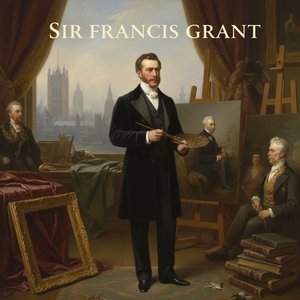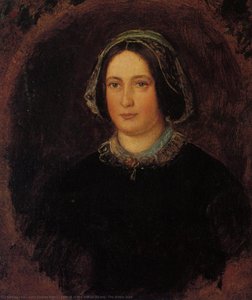


Introduction
The British academic realist movement emerged as a cornerstone of nineteenth-century visual culture, defined by a profound commitment to technical precision and the formal rigor taught within the prestigious art academies of the United Kingdom. During this era, artists sought to master the nuances of light, anatomy, and texture, creating highly polished compositions that bridged the gap between idealized beauty and the tangible reality of the human experience. These painters operated within a structured tradition where the mastery of oil on canvas was not merely a skill, but a disciplined language used to capture everything from grand historical narratives to the quiet dignity of portraiture.
This movement flourished as a response to the evolving social landscape of the Victorian age, reflecting a cultural desire for order, clarity, and narrative depth. By adhering to the strict standards of academic training, these artists developed a sophisticated ability to render skin tones, fabric, and atmosphere with a level of detail that commanded respect from both contemporary critics and the public. Their works often served as windows into the social hierarchies and domestic intimacies of their time, preserving the essence of British life through a lens of meticulous craftsmanship.
Today, these painters remain vital to the history of art because they represent the pinnacle of classical technique in an increasingly digital age. Their ability to evoke emotion through subtle tonal shifts and impeccable brushwork continues to resonate with those who value the tactile soul of a hand-painted masterpiece. By examining the lives and legacies of these masters, we gain a deeper understanding of the foundations of Western realism and the enduring power of the academic tradition.
The following selection explores ten significant figures of this movement, ranging from masters of dramatic portraiture to specialists in landscape and genre scenes, each embodying the excellence of the British academic tradition.
James Sant
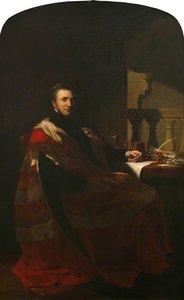 Ernest Augusutus, 3rd Earl of Mount Edgcumbe, in Peers Robes - James Sant
James Sant (1820–1916) stands as a preeminent figure of British Academic Realism, a movement defined by the highly polished and meticulously finished techniques taught in the great art schools of the 19th century. Trained at the Royal Academy Schools under luminaries such as John Varley and Augustus Wall Callcott, Sant transitioned from delicate watercolor to a robust, masterful command of oil painting. His work is instantly recognizable through its profound ability to capture the essence of innocence in allegorical depictions of children, as well as the dignified gravity of the Victorian aristocracy.
In his representative work, Ernest Augustus, 3rd Earl of Mount Edgcumbe, in Peers Robes (1847), Sant demonstrates the hallmarks of the academic style through a dramatic use of chiaroscuro. The composition utilizes deep shadows and a warm, somber palette of earthy browns and rich reds to define the subject's authoritative presence. His brushwork, while maintaining a smooth and finished surface characteristic of the era, builds a complex architecture of tones that gives the heavy ceremonial drapery a palpable sense of weight and texture. Whether portraying the nobility or the symbolic purity of youth, Sant’s oeuvre remains a testament to the technical precision and emotional depth of the British academic tradition."
Francis Grant
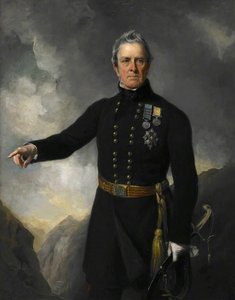 Lieutenant General Sir George Pollock - Francis Grant
Sir Francis Grant (1803–1878) stands as a preeminent figure among British Academic Realist painters, a movement defined by its technical precision and the polished rendering of social hierarchy. Born in Perthshire, Scotland, Grant’s journey from a potential legal career to the presidency of the Royal Academy exemplifies the era's dedication to formal mastery. His style evolved from the vibrant, energetic sporting scenes of his youth—honed under the influence of equestrian artist John Ferneley—into a sophisticated, highly finished approach to portraiture that became his hallmark.
Grant’s work is quintessential Academic Realism due to his ability to marry meticulous anatomical accuracy with the psychological depth required by the Victorian elite. He did not merely capture likenesses; he articulated the very essence of status and duty. This is masterfully demonstrated in his 1856 work, Lieutenant General Sir George Pollock. In this portrait, Grant utilizes a structured pyramidal composition and a controlled, muted palette to convey the gravity of command. Through subtle layering of oil paint, he renders the textures of military regalia and the resolute features of the sitter, ensuring the subject’s dignity is preserved with the exacting standards of the 19th-century academic tradition.
Daniel Macnee
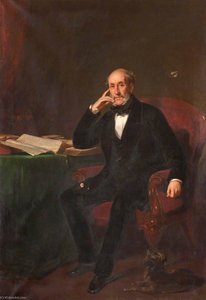 David Crawford (1790–1861), Deputy Lieutenant of Renfrewshire and Baron Baillie of Greenock - Daniel Macnee
Daniel Macnee (1806–1882) remains a cornerstone of Scottish art history, a painter whose career was defined by a profound connection to the rugged landscapes of the Highlands and the formal structures of the Royal Scottish Academy. His journey from a disciplined naval background to the presidency of the Academy reflects a life dedicated to the meticulous observation of both character and terrain. Macnee’s work is a quintessential example of the academic realist movement, characterized by a highly polished technique and a commitment to the accurate, dignified representation of his subjects.
His mastery of the genre is evident in his ability to balance romanticism with the strictures of formal portraiture. In his representative work, David Crawford (1790–1861), Deputy Lieutenant of Renfrewshire and Baron Baillie of Greenock, Macnee demonstrates the hallmarks of the academic style. Through a sophisticated use of chiaroscuro, he sculpts the sitter out of deep, somber shadows, using light to define the texture of heavy upholstery and the weathered lines of a man of high social standing. This precise management of light and shadow ensures a sense of physical volume and psychological gravity, elevating the portrait from a mere likeness to a profound study of status and presence.
Stephen Pearce
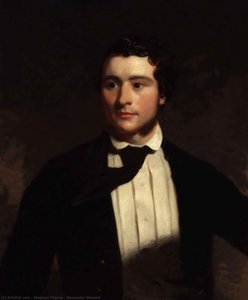 Alexander Stewart - Stephen Pearce
Born in London in 1819, Stephen Pearce emerged as a distinguished figure within the British Academic Realism movement, a style defined by its rigorous technical precision and polished finish. His artistic foundation was built at Sass’s Academy and the Royal Academy Schools, but it was his apprenticeship under Sir Martin Archer Shee that truly refined his ability to capture the psychological depth of his subjects. This commitment to the academic tradition of meticulous detail and formal composition is epitomized in his 1854 portrait, Alexander Stewart.
In this striking oil on canvas, Pearce demonstrates the hallmark characteristics of the movement through a masterful use of chiaroscuro. The subject is rendered with sharp, precise lines, from the crisp geometry of the white collar to the deep textures of the black jacket. By employing a somber, dark color palette, Pearce creates a dramatic sense of intimacy and presence, focusing the viewer's attention entirely on the subject's engaging expression. Whether depicting the nobility of the Royal Mews or the dignified poise of a gentleman, Pearce’s work remains a testament to the sophisticated realism that defined 19th-century British art."
John Phillip
 William Borthwick Johnstone (1804 - 1868) - John Phillip
John Phillip (1817–1867) stands as a distinguished figure among British academic realist painters, a movement defined by its commitment to highly polished, meticulously finished depictions of reality. Born in Aberdeen, Scotland, Phillip’s technical foundation was built upon the narrative traditions of David Wilkie and the dramatic sensibilities of the influential circle known as The Clique. His early career was dedicated to the dignified, somber portrayal of Scottish rural life, where he applied the rigorous standards of the Royal Academy to capture the quiet hardships of the crofting community with profound precision.
A significant evolution in his style occurred following a move to warmer climates, where his palette shifted from the muted tones of Scotland to the vibrant, sun-drenched atmosphere of Spain. This period saw him embrace a painterly approach influenced by the masters Velázquez and Murillo, blending academic structure with a more expressive, light-filled technique. In his representative work, William Borthwick Johnstone (1865), Phillip demonstrates this mastery of the genre. The portrait utilizes a dramatic chiaroscuro effect and a restricted palette of earthy tones to achieve a lifelike, psychological depth, exemplifying the era's ability to merge formal portraiture with a profound sense of character and dignity.
John Pettie
 Who Goes? - John Pettie
John Pettie (1839–1893) stands as a quintessential figure of the Academic Realism movement, distinguished by his ability to fuse meticulous technical rigor with profound narrative drama. Trained at the Trustees Academy in Edinburgh under Robert Scott Lauder, Pettie mastered the classical precision and observational truth that defined the era's academic standards. His ascent to the Royal Academy in London solidified his status as a master of the Victorian age, where he became celebrated for his capacity to breathe life into historical and genre scenes through sophisticated lighting and vivid color.
His mastery of the movement is vividly realized in his 1881 work, Who Goes?. This composition exemplifies the academic penchant for historical accuracy and dramatic tension. Through a masterful use of chiaroscuro, Pettie illuminates a solitary figure in a bright yellow frock coat, setting him against a backdrop of deep, enveloping shadows. The presence of a tricorn hat, a long-haired wig, and a flintlock pistol anchors the scene in a specific historical moment, transforming a quiet interior into a space of palpable alertness. By combining precise anatomical detail with a sense of unfolding narrative, Pettie captures the very essence of the Academic Realist tradition."
John Partridge
 Sir John Forbes (1787–1861) - John Partridge
A master of the dignified portrait, John Partridge (1789–1872) stands as a quintessential figure among British academic realist painters. His technical precision and ability to capture the psychological weight of his subjects were profoundly shaped by his transformative years in Italy. Between 1823 and 1827, while wandering through Florence, Venice, and Rome, Partridge moved beyond mere likeness to engage with the masters of the Renaissance. By sketching works by Raphael and Titian, he mastered the dramatic interplay of light and shadow, or chiaroscuro, which became a cornerstone of his mature, highly polished style.
This commitment to the rigorous standards of the Royal Academy and the classical traditions of the Old Masters defines his place within the academic realism movement. In his 1847 work, Sir John Forbes (1787–1861), this heritage is vividly realized. The portrait utilizes a structured composition and a dark, atmospheric palette to push the sitter into the foreground, emphasizing the tactile textures of skin and heavy fabric. Through the careful application of oil on canvas, Partridge achieves a sense of historical permanence, transforming a seated gentleman into a figure of enduring, sculptural presence.
Heywood Hardy
 Hounds First, Gentlemen, Hounds First - Heywood Hardy
A master of equestrian precision, Heywood Hardy (1842–1933) occupies a distinguished position among British Academic Realism painters. His work is defined by the polished, highly finished technique characteristic of the 19th-century academic tradition, blending rigorous anatomical accuracy with a sense of Romantic drama. Born in Chichester, Sussex, into a family steeped in artistic discipline, Hardy refined his technical command at the École des Beaux-Arts in Paris under Isidore Pils, a period that infused his British sensibilities with continental sophistication.
Hardy’s expertise lay in his profound understanding of animal movement, a skill bolstered by his studies of equine gait with Professor Alfred Henry Garrod. This scientific observation allowed him to elevate animal portraiture into grand, narrative scenes of aristocratic leisure and rural vitality. In his representative work, Hounds First, Gentlemen, Hounds First, he captures the spirited energy of a fox hunt, portraying the social rituals of the Victorian era with breathtaking clarity. Through his ability to render the muscular tension of a horse or the frantic motion of a hunt, Hardy transformed the sporting life of the United Kingdom into enduring, atmospheric masterpieces of the Academic Realist style.
Sydney Hodges
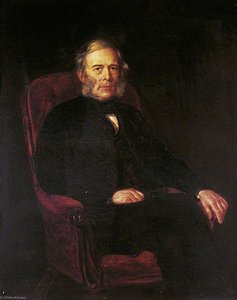 Samuel Hey - Sydney Hodges
In the 1873 portrait Samuel Hey, the viewer is confronted with a profound sense of Victorian gravity. Seated in a richly upholstered armchair, the subject is rendered with a stillness that suggests a life of settled authority. The lighting, sweeping in from the upper left, carves the gentleman's features out of a dark, indistinct background, creating a three-dimensional weight that is a hallmark of the academic realism movement. This technical precision allows the observer to almost feel the tactile difference between the heavy fabric of the sitter's coat and the delicate texture of his skin.
Born in Cornwall in 1829, Joseph Sydney Willis Hodges transitioned from the evocative landscapes of his youth to the rigorous, disciplined training of the Slade School of Fine Art in London. It was this academic foundation that defined his career as a premier British academic realist painter. He specialized in psychological portraiture, moving beyond mere likeness to capture the inner dignity of prominent figures, including clergy and military leaders. His mastery of oil on canvas is characterized by a meticulous attention to anatomical detail and a sophisticated use of light and shadow, ensuring his subjects possess a permanent, commanding presence.
Arthur Stockdale Cope
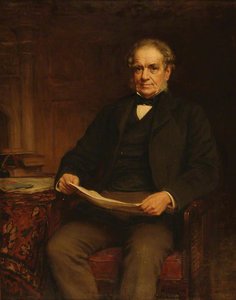 William Burchell - Arthur Stockdale Cope
Sir Arthur Stockdale Cope (1857–1940) stands as a distinguished figure within the British Academic Realism movement, a style defined by its rigorous technical precision and devotion to the formal traditions of the 1800s. Trained at Carey's Art School and the prestigious Royal Academy Schools, Cope inherited a profound respect for the polished, highly finished aesthetics taught by the era's official academies. His work is characterized by a masterful command of light and shadow, using dramatic chiaroscuro to sculpt the human form and reveal the psychological depth of his subjects.
In his 1884 masterpiece, William Burchell, Cope exemplifies the core tenets of Academic Realism through a dignified, formal composition. The sitter is presented with a quiet, somber gravity, his features meticulously rendered to capture the textures of age and experience. Light cascades from the upper left, casting deep shadows that emphasize the contours of the face and the weight of the subject's contemplative gaze. By eschewing overly smooth surfaces in favor of a more textured, three-dimensional approach, Cope transcends mere likeness, transforming a portrait into a profound study of character and presence.
Conclusion
The legacy of these British academic realist painters lies in their shared commitment to technical perfection and the elevated storytelling of the 19th-century tradition. From the meticulous portraiture of Daniel Macnee and Francis Grant to the evocative, atmospheric scenes captured by Heywood Hardy, these artists mastered the art of the polished finish to immortalize the character and social nuances of their era. Whether through the grand historical narratives of John Phillip or the intimate, highly detailed studies of everyday life, each painter contributed to a visual language defined by precision, light, and a profound respect for the formal rules of composition.
For those looking to bring this sense of historical elegance and refined craftsmanship into a modern space, Mus3ums.com offers a way to honor these masters. Our collection allows you to own a piece of this heritage through museum-quality, hand-painted oil reproductions, meticulously crafted by skilled artists to capture the true texture and soul of these classic works. Explore our full collection and find the perfect masterpiece to transform your home.