
Introduction
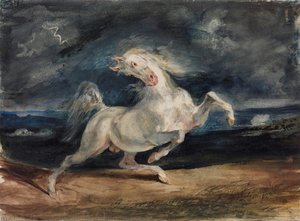
Emerging from the turbulent landscape of early 19th-century France, the Romanticism movement marked a profound departure from the rigid constraints of Neoclassicism. Rather than seeking perfection through mathematical order and calm rationality, these artists turned inward to the depths of human emotion, the sublime power of nature, and the dramatic intensity of the imagination. This era was defined by a rejection of strict rules in favor of spontaneous expression, where the brushstroke became a vehicle for passion and the canvas a stage for the sublime, the exotic, and the chaotic.
The cultural climate of France during this period was one of immense upheaval and transformation. As the nation navigated the aftermath of revolution and the shifting tides of empire, painters sought to capture the visceral reality of the human condition. They moved away from idealized Greco-Roman archetypes to explore contemporary struggles, historical tragedies, and the overwhelming, often terrifying, majesty of the natural world. This shift prioritized the subjective experience, allowing for a more dynamic and textured approach to color and light that would forever change the trajectory of Western art.
Today, these masters continue to resonate because they spoke to the fundamental complexities of being alive. Their ability to translate raw feeling into visual poetry ensures that their works remain deeply moving, transcending the centuries that separate us from their original creation. By studying their techniques and their subjects, we gain insight into the very origins of modern artistic freedom.
The following selection explores ten essential figures of this movement, ranging from masters of dramatic historical compositions to those who captured the ethereal light of the landscape, each embodying the restless spirit of French Romanticism.
Gustave Doré
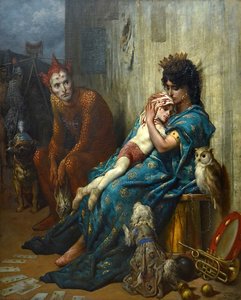 The Acrobats - Gustave Doré
Gustave Doré was a force of nature in the 19th-century art world, a self-taught draftsman who bypassed traditional academies to master the dramatic language of the line. His career was defined by an immense, relentless momentum, moving from the satirical sketches of his youth in Paris to becoming a global icon of the Victorian era. As a quintessential figure among French romantic painters, Doré’s work embodies the movement's core obsession with the sublime, the grotesque, and the overwhelming power of human emotion. He possessed a unique ability to navigate the spectrum of existence, from the divine to the deeply melancholic.
In his work The Acrobats, this Romantic sensibility is captured through a masterful use of chiaroscuro. The piece avoids the calm order of Neoclassicism, opting instead for a theatrical atmosphere where deep shadows envelop the figures, heightening a sense of vulnerability and quiet drama. Whether through his legendary wood engravings or his evocative paintings, Doré’s ability to render texture and light ensures his vision remains a powerful testament to the emotional intensity that defines the Romantic era.
Eugène Delacroix
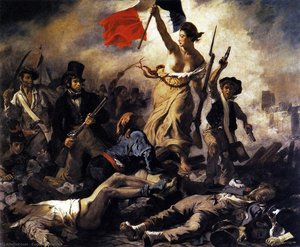
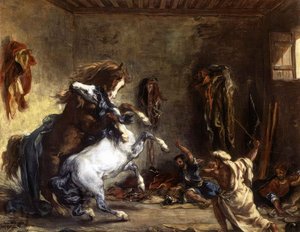
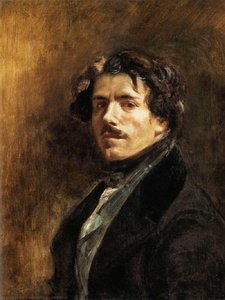
A central figure of the French Romantic movement, Eugène Delacroix (1798–1863) fundamentally redefined the emotional landscape of 19th-century art. Rejecting the rigid, calculated lines of Neoclassicism, he embraced a restless energy that mirrored the societal upheavals of his era. His work is characterized by a profound sense of movement and a vibrant, dramatic use of color that sought to capture the raw, individualistic essence of the human condition.
His masterpiece, Liberty Leading the People, stands as a definitive testament to this Romantic spirit. Painted in 1831 to commemorate the July Revolution, the work transcends mere historical documentation through its intense psychological depth. Delacroix utilizes a dynamic, triangular composition to lead the viewer through a whirlwind of action, where the personification of Liberty strides triumphantly over a barricade. By prioritizing passion and the sublime power of human struggle over academic restraint, Delacroix solidified his position as a leader of the Romantic school, leaving a legacy that forever altered the trajectory of European painting.
- Key Works: The Death of Sardanapalus, The Women of Algiers, The Massacre at Chios
- Style: Dramatic, expressive brushwork and rich, emotive color palettes.
Pierre-Henri de Valenciennes
 A LA VILLA BORGHESE RUISSEAU COULANT PARMI LES ARBRES - Pierre-Henri de Valenciennes
Pierre-Henri de Valenciennes (1750–1819) stands as a pivotal figure in the transition toward Romanticism, specifically through his revolutionary advocacy for the emotional and direct observation of nature. While many of his contemporaries remained tethered to rigid, studio-bound compositions, Valenciennes championed the concept of the landscape portrait. By working en plein air—particularly during his formative years in Rome between 1778 and 1782—he sought to capture the fleeting, atmospheric shifts of light and weather that define the wild, untamed spirit of the Romantic era.
His masterpiece, A La Villa Borghese Ruisseau Coulant Parmi Les Arbres, serves as a profound testament to this approach. In this work, the viewer is immersed in a sun-dappled woodland where the interplay of light and shadow creates a sense of profound depth. His brushwork is characterized by a tactile quality, using thick impasto to render the rough textures of bark and the shimmering movement of a meandering stream. This emphasis on the sensory experience of the natural world, rather than idealized order, deeply influenced a generation of artists, including Jean-Victor Bertin and Achille Etna Michallon, cementing his legacy as a precursor to the Romantic landscape tradition.
Théodore Géricault
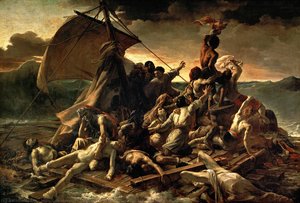 The Raft of the Medusa - Théodore Géricault
In his monumental masterpiece, The Raft of the Medusa, Théodore Géricault captures a visceral exploration of human desperation and the sublime, terrifying power of nature. This work serves as a profound testament to his role as a pioneer of the Romantic movement in France. By choosing to depict the harrowing aftermath of a real-life maritime disaster, Géricault rejected the calm, ordered restraint of Neoclassicism in favor of raw, turbulent emotion and political urgency.
Born in 1791, Géricault’s artistic identity was forged through a deep, self-directed dialogue with the Old Masters like Rubens and Rembrandt while studying in the Louvre. This immersion allowed him to master a dramatic chiaroscuro and a dynamic use of light and shadow that became hallmarks of his style. His technique is characterized by:
- Intense Emotionality: A focus on the psychological weight of human suffering and resilience.
- Anatomical Precision: A dedication to realism, achieved through meticulous study of the human form.
- Dramatic Composition: The use of powerful, contorted figures and rich impasto textures to convey movement and tension.
Through his somber palette and mastery of shadow, Géricault transformed contemporary tragedy into timeless, high-stakes drama, cementing his legacy within the French Romantic tradition.
Horace Vernet
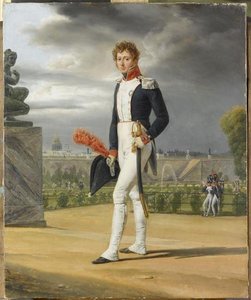 Philippe Lenoir - Horace Vernet
Born within the walls of the Louvre Palace during the height of the French Revolution, Horace Vernet (1789–1863) was destined to inherit a profound artistic legacy. As the son of Carle Vernet, he moved away from the idealized, static compositions of Neoclassicism to embrace the raw, kinetic energy that defines the Romantic movement. His work is characterized by a rejection of rigid academic formalism in favor of a more visceral, vernacular realism that captured the true spirit of 19th-century life.
Vernet’s place among the French Romantic painters is cemented by his ability to infuse historical and military narratives with intense emotion and dramatic movement. In his representative work, The Taking of an Entrenched Camp, he moves beyond mere documentation to create a sensory experience of combat. Through expressive brushwork and a masterful use of light and shadow, he captures the chaos of the Siege of Almeida, transforming a battlefield into a stage for human heroism. By prioritizing the immediate, emotional impact of a scene over the calm order of previous eras, Vernet became a vital voice in the Romantic era, bridging the gap between meticulous historical detail and the wild, unbridled passion of the human experience."
Paul Delaroche
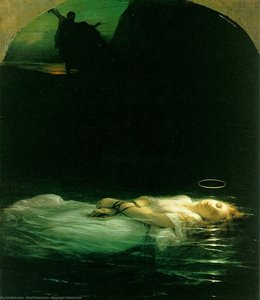
In his hauntingly beautiful masterpiece Young Christian Martyr, Paul Delaroche captures a profound sense of melancholy through a composition of stark contrasts. The work features a pale, submerged figure set against a dark, moody backdrop, utilizing a palette of deep, shadowy tones and sap green to evoke a mystical atmosphere. This ability to transform a canvas into a theatrical stage is a hallmark of his approach to historical and religious narratives.
Born in Paris in 1797, Delaroche emerged as a pivotal figure in the French Romanticism movement by bridging the gap between the sweeping emotionalism of the era and the disciplined precision of Academic art. Under the mentorship of Antoine-Jean Gros, he mastered the art of the grand narrative, yet he often eschewed rigid neoclassicism in favor of a pragmatic realism. He belonged to the Romantic movement through his focus on the raw, human core of history—painting not just monumental events, but the vulnerability and terror of the individuals within them. His technique is defined by an intricate use of light and shadow, creating a sense of breathless immediacy that makes the past feel startlingly present.
Thomas Couture
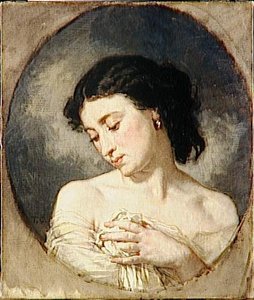 JEUNE FEMME EN BUSTE LES EPAULES DENUDEES - Thomas Couture
Thomas Couture stands as a transformative figure in French art, a painter who masterfully bridged the emotional intensity of Romanticism with the burgeoning precision of Realism. His place within the Romantic movement is defined by his ability to infuse historical narratives with profound social commentary and psychological depth, moving away from the rigid, sterile rules of academic tradition. This is most evident in his monumental work, Romans During the Decadence, where he utilized dramatic tonal contrasts and rich, dark hues to depict the moral decay of an empire, mirroring the anxieties of his own era.
A visitor can recognize Couture’s hand through his sophisticated command of chiaroscuro and a brushwork that balances classical structure with a palpable sense of unrest. His representative work, Jeune Femme en Buste les Épaules Dénudées, exemplifies this sensitivity. In this piece, he moves beyond mere likeness to explore a melancholic grace, using light and shadow to capture a sense of vulnerability and quiet contemplation. Whether through grand historical scenes or intimate portraits, Couture’s art is characterized by an evocative power that prioritizes emotional resonance above all else.
Pierre-Paul Prud'hon
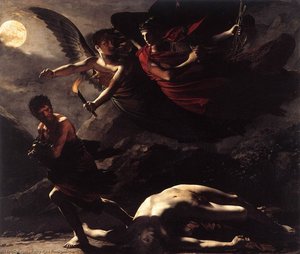 Justice and Divine Vengeance Pursuing Crime - Pierre-Paul Prud'hon
Pierre-Paul Prud'hon stands as a transformative figure in French art, serving as a vital bridge between the disciplined elegance of Neoclassicism and the emotive turbulence of the Romantic movement. While his early training in Dijon and his time in Rome instilled in him a profound respect for classical form and the grace of masters like Correggio, his later works embraced the dramatic intensity and psychological depth that defined the Romantic era. This transition is perfectly encapsulated in his monumental 1808 masterpiece, Justice and Divine Vengeance Pursuing Crime.
In this profound work, Prud'hon moves beyond mere portraiture to explore the sublime and the terrifying. He utilizes a masterful application of chiaroscuro, casting the landscape into deep, moody shadows that evoke a sense of awe and vulnerability. By juxtaposing heroic figures against a vast, tumultuous mountainous backdrop, he captures the Romantic preoccupation with the power of nature and the moral weight of the human soul. His ability to blend meticulous, academic brushwork with such raw, dramatic storytelling ensures his place among the most significant French Romantic painters, as he successfully translated the spiritual and emotional fervor of the age onto the canvas.
Adolphe Joseph Thomas Monticelli
 Flowers in a Blue Vase - Adolphe Joseph Thomas Monticelli
Adolphe Joseph Thomas Monticelli (1824–1886) occupies a singular, enigmatic position in the history of French art. While his career bridged the gap toward Impressionism, his soul remained deeply rooted in the Romanticism movement. This connection is most evident in his profound fascination with the expressive brushwork and vibrant color palettes of Eugène Delacroix, a master who defined the Romantic fervor. Monticelli’s work eschews the rigid, calm order of Neoclassicism in favor of a dramatic, emotional intensity that prioritizes the tactile sensation of paint over precise anatomical or botanical accuracy.
His training at the École des Beaux-Arts under Paul Delaroche provided a classical foundation, yet it was his ability to infuse subjects with a sense of wild, atmospheric energy that truly defined his legacy. In his representative work, Flowers in a Blue Vase (1881), this Romantic sensibility reaches a crescendo. Rather than mere depiction, Monticelli uses a heavy, sculptural impasto technique to create ridges of paint that catch the light, turning a simple bouquet into a dramatic struggle of light and shadow. Through these vigorous, energetic strokes, he captures a fleeting, emotional moment, cementing his status as a vital link between Romantic passion and the modern era.
Anne-Louis Girodet
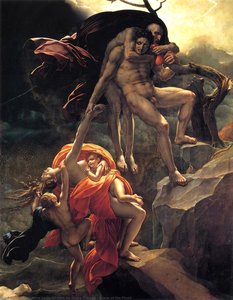 Scene of the Flood - Anne-Louis Girodet
Anne-Louis Girodet (1767–1824) occupies a singular position in art history, serving as a vital bridge between the disciplined rigor of Neoclassicism and the emotive turbulence of the Romantic movement. A student of the legendary Jacques-Louis David, Girodet initially mastered the precision and moral clarity of his teacher's studio. However, his artistic soul began to drift toward the dramatic and the sublime, a shift that defines his place among French Romantic painters. Rather than adhering to the strict, rational order of his predecessors, Girodet infused his compositions with a burgeoning sense of passion and psychological depth.
His masterpiece, Scene of the Flood (1806), exemplifies this transition. In this work, he moves away from static classical themes to embrace the raw, overwhelming power of nature and divine intervention. By depicting the tempestuous deluge and the vulnerability of humanity, he tapped into the core Romantic fascination with cosmic reckoning and the sublime. His ability to blend technical academic excellence with a melancholic, atmospheric sensibility allowed him to explore literary and biblical narratives through a lens of intense emotion, securing his legacy as a pioneer of the Romantic era in France."
Conclusion
The legacy of French Romanticism lies in its profound ability to capture the turbulence of the human spirit and the untamed majesty of the natural world. From the dramatic, sweeping narratives of Delacroix and Géricault to the ethereal, dreamlike atmospheres crafted by Girodet and Prud'hon, these masters moved beyond the rigid constraints of Neoclassicism to embrace emotion, movement, and light. Whether through the detailed, epic illustrations of Doré or the intense, historical fervor of Delaroche, this movement transformed the canvas into a stage for passion and sublime power. Each artist contributed a unique lens to this era, ensuring that the tension between order and chaos would forever define the French aesthetic.
At Mus3ums.com, we invite you to bring this evocative history into your own living space. Our artisans specialize in creating museum-quality, hand-painted oil reproductions that preserve the tactile depth and emotional intensity of these masterpieces. By choosing a custom commission or a fine art print, you can transform your home or office with the soul-stirring energy of the Romantic era. Explore our full collection to find the perfect piece to ignite your interior design and connect you with the timeless beauty of French art history.


