Introduction
To step into the world of Francis Bacon is to abandon the comfort of the familiar and surrender to the visceral, raw energy of the human condition. His canvases do not merely depict figures; they capture the very tremors of existence, the silent screams, and the profound vulnerability that resides beneath our skin. As we prepare to journey through his top twenty-five masterpieces, we are not simply looking at paint on canvas, but witnessing a masterclass in emotional intensity—a confrontation with the beautiful, terrifying truth of what it means to be alive.
Born in Dublin and finding his creative crucible in the turbulent atmosphere of post-war London, Bacon emerged as a singular force in 20th-century art. His era was one of profound reconstruction and existential questioning, a time when the stability of the old world had vanished, leaving behind a landscape of uncertainty. Drawing from the distorted geometries of Picasso, the haunting fragility of Egon Schiele, and even the cinematic terror of Eisenstein, Bacon forged a visual language that bypassed the intellect to strike directly at the nervous system. He took the authoritative weight of the Old Masters—most notably the regal presence of Velázquez—and dismantled them, reassembling their subjects into tormented, pulsating specters of isolation.
These works remain profoundly meaningful today because they speak to a universal truth that transcends time and geography. In an age often characterized by digital detachment, Bacon’s work demands a physical, sensory response. His use of space, his mastery of shadow, and his ability to render the flesh as something both resilient and decaying resonate with our modern anxieties and our deepest reflections on mortality. There is a haunting elegance in his distortions; he finds a strange, rhythmic beauty within the chaos.
In the following curation, we invite you to walk alongside us through this gallery of shadows and light. From his groundbreaking early studies that shocked the London art scene to his later, more atmospheric explorations of the human form, each piece on this list represents a pivotal moment in his storied career. Prepare to encounter works that challenge your perception, provoke your emotions, and ultimately, leave an indelible mark upon your soul.
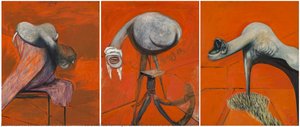
Three Studies for Figures at the Base of a Crucifixion - Francis Bacon
 Three Studies for Figures at the Base of a Crucifixion - Francis Bacon
What if I told you that Three Studies for Figures at the Base of a Crucifixion by Francis Bacon was born from a moment of profound rebellion—a visceral stroke of defiance against the traditional sanctity of art? This triptych is not merely a painting; it is a manifesto of existential truth . Its inclusion in our collection of the top 25 artworks of Francis Bacon is demanded by history, as it fundamentally redefined the boundaries of emotional expressionism and post-war angst.
The work vibrates with a haunting energy, where searing orange backdrops clash against amorphous, distorted figures that seem to writhe in silent, primordial torment. Through thick, gestural impasto and bone-chilling silhouettes, Bacon captures the very essence of human vulnerability. At Mus3ums.com, we believe such profound intensity belongs in the most curated environments. Imagine this masterpiece commanding attention in a contemporary study or a sophisticated gallery-style lounge; it transforms a mere room into a powerful statement of intellectual depth. Bringing this level of raw, historical significance into your personal sanctuary ensures that your space remains not just a place of rest, but a profound dialogue with the soul of modern art.
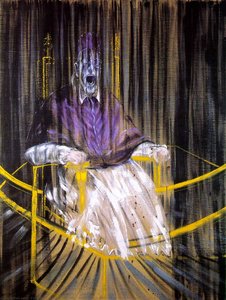
study after velazquez's portrait of pope innocent x, 1953 - Francis Bacon
 study after velazquez's portrait of pope innocent x, 1953 - Francis Bacon
In Study after Velázquez's Portrait of Pope Innocent X (1953), the lines of history aren’t merely drawn; they are choreographed in a visceral, haunting ballet of existential dread. This is not a mere composition; it is a dance frozen in time , where the authoritative grandeur of the Old Master is dismantled and rebuilt through Bacon's fractured lens. The figure, trapped within a skeletal, cage-like structure, emerges in stark whites and bruised purples against a void of deep blacks and somber browns.
The brushwork possesses a rhythmic, almost violent energy—thick, gestural strokes that create a heavy impasto effect, making the canvas appear to breathe rhythm through its very texture. As the eyes trace the bright, jarring yellow lines of the chair, one feels the tension between confinement and the raw, screaming soul within. Its place in our collection of the top 25 artworks of Francis Bacon is a tribute to this profound ability to make chaos feel like harmony. What if your own walls could hold such a powerful, transformative balance?
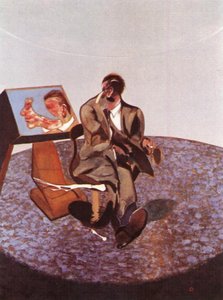
Portrait of George Dyer in a Mirror, 1968 - Francis Bacon
 Portrait of George Dyer in a Mirror, 1968 - Francis Bacon
In Portrait of George Dyer in a Mirror, 1968 , Francis Bacon transcends mere portraiture to stage a visceral confrontation with the fractured self. This haunting masterpiece serves as a profound exploration of human isolation, where the boundaries between reality and reflection dissolve into a dreamscape of psychological turmoil. The painting depicts Dyer, Bacon’s longtime companion, seated before an easel that displays a distorted self-portrait—a doubling effect that amplifies the sense of existential dread and identity crisis.
Bacon utilizes a somber, muted palette of deep greens, browns, and blacks, punctuated by angular, surrealist forms that evoke a sense of entrapment. The textured, swirling background creates a claustrophobic atmosphere, mirroring the post-war anxieties of an era grappling with disillusionment. Today, this work remains a vital cultural touchstone for curated contemporary spaces; its raw expressionism and exploration of duality resonate deeply within modern interior design, where collectors seek art that possesses both intellectual depth and an unapologetic emotional intensity. It is not merely a painting, but a mirror held up to the very soul of modern existence.
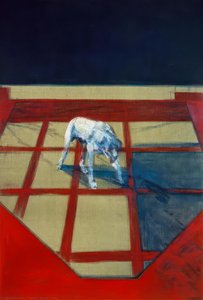
Dog - Francis Bacon
 Dog - Francis Bacon
In the haunting stillness of Dog , Francis Bacon captures a moment where primal instinct meets profound existential solitude. This masterpiece earns its place among the top 25 artworks of Francis Bacon through its masterful ability to transmute a simple subject into a vessel for human vulnerability. The composition is a visceral dialogue between organic life and rigid geometry; a solitary white figure stands trapped within a stark, architectural grid of crimson lines and deep, atmospheric shadows.
The sensory experience of the piece is defined by Bacon’s signature impasto technique, where energetic, loose brushstrokes breathe a restless life into the canine form, contrasting sharply against the clinical precision of the surrounding cage-like structure. The palette—a somber arrangement of midnight blues, muted whites, and striking reds—evokes an unmistakable sense of tension and introspection. For the discerning collector or interior designer, such a work offers more than mere decoration; it provides a sophisticated focal point that invites deep contemplation, bringing a layer of intellectual depth and avant-garde prestige to any modern architectural space.
painting, 1946 - Francis Bacon
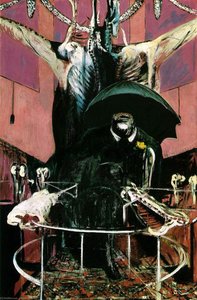 painting, 1946 - Francis Bacon
To stand before a work from the immediate post-war era is to witness the very moment the human psyche began to grapple with its own fragmentation. In painting, 1946 by Francis Bacon , we encounter a visceral landscape of existential dread and surrealist beauty that secures its place among the top 25 artworks of Francis Bacon . This piece serves as a haunting reinterpretation of religious iconography, where a central figure, reminiscent of a crucifixion, is suspended amidst chains and ropes, evoking profound themes of confinement and sacrifice.
The canvas is a masterclass in expressionist intensity ; Bacon employs thick, impasto brushwork and a dramatic palette of deep reds, purples, and blacks to create a claustrophobic, dreamlike atmosphere. As you observe the distorted figures—including a mysterious man beneath an umbrella and unsettling, insect-like forms—the heavy shadows and stark chiaroscuro pull you into a world of decay and transformation. It is a powerful exploration of human vulnerability that continues to captivate collectors today, proving that Bacon’s raw, unfiltered emotional depth can still transform a modern space into a site of profound contemplation.
Untitled 1 - Francis Bacon
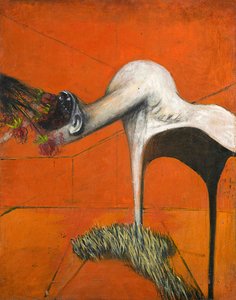 Untitled 1 - Francis Bacon
While many view his work through a lens of pure chaos, the creation of Untitled 1 was born from Bacon’s profound obsession with the visceral power of the scream—a motif he famously extracted from the cinematic intensity of Eisenstein. In this 1954 masterpiece, the artist achieves a breathtaking technical feat: using thick, layered oil pigments and unconventional textures to transform a white, equine-like self-portrait into a vessel of existential dread. The striking contrast between the stark, ghostly head and the aggressive, blood-red background creates a sensory tension that is almost palpable.
As one of the top 25 artworks of Francis Bacon , this piece represents a conceptual leap where Cubist fragmentation meets raw, unbridled Expressionism. The way the light seems to struggle against the dark, amorphous forms invites deep contemplation. For the discerning collector, possessing such a profound exploration of human vulnerability can transform a modern study or home office into a space of intense intellectual focus and sophisticated, brooding prestige.
STUDIES FROM THE HUMAN BODY (triptych, left) - Francis Bacon
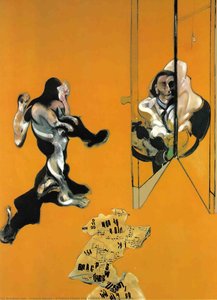 STUDIES FROM THE HUMAN BODY (triptych, left) - Francis Bacon
To stand before STUDIES FROM THE HUMAN BODY (triptych, left) is to enter a space of profound psychological tension, where the air feels heavy with the weight of unspoken anxieties. One does not simply view this 1970 masterpiece; one experiences a visceral confrontation with the fragility of our very essence. Bacon utilizes a jarring palette of unsettling yellows and oranges to illuminate figures that appear caught in a state of mid-dissolution, their forms distorted by an invisible, existential force.
This work earns its place among the top 25 artworks of Francis Bacon because it captures the raw, unvarnished truth of the human condition—the vulnerability, the decay, and the silent screams of the post-war psyche. Through his masterful use of Expressionist brushwork, Bacon transforms the canvas into a mirror for our deepest fears. While such intensity can be unsettling, integrating the profound depth of Bacon’s vision into a curated collection allows us to engage with the complexities of life, bringing a sense of intellectual rigor and emotional resonance to the modern interior.
Figure in a Landscaspe - Francis Bacon
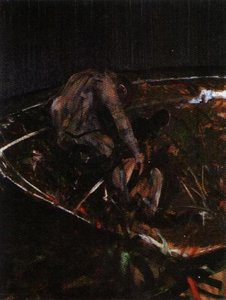 Figure in a Landscaspe - Francis Bacon
In Figure in a Landscape , the lines of Bacon’s brush aren’t merely drawn; they are choreographed . This is not a static composition; it is a dance frozen in time , capturing the visceral tremor of post-war anxiety. The subject, slumped and anonymous, exists within a space where the boundaries between the human form and the environment dissolve into a rhythmic, unsettling pulse. Through thick, sculptural layers of ochre, grey, and muted earth tones, Bacon creates a world that feels both decaying and intensely alive.
The painting’s placement among the top 25 artworks of Francis Bacon is a tribute to its profound ability to make chaos feel like harmony. As we gaze upon the fragmented silhouette against the haunting backdrop of a boat and a solitary chair, we are forced to confront the raw vulnerability of existence. What if your living room could hold that same balance? What if your walls could breathe rhythm and invite such deep, existential reflection into your home?
Collins St., 5 pm - Francis Bacon
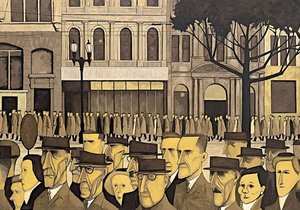 Collins St., 5 pm - Francis Bacon
Stepping into the world of Collins St., 5 pm is like witnessing a cinematic freeze-frame of urban existence, where the frantic energy of the city meets a profound, rhythmic stillness. While this evocative piece is often discussed in the same breath as the visceral intensity found in the top works of Francis Bacon , it offers a unique, structured meditation on the human condition. The scene unfolds with a muted, almost monochromatic gravity, capturing the weary, synchronized movement of commuters navigating the bustling Melbourne streets at the close of the workday.
The atmosphere is thick with the palpable weight of routine; there is a haunting beauty in the uniformity of the figures and the stark, architectural shadows that define the streetscape. For the discerning collector or interior designer, such a work brings a sophisticated, contemplative depth to a modern space. Its rhythmic composition and somber palette serve as an anchor for minimalist interiors, inviting moments of quiet reflection on the intersection of societal structure and individual experience.
Study for a Pope VI - Francis Bacon
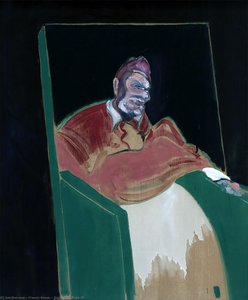 Study for a Pope VI - Francis Bacon
In Study for a Pope VI by Francis Bacon, the commanding, visceral use of crimson and deep ochre establishes an atmosphere of profound psychological tension. This palette does not merely decorate the canvas; it vibrates with an almost violent intensity, setting a mood of existential unrest that is central to why this piece remains one the top 25 artworks of Francis Bacon . The way these warm, blood-like tones clash against the shadowy, indistinct background creates a sense of isolation and raw emotion that is impossible to ignore.
For the discerning collector or interior designer, integrating such a powerful work into a modern space requires a sophisticated touch. The painting’s dramatic color scheme can serve as a focal point for a dining room, where it can anchor a palette of dark woods and muted textures, or in a contemporary study to evoke a sense of intellectual depth and gravity. By mirroring its intense reds and somber shadows through curated lighting and accent pieces, one can transform a living space into a gallery-like sanctuary that celebrates the bold expressionism and haunting beauty of Bacon’s legendary legacy.
composition, 1933 - Francis Bacon
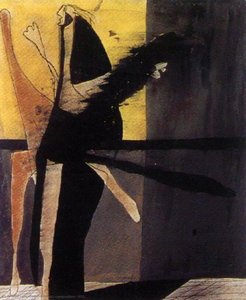 composition, 1933 - Francis Bacon
In Composition (1933) , we encounter a profound precursor to the visceral intensity that would later define Francis Bacon’s legacy. This early masterpiece stands as a vital inclusion in our selection of the top 25 artworks of Francis Bacon because it captures the precise moment where Surrealist dreamscapes meet existential dread. The painting presents an arresting, illogical tenderness: a woman cradling a giraffe with maternal devotion, a juxtaposition that immediately unsettles the viewer’s sense of reality.
The visual language is strikingly tactile; the heavy, expressive applications of pigment create a rugged landscape of paint that mirrors the psychological instability of the interwar period. For the discerning collector or interior designer, this piece offers an unparalleled atmospheric depth. Its muted, somber tones and haunting silhouettes provide a sophisticated focal point for modern, minimalist spaces, where the tension between the delicate figure and the symbolic birds creates a quiet, prestigious drama. It is not merely a painting, but a window into the fractured human psyche.
self-portrait, 1972 iii - Francis Bacon
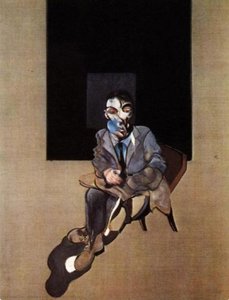 self-portrait, 1972 iii - Francis Bacon
In Self-Portrait, 1972 III by Francis Bacon, the dominating presence of a stark, monochromatic palette—composed of haunting greys, deep blacks, and bone-like whites—establishes an atmosphere of profound existential stillness. This mastery of shadow and light is precisely why this work remains a cornerstone among the top 25 artworks of Francis Bacon . The artist utilizes these desaturated tones not merely for aesthetic effect, but to strip away the superficial, forcing a confrontation with the raw, fractured essence of the human psyche.
For the discerning collector or interior designer, integrating such a powerful piece into a modern living space or a minimalist dining room offers an unparalleled opportunity to curate emotional depth. The painting’s somber, dramatic lighting can anchor a room, providing a sophisticated focal point that complements contemporary architectural lines and neutral textures. By introducing this level of visceral intensity, one can transform a gallery-like setting into a space of deep reflection, where the interplay of light and shadow mirrors the complex, layered history of 20th-century expressionism.
Selfportrait Centre Georges Pompidou, PARIS - Francis Bacon
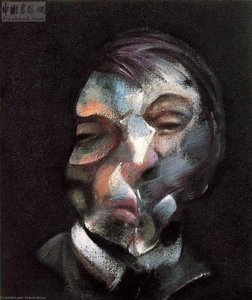 Selfportrait Centre Georges Pompidou, PARIS - Francis Bacon
To encounter Francis Bacon’s Selfportrait Centre Georges Pompidou is to stand before a mirror that refuses to reflect a coherent reality. In this haunting 1971 masterpiece, the artist invites us into a space of profound psychological intimacy, where the boundaries between the self and the void begin to dissolve. The composition is strikingly claustrophobic, pulling the viewer toward a tightly cropped view of Bacon’s own visage, rendered with an unsettling, mask-like fragmentation.
The palette is a somber dance of grey, black, and white, punctuated only by ghostly traces of blue and pink that suggest a flesh in flux. Through loose, gestural strokes and dramatic lighting, Bacon captures the very essence of alienation and existential tension. For the discerning collector or interior designer, this work offers much more than mere decoration; it provides an intellectual anchor for sophisticated, contemporary environments. Its presence in a curated space evokes themes of identity and resilience, serving as a powerful, avant-garde centerpiece that inspires deep reflection and conversation.
head vi, 1949 - Francis Bacon
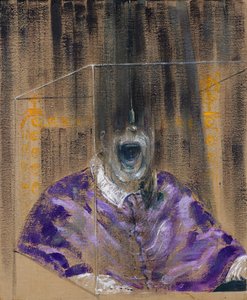 head vi, 1949 - Francis Bacon
In the pantheon of 20th-century expressionism, head vi, 1949 stands as an unflinching confrontation with the abyss of human experience. As one of the most significant entries in our collection of the top 25 artworks of Francis Bacon , this piece captures the visceral psychological disintegration that gripped a post-war Europe. The painting is far more than a portrait; it is a haunting echo of wartime trauma, where the sickly yellow background and the figure's distorted, screaming visage serve as universal symbols of existential dread.
Bacon’s mastery lies in his ability to use the squeeze technique —applying paint with a raw, physical energy that makes the canvas pulse with life and terror. The man, draped in a deep purple robe, appears caught in a moment of silent, agonizing metamorphosis. For the discerning collector or interior designer, integrating such a profound work into a curated space creates a powerful dialogue between historical gravity and modern aesthetic tension. It invites us to reflect on the fragility of our own consciousness, making it an indispensable cornerstone for any serious exploration of modern art masterpieces .
Pope and Chimpanzee,1962 - Francis Bacon
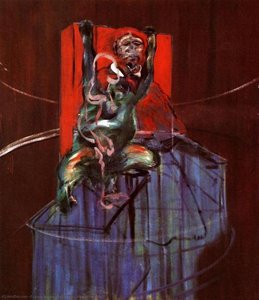 Pope and Chimpanzee,1962 - Francis Bacon
To stand before a masterpiece of existential tension is to confront the very fractures of the human soul. In Pope and Chimpanzee, 1962 by Francis Bacon , we encounter one of the most unsettling yet profound entries in our collection of the top 25 artworks of Francis Bacon. This work serves as a visceral window into the post-war psyche, where the boundaries between man and beast, authority and instinct, begin to dissolve.
The canvas is a theater of anxiety; Bacon utilizes fragmented forms and a technique of dripping, splattered paint to create a texture that feels almost wounded. A seated figure, hands bound in a gesture of profound subjugation, sits alongside an incongruous chimpanzee, a juxtaposition that disrupts all conventional portraiture. The palette is haunting, utilizing distorted perspectives to mirror a fractured internal reality. As we explore this pivotal work, we see how Bacon’s mastery of expressionism captures the raw, primal terror of existence. Such powerful imagery does more than decorate a room; it transforms a space into a site of deep contemplation, inviting the viewer to engage with the beautiful, terrifying complexity of our shared humanity.
female nude standing in a doorway 1972 - Francis Bacon
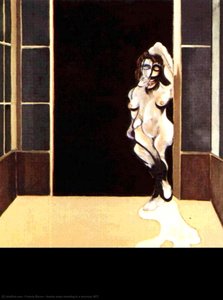 female nude standing in a doorway 1972 - Francis Bacon
To stand before a masterpiece of existential tension is to confront the very marrow of human vulnerability. In female nude standing in a doorway 1972 by Francis Bacon , we are not merely observing a figure, but witnessing a profound psychological descent. This work earns its place among the top 25 artworks of Francis Bacon through its haunting ability to transform a simple architectural threshold into a site of profound entrapment and exposure.
Bacon utilizes his signature visceral technique, where thick, almost sculptural applications of oil paint create a surface that feels both wounded and raw. The central figure, caught in a gesture of instinctive protection with hands pressed against her face, emerges from a void of deep, eery shadows. The stark contrast between the pale, distorted flesh and the oppressive black background amplifies the sense of isolation. As the light catches the textured, dripping pigments, the painting breathes with an unsettling energy. It remains a timeless cornerstone of modern expressionism, reminding us how art can transform a space into a sanctuary for contemplating the most complex, unspoken depths of the human soul.
after the life mask of william blake iii, 1955 - Francis Bacon
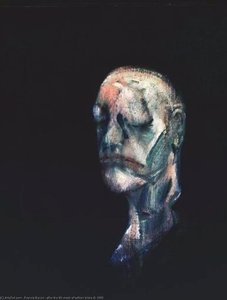 after the life mask of william blake iii, 1955 - Francis Bacon
In After the Life Mask of William Blake III , Francis Bacon does not merely paint a portrait; he conducts an excavation of the human psyche. To stand before this 1955 masterpiece is to witness a visceral echo of mortality. The light here does not illuminate so much as it haunts, emerging from a palette of bruised purples, muted grays, and abyssal blacks to reveal a face in the throes of dissolution.
Bacon uses the historical reference of the life mask to deconstruct identity itself. Through thick, gestural impasto and fragmented forms, he captures a sense of profound alienation. The composition is claustrophobic, with a flattened perspective that traps the subject’s downward gaze within a void of psychological turmoil. It is this mastery of tension—the way the paint seems to vibrate with instability—that secures its place among the top 25 artworks of Francis Bacon. This is art that does not just reflect existence; it captures the raw, unvarnished ache of being alive, inviting you to contemplate the beautiful tragedy of the human condition.
second version of triptych 1 - Francis Bacon
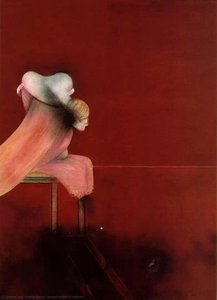 second version of triptych 1 - Francis Bacon
To encounter the Second Version of Triptych 1 is to confront the very essence of existential dread. In this haunting reimagining of his 1944 breakthrough, Francis Bacon captures a profound sense of isolation that resonates far beyond the canvas. The solitary figure, slumped in a chair with a face obscured by mask-like distortion, evokes a universal vulnerability—a silent scream echoing through the corridors of the human psyche. It is a masterpiece of tension, where the jarring, visceral red of the background clashes against muted, dissolving forms to create an atmosphere of inescapable anxiety.
This work earns its place among the top 25 artworks of Francis Bacon due to its unparalleled ability to translate post-war trauma into a timeless visual language of distortion and raw emotion. At Mus3ums.com, we honor this legacy through our meticulous handmade oil reproductions. Our master artists utilize layered techniques and textured brushwork to preserve the sculptural depth and psychological intensity of Bacon’s vision, allowing collectors to invite this profound, transformative energy into their own private sanctuaries.
Man in Blue I - Francis Bacon
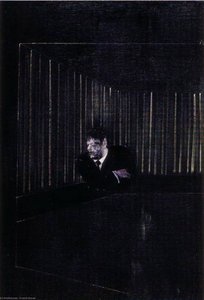 Man in Blue I - Francis Bacon
To encounter Man in Blue I by Francis Bacon is to step directly into a visceral exploration of human vulnerability and existential dread. As one of the most profound entries in our collection of the top 25 artworks of Francis Bacon, this 1952–1953 masterpiece transcends mere portraiture; it is an unsettling plunge into the depths of the subconscious. Through a masterly use of distorted forms and a claustrophobic setting, Bacon captures the psychological wreckage of the post-war era, prioritizing raw emotional truth over anatomical accuracy.
The composition utilizes a strikingly restrained palette of deep blacks, somber greys, and muted blues, creating an atmosphere of oppressive darkness. Strong, fractured vertical lines bisect the frame like prison bars, trapping the subject in a state of profound isolation. For the modern collector or interior designer, this work offers a powerful focal point for spaces that demand intellectual depth and dramatic tension. Its monochromatic soul and gestural, textured brushstrokes provide a sophisticated, moody aesthetic that resonates within contemporary architectural settings, inviting a contemplative dialogue between the viewer and the shadows of the human condition.
triptych, august, 1972 a - Francis Bacon
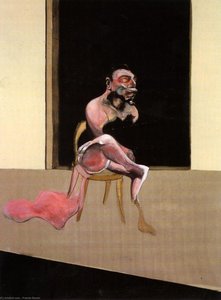 triptych, august, 1972 a - Francis Bacon
While many associate the visceral intensity of Francis Bacon with sudden bursts of madness, the creation of Triptych, August 1972 A was a calculated descent into the depths of existential dread. In this profound work, Bacon moves beyond mere distortion to achieve a masterful fragmentation of the human form, where the boundaries between flesh and psyche dissolve entirely. The central figure, slumped in a state of profound isolation, is rendered through a heavy, gestural application of oil paint; thick impasto meets frantic scraping to evoke the raw sensation of wounded muscle and bruised crimsons.
As one of the most significant entries in our collection of the top 25 artworks of Francis Bacon , this triptych serves as a powerful study in shadow and resilience. The somber palette of earthy ochres and ghostly greys creates an atmosphere of quiet, monumental tension. For the sophisticated collector, placing such a commanding piece within a modern home office or private study provides more than just visual depth; it fosters an environment of intense focus and intellectual rigor, inviting a silent, powerful dialogue with the complexities of the human condition.
Interior of a Room - Francis Bacon
 Interior of a Room - Francis Bacon
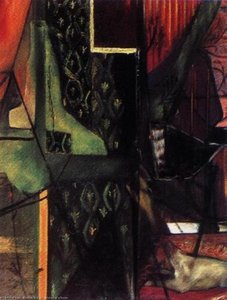
In Interior of a Room by Francis Bacon, the composition is defined by a stark, geometric tension that commands the viewer's attention. The arrangement of the chairs—positioned diagonally to create an unsettling imbalance—establishes a structural rhythm that is both jarring and profoundly captivating. This precise use of lines and shapes creates a sense of architectural permanence, contributing to its status as one of the top 25 artworks of Francis Bacon . While the subject matter explores psychological fragmentation, the underlying geometry provides a skeletal stability that feels timeless.
For the discerning collector or interior designer, this work offers a fascinating parallel to modern minimalist design . The monochrome palette and the deliberate, sparse placement of forms—the cat, the dog, and the solitary bowl—ground a clean, contemporary aesthetic within a space. It demonstrates how even the most visceral, existentialist imagery can serve as a powerful anchor in a sophisticated room, providing a deep, intellectual gravity that complements a curated, high-end environment.
portrait49 - Francis Bacon
 portrait49 - Francis Bacon
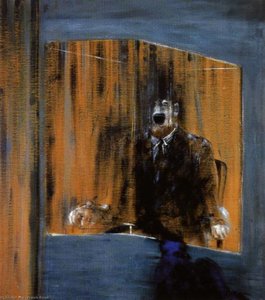
To stand before a masterpiece of existential tension is to confront the very essence of the human psyche. In portrait49 by Francis Bacon , we encounter one of the most profound entries in our collection of the top 25 artworks of 'Francis Bacon'. This 1968 monochrome work serves as a haunting window into the post-war era's collective anxiety, stripping away the distractions of color to focus entirely on the raw, psychological weight of existence.
The composition captures a man in a suit, his gaze fixed through a window, caught in a moment of profound contemplation and palpable unease. Bacon’s expressionist technique is visceral; he utilizes layers of emulsion paint, meticulously scraped away to reveal textures that mimic the fragility of flesh and bone. The stark black and white palette amplifies the sense of isolation, turning a simple portrait into a dramatic study of confinement and observation. This piece remains essential because it does not merely depict a subject; it evokes an atmosphere of inescapable truth. Such works possess a timeless power, capable of transforming a modern interior into a space of deep reflection and intellectual gravity.
Hombre con Perro - Francis Bacon
 Hombre con Perro - Francis Bacon
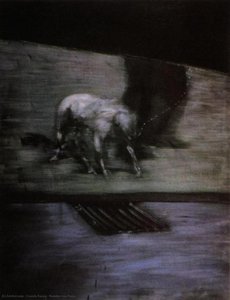
To encounter Hombre con Perro by Francis Bacon is to step directly into a visceral landscape of existential tension. This work does not merely depict subjects; it captures the very frequency of human anxiety. Rendered in a haunting, monochromatic palette, the composition utilizes distorted, almost grotesque canine forms and a spectral human presence to evoke a profound sense of isolation and psychological unrest. Its inclusion in our selection of the top 25 artworks of Francis Bacon is essential, as it exemplifies his unparalleled ability to bypass traditional beauty in favor of raw, emotional truth.
The painting’s power lies in its controlled chaos—the way loose, gestural brushstrokes and dramatic shadows create a sense of movement and struggle. At Mus3ums.com, we believe such profound works should not be confined to museum archives but integrated into the soul of your personal sanctuary. Whether as a centerpiece in a modern office or a focal point in a refined home, bringing this masterpiece into your space transforms a mere wall into a powerful statement of depth and intellectual rebellion.
figure study ii, 1945-46 - Francis Bacon
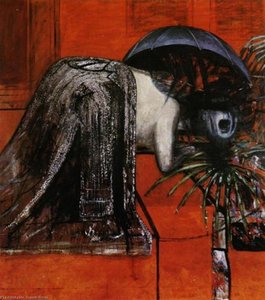 figure study ii, 1945-46 - Francis Bacon
To encounter Figure Study II, 1945-46 by Francis Bacon is to stand at the precipice of the human psyche, where the boundaries between flesh and shadow dissolve into a profound expression of existential unrest. At Mus3ums.com, our mission has always been to democratize such monumental beauty, ensuring that the raw, transformative power of the Old Masters and modern icons alike can be experienced far beyond the walls of a traditional museum.
This masterpiece earns its place in our Top 25 through its uncompromising ability to translate post-war trauma into a visceral visual language. Through fragmented forms and the haunting presence of an open umbrella, Bacon creates a claustrophobic, symbolic space that resonates with timeless themes of isolation and vulnerability. The muted, somber palette and textured, almost wounded surfaces demand an emotional response, making it an irreplaceable pillar of 20th-century expressionism.
Just as this painting redefines the boundaries of portraiture, it offers a profound opportunity for the modern collector to introduce a sense of depth and intellectual gravity to a curated space. Through our high-fidelity, hand-painted oil reproductions, you can bring this striking, transformative presence into your own home, office, or private gallery, making Bacon’s enduring legacy a permanent part of your personal aesthetic journey.
two figures, 1953 - Francis Bacon
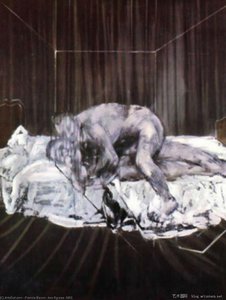 two figures, 1953 - Francis Bacon
In the hauntingly monochrome depths of Two Figures (1953) , Francis Bacon captures that most primal and unsettling human truth: the thin veil between intimacy and existential dread. To encounter this work is to witness a profound psychological tension, where two intertwined bodies emerge from a void, their struggle rendered in stark, visceral tones. It earns its place among the top 25 artworks of Francis Bacon because it distills his entire philosophy—the fragility of flesh and the isolation of the soul—into a single, breathless moment of monochrome intensity.
The composition is masterfully unsettling; the presence of scattered birds introduces a sense of precariousness, as if even nature is caught in this orbit of decay. At Mus3ums, we understand that such profound emotion requires more than a mere print. Our master artists utilize heavy impasto techniques and meticulous layering on 100% cotton canvas to recreate the palpable ridges and physical textures of Bacon’s brushwork. We invite you to bring this powerful piece of modern art history into your private collection through our bespoke, hand-painted oil reproductions, ensuring the raw, visceral spirit of the original remains eternally vibrant in your home.
Conclusion
To walk through the visceral landscapes of Francis Bacon is to confront the very essence of the human condition—the raw, the unvarnished, and the profoundly moving. These twenty-five masterpieces are far more than mere relics of a turbulent twentieth century; they are living, breathing presences that continue to pulse with an unsettling vitality. They challenge our perceptions, demand our attention, and possess a unique ability to transform a space from a simple room into a sanctuary of deep reflection and intellectual inquiry.
At Mus3ums.com , we believe that the profound emotional weight of such works should not be confined to the silent halls of a museum. We strive to bridge the gap between historical significance and contemporary living, ensuring that the soul of Bacon’s distortion and intensity can find a home within your own curated environment. Every hand-painted reproduction in our collection is a labor of reverence, meticulously crafted by skilled artists who honor the original's frantic brushwork, its haunting shadows, and its inimitable spirit.
Whether you are drawn to the primal terror of his figures or the architectural isolation of his compositions, we invite you to explore the full collection . Allow us to help you bring a piece of this enduring legacy into your world, where the timelessness of fine art meets the tangible beauty of master craftsmanship.