Introduction
The first decades of the twentieth century in Russia were defined by profound political and social upheaval, providing the catalyst for two of the most radical movements in modern art history: Suprematism and Constructivism. Suprematism was launched by Kazimir Malevich in Petrograd in December 1915, introducing a visual language of pure geometric abstraction intended to express spiritual feeling. Shortly thereafter, between 1920 and 1921, Constructivism emerged in Moscow, as artists began to reject traditional easel painting in favor of art that served the practical needs of a new Soviet society.
Because both movements originated from the same turbulent era and shared a common rejection of figurative tradition, they are frequently compared or confused. Both movements utilized a radical language of geometry and drew heavily from the foundations of Cubism and Futurism. However, they pulled in opposite directions: one toward the metaphysical and the other toward the industrial. This article examines the fundamental distinctions between these two currents, exploring how Suprematism sought the supremacy of pure feeling while Constructivism embraced the role of the artist-engineer to build a functional, modern world.
| Suprematism | Constructivism | |
|---|---|---|
| Dates | c. 1915-1930s | c. 1914-1930s |
| Where | Russia (Petrograd/Vitebsk) | Russia (Moscow) |
| Key painters | Kazimir Malevich, Olga Rozanova, Nikolai Suetin | Vladimir Tatlin, Alexander Rodchenko, Lyubov Popova |
| Palette and light | Coloured rectangles, crosses, circles, and bars on white or pale grounds | Industrial materials, bold typography, and monochrome canvases |
| Typical subjects | Pure geometric forms and spiritual essence of feeling | Practical design, architecture, photography, and industrial materials |
| Technique | Easel painting and porcelain decoration | Assemblage, photomontage, and mass production |
| One key work | Black Square (1915) by Kazimir Malevich | Monument to the Third International (1919-1920) by Vladimir Tatlin |
The Supremacy of Pure Feeling in Suprematism
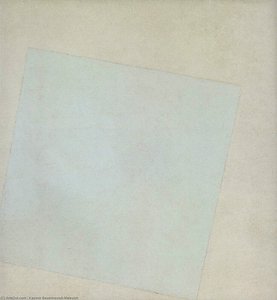
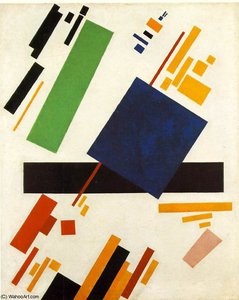 Suprematist Composition - Kazimir Malevich
 Female Portrait - Olga Rozanova
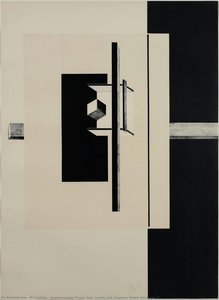 Kestnermappe Proun, Rob. Levnis and Chapman GmbH Hannover #7 - El Lissitzky
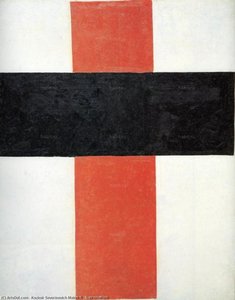
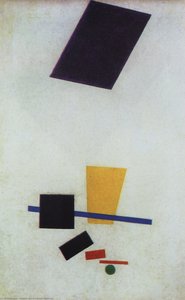
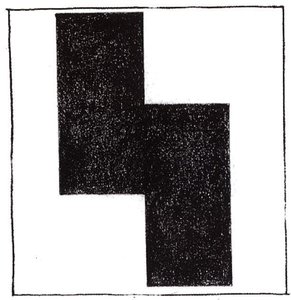
Suprematism emerged in Russia during the turbulent period surrounding the First World War and the Revolution of 1917. The movement was officially launched by Kazimir Malevich in December 1915 at the exhibition known as 0.10, The Last Futurist Exhibition of Paintings, held in Petrograd. Malevich sought to move beyond the representational constraints of traditional painting, which he believed were obligated to mimic the visible world. Instead, he pursued the "supremacy of pure feeling," a concept where art is liberated from the depiction of objects to focus on the essence of sensation.
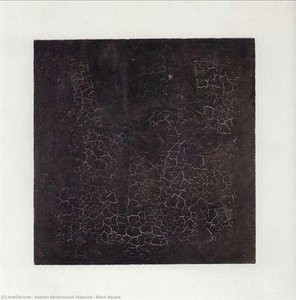
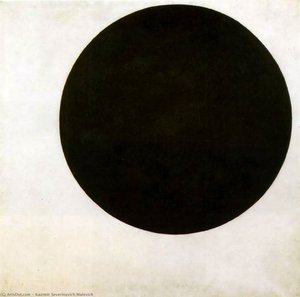
This radical shift was most famously embodied in Malevich’s Black Square (1915). By hanging this work high in the corner of the room—a space traditionally reserved for religious icons in Russian homes—Malevich signaled a profound philosophical break from the past. His later works, such as Suprematist Composition (1916), utilized geometric forms like rectangles, circles, and crosses floating on white or pale grounds, creating a sense of weightlessness in infinite space. This pursuit of abstraction reached a peak in White on White (1918).
Other artists expanded these geometric explorations through different technical approaches:
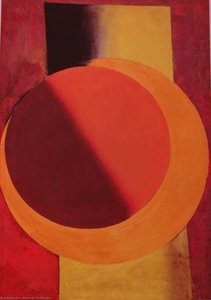
- Olga Rozanova, a significant colorist, pushed the movement toward pure color in works such as Green Stripe (1917).
- Nikolai Suetin, a pupil of Malevich in the UNOVIS group at Vitebsk, applied Suprematist forms to porcelain produced at the State Porcelain Factory in Petrograd during the 1920s.
For the Suprematists, abstraction was not merely a stylistic choice but a spiritual and metaphysical end in itself, aiming to transcend the material world through the language of pure geometry.
Constructivism and the Artist-Engineer
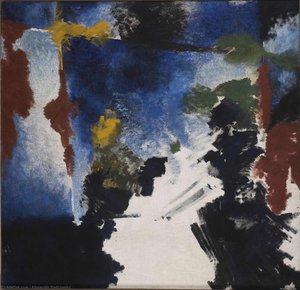 Abstraction (Rupture) - Aleksandr Rodchenko
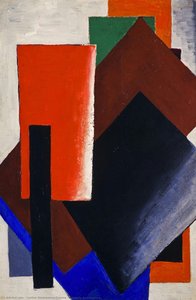 Painterly Architectonic - Lyubov Popova
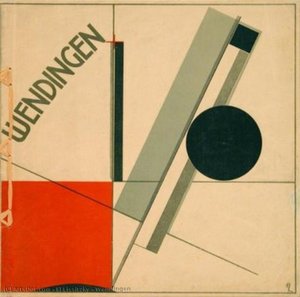 Wendingen - El Lissitzky
While Suprematism sought a metaphysical escape, Constructivism emerged around 1920–1921 in Moscow as a movement rooted in the practical needs of a new Soviet society. Constructivists rejected the concept of "art for art's sake," viewing the traditional easel painting as an outdated relic. Instead, they adopted the persona of the "artist-engineer," focusing on industrial materials, mass production, and social utility.
The movement's origins can be traced to the 1914 Counter-Reliefs by Vladimir Tatlin, which utilized assemblages of wood, metal, and glass to engage directly with physical space. Tatlin’s shift toward three-dimensional construction was further exemplified by his model for the Monument to the Third International (1919–1920), a spiraling tower of iron and glass designed to serve as a functional architectural structure rather than a static object of contemplation.
As the movement progressed, artists moved away from the canvas toward typography, posters, and industrial design. Notable transitions include:
- Alexander Rodchenko exhibited three monochrome canvases—Pure Red Colour, Pure Yellow Colour, and Pure Blue Colour (1921)—which signaled the end of traditional painting, leading him to focus on photography and graphic design, such as his 1924 advertisement for the Leningrad State Publishing House.
- Lyubov Popova transitioned from her Painterly Architectonics series (1916–1918) toward practical applications, including textile designs and stage sets, such as her work for Vsevolod Meyerhold's 1922 production of The Magnanimous Cuckold.
- El Lissitzky acted as a bridge between movements, creating Wendingen (1921), a cover design for a Dutch magazine, which applied geometric principles to the field of architecture and design.
Spiritual Abstraction versus Social Utility
While both movements emerged from the radical shifts of the Russian Revolution, they diverged sharply in their ultimate purpose. Suprematism was a metaphysical pursuit. For Kazimir Malevich, abstraction was a spiritual end in itself, intended to liberate art from the burden of representing the physical world. His works, such as Suprematist Composition (1916), utilized geometric forms to achieve a state of pure feeling. This focus on the spiritual was furthered by artists like Olga Rozanova, whose Green Stripe (1917) explored the expressive potential of pure color. In this context, the canvas was a space for contemplation, often featuring shapes that appeared to float weightlessly in an infinite void.
In contrast, Constructivism rejected this notion of "art for art's sake." Constructivists viewed the artist as an engineer whose role was to serve the building of a new Soviet society through practical application. This movement moved away from the easel and toward industrial materials, typography, and design. Key examples of this functional shift include:
- Vladimir Tatlin's Counter-Reliefs (1914), which utilized assemblages of wood, metal, and glass to engage directly with physical space.
- Alexander Rodchenko's transition from monochrome canvases, such as Pure Red Colour (1921), to practical applications like posters and typography.
- Lyubov Popova's work in textile design and stage sets, such as her designs for the 1922 production of The Magnanimous Cuckold.
El Lissitzky served as a vital bridge between these two ideologies. Trained in the Suprematist circle, he developed the Proun compositions, which functioned as a link between Suprematist painting and architectural engineering. His work, such as the lithograph Kestnermappe Proun (1923), demonstrated how the radical geometry of abstraction could be synthesized into a new visual language for the modern world.
Conclusion
To distinguish these movements in a museum setting, one must observe the intended purpose of the object. A Suprematist work is typically a painting—geometric shapes floating on a pale ground, designed for quiet, metaphysical contemplation. In contrast, a Constructivist work often functions as a construction, a poster, or a design, utilizing industrial materials or bold typography to serve a practical or political social function. While Suprematism seeks the supremacy of pure feeling, Constructivism seeks the utility of the artist-engineer.
Despite these opposing directions, the two movements share a fundamental foundation. Both emerged from the radical shifts of the Russian avant-garde, drawing heavily from Cubism and Futurism. They both rejected the figurative tradition and the obligation to mimic the visible world, opting instead for a radical language of pure geometry to define a new era of modern consciousness.
Explore these radical masterpieces on our website.
Frequently asked questions
What is the difference between Suprematism and Constructivism?
Suprematism, launched by Kazimir Malevich in 1915, sought the supremacy of pure feeling through spiritual, non-objective abstraction. Constructivism, emerging around 1920-1921, rejected art for art's sake. Constructivists acted as artist-engineers, using industrial materials and practical designs to serve the building of a new Soviet society.
Who are the famous painters of Suprematism?
Key figures of the Suprematist movement include Kazimir Malevich, who introduced the movement at the 0.10 exhibition in 1915, Olga Rozanova, a brilliant colourist, and Nikolai Suetin, a pupil of Malevich in the UNOVIS group.
What are some famous Suprematist artworks?
Notable works include Kazimir Malevich's Black Square (1915) and Suprematist Composition (1916). Other significant pieces include Olga Rozanova's Green Stripe (1917) and Suprematist Composition: White on White (1918). El Lissitzky also created Proun compositions that bridged Suprematist painting and architecture.
Who were the main artists in Constructivism?
Major Constructivist artists included Vladimir Tatlin, known for his Counter-Reliefs (1914), and Alexander Rodchenko, who moved from monochrome canvases to photography and typography. Lyubov Popova was also a key figure, moving from Painterly Architectonics to textile designs and stage sets.
Famous painters of Suprematism
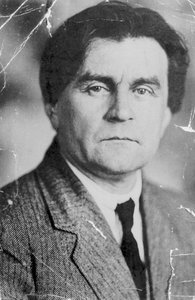
- 1879 – 1935Kazimir Malevich
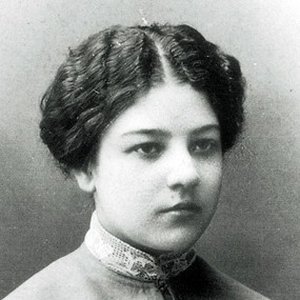
- 1886 – 1918Olga Rozanova
Famous artworks of Suprematism
- Kazimir Malevich · 1916Suprematist Composition
- Kazimir Malevich · 1918Suprematist Composition: White on White
- Olga Rozanova · 1907Female Portrait
- Olga Rozanova · 1916Suprematism


Famous painters of Constructivism
- 1885 – 1953Vladimir Tatlin
- 1891 – 1956Aleksandr Rodchenko
- 1889 – 1924Lyubov Popova


Famous artworks of Constructivism
- Aleksandr Rodchenko · 1920Abstraction (Rupture)
- Aleksandr Rodchenko · 1918Red and Yellow
- Lyubov Popova · 1916Painterly Architectonic
- Lyubov Popova · 1915Untitled