A Pioneer of Abstraction: The Life and Legacy of Hilla Rebay
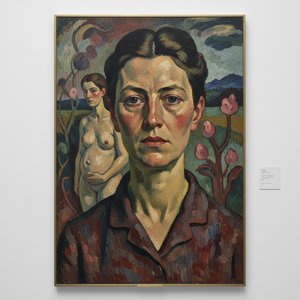
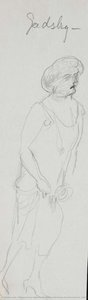
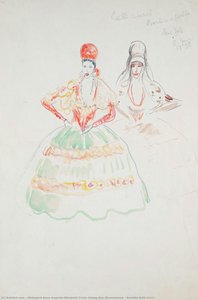
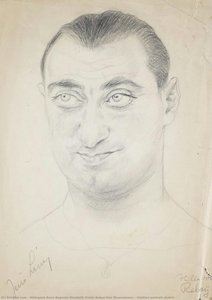
Hilla Rebay, a name perhaps less familiar than some of her contemporaries, nevertheless stands as a pivotal figure in the development of abstract expressionism and a crucial architect of modern art’s reception in America. Born Hildegard Anna Augusta Elisabeth Freiin Rebay von Ehrenwiesen in Strasbourg, Germany, in 1890, she emerged from an aristocratic background to become a visionary artist, collector, museum director, and ultimately, a champion of a radical new aesthetic sensibility. Her journey was one of constant reinvention, marked by a restless spirit, a deep spiritual connection to art, and an unwavering belief in the transformative power of non-objective forms.Early Influences and Artistic Training
Rebay’s early life provided her with a privileged yet intellectually stimulating environment. Growing up within the confines of a noble family instilled in her a sense of cultural awareness and artistic appreciation, while simultaneously fostering a desire to forge her own path beyond societal expectations. From a young age, she demonstrated an innate talent for art, receiving formal training at the Cologne Kunstgewerbeschule and later at the Académie Julian in Paris. These initial studies provided her with a solid foundation in traditional techniques – landscape painting, portraiture, genre scenes, and historical compositions—skills that would later inform her approach to abstraction. However, Rebay’s true artistic awakening occurred during her time in Munich in 1910, where she encountered the vibrant world of German Jugendstil. The works of Fritz Erler, a prominent Jugendstil painter, opened her eyes to the possibilities of modern art and ignited a desire to break free from conventional representation. This encounter marked a turning point, propelling her towards experimentation and challenging established artistic norms.The Avant-Garde Circle and the Rise of Non-Objectivity
Following her exposure to Jugendstil, Rebay became deeply involved in the burgeoning avant-garde scene of Berlin. She participated in exhibitions at the Cologne Kunstverein in 1912 and the Salon des Indépendants in Paris in 1913, immersing herself in a constellation of radical artists—Archipenko, Brâncuși, Chagall, Delaunay, Gleizes, Rivera, and van Rees among them. It was during this period that she encountered Hans (Jean) Arp, an encounter that profoundly shaped her artistic trajectory. Through Arp’s influence, Rebay discovered the groundbreaking work of Kandinsky, Klee, Marc, and Bauer—artists who were pioneering a new approach to art by abandoning representational form altogether. This exposure ignited a profound shift in Rebay's artistic vision, inspiring her to explore the expressive potential of pure abstraction. She began creating collages, experimenting with overlapping curved lines, planes, dots, and dense textures of asymmetrical shapes – a visual language that hinted at underlying energies and spiritual dimensions. Her early abstract works were characterized by a dynamic interplay of form and color, reflecting both her personal experiences and her evolving understanding of non-objective art.A Patronage Forged in Vision: Rebay and Solomon Guggenheim
In 1927, Rebay embarked on a new chapter, immigrating to New York City. This move proved transformative, not only for her own artistic development but also for the landscape of American art. It was in New York that she forged an extraordinary relationship with Solomon R. Guggenheim, a bond built on mutual respect and a shared passion for non-objective art. Rebay quickly became Guggenheim’s confidante and trusted advisor, guiding his collecting endeavors and shaping what would become one of the world's most significant collections of modern art. She tirelessly championed artists like Bauer and Kandinsky, recognizing their genius and advocating for their inclusion in Guggenheim’s holdings. This patronage wasn’t merely about acquiring artworks; it was about fostering a new aesthetic sensibility and challenging prevailing artistic conventions. In 1939, Rebay's vision culminated in the founding of the Museum of Non-Objective Painting – the precursor to the Solomon R. Guggenheim Museum – with herself as its first director. This institution served as a beacon for abstract art, providing a platform for groundbreaking artists and introducing American audiences to new ways of seeing.The Guggenheim Museum: A Legacy of Innovation
Rebay’s influence extended far beyond the walls of the museum she founded. Her insistence on a building designed by Frank Lloyd Wright resulted in an architectural masterpiece—a spiraling structure that embodies the spirit of modernism and serves as a powerful symbol of the Guggenheim's commitment to innovation. The museum, which opened in 1959 (though Rebay sadly did not live to see it), stands today as a testament to her visionary leadership and enduring legacy. Her guidance to Solomon Guggenheim not only shaped the development of a world-renowned collection but also contributed to the broader acceptance and appreciation of non-objective aesthetics.A Lasting Impact: Legacy and Historical Significance
Hilla Rebay’s influence extends far beyond her own artistic creations. She was a tireless advocate for non-objective art, organizing numerous exhibitions throughout Europe and the United States, and fostering dialogue around its aesthetic principles. As director of the Museum of Non-Objective Painting/Solomon R. Guggenheim Museum, she played a vital role in establishing its reputation as a leading center for modern art. Her contributions to the development of abstract expressionism are undeniable, and her legacy continues to inspire artists and collectors today. She stands as a pivotal figure in the story of modern art, a pioneer who dared to challenge conventions and champion a new aesthetic vision—a testament to the power of artistic courage and unwavering dedication.Key Achievements
- Co-founder of Der Krater: A significant artist group promoting avant-garde expression.
- Advisor to Solomon R. Guggenheim: Instrumental in shaping his collection of non-objective art.
- Founder and First Director of the Museum of Non-Objective Painting (now the Guggenheim): Established a leading institution for modern art.
- Commissioned Frank Lloyd Wright to design the Guggenheim Museum: Resulting in an iconic architectural landmark.
- Champion of Abstract Art: Organized exhibitions and fostered dialogue around non-objective aesthetics.
Otázky a odpovědi
V jakém městě a z jaké země pochází Hilla Rebay von Ehrenwiesen?
Hilla Rebay von Ehrenwiesen se narodil(a) ve městě Štrasburk v zemi Francie.
Odkud pochází Hilla Rebay von Ehrenwiesen?
Hilla Rebay von Ehrenwiesen se narodil(a) v Francie.
V jakém historickém období působil/a Hilla Rebay von Ehrenwiesen?
Hilla Rebay von Ehrenwiesen působil v období Modernismus. Toto období historicky vymezuje uměleckou činnost tohoto autora.