Introduction
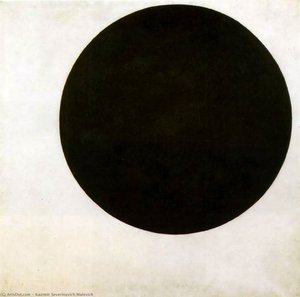
Have you ever looked at a painting of a simple black square or a bright red circle and wondered, "What is the point of this?" If you have, you are already standing at the crossroads of one of the most radical eras in art history. We are looking at the Russian avant-garde, a period of intense upheaval shaped by the First World War and the Revolution of 1917. Within this turbulent decade, two powerful movements emerged: Suprematism and Constructivism.
It is very easy to confuse them at first glance. Both movements were born in Russia and both abandoned the traditional way of painting people or landscapes in favor of a bold, new language of pure geometry. You will see similar shapes—rectangles, lines, and circles—in both styles. However, if you look closer, you will see they were actually pulling in opposite directions. While one sought the spiritual, the other sought the practical. In this article, we will help you distinguish between them by exploring three key differences:
- The pursuit of pure feeling versus the service of society.
- The spiritual void versus the industrial construction.
- The contemplative painting versus the functional design.
| Suprematism | Constructivism | |
|---|---|---|
| Dates | c. 1915-1918 | c. 1920-1921 |
| Where | Petrograd, Russia | Moscow, Russia |
| Key painters | Kazimir Malevich, Olga Rozanova, Nikolai Suetin | Vladimir Tatlin, Alexander Rodchenko, Lyubov Popova |
| Palette and light | Coloured rectangles, crosses, circles, and bars on white or pale grounds | Monochrome canvases and industrial materials |
| Typical subjects | Pure geometric forms and spiritual essence | Industrial progress, machine aesthetics, and practical design |
| Technique | Easel painting and porcelain decoration | Assemblage, photomontage, typography, and mass production |
| One key work | Black Square (1915) by Kazimir Malevich | Monument to the Third International (1919-1920) by Vladimir Tatlin |
The Supremacy of Pure Feeling
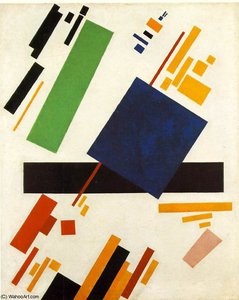 Suprematist Composition - Kazimir Malevich
 Female Portrait - Olga Rozanova
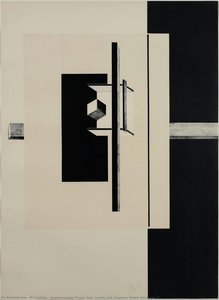 Kestnermappe Proun, Rob. Levnis and Chapman GmbH Hannover #7 - El Lissitzky
Have you ever looked at a painting and felt it was trying to tell you a story about a person or a landscape, only to find that it refuses to do so? That is exactly where we begin our journey into Suprematism. Born in the turbulent years around the Russian Revolution, this movement wasn't interested in mimicking the world we see with our eyes. Instead, it sought something much deeper.
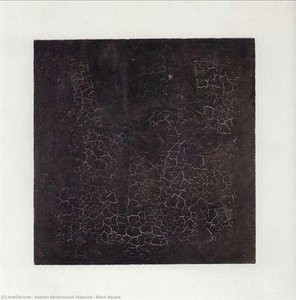
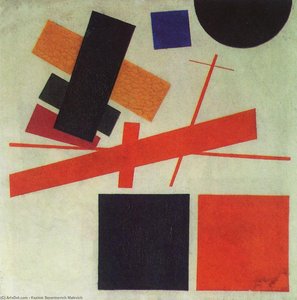
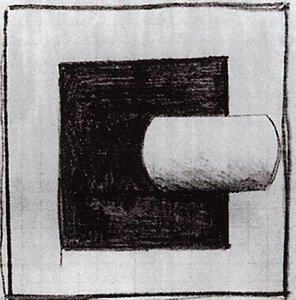
At the heart of this radical shift was Kazimir Malevich. He wanted to liberate art from the "things" of reality—the trees, the faces, the objects—to reach what he called the supremacy of pure feeling. Imagine standing in a gallery in Petrograd in December 1915 at the 0.10 exhibition. There, Malevich hung his iconic Black Square high in the corner of the room, a place traditionally reserved for religious icons in a Russian home. It was a profound, almost unsettling encounter with the void.
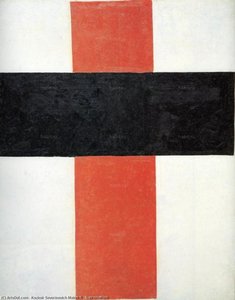
In Suprematism, geometry becomes a language for the soul. You will see shapes that seem to float weightlessly in an infinite, pale space, stripped of all earthly weight. Consider these key examples of that spiritual, non-objective geometry:
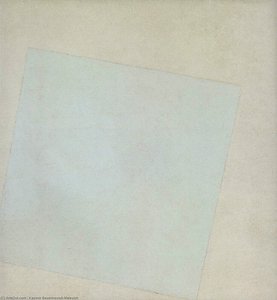
- Suprematist Composition (1916) by Kazimir Malevich: A dynamic arrangement of geometric forms that serves as a foundational statement of abstract art.
- Green Stripe (1917) by Olga Rozanova: A brilliant exploration of pure color that pushed the movement toward its limits.
- White on White (1918) by Kazimir Malevich: A culminating work where the subject is nothing more than the essence of color and form itself.
For these artists, abstraction wasn't just a style; it was a spiritual destination.
Art as a Tool for Society
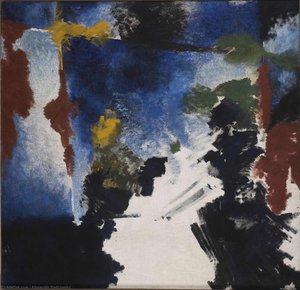 Abstraction (Rupture) - Aleksandr Rodchenko
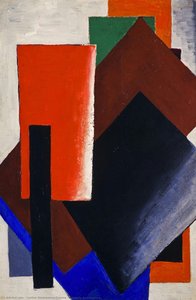 Painterly Architectonic - Lyubov Popova
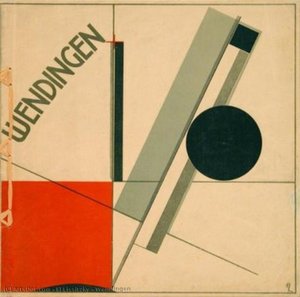 Wendingen - El Lissitzky
If you look at a Suprematist painting, you are meant to contemplate it. But if you look at a Constructivist work, you might ask: What is this for? This was the central question for the Constructivists. Emerging around 1920-1921 in Moscow, these artists weren't interested in the "art for art's sake" approach. They didn't want to create objects just to be admired in a quiet gallery; they wanted to build a new Soviet society. They saw themselves as "artist-engineers," using art as a functional tool for the masses.
Think about how this changed the very nature of the artwork. Instead of just oil on canvas, they turned to industrial materials, typography, and mass production. We see this shift in several fascinating ways:
- Three-Dimensional Construction: It started with Vladimir Tatlin’s Counter-Reliefs in 1914—assemblages of wood, metal, and glass that broke away from the flat canvas to engage directly with real space.
- The Monumental Vision: Tatlin’s ambitious model for the Monument to the Third International (1919-1920) envisioned a spiraling tower of iron and glass, a structure meant to serve a political purpose rather than just a decorative one.
- Graphic Design and Textiles: Alexander Rodchenko moved toward the practical, creating bold posters and typography, such as his 1924 advertisement for the Leningrad State Publishing House. Similarly, Lyubov Popova transitioned from her Painterly Architectonics series (1916-1918) into the world of textile designs and stage sets, such as her work for the 1922 production of The Magnanimous Cuckold.
For these artists, the goal was utility. Whether it was a book cover, a poster, or a piece of fabric, art was meant to be integrated into the fabric of everyday life, serving the collective needs of a revolutionary era.
Spiritual Void vs. Practical Construction
So, how do you tell them apart when you are standing in front of them? It really comes down to a question of purpose: is the art meant for your soul, or is it meant for your life?
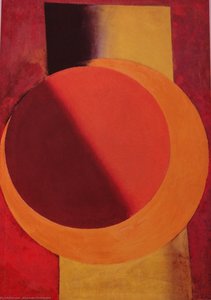
If you find yourself looking at a painting where the shapes seem to be drifting in a vast, silent emptiness, you are likely in the realm of Suprematism. Think of Kazimir Malevich’s Suprematist Composition (1916). Here, you see dynamic geometric forms floating on a pale ground, as if they have no weight at all. It is a quiet, almost metaphysical experience. You might also see this in the work of Olga Rozanova, such as her Green Stripe (1917), which pushes toward the pure, vibrating essence of color. For these artists, abstraction was a way to reach a spiritual state, a "supremacy" of feeling that didn't need to represent a single object from the physical world.
But then, look at the Constructivists, and the energy shifts entirely. They weren't interested in floating in a void; they wanted to build the world. Instead of just paint on canvas, they looked to industrial materials—wood, metal, and glass. Consider these differences:
- Suprematism: Focuses on the contemplative. It is often a painting of shapes—circles, crosses, and bars—meant for meditation.
- Constructivism: Focuses on the functional. It is often a construction, a poster, or a design. Think of Alexander Rodchenko’s move toward typography and posters, or Lyubov Popova’s transition from painting to textile designs and stage sets.
While a Suprematist work asks you to look inward, a Constructivist work asks you to look outward at the machines, the buildings, and the new society being built around you.
Conclusion
So, how do you tell them apart when you are standing in a museum? It really comes down to one question: What is this piece for?
If you find yourself staring at a painting of colorful shapes—circles, squares, or crosses—that seem to be floating weightlessly in a vast, pale void, you are likely looking at Suprematism. These works are meant for contemplation; they are about the spiritual feeling of color and geometry, stripped of all worldly objects. But, if the work feels more like a construction—perhaps a poster, a textile design, or an assemblage of industrial materials like metal and glass—you are in the realm of Constructivism. These artists weren't looking for the void; they were looking for the factory, aiming to make art useful for a new society.
What do they both share? They both broke the rules. Both movements emerged from the chaos of the Russian Revolution, both rejected the old way of painting realistic landscapes or portraits, and both used a radical, geometric language to redefine what art could be.
Explore these revolutionary works on our website.
Frequently asked questions
What is the difference between Suprematism and Constructivism?
Suprematism focuses on the supremacy of pure feeling through spiritual, metaphysical abstraction. It often features geometric shapes floating on pale grounds meant for contemplation. Constructivism rejects art for art's sake, aiming to serve society through practical design, industrial materials, and functional purposes like posters or architecture.
Who were the famous painters of Suprematism?
Kazimir Malevich was the founder of Suprematism, known for his radical rejection of representation. Other key artists included Olga Rozanova, a brilliant colourist, and Nikolai Suetin, a pupil of Malevich in the UNOVIS group.
What are some famous Suprematist works?
Famous works include Kazimir Malevich's Black Square and his Suprematist Composition. Other notable pieces include Olga Rozanova's Green Stripe and the Proun compositions created by El Lissitzky.
Who were the main artists of Constructivism?
Key figures include Vladimir Tatlin, who created Counter-Reliefs, and Alexander Rodchenko, who moved from monochrome canvases to photography and typography. Lyubov Popova was also a significant artist, moving from painterly architectonics to textile designs and stage sets.
Famous painters of Suprematism
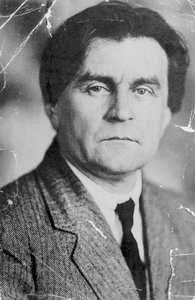
- 1879 – 1935Kazimir Malevich
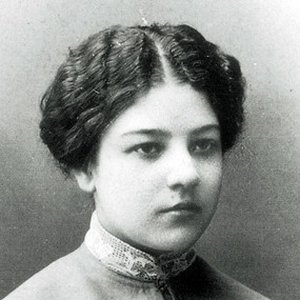
- 1886 – 1918Olga Rozanova
Famous artworks of Suprematism
- Kazimir Malevich · 1916Suprematist Composition
- Kazimir Malevich · 1918Suprematist Composition: White on White
- Olga Rozanova · 1907Female Portrait
- Olga Rozanova · 1916Suprematism

Famous painters of Constructivism
- 1885 – 1953Vladimir Tatlin
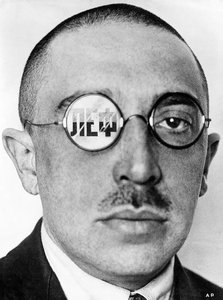
- 1891 – 1956Aleksandr Rodchenko
- 1889 – 1924Lyubov Popova

Famous artworks of Constructivism
- Aleksandr Rodchenko · 1920Abstraction (Rupture)
- Aleksandr Rodchenko · 1918Red and Yellow
- Lyubov Popova · 1916Painterly Architectonic
- Lyubov Popova · 1915Untitled