The Essence of Form: Understanding the Fundamentals of Three-Dimensionality
To encounter a sculpture is to engage in a silent, physical dialogue with space itself. Unlike the two-dimensional realm of painting, where depth must be meticulously simulated through perspective and chiaroscuro, sculpture exists as an undeniable presence within our shared reality. It occupies the same air we breathe, demanding that the viewer move, rotate, and shift their vantage point to fully comprehend its truth. At its most fundamental level, the mastery of three-dimensional art lies in the manipulation of mass and volume—the ability to command weight and gravity to create a sense of equilibrium or tension. The true power of a sculptural work resides in its relationship with the void. A master sculptor understands that what is absent is often as vital as what is present. The hollows, the crevices, and the negative spaces carved into stone or cast in bronze define the boundaries of the object, allowing light to penetrate and shadow to settle. This interplay creates a kinetic experience; as the sun moves across a gallery or a viewer walks around a pedestal, the sculpture appears to transform, revealing new contours and hidden depths. It is this inescapable physicality that grants sculpture its unique ability to anchor a space with emotional and structural permanence.From Marble to Metal: A Historical Survey of Sculptural Mediums and Techniques
The history of human expression is etched into the very materials used to manifest it. For centuries, the pursuit of perfection was synonymous with the mastery of stone. The classical tradition, epitomized by the breathtaking marble works of the Renaissance, sought to replicate the softness of human flesh through the rigorous application of subtractive techniques. To carve marble is to engage in a high-stakes struggle against resistance; one misplaced strike of the chisel can shatter a limb or ruin a delicate feature forever. This era established a standard of anatomical precision and idealized beauty that remains a cornerstone of art history. As eras shifted, so too did the preference for medium and method. The introduction of lost-wax casting revolutionized the sculptural landscape, allowing for the creation of intricate, additive works in bronze. Unlike the subtractive nature of stone carving, bronze allows for more dynamic, outstretched poses and delicate textures that would be impossible to sustain in brittle marble. This transition facilitated a greater sense of movement and drama, paving the way for the expressive fluidity seen in later centuries. From the heavy, earth-bound permanence of granite to the industrial strength of modern steel, each medium brings its own vocabulary of texture and durability, offering artists a diverse palette to communicate their vision across the ages.The Modern Revolution: Abstract Geometry and the Legacy of Barbara Hepworth
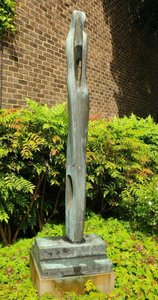
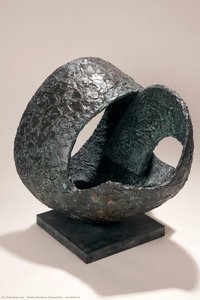
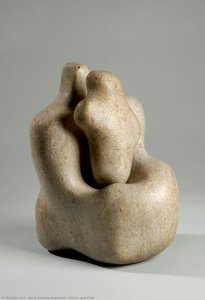
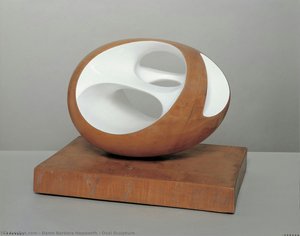
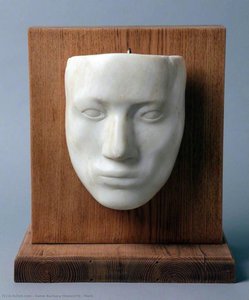
The dawn of the 20th century brought a seismic shift in how we perceive form, moving away from the literal representation of the human figure toward an exploration of pure, organic abstraction. This revolution was led by visionaries who sought to find the spiritual essence within shape and line. Among the most influential figures of this movement was Dame Barbara Hepworth, whose work redefined the boundaries of modern sculpture. Her approach was deeply rooted in a connection to the natural world, utilizing organic lines and textured surfaces to evoke the rhythms of the landscape. Hepworth’s mastery lay in her ability to integrate the concept of the "pierced" form. By introducing holes into her sculptures, such as in her monumental works like Oval Form (Trezion) or Single Form (Antiphon), she invited the environment to become part of the art itself. These apertures allowed for a profound interplay between light and space, breaking the solidity of the mass and creating a sense of transparency. Her work, alongside contemporaries in movements like Unit One, moved sculpture toward a more contemplative, architectural language, where the distinction between the object and its surroundings began to dissolve into a singular, harmonious experience.Conceptual Frontiers: The Evolution from Classical Realism to Dadaist Provocation
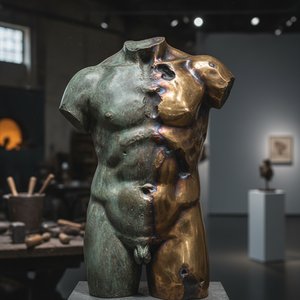
As the modern era progressed, the definition of "sculpture" underwent an even more radical transformation, challenging the very notion of what constitutes an art object. While the classical tradition focused on the perfection of the recognizable form, movements such as Dada and Surrealism sought to disrupt the viewer's expectations through provocation and the use of found objects. This era introduced the concept of the readymade, where the artist’s choice, rather than their manual craftsmanship, became the primary act of creation. A striking example of this intellectual pivot can be seen in the works of Marcel Duchamp, such as his Sculpture-morte. By utilizing non-traditional materials like fruit and vegetables, Duchamp stripped sculpture of its traditional reverence and replaced it with a playful, often unsettling, conceptual depth. This period taught us that sculpture could be an idea, a gesture, or a commentary on consumer culture, rather than just a physical monument. This evolution from the realistic Torso works of the early 20th century to the experimental "anti-concept" installations of artists like Lee Seung-taek represents one of the most significant expansions of the artistic lexicon in human history, proving that the boundaries of three-dimensional art are as limitless as the human imagination.The Tactile Experience: Evaluating Texture, Mass, and Spatial Interplay in Sculpture
To truly appreciate a masterpiece, one must look beyond the subject matter and focus on the tactile qualities that define its surface. The texture of a sculpture—whether it is the smooth, polished finish of a bronze casting or the rugged, chiseled grain of dark wood—serves as the primary conductor of emotion. A rough, impasto-like texture can convey struggle, age, or raw energy, while a highly refined, mirror-like surface suggests divinity, purity, or the clinical precision of modern technology. Ultimately, the success of a sculpture is measured by its ability to command the space it inhabits. The interplay between mass and the surrounding atmosphere creates a tension that draws the observer in. When we contemplate works like those from the Franz Bergman Foundry or the delicate Arts & Crafts lines of The High Carry, we are witnessing a deliberate orchestration of weight and lightness. For the discerning collector, understanding these nuances—the way light catches a textured edge or how a heavy base provides a sense of eternal stability—is essential to appreciating the profound, enduring legacy of three-dimensional art.For those seeking to bring the grandeur of art history into their own collections, Mus3ums.com offers an unparalleled gateway to museum-quality reproductions. Whether you are drawn to the classical elegance of bronze or the modern spirit of abstract forms, our master artists specialize in creating hand-painted oil recreations that capture the true soul and texture of the world's most iconic works.