
Introduction
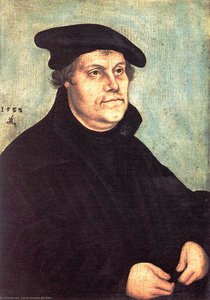
The 16th century in Germany marked a profound transformation in the visual language of Europe, a period where the precision of Northern Renaissance detail met the burgeoning humanism of a changing world. This era was defined by a tension between the sacred and the secular, as artists navigated the religious shifts of the Reformation while simultaneously embracing the scientific curiosity of the age. The painters of this period moved beyond the stylized traditions of the Middle Ages, introducing a sophisticated understanding of anatomy, perspective, and the psychological depth of the human face.
What unites these masters is a relentless pursuit of technical mastery, whether through the intricate, fine-lined precision of woodcuts and engravings or the rich, emotive textures of oil on panel. From the monumental religious fervor of the early century to the elegant, courtly portraiture that emerged as political power shifted, these artists captured the very essence of a society in flux. Their ability to render the tactile quality of fabric, the translucency of skin, and the dramatic play of light established a standard of realism that continues to influence the way we perceive the world through art.
Today, the legacy of these masters remains vital, serving as the foundation for much of Western portraiture and landscape painting. Their works are not merely historical artifacts but living studies in composition and emotion that continue to resonate in modern galleries and private collections alike. In the following sections, we explore ten essential figures of this golden age, including the unparalleled precision of Albrecht Dürer, the dramatic intensity of Matthias Grünewald, and the masterful portraiture of Hans Holbein the Younger, each representing a unique facet of this transformative German artistic movement.
Hans Holbein the Younger
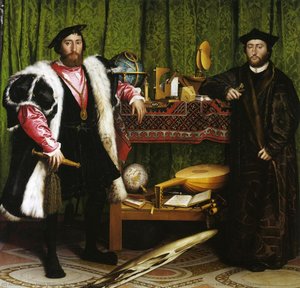 Double Portrait of Jean de Dinteville and Georges de Selve (also known as The Ambassadors) - Hans Holbein the Younger
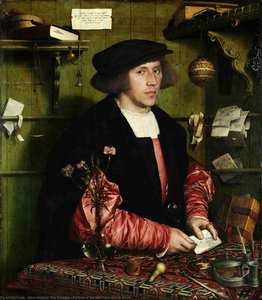
A visitor recognizes the hand of Hans Holbein the Younger through an almost supernatural precision that borders on the hyper-real. His work is defined by a cool, controlled light and a staggering ability to render the tactile essence of the physical world—the heavy weight of fur, the sheen of polished metal, and the delicate translucency of skin. As a master born in Augsburg around 1497, Holbein represents the pinnacle of the 16th century German tradition, having inherited a rigorous technical foundation from his father, Hans Holbein the Elder, and his grandfather. His journey from the workshops of Germany to the professional circles of Basel allowed him to refine a style that merged meticulous draughtsmanship with the intellectual depth of the Northern Renaissance.
His 1533 masterpiece, Double Portrait of Jean de Dinteville and Georges de Selve (also known as The Ambassadors), serves as a profound testament to his skill. In this work, the viewer is confronted with a dense landscape of symbolic objects—globes, lutes, and scientific instruments—all rendered with breathtaking clarity. The composition is famously haunted by an enigmatic anamorphic skull, a subtle memento mori that introduces a sense of mystery and mortality into an otherwise display of worldly power and intellectual prestige.
Peter Paul Rubens
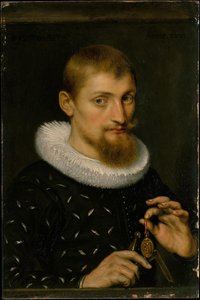 Portrait of a Man, Possibly an Architect or Geographer - Peter Paul Rubens
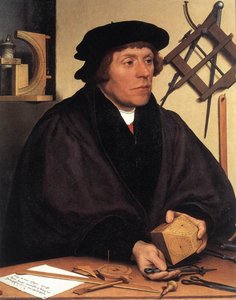
Born in Siegen, Germany, in 1577, Peter Paul Rubens stands as a monumental figure whose origins link him to the artistic landscape of 16th century Germany. His journey from the religious instabilities of his youth to the pinnacle of the Flemish Baroque was defined by a rigorous, disciplined training. He began his technical foundation under Tobias Verhaecht, later refining his mastery of portraiture and mythology through apprenticeships with Adam van Noort and Otto van Veen. This deep immersion in the structural mechanics of the Flemish tradition provided the essential groundwork for his later, explosive synthesis of styles.
A profound turning point occurred when Rubens traveled to Italy, where he absorbed the grandeur of Michelangelo and the coloristic brilliance of Titian. This fusion of Northern precision and Italian dynamism allowed him to redefine narrative art. His early oil on copper, Portrait of a Man, Possibly an Architect or Geographer (1597), serves as a vital testament to this evolution. In this work, the young artist demonstrates a remarkable ability to weave intellectual symbolism—such as the tools of measurement and the fleeting nature of time—into a contemplative, highly structured composition.
Albrecht Dürer
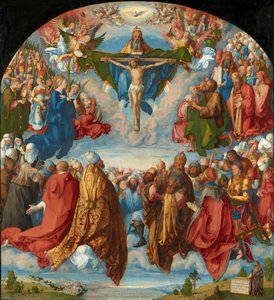 Adoration of the Trinity (Landauer Altar) - Albrecht Dürer
A true master of the Northern Renaissance, Albrecht Dürer stands as a central figure among 16th century German painters. Born in Nuremberg in 1471, he transitioned from the disciplined world of his goldsmith father to become a polymath of the arts, excelling as a painter, draftsman, and printmaker. His work is instantly recognizable by its profound intellectual depth and a meticulous, almost scientific precision in detail that bridges the gap between the physical and the spiritual. Whether through the delicate lines of a silverpoint self-portrait or the complex textures of his engravings, Dürer’s hand is defined by a rigorous technical mastery and a capacity for intense observation.
His 1511 masterpiece, Adoration of the Trinity (Landauer Altar), exemplifies his ability to orchestrate grand, celestial narratives. In this monumental work, Dürer captures a moment of divine convergence, weaving together the earthly and the heavenly with a spiritual weight that commands the viewer's attention. Through his sophisticated use of composition and light, he transformed the religious iconography of the German Renaissance into a visual hymn, securing his legacy as one of the most influential artists of the 16th century.
Lucas Cranach the Elder
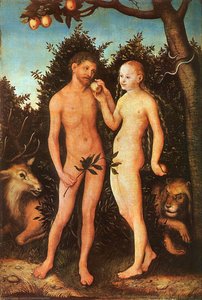 Adam and Eve - Lucas Cranach the Elder
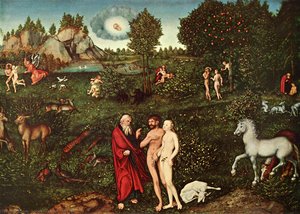
As a central figure of the German Renaissance, Lucas Cranach the Elder (1472–1553) served as the visual architect of a transformative era. His career was defined by a profound synergy between artistic mastery and the religious shifts of the 16th century. By establishing a prolific workshop in Wittenberg, he became a vital collaborator to Martin Luther, translating the complex ideologies of the Protestant Reformation into a powerful, reproducible visual language through both oil paintings and woodcuts.
His technical precision and ability to navigate the patronage of the Electors of Saxony allowed him to dominate the German art market. A quintessential example of his skill is the 1531 masterpiece, Adam and Eve. This work exemplifies his ability to blend the elegant, flowing lines of the Northern Renaissance with deep symbolic narratives. Through his depictions of the Fall of Man and his iconic portraiture, Cranach did more than record history; he constructed the very identity of a new age, securing his legacy as one of the most influential German painters of the 16th century.
Matthias Grünewald
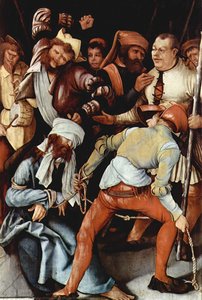 The Mocking of Christ - Matthias Grünewald
Matthias Grünewald stands as a profound figure among the 16th century German painters, representing a powerful departure from the mathematical idealism of the Italian Renaissance. While his contemporaries in the south sought serene proportions, this German master embraced a visceral, late Gothic intensity that prioritized spiritual and psychological truth. His work is defined by a refusal to sanitize the human experience, opting instead to highlight the raw textures of suffering and the weight of divine drama.
A quintessential example of his expressive mastery is The Mocking of Christ, painted around 1503. In this work, Grünewald utilizes a gritty realism to capture the tension of the scene, using light to pierce through the shadows and emphasize the physical reality of the figures. His ability to articulate deep emotion through color and texture reached its zenith in the monumental Isenheim Altarpiece. Here, his unflinching depiction of Christ’s torment served as a profound source of solace for those facing physical agony, cementing his legacy as a painter who transformed religious narrative into an immersive, visceral experience of faith.
Hendrik Goltzius
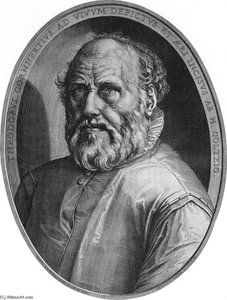 Dirck Volkertsz Coornhert - Hendrik Goltzius
Born in Germany in 1558, Hendrik Goltzius stands as a pivotal figure among 16th century German painters and printmakers, bridging the gap between the Northern Renaissance and the burgeoning Baroque era. His early years in Duisburg, where he studied glass painting under his father, provided a foundation for a career that would eventually redefine the expressive potential of the burin. After training under the polymath Dirck Volckertszoon Coornhert, Goltzius moved to Haarlem, where he became a leading master of Northern Mannerism.
His technical innovation was profound, most notably through the development of the "swelling line." By manipulating the burin to vary line thickness, he achieved a sophisticated tonal range that sculpted volume with unprecedented vitality. This mastery is vividly captured in his 1590 engraving, Dirck Volkertsz Coornhert, where the interplay of light and shadow creates a palpable, three-dimensional presence. Whether through his intricate "dot and lozenge" technique or his later transition into painting at age forty-two, Goltzius’s ability to command line and texture ensured his legacy as a virtuoso of the 16th century.
Hans Baldung Grien
 Madonna and Child - Hans Baldung Grien
A central figure of the German Renaissance, Hans Baldung Grien (c. 1485–1545) represents the expressive and often enigmatic spirit of 16th century German painters. Having trained in the Upper Rhineland before entering the workshop of Albrecht Dürer in Nuremberg around 1503, Baldung developed a style that moved beyond mere technical precision. While he mastered the meticulous detail of his mentor, he carved out a unique identity through a fascination with mythology, allegory, and the psychological complexities of the human form, often infusing his works with a sense of Romantic tension and vibrant color.
His 1516 masterpiece, Madonna and Child, serves as a profound testament to his ability to bridge the structured traditions of the Northern Gothic with the emerging sensibilities of the Renaissance. In this work, the divine is rendered with a startlingly human tenderness. Rather than presenting an idealized, distant icon, Baldung captures a palpable maternal intimacy, using soft, atmospheric warmth to ground the sacred scene in emotional reality. Through his mastery of light and composition, he transformed religious iconography into a deeply personal meditation on life and devotion.
Hans von Aachen
 Bacchus, Venus and Cupid - Hans von Aachen
Born in Cologne in 1552, Hans von Aachen stands as a vital figure among 16th century German painters, bridging the transition from the High Renaissance into the sophisticated tension of Northern Mannerism. His artistic journey, likely shaped in the workshop of Leonardus Sievenhoven, allowed him to develop a style defined by elongated elegance and a profound command of light. His work is characterized by a dramatic, almost theatrical use of color and composition that echoes the influence of El Greco, making him a central representative of the German artistic landscape during this transformative era.
His mastery of the human form and mythological narrative is vividly captured in his 1595 work, Bacchus, Venus and Cupid. In this intimate composition, the artist employs a striking chiaroscuro, pulling the viewer into a shallow, dark space where luminous, porcelain-like skin contrasts against deep, velvety shadows. The arrangement of the three deities—the robust Bacchus, the serene Venus, and the youthful Cupid—creates a sense of immediate, passionate presence. Through soft, organic lines and intricate textures, von Aachen transforms a divine gathering into a study of desire and light, cementing his legacy as a master of the Mannerist aesthetic.
Albrecht Altdorfer
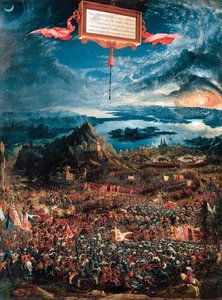 The Battle of Alexander at Issus - Albrecht Altdorfer
A central figure of the 16th century German painters, Albrecht Altdorfer (c. 1480–1538) acted as a transformative force in the Northern Renaissance. Born in Regensburg, he transitioned from the late Gothic tradition into a revolutionary era of artistic expression. As a leading light of the Danube School, Altdorfer was instrumental in elevating landscape from a mere background element to a profound, independent subject of art, often imbuing the natural world with intense emotional resonance.
His technical mastery is vividly realized in his 1529 masterpiece, The Battle of Alexander at Issus. This dramatic work, commissioned by Duke William IV of Bavaria, depicts the historic clash between Alexander the Great and the Persian Empire. Through a dense, turbulent composition of cavalry and infantry, Altdorfer employs a rich, earthy palette of deep reds and blues to capture the chaos of ancient warfare. The painting utilizes dynamic lines and sophisticated lighting to create a sense of immense depth and kinetic energy, serving as both a historical chronicle and a powerful allegory of the conflicts defining his own century.
Joos van Cleve
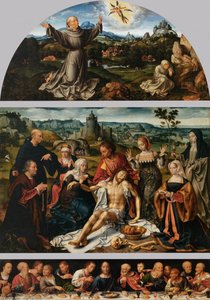 Altarpiece of the Lamentation - Joos van Cleve
Born in Krefeld, Germany, around 1485, Joos van Cleve stands as a pivotal figure among 16th century German painters due to his unique ability to bridge the meticulous traditions of the North with the burgeoning grace of the Italian Renaissance. His artistic journey began under the guidance of Jan Joest, where he mastered the complex alchemy of pigment layering and the spiritual gravity required for monumental works, such as the high altar of the Kalkar Nikolaikirche. This rigorous training allowed him to develop a signature luminosity that would define his career in the vibrant artistic hub of Antwerp.
Van Cleve’s mastery is perhaps most poignantly captured in his 1520 work, Altarpiece of the Lamentation. This masterpiece exemplifies the Northern Renaissance's obsession with detail, from the tactile textures of symbolic drapery to the profound, melancholic expressions of grief. His compositions often feature a sophisticated interplay of light and movement, blending the rigid dogmas of local guilds with an experimental, atmospheric spirit. Through his religious scenes and portraits, van Cleve transformed the visual language of the 16th century, leaving a legacy of works that harmonize earthly reality with divine contemplation.
Conclusion
The masters of this era defined the visual language of Northern Europe, bridging the gap between the meticulous detail of the late Gothic period and the grand, humanistic spirit of the Renaissance. From the profound spiritual intensity of Matthias Grünewald to the unparalleled precision of Albrecht Dürer and the sophisticated portraiture of Hans Holbein the Younger, these artists transformed the 16th century into a golden age of German expression. Whether through the intricate linework of a master printmaker or the sweeping, dramatic compositions of the early Baroque, their collective legacy continues to shape how we perceive light, anatomy, and the human soul.
At Mus3ums.com, we invite you to bring this profound history into your own living space. Our artisans specialize in creating museum-quality, hand-painted oil reproductions that capture the authentic texture and soul of these historical masterpieces. You can explore our full collection to find the perfect piece and experience the enduring beauty of German art through a living, tactile medium.


