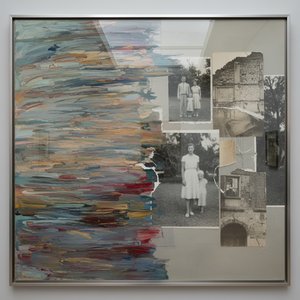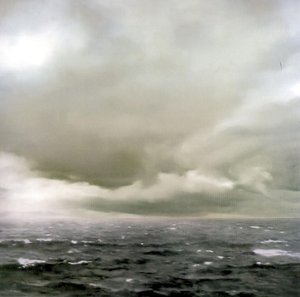
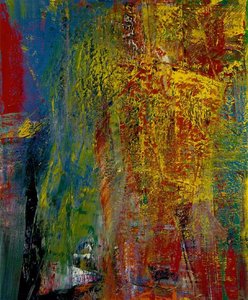
Introduction
The landscape of contemporary art in the 21st century finds a profound and complex voice within the borders of Germany, a nation whose artistic evolution has long been shaped by a tension between rigorous intellectualism and raw, expressive power. Today, German painters continue to redefine the boundaries of the medium, moving beyond traditional representation to explore the intersections of memory, digital abstraction, and the physical weight of the canvas. This era is characterized by a refusal to settle into a single movement; instead, these artists navigate a diverse spectrum that ranges from the hyper-realistic and the photographic to the deeply textural and the conceptual.
Historically, the German school has always been a site of intense dialogue, often reacting to the heavy legacies of the past by reinventing the language of modernism. In the current century, this manifests as a sophisticated engagement with how we perceive reality in an increasingly mediated world. Whether through the manipulation of color, the layering of historical symbols, or the deconstruction of geometric forms, these creators maintain a vital relevance by addressing the fragmentation of modern identity and the enduring power of the tactile mark in a digital age.
As we walk through this curated selection, we encounter a lineage of masters and innovators who represent the pinnacle of this movement. From the monumental and the philosophical to the intricate and the experimental, the following ten artists exemplify the depth and diversity of German painting in the 21st century.
Gerhard Richter
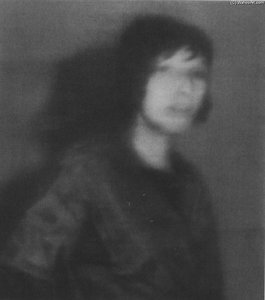
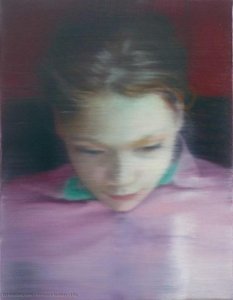 Ella - Gerhard Richter
Gerhard Richter stands as a monumental figure in contemporary art, bridging the gap between the precision of photography and the raw energy of abstraction. His presence in the 21st century is defined by a continuous evolution of technique, moving from his early years as a sign painter in post-war Germany to his formal studies at the Dresden Academy of Fine Arts. As a leading voice among 21st century German painters, Richter has fundamentally altered how we perceive the relationship between the painted image and reality, often utilizing squeegees and complex grids to challenge the viewer's sense of certainty.
His 2007 work, Ella, serves as a profound example of his ability to navigate this ambiguity. This painting is not a mere portrait but a meditation on memory and perception. Through the use of translucent oil paint, Richter creates a hazy, dreamlike quality that blurs the edges of the subject's face against a muted red background. The work captures a sense of quietude and melancholy, demonstrating why his stylistic investigations remain central to the discourse of modern German art well into the current century.
Anselm Kiefer
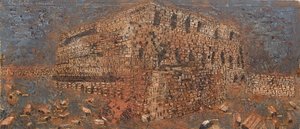 The Fertile Crescent - Anselm Kiefer
In the monumental expanse of The Fertile Crescent, created in 2009, the viewer encounters a vision where architecture and nature dissolve into a mythic landscape. This work exemplifies the scale and gravity that define the career of Anselm Kiefer, a titan of Neo-Expressionism whose practice remains deeply influential in the 21st century. His presence in this era of German art is marked by a profound engagement with historical memory and the physical weight of the past.
Kiefer’s approach is characterized by a visceral, almost alchemical use of materials. He moves beyond traditional oil painting, utilizing ash, straw, and lead to create heavy impasto surfaces that feel more like geological excavations than mere depictions. His work often explores the shadows of German history and the themes of absence and destruction, a preoccupation deeply influenced by the poetry of Paul Celan. Through his mastery of texture, Kiefer transforms the canvas into a site of transformation, where the grit of the medium mirrors the somber, dramatic weight of his subject matter. His ability to give form to historical silence ensures his position as a vital voice in contemporary German art.
Thomas Peter Friedl
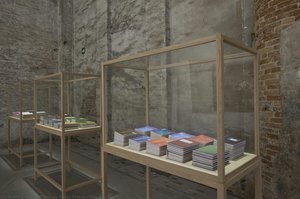 The Diaries - Thomas Peter Friedl
A central figure in the landscape of 21st century German painters, Thomas Peter Friedl has redefined the boundaries of Contemporary Realism through a deeply intellectual and multidisciplinary approach. Born in Munich in 1967, his evolution from a theater critic to a visual artist allowed him to treat the canvas and the three-dimensional model as stages where identity and power are perpetually reenacted. His practice is defined by a radical neutrality, using architectural scale models and layered forms to dismantle the structures of historical and political meaning.
His representative work, The Diaries (2015), serves as a profound testament to this conceptual rigor. In this piece, Friedl utilizes the imagery of a bookshelf to engage with the anxieties of representation and the weight of art history. Rather than offering a simple depiction, the work functions as a site of inquiry, using hollowed-out forms to disrupt established hierarchies. By stripping away traditional context, Friedl forces a confrontation with the contradictions of the modernist project, making him a vital voice in the contemporary German movement for his ability to transform architectural precision into a medium for social and ideological reflection.
Thomas Riesner
 POWERLESSNESS:2 - Thomas Riesner
A prominent figure in the contemporary German art scene, Thomas Riesner has spent much of the 21st century refining a visual language rooted in the raw, unbridled intensity of the Art Brut movement. Born in Leipzig in 1971, Riesner began his intensive engagement with painting in the early 1990s, a period that laid the foundation for his highly expressive and introspective oeuvre. His work is characterized by a profound exploration of human transience and the psychological weight of powerlessness, themes that resonate deeply within the landscape of modern German expressionism.
Riesner’s technical versatility allows him to move seamlessly between painting, drawing, and etching, often utilizing Indian ink to achieve a stark, emotive impact. His representative work, POWERLESSNESS:2 (2022), serves as a masterful example of this approach. The piece features abstract figures emerging from a turbulent, chaotic background, utilizing action painting techniques such as dripping and splattering to create a sense of instability. Through the heavy use of impasto and a dramatic, high-contrast palette of black and white, Riesner captures a sense of emotional distress and movement, solidifying his status as a vital voice in 21st-century German art.
Christoph Von Weyhe
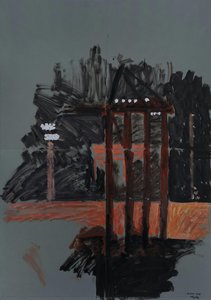 Hamburger Hafen in der Nacht des 26. Juni 2009 (Harbour of Hamburg in the Night of June 26th 2009) - Christoph Von Weyhe
Christoph Von Weyhe stands as a profound figure among 21st century German painters, continuing a lifelong investigation into the atmospheric weight of place. Born in 1937 in Halle an der Saale and raised in the maritime environment of Hamburg, his practice has been shaped by a deep sensitivity to light and memory. His move to Paris in 1961 to study at the École des Beaux-Arts marked a transformative era, integrating a sophisticated European sensibility into his German roots. Throughout the 21st century, his work has remained a testament to the quiet power of presence, often returning to the spectral landscapes of his youth.
In his representative work, Hamburger Hafen in der Nacht des 26. Juni 2009 (Harbour of Hamburg in the Night of June 26th 2009), Von Weyhe captures the essence of the Hamburg harbor not through bustling commerce, but through a melancholic, nocturnal stillness. The painting utilizes a somber palette of grey, black, and reddish-brown to depict a weathered wooden pier stretching into a dark, liquid void. Through heavy impasto and gestural brushstrokes, he creates a tactile reality where light diffuses through organic shapes, turning a simple maritime scene into a profound study of isolation and the slow decay of man-made structures.
Tore Rinkveld
 Untitled - Tore Rinkveld
A central figure in the contemporary German art scene, Tore Rinkveld—often recognized by his moniker Evol—redefines the boundaries of urban observation. His practice is deeply embedded in the 21st-century dialogue between the individual and the sprawling metropolis, specifically through his fascination with the architectural remnants of Berlin. Rinkveld’s work is instantly recognizable by its uncanny precision and the way it shrinks the monumental into the miniature. Using a meticulous multi-layered stencil technique, he transforms mundane street fixtures, such as electric enclosures and weathered cardboard, into breathtaking architectural models.
In his representative work, Untitled (2010), the artist captures the essence of the city through a lens of hyper-detailed realism. He draws profound inspiration from the brutalist, socialist-era tower blocks of former East Germany, distilling their heavy, geometric textures into intimate, tactile compositions. His process often incorporates the inherent flaws and weathered surfaces of the original objects, utilizing camouflage as a critical artistic element. By reimagining these massive edifices as "cities within cities," Rinkveld creates a bridge between the vast scale of urban history and the quiet, overlooked fragments of daily life.
Pd Dr. Mark-Oliver Rödel
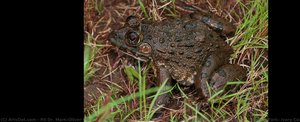 Hoplobatrachus occipitalis, Aussichtsbergtümpel 08 2014, Comoé National Park, Ivory Coast - Pd Dr. Mark-Oliver Rödel
A defining figure of 21st century German painters, Pd Dr. Mark-Oliver Rödel represents a unique convergence of rigorous scientific inquiry and evocative visual expression. His work is deeply rooted in his identity as a researcher and curator at the Museum für Naturkunde Berlin, a background that allows him to bridge the gap between biological documentation and fine art. By applying the precision of a herpetologist to the canvas, he captures the essence of metamorphosis and the delicate balance of biodiversity, making him a vital voice in contemporary German art focused on the natural world.
In his representative work, Hoplobatrachus occipitalis, Aussichtsbergtümpel 08 2014, Comoé National Park, Ivory Coast, Rödel demonstrates this seamless integration of science and soul. The painting serves as a meticulous visual record of the Crowned bullfrog within its specific West African ecosystem. Through a tranquil and earthy composition, he utilizes soft, natural light to emphasize the tactile, rough textures of the specimen's skin against the organic lines of decaying leaves and grass. The result is a piece of contemporary realism that functions simultaneously as a biological study and a profound meditation on the stillness of life in the wild.
Karl Heinz Jeron
 Cryptids - Karl Heinz Jeron
Karl Heinz Jeron stands as a vital figure among 21st century German painters and media artists, pushing the boundaries of what constitutes a visual experience in the digital age. His practice is a profound investigation into the intersection of mechanical precision and sensory perception, exploring how technology and automation reshape our societal dynamics. A visitor recognizing a Jeron work immediately encounters a tension between the organic and the industrial, often characterized by a sophisticated use of sound and augmented reality to expand the canvas of human experience.
In his representative 2020 work, Cryptids, Jeron explores the materiality of urban existence. These sculptures, cast in concrete, incorporate the discarded debris of modern civilization—such as plastic bottles and packing materials—alongside synthetic plants and video elements. The resulting compositions create speculative constellations that reflect on the remains of our ongoing civilization. Through these immersive installations and his earlier explorations into the soulful, sonic qualities of robotics, Jeron continues to define the avant-garde landscape of contemporary German art, bridging the gap between the tangible world and our increasingly networked, digitized reality.
Wolfgang Voigt
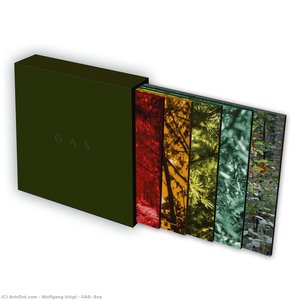 GAS: Box - Wolfgang Voigt
Wolfgang Voigt represents a unique intersection of sonic and visual abstraction that defines the multidisciplinary nature of 21st century German painters and artists. While primarily recognized as a pioneer of the Cologne electronic scene and the founder of Kompakt Records, his work under the moniker GAS transcends traditional music to become a form of immersive, atmospheric art. His practice is deeply rooted in the landscapes of the Königsforst woods near Cologne, where the textures of nature serve as the primary source for his conceptual explorations.
His representative work, GAS: Box (2016), exemplifies this connection between the natural world and abstract perception. The work utilizes four distinct panels that depict trees through vibrant, almost hallucinatory color palettes—red, green, yellow, and blue. Rather than providing a photographic likeness, these panels function as visual echoes of his ambient soundscapes, capturing the interplay between organic growth and artificial color. By translating the rhythmic, looping textures of minimal techno into a visual language of color and form, Voigt contributes to the contemporary German tradition of using abstraction to evoke profound, reflective emotional states.
Tomma Abts
 Veeke - Tomma Abts
A central figure in the landscape of 21st century German painters, Tomma Abts has redefined the boundaries of contemporary abstraction through a practice of rigorous, systematic discovery. Born in Kiel, Germany, her artistic evolution was shaped by her studies at the Hochschule der Künste Berlin, where she developed a unique visual language that eschews the emotive impulses of neo-expressionism in favor of structural clarity. Her move to London in 1995 marked a significant chapter in her career, establishing her as a vital voice in the international minimalist tradition.
Abts’ work is characterized by a profound rejection of premeditation. Rather than following a fixed blueprint, she allows forms to emerge through an intuitive process of layering acrylic and oil paints. This method creates a palpable history of decision-making on the canvas, where shapes seem to evolve through trial and error. Her representative work, Veeke, exemplifies this approach; it is a complex, cerebral composition of interlocking, angular planes that seem to vibrate with an internal logic. By deriving titles from a dictionary of names, Abts imbues her geometric explorations with a sense of personality, transforming pure abstraction into a deeply reflective dialogue between form and perception.
Conclusion
The evolution of German art in the 21st century is defined by a profound tension between the tangible and the abstract, moving from the heavy, historical textures of Kiefer to the precise, almost mathematical explorations of Friedl and Abts. These artists have collectively pushed the boundaries of what a canvas can hold, whether through the blurring of photographic reality or the structural complexity of contemporary abstraction. Each painter contributes a unique layer to this modern legacy, ensuring that the German aesthetic remains a vital, shifting force in the global art dialogue.
For those looking to bring this contemporary spirit into their own living spaces, Mus3ums.com offers a way to experience these masterpieces through our bespoke services. You can explore our full collection to find works that resonate with your personal style. We invite you to transform your environment by commissioning museum-quality, hand-painted oil reproductions that capture the true depth, texture, and soul of these 21st-century icons.