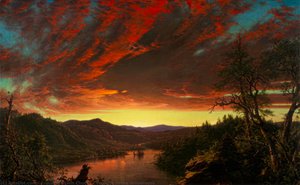
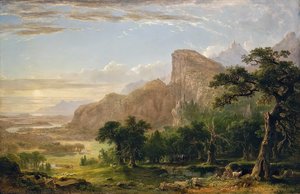
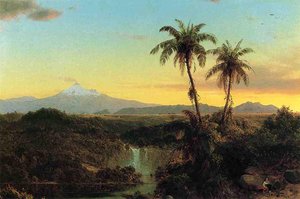
Introduction
The vast, untamed wilderness of the North American continent served as the profound spiritual catalyst for the Hudson River School, a movement that redefined the visual identity of the United States during the mid-19th century. These painters sought to capture the sublime majesty of untouched landscapes, treating the sprawling forests, dramatic mountains, and luminous river valleys as sacred spaces where the divine was visible through the natural world. Through a meticulous attention to light and atmosphere, they transformed the American landscape into a theater of awe and contemplation.
Emerging during a period of rapid national expansion and industrialization, these artists provided a visual counterpoint to the encroaching urbanity of the era. Their works often emphasized the tension between the immense scale of nature and the delicate presence of humanity, utilizing a sophisticated interplay of chiaroscuro and atmospheric perspective to evoke a sense of transcendental wonder. This aesthetic approach did more than just document geography; it helped forge a national mythology, celebrating the grandeur of a continent that felt both infinite and divine.
Today, the legacy of these masters remains vital, offering a window into a vanished era of pristine ecology and a profound philosophical connection to the environment. Their ability to translate the ephemeral qualities of light and mist into enduring oil paintings continues to influence how we perceive the relationship between humanity and the wild. The following selection explores the diverse voices of this movement, highlighting the essential contributions of ten painters who defined the very soul of American landscape art.
Worthington Whittredge
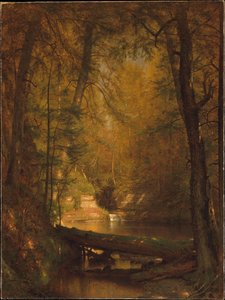 The Trout Pool - Worthington Whittredge
Born in a log cabin in Ohio in 1820, Worthington Whittredge’s journey to becoming a master of the American landscape was marked by a profound transition from the rugged survivalism of the frontier to the disciplined rigor of European academies. After working as a house painter's apprentice in Cincinnati, he traveled to Germany to study at the Düsseldorf Academy under Emanuel Leutze. This formal training provided him with the technical precision necessary to capture the sublime details of the natural world, a hallmark of the Hudson River School movement.
Whittredge’s place within this group of American landscape painters is defined by his ability to elevate the untouched wilderness into a spiritual experience. His representative work, “The Trout Pool” (1870), exemplifies this mastery. In this piece, he moves beyond mere topography to explore the interplay of light and shadow within a secluded woodland sanctuary. Through a sophisticated application of luminism, he renders the shimmering water and mossy textures with a breathtaking realism that captures the very soul of the American pastoral ideal. His work remains a testament to the movement's devotion to the sanctity of the wild.
John Frederick Kensett
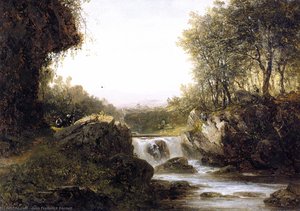 The Walking Tour - John Frederick Kensett
John Frederick Kensett (1816–1872) stands as a pivotal figure among American Hudson River School painters, specifically for his role in pioneering the Luminist style. While many of his contemporaries sought the dramatic and the sublime, Kensett’s contribution to the movement was defined by a profound sense of serenity and a meditative focus on the atmospheric qualities of the American wilderness. His technical precision was rooted in his early training as an engraver under his father, Thomas Kensett, a discipline that instilled in him a meticulous eye for detail and form.
After studying in Europe alongside fellow artists like Asher Durand, Kensett returned to the United States to document the vast landscapes of the Northeast and the Colorado Rockies. His work exemplifies the Hudson River School's reverence for untouched nature, yet he approached his subjects with a unique, tranquil intensity. In his representative work, The Walking Tour (1847), he masterfully employs delicate layering to create a luminous effect, where light filters through verdant valleys and reflects off meandering rivers. Through this subtle manipulation of light and color, Kensett transformed the landscape into a vessel for quiet contemplation, capturing the very essence of the American spirit through a lens of luminous calm.
Sanford Robinson Gifford
 A Mist Rising at Sunset in the Catskills - Sanford Robinson Gifford
Sanford Robinson Gifford (1823–1880) stands as a preeminent figure within the Hudson River School, specifically recognized for his mastery of Luminism. While many of his contemporaries focused on the dramatic and turbulent aspects of the American wilderness, Gifford’s contribution to this movement was defined by a profound focus on atmospheric light and serene, idyllic landscapes. His ability to capture the ephemeral qualities of light and air allowed him to translate the spiritual resonance of nature into tranquil visual experiences.
His artistic foundation was built through studies under the British watercolorist John Rubens Smith and later at the National Academy of Design. His career was marked by significant expeditions, including travels through Europe and a 1870 journey to the Rocky Mountains with the Hayden expedition. These experiences deepened his ability to render vast, untouched terrains with a sense of quiet grandeur. In his representative work, A Mist Rising at Sunset in the Catskills (1861), Gifford exemplifies the Luminist style through a masterfully balanced composition of reflective waters and hazy, distant mountains, inviting a sense of stillness and contemplation that remains a hallmark of his legacy.
William Trost Richards
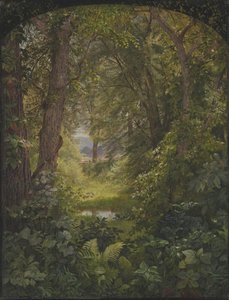 Woodland Glade - William Trost Richards
William Trost Richards (1833–1905) holds a singular position among the American Hudson River School painters, distinguished by his transition from romanticized vistas toward a profound, almost scientific realism. While many of his contemporaries sought the dramatic and the sublime, Richards utilized his training under the German artist Paul Weber to pursue an exacting fidelity to the natural world. His work serves as a vital bridge between the grand emotionalism of the Hudson River School and the meticulous precision of the Pre-Raphaelites.
His mastery is perhaps most evident in his 1860 work, Woodland Glade. In this piece, Richards eschews sweeping panoramas in favor of an intimate, immersive study of forest textures. Rather than focusing on grand spectacle, he captures the quietude of the wilderness through the painstaking rendering of rough bark, diffused light, and the delicate reflections of a small stream. This dedication to documenting the intricate details of the American landscape—from the rugged White Mountains to the complex patterns of the coastline—solidified his reputation as a master of observation. Through his precise brushwork, Richards transformed the untouched wilderness into a site of quiet, contemplative beauty.
Frederic Edwin Church
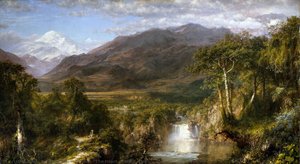
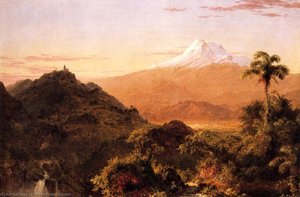
Frederic Edwin Church stands as a monumental figure within the Hudson River School, a movement dedicated to portraying the American wilderness as a sacred, untamed expanse. Born in 1826, Church’s artistic journey was profoundly shaped by his apprenticeship under Thomas Cole, the founder of this distinctly American landscape tradition. This lineage instilled in him a deep reverence for nature, which he transformed into a sophisticated blend of meticulous realism and Romantic grandeur. Unlike mere topographical sketches, his works sought to evoke the sublime, capturing the spiritual awe inspired by the vastness of the natural world.
His masterpiece, The Heart of the Andes (1859), exemplifies this ability to merge scientific observation with dramatic atmosphere. In this expansive oil on canvas, Church moves beyond simple scenery to create an immersive experience of the South American wilderness. Through masterful command of light and texture, he renders lush vegetation and towering peaks with an astonishing level of detail. The painting’s immense scale and luminous quality exemplify the Hudson River School's mission to celebrate the overwhelming power and divine beauty of the landscape, making Church a pivotal architect of 19th-century American art.
Asher Brown Durand
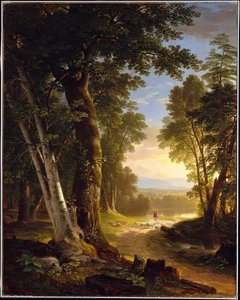 The Beeches - Asher Brown Durand
As a foundational figure of the Hudson River School, Asher Brown Durand transitioned from a meticulous engraver to a master of the American wilderness. His early training in the precision of silversmithing and engraving provided a technical rigor that would later define his approach to the natural world. Unlike the dramatic, often turbulent sublime of his contemporaries, Durand’s contribution to the movement is characterized by a profound, tranquil naturalism. He sought to capture the quiet sanctity of the untouched landscape, moving away from theatricality toward a more contemplative observation of light and botanical detail.
His representative work, The Beeches (1845), serves as a quintessential example of this serene aesthetic. In this woodland vista, Durand employs a soft, afternoon light to bathe beech and basswood trees in a gentle glow, creating an intimate pastoral scene. A winding path, a solitary figure, and a grazing horse emphasize a sense of peaceful coexistence within the forest. His brushwork is characterized by a delicate balance of clarity and atmosphere, using a rich palette of greens to evoke the lush, living textures of the American landscape. Through such works, Durand helped establish a visual language for the American wilderness that was both deeply spiritual and intensely detailed.
Jasper Francis Cropsey
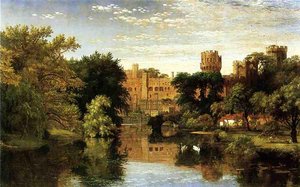 Warwick Castle, England - Jasper Francis Cropsey
Jasper Francis Cropsey (1823–1900) stands as a pivotal figure within the Hudson River School, a movement defined by its romanticized, spiritual approach to the vast American wilderness. His work is characterized by a unique synthesis of architectural precision and a profound sensitivity to the emotional resonance of nature. Having trained in architecture under Joseph Trench, Cropsey brought a disciplined draftsmanship to his canvases, allowing him to capture the structural integrity of both natural formations and man-made landmarks with exceptional clarity.
His mastery of light and atmosphere is vividly demonstrated in his 1857 work, Warwick Castle, England. Although the subject is European, the painting exemplifies the Hudson River School's preoccupation with the sublime and the idealized beauty of the landscape. Through the expert use of atmospheric perspective, Cropsey creates an immense sense of depth, framing the fortress against a hazy, luminous sky. The composition utilizes earthy tones and warm autumnal hues to establish a tranquil yet awe-inspiring mood, showcasing his ability to transform a physical location into a timeless, romantic vision of grandeur.
Robert Seldon Duncanson
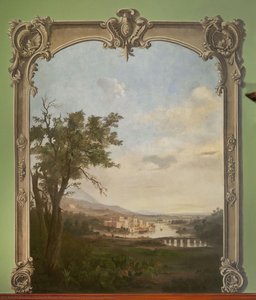 Landscape Mural - Robert Seldon Duncanson
Robert Seldon Duncanson (1821–1872) stands as a monumental figure in American art history, recognized as the first African American landscape artist to achieve widespread international acclaim. His journey from an apprenticeship in carpentry to becoming a master of the canvas is a testament to his profound connection to the natural world. After relocating to Cincinnati, the "Athens of the West," Duncanson transitioned from portraiture to the grand, sweeping vistas that define the Hudson River School movement. His ability to capture the sublime beauty of the American wilderness through meticulous self-study and a keen eye for detail allowed him to master the romantic ideals of his era.
Duncanson’s inclusion in the Hudson River School is cemented by his ability to evoke the spiritual and emotional grandeur of the untamed landscape. His 1852 work, Landscape Mural, exemplifies this mastery. In this composition, he utilizes sophisticated atmospheric perspective to create an illusion of immense depth, layering tonal values to depict a serene, pastoral dream where mountains meet calm waters. Through his work, the vast, untouched wilderness is transformed into a meditative space of sublime tranquility, capturing the very essence of the American Romantic spirit.
Seth Eastman
 Ballplay of the Dakota on the St. Peters River in Winter - Seth Eastman
Seth Eastman (1808–1875) occupied a unique position within the American landscape tradition, blending the disciplined eye of a West Point-trained officer with the romantic sensibilities of the Hudson River School. While many of his contemporaries focused on the grand, untouched wilderness, Eastman’s contribution to the movement was defined by his ethnographic precision and his role as a chronicler of the frontier. His service in the United States Army, particularly during the Mexican-American War and his subsequent time in the Dakota Territory, allowed him to witness the dramatic shifts of a nation in motion, providing him with a firsthand perspective that few artists of his era possessed.
His place among Hudson River School painters is cemented by his ability to infuse historical and cultural narratives into the vast American landscape. In his representative work, Ballplay of the Dakota on the St. Peters River in Winter (1848), he captures a spirited communal game amidst a frozen, wintry expanse. Through this piece, Eastman demonstrates the movement's fascination with the sublime power of nature, while simultaneously documenting the resilient life and cultural rituals of the Dakota Sioux. His work serves as a vital intersection between meticulous military observation and the expressive, atmospheric landscape painting that defined 19th-century American art.
Jervis McEntee
 Natural Bridge - Jervis McEntee
Jervis McEntee (1828–1891) occupies a unique and deeply introspective position among the American Hudson River School painters. While many of his contemporaries sought to capture the explosive, panoramic grandeur of the untamed wilderness, McEntee turned his gaze toward the poetic intimacy of nature’s more subtle transitions. His work is defined by a melancholic sensibility, often focusing on the quiet beauty found in autumn scenes and the inevitable decline of the natural world.
His technical foundation was significantly shaped by an apprenticeship under the movement's leading light, Frederic Edwin Church. However, McEntee diverged from Church’s luminous and dramatic style, opting instead for a subdued palette and a mastery of light and shadow that evoked a sense of transience and loss. This stylistic choice makes him a vital voice within the Hudson River School, offering a contemplative counterpoint to the exuberant landscapes of his peers.
In his 1877 work, Natural Bridge, McEntee demonstrates this signature ability to blend geological permanence with atmospheric emotion. Through meticulous brushwork, he renders the weathered textures of Virginia's iconic rock formations, transforming a landmark into a silent, meditative dialogue between the enduring earth and the fleeting passage of time.
Conclusion
The legacy of these masters lies in their ability to translate the sublime scale of the American wilderness into a profound spiritual experience. From the dramatic, light-drenched vistas of Frederic Edwin Church to the intimate, atmospheric landscapes of Jervis McEntee, each artist contributed a unique lens through which to view the untamed natural world. Whether capturing the rugged textures of the mountains or the tranquil serenity of a coastal inlet, these painters collectively defined a national identity rooted in the awe-inspiring majesty of the landscape.
For those looking to bring this sense of grandeur into their own living spaces, Mus3ums.com offers a way to connect with this era of American art. Our artisans specialize in creating museum-quality, hand-painted oil reproductions that capture the authentic brushwork and luminous depth of these historical masterpieces. You can explore our full collection to find the perfect landscape and invite the timeless beauty of the Hudson River School into your home through our bespoke, fine-art commissions.