The Architecture of Light: Defining Chiaroscuro and Tenebrism
 Chiaroscuro
In art, chiaroscuro (English: kee-AR-ə-SKOOR-oh, -SKURE-, Italian: [ˌkjaroˈskuːro]; lit. 'light-dark') is the use of strong contrasts between light and dark, usually bold contrasts affecting a whole composition. It is also a technical term used by a...
To understand the Baroque era is to understand the profound tension between what is revealed and what remains hidden. At the heart of this aesthetic revolution lies
chiaroscuro, a technical mastery of light and dark that does far more than merely suggest three-dimensional volume. It is an architectural tool of the canvas, used by masters to sculpt figures out of the void, providing a sense of weight, presence, and tactile reality. While the term itself refers to the delicate gradation of values to achieve modeling, its more extreme cousin,
tenebrism, pushes this concept into the realm of the theatrical. In tenebrism, the shadows are not merely absence of light but are deep, impenetrable, and heavy, serving as a dramatic stage from which subjects emerge with startling intensity.
This interplay of illumination is not merely a stylistic choice but a spiritual metaphor. When we observe the way light pierces through darkness, we see the very essence of the Counter-Reformation: divine grace breaking through the shadows of human suffering. This technique allows for a focused, almost cinematic intensity, where the viewer's eye is directed with surgical precision toward the emotional epicenter of the work. Whether it is the subtle
chiaroscuro modelling found in the delicate works of Raphael or the aggressive, high-contrast drama of the seventeenth century, this manipulation of light creates a sensory experience that transcends simple observation, inviting the collector into a world of profound depth and mystery.
Dynamic Energy: The Orchestration of Motion in Baroque Composition
 Masterpieces of Motion: The Top 25 Greatest Artworks by Peter Paul Rubens
Introduction To step into the world of Peter Paul Rubens is to surrender to a whirlwind of motion, color, and unbridled emotion. His canvases do not merely sit upon a wall; they breathe, pulse, and command the very air around them. As one of the undi...
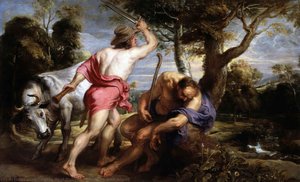
If light provides the soul of Baroque art, then motion provides its heartbeat. Unlike the balanced, static equilibrium of the Renaissance, the Baroque period embraced a whirlwind of energy, characterized by swirling draperies, muscular tension, and an unapologetic sense of movement. This was an era that sought to capture the "big moment"—the split second of divine intervention, the peak of a battle, or the breathless climax of a mythological tragedy. The compositions are rarely settled; instead, they utilize diagonals, spirals, and complex, overlapping forms to guide the eye in a continuous, rhythmic dance across the surface of the painting.
This orchestration of movement is designed to evoke awe and surprise. In the works of the great Flemish masters, one finds a sense of unbridably life, where flesh possesses a luminous warmth and every brushstroke seems to pulse with vitality. The composition becomes a choreographed event, much like a theatrical performance captured in oil. This dynamism is not merely about physical movement but about emotional momentum. By breaking the rigid boundaries of classical symmetry, Baroque artists created a visual language of
grandeur and
surprise, ensuring that the viewer remains perpetually engaged, caught in the gravitational pull of the artwork's internal energy.
Masters of the Shadow: Caravaggio and the Revolution of Realism
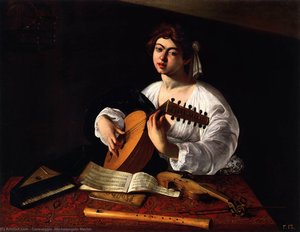 The Lute Player
The Enchanting World of "The Lute Player" "The Lute Player," created by the masterful hand of Caravaggio in 1600, is a captivating example of Baroque art that invites viewers into an intimate moment of musical passion and quiet contemplation. This ex...
No discussion of Baroque drama is complete without the revolutionary presence of Michelangelo Merisi da Caravaggio. His approach to painting fundamentally altered the course of Western art, introducing a level of raw, visceral realism that was previously unimaginable. In masterpieces such as
The Lute Player, Caravaggio utilizes an innovative use of light and shadow to create an intimate, almost voyeuristic connection with his subjects. By bathing figures in a soft, naturalistic light that contrasts sharply against a dark, void-like background, he achieves a sense of profound realism and psychological depth.
Caravaggio’s mastery extends into the more violent and spiritual realms through his use of tenebrism. In works like
The Seven Acts of Mercy or
Judith and Holofernes, the extreme shadows do not just provide depth; they heighten the emotional crescendo of the narrative. He stripped away the idealized artifice of the past, presenting biblical figures with weathered skin, dirty feet, and palpable human emotion. This commitment to an intense, dramatic realism paved the way for a generation of artists, from Rembrandt to Velázquez, proving that the most profound spiritual truths are often found within the most gritty and human realities.
The Grand Spectacle: Rubens and the Power of Painterly Drama
 Mastering the Baroque: The Top 25 Essential Artworks by Peter Paul Rubens
Introduction Imagine stepping into a room where the air feels heavy with drama, where every shadow holds a secret, and where colors seem to pulse with the very rhythm of life itself. This is the world of Peter Paul Rubens , the undisputed master of t...
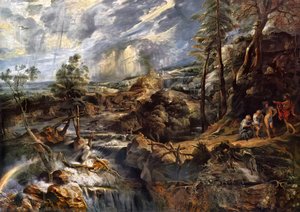
While Caravaggio mastered the intimate shadow, Peter Paul Rubens engineered the epic spectacle. As the undisputed heavyweight of the Baroque era, Rubens possessed an unparalleled ability to command a canvas with a sense of monumental scale and unbridified emotion. His work is a symphony of color and motion, synthesizing the muscularity of Michelangelo with the luminous, sensual warmth of Titian. To encounter a Rubens masterpiece is to surrender to a sensory explosion; his canvases breathe, pulse, and demand attention through their sheer physical presence.
In works such as
Massacre of the Innocents, Rubens utilizes intense chiaroscuro to pull the viewer into a whirlwind of tragic chaos. The composition is a masterclass in Baroque energy, where vibrant reds and deep blues clash against crumbling classical ruins. His ability to weave together complex political narratives with raw, visceral beauty makes his work uniquely powerful. For the discerning collector, Rubens offers more than just a painting; he offers an experience of
grandeur—a tactile reality where the visible texture of oil on canvas celebrates the very intensity of life itself.
Architectural Theatricality: Creating Illusion through Quadratura
 Baroque architecture
Baroque architecture is a highly decorative and theatrical style which appeared in Italy in the late 16th century and gradually spread across Europe. It was originally introduced by the Catholic Church, particularly the Jesuits, as a means to combat ...
The Baroque obsession with drama was not confined to the canvas; it spilled over into the very bones of architecture. In the great palaces and churches of Europe, architects sought to blur the lines between reality and the sublime. This was achieved through
quadratura—a sophisticated form of
trompe-l'œil painting combined with sculpture. On the ceilings of magnificent basilicas, painted figures appear to crowd the edges of the architecture, creating the breathtaking illusion that the roof has opened to reveal the heavens themselves.
This architectural theatricality was often supported by the use of light streaming from cupolas and reflecting off abundant gilding, further enhancing the sense of divine presence. In spaces like the
Piazza Barberini or the
Church of the Gesù, the interplay of space, perspective, and ornament creates a cohesive environment where the structural and the decorative are inextricably linked. This orchestrated contrast—the use of twisted columns to suggest upward motion and the creation of vast, illusory vistas—servates to inspire collective awe, transforming a physical building into a spiritual stage for the divine.
Legacy of the Sublime: The Enduring Influence of Baroque Aesthetics
 Václav Vavřinec Reiner
Václav Vavřinec Reiner: A Baroque Visionary Václav Vavřinec Reiner (Wenzel Lorenz Reiner), born Prague, Czech Republic around 1686 or 1689 and died Prague in 1743, stands as a pivotal figure within the baroque painting movement—a period characterized...
The legacy of the Baroque era continues to resonate within the modern aesthetic consciousness. Its emphasis on emotional intensity, the power of contrast, and the beauty of movement remains a cornerstone of our understanding of visual impact. From the delicate
chiaroscuro modelling seen in the works of Guercino to the sweeping, emotive landscapes of late-Baroque visionaries like Václav Vavřinec Reiner, the period's influence is felt in every era that seeks to capture the profound.
Today, we find the spirit of the Baroque in our appreciation for authenticity and visceral connection. In an age often characterized by digital stillness, the tactile richness of a hand-painted oil reproduction—with its visible brushstrokes and deep tonal range—server as a reminder of the enduring power of the human hand. At
Mus3ums.com, we honor this heritage by providing collectors with access to museum-quality reproductions and custom commissions that breathe life into these historical masterpieces, ensuring that the dramatic pulse of the Baroque continues to illuminate our modern spaces.