The Genesis of Surreality: From Symbolist Roots to the Post-War Avant-Garde
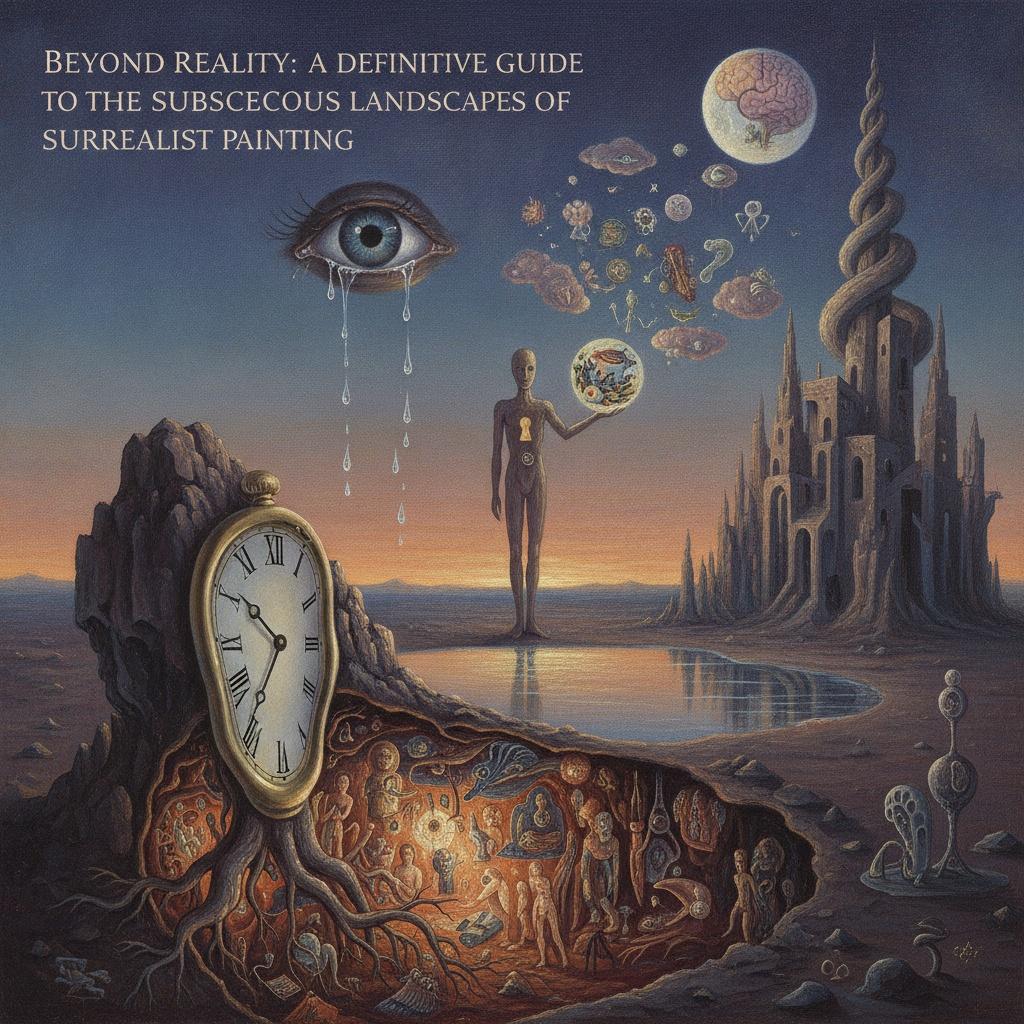
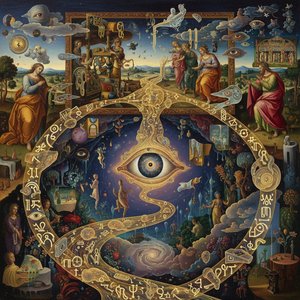 Beyond Reality: A Sophisticated Exploration of Symbolism and the Dreamlike Subconscious in Art History
The Veil of Perception: Defining the Symbolist Movement To gaze upon a Symbolist masterpiece is to step through a threshold, leaving the tangible certainties of the material world for a realm where shadows possess weight and silence speaks in metapho...
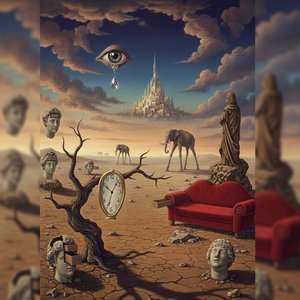
To understand the fractured, dreamlike logic of Surrealism, one must first look back at the twilight of the 19th century and the emergence of the Symbolist movement. Before the Surrealists sought to resolve the contradictions between dream and reality, the Symbolists had already begun to pull back the veil of perception. They rejected the literalism of Naturalism and the fleeting light of Impressionism, choosing instead to explore a realm where shadows possessed weight and silence spoke in metaphors. Artists like Odilon Redon acted as precursors, creating ethereal landscapes where figures emerged from a nebulative darkness, suggesting the way memories flicker into consciousness before retreating into the void. This movement served as a vital bridge, moving art away from the mere documentation of the external world toward the expression of the unseen currents within the human psyche.
As Europe grappled with the profound trauma and disillusionment following World War I, the seeds of Surrealism began to germinate in the fertile soil of Dadaism. While Dada embraced the absurd and the rejection of logic as a protest against a nonsensical war, Surrealism—formally established by André Breton’s 1924 manifesto—aimed for something more constructive. It sought to create a "super-reality," or surreality, by synthesizing the rational and the irrational. This was not merely an aesthetic shift but a revolutionary intellectual movement that drew from political causes and deep psychological inquiry, forever altering the trajectory of modern art by asserting that the true essence of human experience lies beneath the surface of conscious thought.
Unlocking the Unconscious: The Paranoiac-Critical Method and Freudian Influence
SurrealismSurrealism is an art and cultural movement that developed in Europe in the aftermath of World War I in which artists aimed to allow the unconscious mind to express itself, often resulting in the depiction of illogical or dreamlike scenes and ideas. I...
The engine driving the Surrealist imagination was nothing less than the burgeoning field of psychoanalysis. The works of Sigmund Freud, particularly his explorations of the unconscious mind, provided the movement with its most potent toolkit. Surrealists viewed the dream state not as a chaotic void, but as a structured landscape of desire, anxiety, and repressed memory. They sought to bypass the "censor" of the rational mind to allow the unfiltered expression of the psyche. This pursuit led to various experimental techniques, such as pure psychic automatism, where the artist allowed the hand to move without premeditated thought, attempting to capture the raw flow of the subconscious.
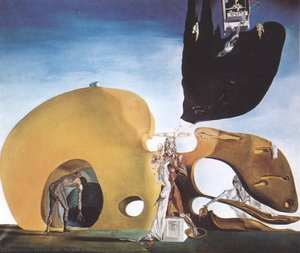
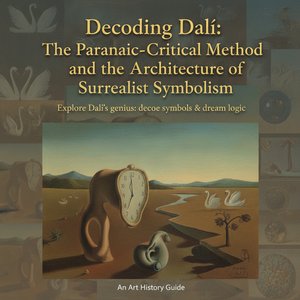
Perhaps no figure utilized these psychological tools more brilliantly than Salvador Dalí. He developed what he termed the "paranoiac-critical method," a highly disciplined approach designed to induce a self-induced state of paranoia. Unlike the passive nature of automatism, Dalí’s method was active; it involved the cultivation of a delusional state to unlock hidden imagery and then using his immense technical skill to render those hallucinations with startling, photographic precision. By meticulously painting the irrational, Dalí made the invisible visible, forcing the viewer to confront the unsettling truths lurking within their own minds. This marriage of high-level academic draftsmanship and psychological instability created a tension that remains one of the most compelling aspects of the movement.
Masterpieces of Distortion: Analyzing Dalí’s Meticulous Realism and Symbolic Landscapes
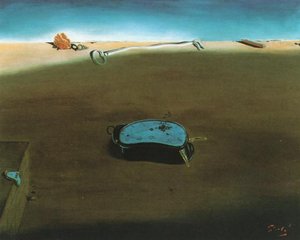 Soft Watches, 1933
Soft Watches, 1933 – A Surreal Echo of Time and Loss Salvador Dalí’s “Soft Watches,” painted in 1933, is more than just a depiction of an inanimate object; it's a profound meditation on mortality, memory, and the elusive nature of time itself. Execut...
When we gaze upon Dalí’s 1933 masterpiece,
Soft Watches, we are not merely looking at a depiction of melting timepieces; we are witnessing a profound meditation on mortality and the elusive nature of memory. The painting exemplifies the signature Surrealist technique of juxtaposing meticulous realism with dreamlike distortions. The clocks, appearing pliable and yielding under pressure, serve as an unsettling metaphor for the erosion of time and the decay of the physical world. The precision of his brushstrokes—rendering the surface texture of the metal and the surrounding objects like spoons and bottles so convincingly—servified to ground the impossible in a terrifyingly tangible reality.
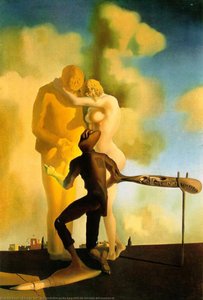
This mastery of "hand-painted" realism extends to his more complex, layered works, such as
Archaeological Reminence of Millet’s Angelus. In this 1935 piece, Dalí engages in an audacious reimagining of Jean-François Millet’s pastoral classicism. Rather than celebrating the peaceful piety of the original, Dalí introduces a desolate, dreamscape landscape populated by colossal, weathered statues. Through the use of unexpected juxtapositions and the manipulation of scale, he transforms a familiar historical reference into a fragmented memory, reflecting the broader Surrealist preoccupation with loss, replacement, and the enduring influence of artistic tradition. It is this ability to "remix" history through a lens of anxiety that defines his most iconic contributions to the canon.
The Architecture of Dreams: Exploring Surrealist Space and the Dissolution of Logic
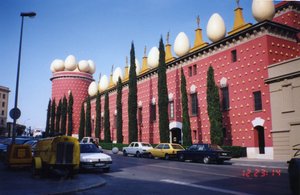 Dalí Theatre and Museum
A Surreal Labyrinth: Stepping into Dalí’s Living Dream To enter the Dalí Theatre and Museum in Figueres is not merely to visit an exhibition, but to surrender oneself to a meticulously crafted hallucination. Located in the heart of the Spanish town w...
Surrealism was never confined to the canvas; it sought to colonize the very space inhabited by the viewer. This ambition is perhaps most vividly realized in the Dalí Theatre and Museum in Figueres, a structure that serves as a self-portrait rendered in stone and glass. To enter this space is to surrender to a meticulously crafted hallucination. The museum, built upon the ruins of an old theatre, functions as a labyrinth designed to disorient the rational mind. Here, the boundaries between art and reality dissolve through the use of optical illusions, anamorphic tricks, and architectural elements that defy conventional logic, such as furniture that appears to cling to ceilings.
This dissolution of space mirrors the themes found within the paintings themselves, where the horizon lines are often vast and empty, creating a sense of infinite, unsettling depth. The architecture of the dreamscape relies on the tension between the familiar and the alien. By manipulating light—such as through the magnificent geodesic dome in Dalí's museum—and creating environments that feel both ancient and futuristic, Surrealist artists invite us to step through a threshold. They create a total environment where the viewer is no longer an observer of a scene, but a participant in a living, breathing hallucination, navigating a world where the laws of physics have been replaced by the fluid logic of the soul.
Legacy of the Irrational: How Surrealism Redefined Modern Visual Language
 Salvador Dalí
Salvador Domingo Felipe Jacinto Dalí i Domènech, Marquess of Dalí de Púbol (11 May 1904 – 23 January 1989), known as Salvador Dalí, was a Spanish surrealist artist renowned for his technical skill, precise draftsmanship, and the striking and bizarre ...
The enduring legacy of Surrealism lies in its profound impact on the global visual language, influencing everything from film and photography to modern graphic design and advertising. By legitimizing the irrational, the movement provided a new vocabulary for expressing the complexities of the human condition in an increasingly fragmented modern age. The element of surprise, the use of non sequitur, and the power of unexpected juxtapositions have become permanent fixtures in our cultural consciousness. We see its echoes in the works of later artists who continued to explore the boundaries between the seen and the unseen, ensuring that the movement's revolutionary spirit remained vibrant long after its initial peak.
Today, we continue to find profound meaning in these distorted landscapes, finding in them a mirror for our own anxieties and aspirations. For the modern collector or history enthusiast, engaging with Surrealist art is an invitation to an introspective journey. Whether through the study of museum-grade reproductions that capture the tactile depth of original oil paintings or through the exploration of historical archives, the world of Surrealism remains a boundless frontier. It reminds us that beneath the veneer of our structured, rational lives, there exists a vast, beautiful, and often unsettling universe of dreams waiting to be rediscovered.
For those seeking to bring the profound textures of art history into their own collections, Mus3ums.com offers unparalleled access to museum-quality reproductions. From the meticulous impasto of a hand-painted oil reproduction to the precision of archival prints, our mission is to make the world's greatest masterpieces accessible to all. Whether you wish to commission a custom work from a personal photo or find a centerpiece that captures the haunting beauty of the Surrealist era, our expert artists and project coordinators are dedicated to preserving the soul of human creativity for your home.