
Introduction
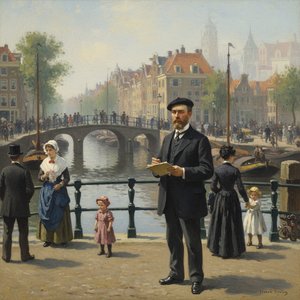
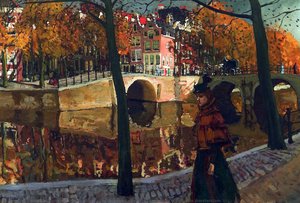
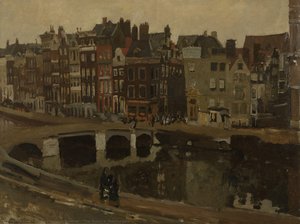
The essence of Dutch impressionist painters lies in their profound ability to capture the fleeting interplay of light and atmosphere across the low-lying landscapes and bustling urban centers of the Netherlands. Moving away from the rigid, polished traditions of studio painting, these artists embraced the spontaneity of the outdoors, seeking to translate the immediate sensory experience of a moment onto canvas. Their work is defined by a rapid, expressive brushstroke and a keen sensitivity to how light transforms the textures of water, sky, and city streets.
Emerging during a period of significant cultural and industrial transition, this movement represented a departure from historical academicism toward a more modern, observational reality. While the French masters were redefining light in Paris, their Dutch counterparts were applying similar principles to the unique, often moody light of the North, documenting everything from the serene expanses of the Hague School to the energetic movement of modern life in Amsterdam. This era marked a pivotal shift in how the Dutch perceived their own environment, moving from idealized scenes to the authentic, unvarnished beauty of the everyday.
Today, these painters remain vital for their mastery of color and their role in the evolution of modern art. Their ability to evoke emotion through light and texture continues to influence how we perceive the relationship between nature and human perception. By examining the works of these masters, one gains a deeper understanding of the roots of modernism and the enduring power of the impressionist spirit. The following artists represent the diverse voices that shaped this movement, from the atmospheric landscapes of Hendrik Willem Mesdag to the vibrant urban scenes of George Hendrik Breitner and the delicate nuances of Margaretha Roosenboom.
Piet Mondrian
 By the Sea - Piet Mondrian
Before he became the architect of geometric abstraction and the pioneer of Neoplasticism, Piet Mondrian was deeply rooted in the naturalistic traditions of his homeland. Born in Amersfoort in 1872, his early artistic identity was shaped by the disciplined environment of a Protestant household and formal training at the Rijksakademie van Beeldende Kunsten in Amsterdam. His inclusion in the group of Dutch impressionist painters stems from this formative period, where his work focused on capturing the atmospheric essence of the Netherlands through a lens of light and color.
In his 1909 work, By the Sea, we witness a crucial transition in his stylistic evolution. Moving away from strict documentation, Mondrian utilizes thick, visible brushstrokes and a heavy impasto to translate the movement of the Zeeland coast into a spiritual experience. The composition balances a luminous yellow sky against deep purples and cobalt blues, seeking the structural truth within the landscape. This period of his life, characterized by a fascination with the interplay of light and salt, serves as the essential foundation for his later, radical departure into the rhythmic grids that would eventually redefine the visual language of the twentieth century.
Johan Jongkind
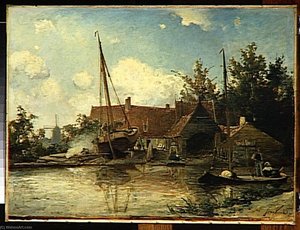 PAYSAGE - Johan Jongkind
In his evocative work PAYSAGE, Johan Jongkind captures a quiet, reflective moment where the boundaries between architecture and nature dissolve into a soft, atmospheric haze. This piece exemplifies his mastery of the ephemeral, focusing on the subtle interplay of light upon water and the structural silhouettes of a canal scene. As a vital Dutch impressionist painter, Jongkind served as a crucial bridge between the rigid traditions of the past and the radical spontaneity of the Impressionist movement. His ability to prioritize subjective perception and the emotional resonance of a specific moment over photographic realism makes him a true forerunner of this aesthetic revolution.
Born in 1819 in the Netherlands, Jongkind’s artistic identity was forged through a deep connection to the tranquil landscapes of Overijssel. After training under Andreas Schelfhout in The Hague, he moved to Paris, where his vibrant marine landscapes and atmospheric scenes earned him the admiration of critics like Baudelaire. His technique, characterized by a focus on light and the fleeting qualities of the atmosphere, profoundly influenced later masters like Monet. Through his ability to translate the essence of light and movement onto canvas, Jongkind remains a foundational figure in the evolution of Dutch landscape art.
Isaac Israëls
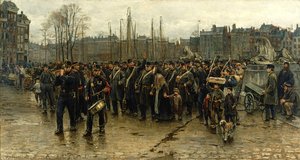 Transport of colonial soldiers - Isaac Israëls
In his 1884 masterpiece, "Transport of Colonial Soldiers," Isaac Israëls captures a somber, atmospheric tableau that showcases his early mastery of tonal depth. This large-scale work, depicting a procession on a Belgian cobblestone street, utilizes a sophisticated palette of muted greys and earthy neutrals to evoke a sense of heavy, imperial stillness. Rather than relying on the bright, sun-drenched colors of later French styles, Israëls employs a nuanced technique to render the textures of military uniforms and the muscularity of horses through subtle light and shadow.
As a leading figure of the Amsterdam Impressionism movement, Israëls moved away from the traditional, heavy subjects of his predecessors to embrace the fleeting energy of modern life. His work is characterized by a desire to portray the vibrant, bustling scenes of Amsterdam’s cafes, cabarets, and urban streets, as well as the breezy seaside landscapes of Scheveningen. Born in Amsterdam in 1865 and trained at the Royal Academy of Art in The Hague, he was deeply influenced by the Tachtigers movement, which advocated for an art style that reflected emotional content through intense, direct technique. His ability to capture the essence of a moment—whether in a crowded city square or a quiet military procession—solidifies his status as a quintessential Dutch impressionist painter.
Willem de Zwart
 Kaïn en Abel - Willem de Zwart
Willem de Zwart stands as a vital bridge between the atmospheric traditions of the Hague School and the vibrant, energetic pulse of Amsterdam Impressionism. Born in 1862, his artistic evolution is a testament to the shifting tides of Dutch art. After honing his technical precision at the Koninklijke Academie voor Beeldende Kunsten under masters like Anton Mauve, Zwart eventually embraced the looser, more luminous brushwork characteristic of the Impressionist movement. This transition allowed him to move beyond muted palettes toward a more spirited engagement with light and color.
His ability to capture fleeting moments and dramatic atmospheres is profoundly evident in his work Kaïn en Abel. In this striking piece, Zwart utilizes a vertical composition to navigate a biblical narrative through a landscape bathed in moonlight. The painting showcases his mastery of the impasto technique, using thick, textured brushstrokes to define the rugged terrain and the emotional weight of the scene. By blending the psychological depth of his early training with the expressive, rapid application of paint favored by the Impressionists, Zwart created a visual language that was both deeply rooted in Dutch tradition and boldly modern.
George Hendrik Breitner
George Hendrik Breitner stands as a transformative force within the Dutch impressionist painters movement, specifically for his role in pioneering Amsterdam Impressionism. Unlike the more pastoral focus of his predecessors, Breitner turned his gaze toward the raw, pulsing energy of the urban landscape. His work captures the fleeting, unvarnished reality of city life, utilizing bold, expressive brushstrokes that prioritize emotional immediacy over academic precision. This restless spirit, which once led to his expulsion from the Hague Academy of Fine Arts, allowed him to develop a cinematic way of seeing that bridged the gap between traditional realism and the rapid, light-sensitive approach of the Impressionists.
His 1887 work, Reclining Nude, exemplifies this stylistic evolution. In this piece, Breitner moves away from the idealized, statuesque figures of classical tradition to embrace a more intimate and tactile reality. The painting captures a singular, breathing moment of rest, defined by the heavy, textured folds of red sheets that provide a vibrant contrast to the surrounding muted tones. Through this work, we see his mastery of atmospheric perspective and his ability to translate a private, quiet moment into a profound study of light and human vulnerability.
Floris Verster
 Flowers and Leaves - Floris Verster
Born in 1861, Floris Verster represents a vital bridge between the somber traditions of the Hague School and the vibrant energy of the Impressionist movement. While his early training at the Leiden Academy of Fine Arts instilled in him a disciplined eye for detail, his spirit sought a more luminous way of seeing. His time studying in The Hague alongside contemporaries like George Hendrik Breitner allowed him to absorb the burgeoning interest in capturing fleeting moments, yet Verster’s true evolution occurred when he looked toward the avant-garde influences of Brussels and France. This exposure pushed him to abandon muted, melancholic tones in favor of an expressive, color-driven approach that defines his place among the Dutch impressionist painters.
His 1888 masterpiece, Flowers and Leaves, serves as a profound testament to this stylistic transition. In this work, Verster moves away from the lavish, idealized still lifes of the past to focus on the raw, transient reality of nature. Through thick, tactile brushstrokes and a dramatic interplay of light and shadow, he captures the heavy, organic textures of wilting foliage. By emphasizing the immediate, physical presence of decay through a rich palette of deep greens and ochres, Verster successfully translated the Impressionist obsession with light and the fleeting moment into the intimate realm of the Dutch still life.
Willem Witsen
 Afrikaantjes in een blauw vaasje, Willem Witsen, 1885 - 1922 - Willem Witsen
Willem Witsen (1860–1923) stands as a sophisticated voice within the Dutch impressionist painters group, distinguished by his ability to capture the atmospheric soul of Amsterdam. While many of his contemporaries sought vibrant, fleeting light, Witsen’s approach was deeply informed by his time in London, where the tonal harmonies of James Abbott McNeill Whistler reshaped his aesthetic. This influence led him toward a more subdued, contemplative style that prioritized mood and the delicate interplay of light and shadow over mere color.
His place in the impressionist movement is defined by this dedication to capturing the immediate, sensory essence of a moment—not through frantic brushwork, but through a masterful command of atmosphere. Whether through his serene cityscapes or his precise etchings of Amsterdam's canals, Witsen sought to translate the quietude of his surroundings onto the canvas. His work, such as the delicate floral still life Afrikaantjes in een blauw vaasje (1922), demonstrates his ability to find profound beauty in simple compositions, utilizing a refined palette to evoke a sense of stillness and grace that remains a hallmark of his artistic legacy.
Hendrik Willem Mesdag
 Kalme zee, Hendrik Willem Mesdag, 1860 - 1900 - Hendrik Willem Mesdag
Hendrik Willem Mesdag (1831–1915) stands as a monumental figure among Dutch impressionist painters, primarily through his profound ability to capture the atmospheric truth of the maritime world. While his early life was destined for banking, his true vocation was found in the salt spray and shifting light of the Dutch coast. As a central figure of The Hague School, Mesdag moved away from rigid studio traditions to embrace the plein-air sensibilities of the Impressionist movement, focusing on the raw, unbridled energy of the North Sea.
His mastery of light and movement earned him international acclaim, notably at the Paris Salon. In his representative work, Kalme zee, he demonstrates a delicate command of coastal life, depicting fishing boats in shallow waters where the atmosphere feels heavy with salt and light. The scene, featuring a man wading through the water with an anchor, showcases his ability to balance tranquil maritime themes with the rhythmic textures of the sea. From his early training under Willem Roelofs to his creation of the colossal Panorama Mesdag, his work remains a testament to the emotional power of the tides and the fleeting, luminous qualities of the Dutch seascape.
Willem Maris
 Cows in a Soggy Meadow, Willem Maris, 1860 - 1900 - Willem Maris
To step into a landscape by Willem Maris is to enter a world where the air itself possesses weight, moisture, and a profound sense of quietude. Born in The Hague in 1844, Maris became a cornerstone of the Hague School, a movement that shared the core tenets of the Impressionist movement by prioritizing atmospheric conditions over rigid, studio-bound detail. He famously rejected the idea of mere documentation, once proclaiming, “I don’t paint cows, but rather effects of light.” This philosophy allowed him to transcend the literal, using the Dutch countryside as a vessel for shimmering, ephemeral radiance.
His intimate connection to the land was deeply personal; as a child, he spent countless hours observing the rhythms of the meadow and the behavior of livestock. This instinctive understanding of nature is masterfully captured in his representative work, Cows in a Soggy Meadow. In this piece, the grazing cattle and the damp, wet meadow are not just subjects, but tools used to catch the fleeting, luminous quality of light. By focusing on how light interacts with the moisture of the Dutch landscape, Maris perfectly embodies the Dutch impressionist painters' mission to capture the immediate, sensory truth of a single moment.
Margaretha Roosenboom
 Silver Vase of Flowers - Margaretha Roosenboom
Born in Voorburg in 1843, Margaretha Roosenboom emerged as a remarkable prodigy within the Dutch artistic landscape. The daughter of landscape painter Nicolaas Johannes Roosenboom and granddaughter of the renowned Andreas Schelfhout, her technical foundation was deeply rooted in a lineage of naturalism. After receiving early training from her father in Brussels, her return to The Hague in 1867 marked a definitive turning point, as she refined her skills under her grandfather’s tutelage. This rigorous education instilled in her a meticulous attention to detail that would define her career.
Roosenboom belongs to the group of Dutch impressionist painters through her unique ability to bridge traditional Dutch still life with the burgeoning sensibilities of the late 19th century. While her compositions maintain a profound naturalism, her work captures the fleeting, luminous effects of light and atmosphere—a core tenet of the Impressionist movement. In her 1882 masterpiece, Silver Vase of Flowers, this transition is palpable. The painting utilizes a sophisticated interplay of light and shadow to create a sense of volume and atmosphere, where the soft textures of roses meet the cool, reflective surface of a metallic vessel. Her ability to translate the ephemeral beauty of nature into tactile, light-drenched compositions secured her place as a significant figure in Dutch art history.
Conclusion
The legacy of these Dutch impressionist painters lies in their ability to translate the fleeting nuances of light and atmosphere into a tangible visual language. From the atmospheric landscapes of Hendrik Willem Mesdag and the delicate floral studies of Margaretha Roosenboom to the urban vitality captured by George Hendrik Breitner, each artist contributed a unique perspective to the movement. Whether through the rapid, outdoor brushwork used to catch a passing moment or the sophisticated color palettes that defined a generation, these masters collectively transformed the way we perceive the natural and urban world.
At Mus3ums.com, we invite you to bring this vibrant history into your own living space. Our artisans specialize in creating museum-quality, hand-painted oil reproductions that preserve the authentic texture and soul of these masterpieces. You can explore our full collection to find the perfect piece and experience the enduring beauty of Dutch Impressionism through a work crafted specifically for your home.