The Sculptor of Turin’s Quiet Observation
In the heart of Piedmont, where the shadows of the Alps meet the architectural grandeur of Turin, the legacy of Ignazio Collino remains etched in stone and marble. Born in 1724 into a family deeply rooted in the sculptural traditions of Italy, Collino’s early life was defined by the tactile intimacy of wood carving, a craft he learned under the watchful eye of his father, Damé. This foundational period instilled in him a profound respect for material and form, a sensitivity that would later allow him to navigate the complex transition between the exuberant drama of the late Baroque and the disciplined clarity of Neoclassicism. His journey was not merely one of personal ambition but a familial odyssey, shared closely with his brother Filippo, as they worked to shape the visual identity of the House of Savoy.
The trajectory of Collino’s career was irrevocably altered by his pursuit of excellence beyond the borders of his home. Supported by a royal subsidy from Carlo Emanuele III in 1750, he traveled to Rome, the epicenter of classical inspiration. It was here that his artistic language began to mature through rigorous engagement with antiquity. Under the mentorship of masters such as the bronze sculptor François Ladatte and the draftsman Claudio Francesco Beaumont, Collino moved beyond simple imitation toward a sophisticated synthesis of styles. In the Roman studios, he labored alongside Giovanni Battista Maini, copying the busts of emperors and vestal virgins, an exercise that refined his ability to capture the eternal essence of the human figure. This period of intense study allowed him to master the delicate balance between Baroque emotion and Neoclassical restraint, a hallmark of his mature oeuvre.
A Legacy in Marble and Royal Patronage
Upon his return to Turin, Collino transitioned from a student of antiquity to a central figure in the city's cultural renaissance. His workshop became a crucible for talent, where he not only produced significant works but also nurtured the next generation of sculptors, including the notable Giovanni Battista Bernero. The scale of his achievements was matched only by the prestige of his patrons. As an appointed sculptor to the king, Collino’s hands were instrumental in decorating the most sacred and significant sites of the Piedmont region. His contributions to the Basilica of Superga, particularly the monumental tombs for the House of Savoy, stand as enduring testaments to his ability to evoke both reverence and historical continuity.
The breadth of his technical mastery is evident in the diversity of his subjects and media:
- Classical Reinterpretations: His ability to breathe life into mythological narratives, such as his Carrara marble group of Papirus and Niobe.
- Civic and Religious Monuments: The creation of profound sculptural elements for royal tombs and the colossal statue of St. Agabus in Novara.
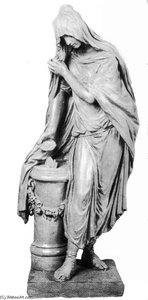
- Allegorical Mastery: The execution of complex personifications including Justice, Strength, Beneficence, and Charity.
- Collaborative Grandeur: The seamless integration of his work with that of his brother Filippo, creating a unified aesthetic for the royal palaces and fountains of the region.
Ultimately, Ignazio Collino was more than a mere craftsman; he was an architect of memory. Through his meticulous attention to detail and his ability to translate the weight of history into the lightness of sculpted form, he helped define an era. His work serves as a bridge between the theatricality of the past and the structured elegance of the future, ensuring that the spirit of 18th-century Turin remains vibrantly alive in the silent, enduring grace of his sculptures.
Ερωτήσεις και Απαντήσεις
Πού και πότε γεννήθηκε ο/η Ignazio Collino;
Ο/Η Ignazio Collino γεννήθηκε στην/στη Turin το 1736.
Με τι άλλα ονόματα ή ψευδώνυμα είναι γνωστός/η Ignazio Collino;
Ο/Η Ignazio Collino είναι γνωστός/η επίσης ως Ignazio Secondo Collino.
Σε ποια πόλη και χώρα γεννήθηκε ο/η Ignazio Collino;
Ο/Η Ignazio Collino γεννήθηκε στην/στη Turin, στο/στη Italy.