Introduction
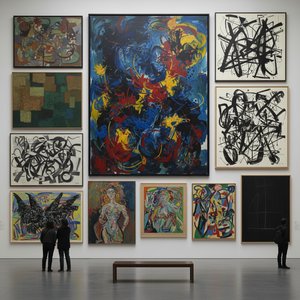
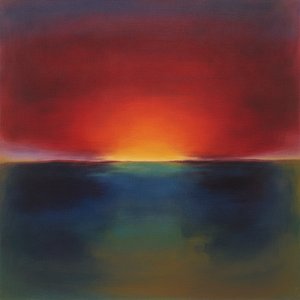
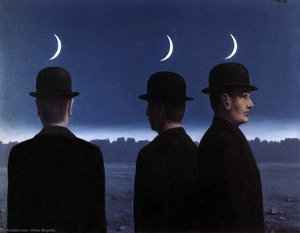
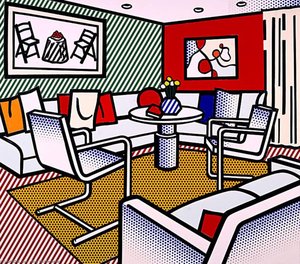
To step into the world of abstract art is to abandon the safety of the recognizable and embark on a journey through pure emotion, rhythm, and form. It is an invitation to stop asking what a painting represents and instead begin feeling how it vibrates against the soul. Unlike representational art, which anchors us to the physical world, abstraction liberates the eye, allowing color, texture, and line to speak a universal language that transcends borders and eras.
Historically, the shift toward abstraction marked one of the most profound revolutions in human expression. As the early 20th century unfolded, artists began to peel away the layers of literal depiction, driven by a desire to capture the invisible—the energy of music, the complexity of the subconscious, and the frantic pulse of a modernizing world. From the geometric precision of the avant-garde movements to the explosive, gestural spontaneity of mid-century expressionism, these works redefined the canvas as a space for spiritual and psychological exploration rather than mere documentation.
Today, these masterpieces remain deeply resonant because they mirror our own contemporary experience: a world of fragmented perceptions, intense sensory input, and profound ambiguity. They offer a sanctuary of contemplation in an age of constant noise, reminding us that meaning is not always something to be decoded, but something to be experienced. As we navigate this curated selection, we will explore ten pivotal works that define the abstract canon—each a testament to the power of non-objective art to stir the human spirit and redefine the boundaries of what it means to see.
Number 1, 1949 - Paul Jackson Pollock
 Number 1, 1949 - Paul Jackson Pollock
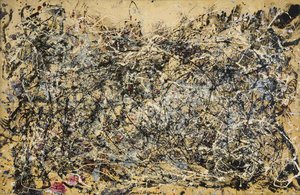
What if I told you that Number 1, 1949 by Jackson Pollock was born from a moment of rebellion—a stroke of defiance against the ordinary? This is not merely a painting; it is a visceral manifesto of movement. As a cornerstone of our list of the top 10 artworks that explore the theme of abstract , this piece redefined beauty by replacing representational forms with the raw, rhythmic energy of "action painting." The canvas becomes an arena where splatters of black, ochre, and white dance in a chaotic yet hypnotic web of texture.
Every drip and streak captures a fragment of the artist's subconscious, offering a profound emotional depth that transcends time. At Mus3ums.com, we believe such monumental energy should not be confined to museums. Imagine this masterwork as a focal point in your professional office or a sophisticated lounge, turning every glance into a reminder: your space is not just a room; it is a statement. Bring the revolutionary spirit of Abstract Expressionism into your interior with our high-quality, hand-painted reproductions.
Composition VIII - Wassily Wassilyevich Kandinsky
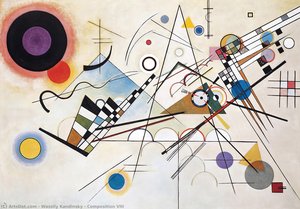 Composition VIII - Wassily Wassilyevich Kandinsky
To stand before Composition VIII by Wassily Kandinsky is to witness a visual symphony where the boundaries between sound and sight dissolve. There is a profound, rhythmic energy in this 1923 masterpiece; it captures that universal moment of finding order within chaos, much like a sudden burst of musical inspiration. As a cornerstone of the top 10 abstract artworks , it remains an essential study in non-objective painting, moving beyond recognizable objects to speak directly to the soul through geometric precision and vibrant, contrasting hues.
Kandinsky’s masterful interplay of sharp lines, floating circles, and intersecting triangles creates a sense of spiritual movement that feels as modern today as it did during his Bauhaus years. At Mus3ums.com , we honor this legacy through our high-quality, hand-painted oil reproductions. Our artists meticulously recreate the visible brushstrokes and deep tonal ranges of Kandinsky’s work, ensuring that the energetic dynamism and emotional depth of this abstract landmark are preserved for your own collection. Bring the transformative power of pure form into your space with a piece that celebrates the very essence of abstraction.
Ciphers and Constellations, in Love with a Woman - Joan Miró
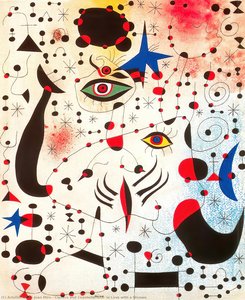 Ciphers and Constellations, in Love with a Woman - Joan Miró
In Ciphers and Constellations, in Love with a Woman , Joan Miró does not merely depict light; he composes it like a celestial sonata. As you stand before this 1941 masterpiece, you realize the artist didn’t just paint illumination—he invented a new language of radiance. Within this quintessential piece of abstract Surrealism, the creamy off-white background acts as a cosmic stage where vibrant reds and deep blacks dance in a rhythmic, symbolic interplay.
The work transcends simple representation through a dreamlike network of lines, stars, and watchful eyes that seem to pulse with their own internal glow. Miró uses gouache and watercolor to create translucent layers, inviting the viewer into a subconscious realm where fate and passion intersect. This piece earns its place in our top 10 abstract artworks because it transforms a flat surface into a portal of infinite depth. When this light spills into your professional or residential space, it does more than decorate a wall; it invites a sense of mystery and profound emotional resonance into the very architecture of your environment.
Joan Miró- Catalan Landscape (The Hunter) - Joan Miró
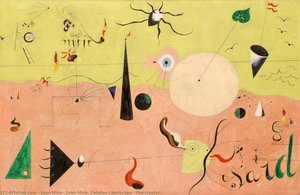 Joan Miró- Catalan Landscape (The Hunter) - Joan Miró
Before the world recognized him as a Surrealist icon, Joan Miró experienced a period of profound creative tension, where the boundaries between reality and his subconscious began to dissolve. In 1924, this tension culminated in Catalan Landscape (The Hunter) , a masterpiece that serves as a cornerstone in our exploration of abstract art . This work represents a monumental conceptual leap; Miró moved beyond mere representation to embrace a language of biomorphic forms and symbolic geometry.
The canvas is a vibrant, dreamlike tapestry where earthy ochres and terracotta meet sudden bursts of celestial pink and deep blue. Through fluid, irregular lines and flattened perspectives, Miró creates an all-over pattern of amoeba-like shapes and eye-like orbs that defy traditional spatial logic. This delicate dance of organic abstraction invites the viewer into a state of constant discovery. The same intellectual depth and rhythmic energy found in this composition can serve as a powerful catalyst for focus, helping to cultivate a sophisticated and highly productive atmosphere within a modern home office or professional study.
Woman I - Willem de Kooning
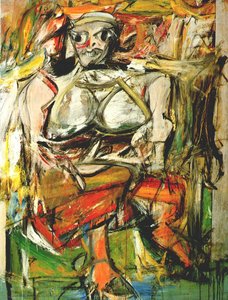 Woman I - Willem de Kooning
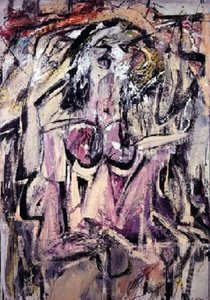
To encounter Woman I by Willem de Kooning is to stand before a monumental pillar of the New York School, an artwork that commands the room with its raw, visceral energy. As one of the most significant pieces in our exploration of the top 10 artworks that explore the theme of abstract expressionism, this 1952 masterpiece transcends mere portraiture to become a profound study of post-war tension and fractured identity.
De Kooning utilizes a chaotic, highly saturated palette where fiery reds and oranges clash violently with unsettling greens, mirroring the internal turmoil of the subject. The surface is a tactile landscape of thick impasto ; every aggressive, gestural brushstroke adds a layer of physical depth that makes the canvas feel alive. For the discerning collector or designer, this work offers more than just visual impact; it brings a sense of historical gravity and sophisticated edge to modern luxury interiors. It is a masterclass in using abstraction to convey human vulnerability, making it an essential cornerstone for any collection focused on emotional intelligence and the evolution of modern art.
On White II - Wassily Wassilyevich Kandinsky
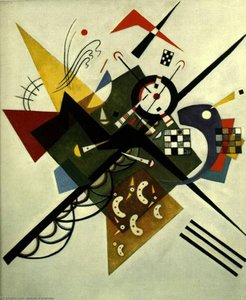 On White II - Wassily Wassilyevich Kandinsky
In the realm of pure abstraction, On White II by Wassily Kandinsky stands as a profound testament to the spiritual power of geometry. Created in 1923 during his influential Bauhaus period, this masterpiece transcends mere decoration; it is an invitation to experience a symphony of form and color. The composition vibrates with energy, utilizing sharp triangles, intersecting lines, and bold rectangles that dance across a luminous, pale background.
As you gaze upon these fragmented perspectives, you aren't just looking at shapes—you are witnessing a carefully constructed emotional language. Kandinsky uses flat planes of vibrant color to evoke deep psychological responses, where blue offers tranquility and red pulses with passion. This work does not seek to depict the visible world but rather to liberate the soul from it. Integrating such a pivotal piece into your collection transforms a simple space into a gallery of the soul , surrounding yourself with the very essence of artistic genius and the transformative power of the abstract movement.
The Mechanic - Fernand Léger
 The Mechanic - Fernand Léger
In The Mechanic (1920), Fernand Léger masterfully bridges the gap between the human form and the industrial pulse of the modern age. This piece stands as a cornerstone in the exploration of abstract themes, where the boundaries of the body dissolve into a rhythmic dance of geometric precision. Léger utilizes his signature "Tubism" style, employing cylindrical forms and bold, primary colors—vibrant yellows, deep reds, and striking blues—to create a composition that feels both structural and alive.
As you observe the fragmented planes and sharp, intersecting lines, you experience the energy of an era defined by machinery and movement. The figure is not merely a subject but a component within a larger, mechanical symphony, where light and shadow are rendered through flattened perspectives and heavy, black outlines. To possess such a work is to invite the dynamism of the avant-garde into your environment; it transforms a simple wall into a window onto the industrial soul, offering a profound sensory encounter with the very essence of modern abstraction.
Abstract Painting 805-4 - Gerhard Richter
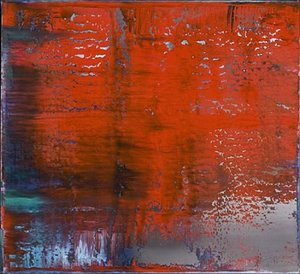 Abstract Painting 805-4 - Gerhard Richter
Gerhard Richter’s Abstract Painting 805-4 stands as a monumental pillar in our exploration of the abstract theme, offering a visceral masterclass in color and movement. This work captures the raw essence of human emotion through a fiery, dominated palette of reds, oranges, and deep browns, punctuated by subtle, cooling hints of blue and white. As a leading figure in contemporary art, Richter utilizes a heavy impasto technique that transforms the canvas into a three-dimensional landscape of ridges and valleys, where every thick brushstroke tells a story of spontaneous energy.
In the context of the world's greatest abstract works, 805-4 is essential for its ability to bridge the gap between chaotic gesture and structured composition. For modern professionals—from interior designers to hospitality decorators—this piece offers unparalleled versatility. Its intense, warm tones provide a sophisticated focal point for corporate lobbies or luxury hotel suites, bringing a sense of prestige and dynamic atmosphere to large-scale architectural spaces. It is not merely a painting; it is an immersive sensory experience that redefines the energy of any room.
Untitled (ernok) - jean michel basquiat
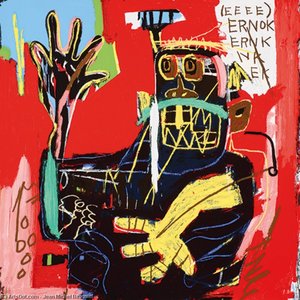 Untitled (ernok) - jean michel basquiat
A visceral explosion of crimson and chaos, Untitled (ernok) by Jean-Michel Basquiat captures the raw, unbridled pulse of urban life. At Mus3ums.com, we believe in democratizing beauty, ensuring that the profound emotional depth of such masterpieces is accessible to all. This work earns its place in our selection of the top 10 abstract artworks through its unparalleled Neo-Expressionist energy and its ability to communicate complex social narratives through distorted forms and aggressive, gestural brushstrokes.
The painting is a sensory storm; thick impasto layers and a high-contrast palette of primary yellows and blues collide against a blood-red backdrop, creating a sense of urgent movement. Basquiat’s use of symbolic elements—such as the grotesque, multi-handed figure—challenges the viewer to find order within disarray. This captivating tension between street-art grit and fine-art complexity makes it an essential study in abstract emotion. Today, this transformative presence can be brought into your own home, office, or personal gallery through our high-fidelity, hand-painted reproductions, allowing you to anchor a modern interior with a piece of profound historical power.
Convergence - Paul Jackson Pollock
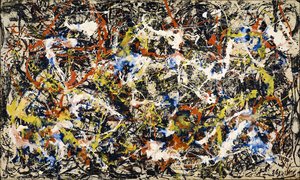 Convergence - Paul Jackson Pollock
What story does the rhythmic, chaotic energy of Convergence by Jackson Pollock tell about a world redefining itself? Emerging from the transformative landscape of post-war America, this masterpiece stands as a pillar in our selection of the top 10 artworks that explore the theme of abstract expressionism. Pollock broke every established rule of the era, abandoning the easel to dance around a canvas laid on the floor, using sticks and pours to create his legendary drip technique.
The painting offers no central focal point, instead presenting an all-over composition where vibrant webs of black, yellow, and crimson interweave in a state of controlled chaos. This visceral, tactile experience—defined by thick impasto and energetic splatters—provides more than just visual interest; it offers a profound sensory escape. For the modern collector, integrating such a dynamic piece into a curated space creates an atmospheric anchor, evoking a sense of raw emotion and historical innovation that transforms any room into a private gallery of movement and light.
Conclusion
As we step away from these fractured forms and vibrant, non-representational rhythms, we realize that abstract art does much more than challenge our vision; it invites us to feel without the need for definitions. These ten masterpieces serve as more than mere historical milestones; they are living, breathing presences that continue to pulse within our modern consciousness. They remind us that beauty often resides in the unseen—in the tension of a line, the depth of a shadow, and the raw energy of a color that refuses to be contained.
In our homes and contemporary spaces, these works act as windows into the infinite, bridging the gap between the tangible world and the boundless landscape of human emotion. They shape our interiors not just as decor, but as anchors for contemplation, echoing an eternal dialogue between the artist's initial spark and our own daily lives. To bring such a piece into your space is to invite a timeless movement of spirit, ensuring that the profound mystery of abstraction continues to inspire, move, and transform the way we perceive the world around us.
We invite you to continue this journey of discovery through our full collection , where the legacy of these masters remains eternally vibrant.