Introduction
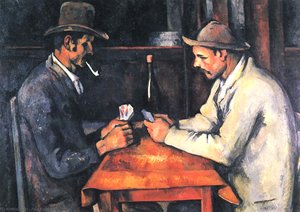
The Card Players by Paul Cézanne (1893), kept at Musée d'Orsay, depicts a focused group of men engaged in a game of cards. These 25 works, created between 1877 and 1905, showcase his evolution from early landscapes like Houses in Provence - the Riax Valley near L'Estaque near L'Estaque to complex still lifes such as Basket of Apples. His approach shifts from the structured forms of Mont Sainte-Victoire Seen from the Bibemus Quarry to the heavy, layered textures of his later years. These paintings remain significant today because they established the geometric foundations for modern art movements.
The Card Players - Paul Cézanne
The series known as The Card Players emerged from a period of intense creative focus in the early 1890s. Paul Cézanne developed these compositions to explore the structural weight of his subjects, moving away from the fleeting impressions of his earlier years toward a more deliberate, constructive approach. Created in 1893, this work marks a pivotal moment in the series, bridging his earlier explorations with the monumental style of his final years. By focusing on the geometric arrangement of the figures, the artist utilized color modulation to build form, a technique that would eventually influence the development of Cubism. The composition relies on a calm, reflective atmosphere where the subjects remain entirely absorbed in their game. This piece is currently kept at the Musée d'Orsay. Every brushstroke contributes to a sense of permanence, turning a simple social interaction into a study of solid, enduring presence.
Mont Sainte-Victoire Seen from the Bibemus Quarry - Paul Cézanne
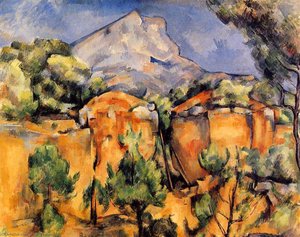 Mont Sainte-Victoire Seen from the Bibemus Quarry - Paul Cézanne
Paul Cézanne found a lifelong muse in the rugged landscape of his native Provence. The series centered on Mont Sainte-Victoire began after he described the mountain as a "beau motif" in a letter to Émile Zola. This 1897 work, titled Mont Sainte-Victoire Seen from the Bibemus Quarry, represents a pivotal moment in the artist's career. Rather than focusing on fleeting impressions, he utilized repetitive, constructive brushstrokes to build up complex fields of color. These small, rhythmic marks allow the viewer to see the structural geometry of the terrain. His method of color modulation helped bridge the gap between the Impressionist movement and the later development of Cubism. The painting is currently kept at the Baltimore Museum of Art.
Large Bathers (Philadelphia) - Paul Cézanne
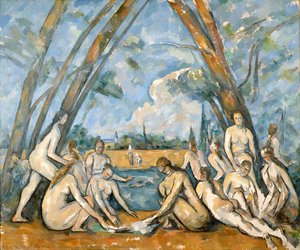
When Joseph E. Widener secured this monumental vision for the Philadelphia Museum of Art in 1937, the investment of $110,000 represented a significant commitment to modern art. For the collectors of that era, such a work signaled a shift toward understanding the structural logic of the canvas. Paul Cézanne spent seven years developing this composition, which remains a cornerstone of Post-Impressionism. He utilized repetitive, constructive strokes to build up planes of color, a technique that helped bridge the gap between late 19th-century traditions and the later Cubist revolution. Thirteen nude female figures inhabit a woodland setting, their forms integrated into the landscape through deliberate color modulation. Rather than focusing on individual identity, the artist used these figures to explore geometric harmony and the relationship between the human body and the natural world. The composition relies on vertical tree trunks to organize the space, creating a structured environment where light brown tones and organic shapes coexist in a balanced, architectural arrangement.
Basket of Apples - Paul Cézanne
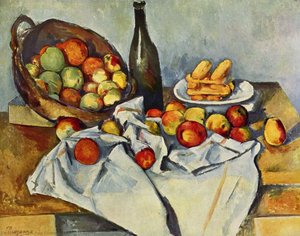 Basket of Apples - Paul Cézanne
Rather than following the rules of naturalistic representation, Paul Cézanne chose to distort objects to achieve multiple perspectives within a single view. This radical approach turned the traditionally overlooked subject of still life into a playground for structural experimentation. While many artists of his era dismissed fruit and bread as trivial, he used these items as a blank slate to explore the very foundations of composition. The arrangement of apples, pears, and bread rolls creates a rhythmic, geometric structure that eventually paved the way for movements like Cubism. His characteristic use of color modulation and constructive, repetitive strokes gives the fruit a tangible, sculptural weight. The warm reds and oranges of the apples contrast against the muted, dark brown tones of the background, creating a balanced, serene atmosphere. This work is currently kept at the Art Institute of Chicago.
Mardi Gras - Paul Cézanne
 Mardi Gras - Paul Cézanne
A festive spirit lingers in the heavy, rhythmic brushstrokes of this 1888 oil on canvas. By focusing on the structural weight of the figures rather than mere celebration, Paul Cézanne paved the way for the geometric breakthroughs of Cubism. Two characters, Pierrot and Harlequin, occupy the space in a way that prioritizes form and color modulation over traditional perspective. One figure wears red and black checkered pants, while the other is dressed as a clown, set against a backdrop that provides a sense of theatrical depth. The palette relies on deep green tones and bold patterns to build a solid, almost architectural presence. This approach to building a scene through repetitive, constructive strokes changed how artists perceived the relationship between objects and the space they inhabit. It is a striking example of how Post-Impressionism moved away from fleeting moments toward a more permanent, structural reality.
Hanged man - Paul Cézanne
 Hanged man - Paul Cézanne
The debut of this landscape at the First Impressionist Exhibition in 1874 marked a significant milestone, as it became the first piece Paul Cézanne ever sold to a collector. This early success highlights how his vision began to find its footing within the evolving art world. The scene depicts a village with a complex composition, where paths lead toward the center and a bench sits to the left. A tree anchors the view, its branches reaching toward the top of the frame. Using a cool color palette and grainy, broken brushstrokes, the artist creates an atmosphere of solitude through the absence of people. His technique relies on color modulation and structured strokes to build the landscape, a method that would later define his approach to form. This work is currently held at the Musée d'Orsay in Paris.
Apples and Oranges - Paul Cézanne
 Apples and Oranges - Paul Cézanne
After passing through the hands of the critic Gustave Geffroy and the collector Isaac de Camondo, this work eventually found its permanent home within the collection of the Musée d'Orsay. Paul Cézanne used the simple arrangement of fruit to explore how geometric forms and color modulation could build volume without traditional shading. By placing apples and oranges upon a blue and white checkered tablecloth, he established a structural logic that influenced the Cubist movement. The warm tones of orange and yellow interact with the cool patterns of the cloth, creating a balanced, serene composition. This approach to still life allowed the artist to scrutinize the natural world with a precision that human subjects rarely permitted. His repetitive, constructive brushstrokes define the weight of each object, turning a domestic scene into a rigorous investigation of space and shape.
Curtain, Jug and Fruit - Paul Cézanne
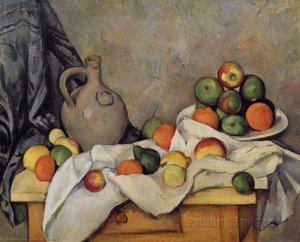
The staggering $60.5 million auction price achieved by this work reflects a radical shift in how we perceive the mundane. While contemporary viewers once saw only a simple arrangement of household items, modern eyes recognize a revolutionary experiment in perspective and optical harmony. Paul Cézanne used these everyday objects to challenge the traditional boundaries of still life, moving away from mere decoration toward a rigorous investigation of form. By placing a jug and a bowl of fruit against a draped curtain, he constructed a scene where objects appear almost randomly yet remain perfectly balanced through careful geometric placement. His characteristic use of color modulation and constructive brushstrokes allows the light brown tones and textures to build a sense of weight and presence. This composition demonstrates his fascination with how we actually see, using the fruit to explore the structural relationship between objects in space. It remains a pivotal moment in art history, marking the transition from Impressionism toward the structured logic of Cubism.
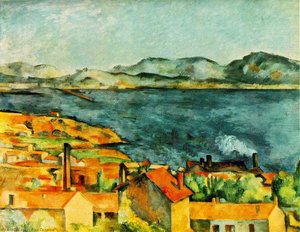
The bay from l'estaque - Paul Cézanne
Created in 1886, The bay from l'estaque is currently held at the Art Institute of Chicago. This work represents a pivotal moment in the evolution of Paul Cézanne, as he began to move away from the fleeting impressions of his contemporaries toward a more structured, architectural approach to nature. His fascination with the landscape of his native Provence is evident here, where he uses deliberate, constructive brushstrokes to build form through color modulation rather than traditional outlines. This method of building a scene through rhythmic patches of pigment directly influenced the development of Cubism decades later. The composition relies on a careful arrangement of geometric shapes to organize the view, providing a sense of stability and order. By focusing on the underlying structure of the terrain, he transformed a simple coastal view into a complex investigation of space and volume. This piece remains a vital example of how he sought to make Impressionism something solid and durable.
Chateau Noir - Paul Cézanne
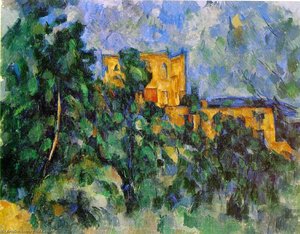 Chateau Noir - Paul Cézanne
Perhaps the shifting landscape glimpsed from a moving train window provided the initial spark for this Provencal scene. Paul Cézanne sought to translate that fleeting, rhythmic movement into a structured visual language, focusing on the way the hillside settlement interacts with the rugged terrain. The composition centers on the relationship between the rustic buildings and the lush greenery of the landscape, using a palette of pinkish brown and earthy tones to define the forms. Rather than focusing on fine detail, the artist utilized repetitive, constructive brushstrokes to build up the texture of the terrain. This method allowed him to explore how color modulation could define space and volume without relying on traditional perspective. By breaking the landscape into geometric planes, the work highlights the underlying structure of the Montagne Sainte-Victoire region, turning a simple rural view into a complex arrangement of light and shape.
Bathers - Paul Cézanne
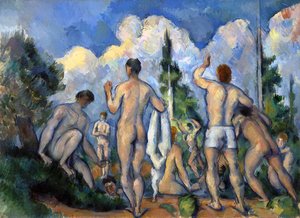 Bathers - Paul Cézanne
The arrangement of the figures creates a subtle, invisible cone that directs your eyes through the composition, guided by the leaning postures of the young men at the edges. Rather than focusing on the movement of the water, the artist prioritizes a rigorous architectural structure. This approach is a hallmark of the style developed by Paul Cézanne, where color modulation and geometric logic define the scene. He uses varying shades of blue to create depth and shadow around the bodies, while the diminishing size of the figures in the background establishes a clear sense of perspective. Ten men appear by the riverbank, some preparing to dive while others are already bathing. The work is currently kept at the Musée d'Orsay in Paris. Through these deliberate, constructive strokes, the artist transforms a simple outdoor scene into a complex study of form and spatial organization.
Houses in Provence - the Riaux Valley near L'Estaque - Paul Cézanne
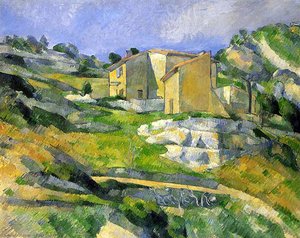 Houses in Provence - the Riaux Valley near L'Estaque - Paul Cézanne
Soft, diffused light filters through an overcast sky, casting a muted glow over the Riaux Valley. For viewers in the late 19th century, this subtle illumination offered a departure from the bright, flickering sun of the Impressionists, focusing instead on the structural weight of the landscape. Today, the scene remains a study in geometric stability, where the yellow walls of a traditional mas and its red-tiled roof anchor the hillside. Paul Cézanne uses deliberate, constructive brushstrokes to build the volume of the terrain, treating the landscape as a series of interlocking planes. This method of color modulation allows the greens of the vegetation and the earthy tones of the architecture to hold a physical presence. The composition relies on the tension between the solid, imposing farmhouse and the rhythmic arrangement of the surrounding hills. This work, currently kept at the National Gallery of Art, highlights the artist's ability to find order within the natural world through a disciplined, analytical approach to form.
Portrait of Victor Chocquet - Paul Cézanne
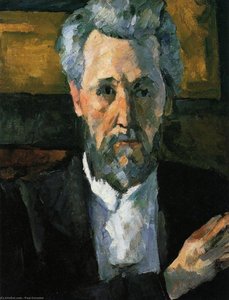 Portrait of Victor Chocquet - Paul Cézanne
Victor Chocquet acted as a vital champion for the Impressionist movement, using his influence and collection to defend artists who faced public mockery. This portrait by Paul Cézanne offers a reflective look at a man who stood firmly behind the avant-garde during a period of intense artistic upheaval. Rather than focusing on mere likeness, the artist utilizes structured, constructive brushstrokes to build the subject's presence, a technique that would later define his approach to the landscape of Mont Sainte-Victoire. The composition relies on a careful modulation of color to establish form, moving away from the soft edges of his contemporaries toward a more geometric stability. This work is currently held at the Virginia Museum of Fine Arts.
Madame Cezanne in the Conservatory - Paul Cézanne
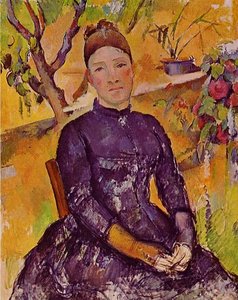 Madame Cezanne in the Conservatory - Paul Cézanne
The conservatory setting functions as a sanctuary of tranquility, placing the subject within a controlled, peaceful environment. Marie-Hortense Fiquet appears composed and reflective, her presence anchored by the structured greenery surrounding her. This portrait highlights the personal side of Paul Cézanne, moving away from his famous landscapes to focus on the woman who was his partner and frequent model. He uses his signature method of building form through color modulation, applying rhythmic, constructive strokes that make her figure feel weighty and permanent. Rather than focusing on fleeting impressions, the artist emphasizes the geometric stability of the space. This approach allows the viewer to see her not as a passing figure, but as a solid, integral part of her surroundings. The work is currently held at the Metropolitan Museum of Art.
View of L'Estaque and Chateaux d'If - Paul Cézanne
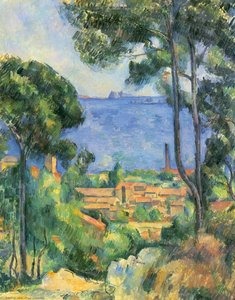 View of L'Estaque and Chateaux d'If - Paul Cézanne
Vibrant light and lush greenery guide the eye toward the expansive water views through a series of rhythmic, expressive brushstrokes. This technique allows the landscape to settle into a structured composition where color modulation defines the very shape of the coast. In this work, the artist moves away from the fleeting impressions of his contemporaries, opting instead to build the scene through deliberate, constructive strokes that emphasize the weight of the terrain. This approach is a hallmark of the Paul Cézanne style, where geometric forms begin to emerge from the natural world. By treating the landscape as a collection of planes, he makes the scenery appear permanent. The way the land meets the sea reflects his lifelong obsession with finding order in nature, a method that would eventually influence the development of Cubism. This piece is currently kept at the Musée d'Orsay.
Chateau du Medan - Paul Cézanne
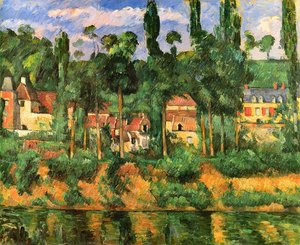 Chateau du Medan - Paul Cézanne
While the structural precision of Seurat and the expressive color shifts of Gauguin helped shape the evolution of Post-Impressionism, this work highlights the unique path taken by Paul Cézanne. His approach to the landscape relies on building complex fields through repetitive, constructive brushstrokes that define the very bones of the scenery. This method allowed him to move away from the fleeting impressions of his contemporaries, focusing instead on the permanent weight of the natural world. The composition remains a quiet moment of tranquility, held within the Glasgow Art Gallery and Museum. Rather than chasing a single moment in time, the artist used color modulation to make the scene feel permanent. Every stroke contributes to a rhythmic texture that defines the terrain, making the work a vital part of the legacy of Paul Cézanne.
Jourdan’s Shed - Paul Cézanne
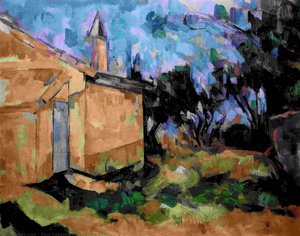 Jourdan’s Shed - Paul Cézanne
Standing before this depiction of a small stone cabin on the artist’s property in Aix-en-Provence, one encounters a rigorous arrangement of geometric planes. Paul Cézanne used the structure to explore how color modulation and constructive brushstrokes could define form. The building appears as a solid anchor of stability, composed of heavy horizontal and vertical lines that flatten the space. This approach moves away from traditional perspective, favoring a structural integrity that anticipates the development of Cubism. The palette relies on muted grey-blue tones and earthy browns to build the cabin's presence against the landscape. By focusing on these architectural shapes, the artist transformed a simple rural outbuilding into a monumental subject of study. This work offers a sophisticated balance of pastoral charm and modern structural weight, making it a compelling choice for a curated interior.
L'Estaque with Red Roofs - Paul Cézanne
 L'Estaque with Red Roofs - Paul Cézanne
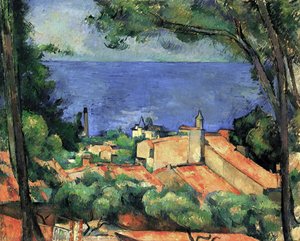
The terracotta red of the village roofs creates a striking visual rhythm against the deep blue of the Mediterranean and the expansive sky. This view of L'Estaque represents a period of intense creativity for Paul Cézanne, as he found a sanctuary in this Provençal fishing village. He organized the landscape into distinct geometric planes, using color modulation to build structure directly onto the canvas. Instead of focusing on fleeting light, he applied paint in deliberate, constructive strokes that give the buildings and lush greenery a monumental stability. The composition relies on a resolute horizon line, anchoring the warm ochre walls of the houses against the shimmering azure water. This architectural approach to nature allowed him to find the permanent form beneath the surface of the landscape, turning a simple coastal scene into a complex arrangement of color and shape.
Landscape - Paul Cézanne
 Landscape - Paul Cézanne
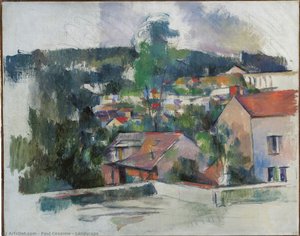
By building up layers of paint to create a textured impasto surface, the artist gives the landscape a physical presence that feels almost sculptural. This approach reflects the way Paul Cézanne sought to reconstruct the natural world through structured, repetitive brushstrokes rather than fleeting impressions. He moved away from the legal career his father had envisioned for him, choosing instead to explore how color modulation and geometric forms could define space. In this work, his characteristic method of using small, constructive strokes builds complex fields that give the scene a tranquil, nostalgic quality. The composition relies on these rhythmic applications of pigment to establish permanence. You can see this technique in the way the paint sits heavily on the linen, creating a tactile depth that defines his unique Post-Impressionist vision. This piece is currently held at the Ohara Museum of Art.
Still Life with Jar, Cup, and Apples - Paul Cézanne
 Still Life with Jar, Cup, and Apples - Paul Cézanne
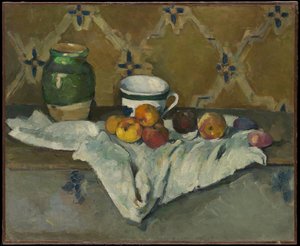
Around 1877, while living in a Parisian apartment on rue de l’Ouest, Paul Cézanne arranged a collection of everyday objects that would become a recurring motif in his career. This work, currently held in the Metropolitan Museum of Art, entered the collection of Mr. and Mrs. H. O. Havemeyer before being bequeathed by Mrs. H. O. Havemeyer. Its provenance highlights the early recognition of his unique approach to composition by significant collectors of the era.
The painting features a green ceramic jar, a white cup, and apples resting upon a surface. A patterned wallpaper provides a rhythmic backdrop, a motif that appears in several other works from this period. This pattern repeats in the shape of the white cloth and the floral decoration on the wooden chest, creating a structural link between the objects and their environment. Through deliberate brushwork and a focus on geometric forms, the artist explores the relationship between color and volume, using repetitive, constructive strokes to define the weight of each item.
Self-Portrait with Palette - Paul Cézanne
 Self-Portrait with Palette - Paul Cézanne
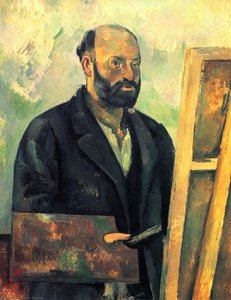
Through repetitive and exploratory strokes, the artist constructs a self-image defined by deliberate, rhythmic movement. This approach broke away from the fluid traditions of his predecessors, establishing a new language for Post-Impressionism. Paul Cézanne uses these constructive marks to build form, much like the geometric structures he later applied to Mont Sainte-Victoire. The palette held in his hand becomes a tool for defining his own presence through careful color modulation.
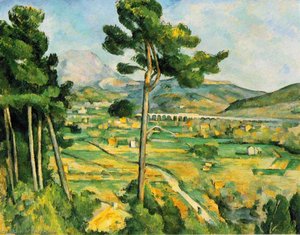
Mont Sainte-Victoire - Paul Cézanne
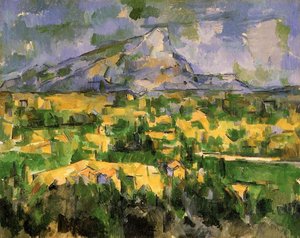 Mont Sainte-Victoire - Paul Cézanne
Early critics often met these views with confusion, finding the fragmented structures and unconventional perspectives difficult to grasp. While they saw a lack of traditional finish, modern eyes recognize the revolutionary way Paul Cézanne used color modulation to build form. This work belongs to a vast series of paintings dedicated to the mountain, a subject he famously described in a letter to Émile Zola as a beautiful motif. Instead of smooth transitions, the artist applied repetitive, constructive brushstrokes that build up complex fields of color. These small, rhythmic marks provide weight and structure that bridges the gap between Impressionism and the birth of Cubism. The composition relies on geometric planes to define the landscape, moving away from mere imitation toward a new way of seeing. This approach transformed how we perceive the natural world through art.
Quarry at Bibémus (Carrière de Bibémus) - Paul Cézanne
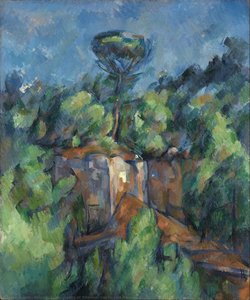 Quarry at Bibémus (Carrière de Bibémus) - Paul Cézanne
A single parasol rests amidst the rugged landscape, offering a subtle hint of leisure or shelter against the heavy stone. This small detail provides a soft counterpoint to the massive, fractured geometry of the landscape, a hallmark of the Paul Cézanne style. Rather than smoothing over the jagged edges of the earth, the artist uses repetitive, constructive strokes to build the terrain, treating the quarry as a collection of solid, interlocking planes. This approach to structure shows how he moved away from the fleeting impressions of his predecessors toward a more permanent, architectural way of seeing. The Nelson-Atkins Museum of Art holds this reflective view of the landscape, where the weight of the rock feels almost tangible through the deliberate application of color. It is a quiet moment of observation, where the natural world is reconstructed through a rigorous, rhythmic logic.
The Three Skulls - Paul Cézanne
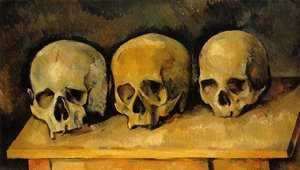 The Three Skulls - Paul Cézanne
Held within the Detroit Institute of Arts, this work arrived there following its time in the hands of Ambroise Vollard and later through the Galerie E. Bignou in New York. Its provenance, moving through collectors like Robert H. Tannahill, reflects the high value placed on the artist's unique approach to form. Paul Cézanne often used repetitive, constructive strokes to build structure, a technique visible here as he organizes three skulls against a dark background. Instead of traditional perspective, he relies on color modulation to create volume. The palette shifts through yellow, orange, and green, using these tones to define the geometric shapes of the bone. This arrangement of objects focuses on the structural harmony of the composition rather than a simple depiction of mortality. The way the colors interact creates a rhythmic, architectural quality that defines the Post-Impressionist style.
Rocks at Fontainebleau - Paul Cézanne
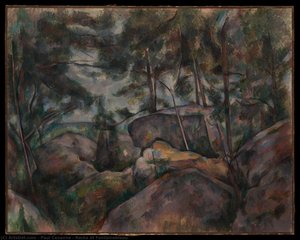 Rocks at Fontainebleau - Paul Cézanne
Forest boulders in the Fontainebleau region provide the structural foundation for this 1890 landscape. Paul Cézanne utilized green, blue, and purple tints to build the surface, accented by a central burst of golden sunlight that gives the stones a shimmering vibrancy. Rather than focusing on traditional perspective, the artist melded the foreground and background through a faceted effect, creating a unique spatial recession. This approach allowed him to treat the natural world as a series of geometric forms, a technique that would later define his most famous explorations of Mont Sainte-Victoire. By using color modulation and repetitive, constructive strokes, he made the landscape feel stable. The composition relies on these rhythmic applications of paint to define the rugged textures of the earth, making the stones appear both heavy and luminous.
Conclusion
Rocks at Fontainebleau (1890) shows the rugged textures of stone and earth through heavy, layered brushstrokes. These twenty-five works from 1877 to 1905 reveal how Paul Cézanne used structured shapes and color to redefine the landscape, seen clearly in works like "The Card Players." Such classic paintings continue to shape the way we see our homes, our emotions, and our culture, echoing the eternal dialogue between art and everyday life. Explore our full collection.