
Nobody ever asks why the toll booth is built the way it is
You've accepted something, and I'd bet you didn't even notice yourself doing it.
You've accepted that a platform selling your painting has to take its money out of yours. Off the top. Before you see it. Forty percent here, fifty there, and you just... nodded, the way you nod at airport wifi pricing. Like it's gravity. Like it's a law of physics instead of a decision someone made in a spreadsheet on a Tuesday.
It isn't gravity. It's a choice. And there's a second choice nobody shows you, because the first one makes more money for the people not showing it to you.
The received wisdom, recited like a prayer
Commission is the business model. That's the whole catechism, mumbled at every gallery opening from here to Chelsea. Saatchi takes 40, Artfinder takes 40 to 45, Singulart takes 50, and every comparison article on the internet — including two we wrote ourselves, look them up, I'm not hiding it — lines those numbers up next to each other like that's the only axis worth measuring. Like ranking restaurants purely by how loud the kitchen is.
It isn't the only axis. It's just the only one anyone's bothered to publish.
Decode the trick, symbol by symbol
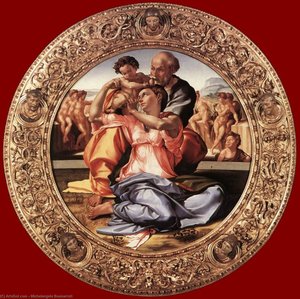
Here's the second model, translated the way you'd translate a painting — object by object, no jargon, no squinting required.
The net price. This is the number you type. Not a "list price" some algorithm is about to shave down while you're not looking. The actual amount you want to end up with in your pocket.
The multiplier. On Mus3ums.com — and likewise on ArtsDot.com and WahooArt.com — that multiplier is 1.10. Ten percent, added on top of your number, not carved out of it. Feel the difference. One is a knife, one is a tip jar.
The buyer's price. Your net price, times 1.10, plus shipping at cost. That's what the customer pays. Nothing hidden inside it belongs to anyone but you and the ten cents on the dollar the platform added afterward.
Your payout. The number you typed. Exactly. Nobody rounds it down, nobody deducts a "service fee" you didn't see coming, nobody runs a promo code that quietly comes out of your cut. What you asked for is what lands.
Read that whole sequence again and notice what's missing: there's no moment where your number gets smaller. On every commission platform, there's exactly one moment where it does — the moment of sale, when the gallery takes its bite, like a toll booth arm coming down right as you're about to drive through. Here, that moment doesn't exist. The bite happened earlier, on the buyer's side of the equation, where it belongs.
The key that unlocks the whole picture
Every good exposé needs one small, undramatic fact that turns the lights on. Usually it's a letter, a diary entry, a receipt somebody wasn't supposed to keep.
This one's a line of code.
Buried in Mus3ums.com's pricing engine sits a single markup multiplier: 1.10. That's it. That's the whole secret. Not a marketing slogan, not a promise on a landing page — a real number the software applies every single time it prices a sale, and it multiplies your price, it does not subtract from it.
Do the arithmetic on that one number and the whole trick falls out: the platform's real take on the artwork line is 9.09%. Say that next to Saatchi's 40, or Singulart's 50, and you understand immediately why nobody in the commission business wants you looking at the underlying numbers instead of a landing page.
The real story is a triumph, not a favour
Here's what that 9.09% actually buys you, run as a straight comparison. Say you need $1,200 in your account.
On Saatchi Art, the buyer pays $2,000 for you to see that $1,200.
On Artfinder's cheaper plan, the buyer pays over $2,100.
On Singulart, the buyer pays $2,400 — twice your take-home, before their subscription is even added.
On Mus3ums.com, the buyer pays $1,320.
Same money in your pocket. A third cheaper for the person actually buying the painting. That gap — the difference between $1,320 and $2,400 — isn't profit anybody's pocketing. It's demand you're not scaring off. Every one of those extra dollars on the commission platforms is a sale that quietly doesn't happen, because the price got frightened away before it reached you, and nobody ever told you that's what was happening. It's like blaming a restaurant's food for empty tables when the real problem is a $40 cover charge nobody mentioned at the door.
That's not a discount the platform is doing you as a favour. That's what the maths does when the toll booth is built the other way round.
One painting, five ways to get paid
The commission platforms give you one shot: list the original, hope it sells, take the hit if it doesn't. One roll of the dice, and if it comes up wrong you eat the storage costs and the disappointment.
One approved artwork here can run on five separate channels at once — the original itself, prints made from it, hand-painted reproductions of it, a licensed digital file of it, or a timed auction of it — and none of the print, reproduction or digital-licence channels require you to pack a box. The original sells once. The rest keeps earning off the same upload, for as long as it's live, like a song that keeps collecting royalties long after the tour bus is empty.
And if you're a painter with actual studio capacity, there's a version of this that skips the shop window entirely: WahooArt runs live inbound commission requests — real people wanting a custom hand-painted piece, a photo turned into an oil painting, a hotel lobby fitted out — routed to studios as quotations. That's not a listing hoping to get noticed in a crowded room. That's paid work arriving in your inbox while you're asleep.
Three things you're muttering to yourself right now
"Why does everyone just accept that a gallery takes almost half your money? Isn't that just how it works?"
Because nobody's ever shown them the alternative in numbers, only in adjectives. "Generous," "fair," "industry standard" — none of those words tell you the buyer paid $2,400 for your $1,200. Once the actual dollar figures are sitting next to each other, "just how it works" stops sounding like a law of nature and starts sounding like a decision nobody had to make.
"Okay, but what's actually different about a platform 'adding' its cut instead of 'deducting' it? Isn't it the same money either way?"
It's the same percentage of the total, roughly — but it's a different number for the buyer to say yes or no to, and buyers say no to bigger numbers. A 40% deduction forces your price up by 67% to protect your income. A 10% addition moves the buyer's price by 10%. One of those price hikes kills far more sales than the other, and every sale that dies never shows up as a loss anywhere you'd notice — it just looks like "art doesn't sell much," which isn't true, it's priced wrong for the model it's stuck in.
"Can one painting really make money five different ways, or is that just a marketing line?"
It's mechanical, not marketing — five sales channels tied to one uploaded artwork, each with its own price and its own fulfilment path, running independently once approved. A painting that never sells as an original can still be earning as a print or a licensed file every week it's live. The failure mode of the commission-only model is a painting that just sits there gathering dust. The failure mode here is a painting that's quietly making $20 a month nobody's even checking on.
The kick
Every artist who's quietly decided their work "doesn't sell for much" because a 40% gallery cut keeps eating the number — you were never the problem. The toll booth was built to look inevitable. It isn't. Somebody just never showed you the other blueprint, because the other blueprint doesn't need you to feel grateful for the privilege of being let in.
Now you've seen it. Do the arithmetic on your own work before you list it anywhere.
Related on Mus3ums.com
- Curious what setting up on the seller side of WahooArt.com actually involves? Here's how to build a seller profile on WahooArt.
- Not a painter but want the same reproduction economics as a buyer? Here's how our hand-painted oil reproductions are actually made.
- Thinking about the commission-request route instead of a storefront listing? Read how bespoke commissioning actually works here.
- Want to see the $1-start auction mechanic mentioned above laid out in full? Here's the strategy behind reserve-priced auctions.
- If digital licensing is the channel that interests you, the full mechanics are in our digital licensing guide.