

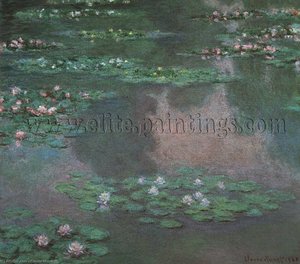
Turn a finished oil painting round and look at the back. Cotton reads pale, soft and uniform, like heavy shirting. Linen reads warmer, slightly irregular, with slubs — small thickenings in the yarn — scattered through the weave. Those irregularities are not a defect. They are the reason painters have been arguing in favour of linen since before anyone thought to write the argument down.
Every hand-painted oil painting we produce is painted on 300 gsm linen canvas. Here is what that buys, and what it does not.
The 30-Second Answer
Hand-painted oils are painted on 300 gsm linen. Linen is made from flax, whose fibres are longer and stronger than cotton's, so the canvas holds tension for decades, resists the sagging and rippling that eventually shows up in cotton, and carries a subtly irregular weave that behaves under a brush the way painters expect. It is the traditional support for oil painting, and it is what a museum conservator expects to find behind a serious oil. Like every print, each oil painting is delivered with a 2-inch (5.1 cm) margin of unpainted canvas on all four sides, for stretching or framing.
Flax, and Why the Fibre Length Decides Everything
Linen comes from flax; cotton comes from the cotton boll. The difference that matters is fibre length. Flax fibres are long — the yarn spun from them has fewer joins along any given length, and fewer joins means fewer weak points. Cotton fibres are much shorter, so a cotton yarn of equal thickness is a longer chain of shorter pieces.
Everything else follows from that one fact:
| Property | Linen (flax) | Cotton | Consequence for a painting |
|---|---|---|---|
| Fibre length | Long | Short | Fewer weak points along the yarn |
| Tensile strength | Higher | Lower | Takes and keeps stretcher tension |
| Dimensional stability | Better over decades | Slackens sooner | The face stays taut; no waves in raking light |
| Response to humidity | Moves, but recovers | Moves and stays moved | Fewer permanent ripples in a changeable room |
| Weave character | Irregular, slubbed | Even, uniform | A surface that varies under the brush |
| Traditional use | The historic support for oil | A modern, cheaper alternative | What a conservator expects behind an oil |
Why Tension Matters More on an Oil Than on a Print
A canvas print carries a thin, flexible layer of ink. An oil painting carries a physical film of paint, sometimes millimetres thick in the impasto, which cures over months into a solid, and then spends the rest of its life very slowly becoming less flexible than the cloth beneath it.
That is the whole conservation problem in one sentence. The support moves; the paint layer eventually does not want to. If the canvas slackens, sags and then gets re-tensioned, the paint film has to follow, and where it cannot follow, it cracks. A support that holds its tension for decades is not a luxury specification on an oil painting — it is the thing that determines whether the surface is intact in fifty years.
This is why the choice of cloth stops being cosmetic the moment real paint is involved, and it is why linen has survived as the standard support for so long despite costing more than cotton at every single step.
What 300 GSM Means Here
Weight is the second half of the specification, and on a hand-painted piece it does specific work:
- It carries the paint. A heavy alla prima passage or built-up impasto is real mass. A light canvas deflects under it — you can push a fingertip against the back and feel the surface give — and that flexing works against the curing paint film.
- It takes tension evenly. At 300 gsm the cloth pulls flat across the whole face instead of tightening at the corners and leaving the centre soft.
- It hides the bars. Light canvas telegraphs the edges of the stretcher through the face in raking light. Heavy canvas does not.
- It survives handling. Paintings get moved, wrapped, unwrapped and leaned against things. Weight is forgiveness.
What the Painter Feels
Ask a painter why linen and they will rarely lead with tensile strength. They will talk about the tooth — the resistance the surface offers a loaded brush.
A cotton canvas is even. Every square inch answers the brush the same way, which is comfortable and, over a large area, slightly characterless. Linen's weave is irregular; the slubs and the varying yarn thickness mean the drag changes minutely as the brush travels. Paint catches on the high points and skips the low ones, and a dry-brush stroke breaks up on its own instead of needing to be broken up deliberately.
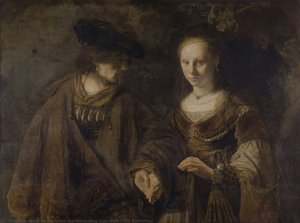
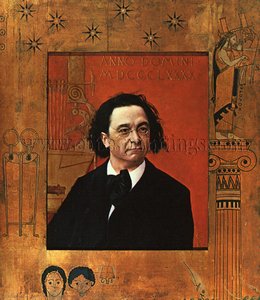
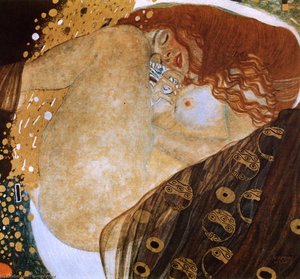
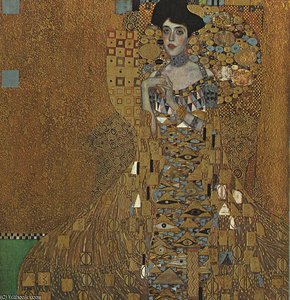
For a reproduction of a historical oil this is not a stylistic nicety, it is accuracy. The originals were painted on this material. A stroke that behaved a certain way on the painter's linen behaves that way again on ours, and the same broken edge appears without anyone having to fake it.
Linen for Oils, Cotton for Prints — On Purpose
Hand-painted oil paintings: 300 gsm linen. Prints: 300 gsm cotton canvas (glossy or matt), or 300+ gsm matte archival paper-canvas for anything going into a frame.
The split is deliberate, and it is about what each layer does. Ink is thin and stays flexible; it does not care about the fibre underneath, so cotton's even weave and lower cost are the right answer for a print — and cotton's uniform surface actually helps, since an ink layer has no impasto of its own to add character with.
Paint is thick, heavy and eventually rigid. It needs a support that will not move under it. So the oils get linen, and nobody in the building considers that negotiable.
| Product | Support | Weight | Chosen for |
|---|---|---|---|
| Hand-painted oil painting | Linen canvas | 300 gsm | Tension held over decades, weave character under the brush, the traditional oil support |
| Print, stretched and hung bare | Cotton canvas, glossy or matt | 300 gsm | Even weave, stable stretching, the right surface for ink |
| Print, going into a frame | Matte archival paper-canvas | 300+ gsm | Rigid enough to be framed and stay flat behind glass |
The 2-Inch (5.1 cm) Margin on an Oil Painting
Every hand-painted oil painting leaves the studio with a 2-inch (about 5 cm) margin of unpainted canvas on all four sides, exactly as every print does. On a painting it does three jobs.
First, stretching. The canvas wraps around the stretcher bars and is fastened behind them; two inches (5.1 cm) per side covers a standard bar depth with enough left to pull even tension and fasten cleanly out of sight. Second, framing. A rebate hides a few millimetres and a floater frame needs the edge to be sound; the margin absorbs both without touching the painted image. Third, the future. If a canvas ever needs re-stretching — which over a long life is normal, not a disaster — a conservator needs spare cloth at the edges to do it. A painting trimmed flush to the paint has spent that option in advance.
Two things to hold on to. The size you order is the painted image, so the canvas itself is four inches (10.2 cm) larger in each direction; allow for it when you measure the wall. And do not trim the margin — not to make it fit a frame, not to tidy it up. It is the most easily destroyed and least replaceable part of the object.
Frequently Asked Questions
What canvas are your hand-painted oil paintings painted on?
300 gsm linen canvas. Linen is woven from flax, and it is the traditional support for oil painting: strong, dimensionally stable over decades, and irregular enough in the weave to behave under a brush the way painters and the original artists expected. Prints are a different decision and use cotton canvas or matte archival paper-canvas instead.
Is linen really better than cotton, or is it just tradition?
It is genuinely different where it counts for oil. Flax fibres are much longer than cotton's, so linen yarn has fewer weak points, higher tensile strength and better dimensional stability. In practice a linen canvas holds its tension far longer, and a taut support is what protects a curing, thickening oil film from the cracking that follows sagging and re-tensioning. For a thin, flexible ink layer on a print, none of that applies — which is exactly why we use cotton there.
Why does the weight, 300 gsm, matter on a painting?
Because oil paint has real mass, especially in impasto. At 300 gsm the canvas carries that load without deflecting, takes stretcher tension evenly across the whole face rather than only at the corners, and does not telegraph the edges of the stretcher bars through the front in raking light. Lighter canvas gives under the paint and under handling.
Why is there a 2-inch (5.1 cm) unpainted border around the painting?
Every hand-painted oil painting and every print carries a 2-inch (5 cm) margin on all four sides, for framing and stretching. It provides the material that wraps around the stretcher bars and is fastened behind them, the allowance a framer's rebate needs, and the spare cloth a conservator will need if the canvas is ever re-stretched. The size you order is the painted image — the canvas is four inches (10.2 cm) larger in each direction. Never trim it.
Should I have the oil painting stretched, or shipped rolled?
Either works, and the margin supports both. Rolled shipping is cheaper and safer over long distances, and a local framer stretches it on arrival — the 2-inch (5.1 cm) border is precisely what they need to do that. Stretched delivery is more convenient but a bulkier, more expensive package. If the painting ships rolled, unroll it flat on arrival and let it relax before stretching, and give recent oil paint time before anything is varnished.


