
Introduction
Imagine stepping into a quiet, sun-drenched chapel in the heart of Tuscany, where the air feels heavy with history and the walls seem to breathe with a newfound life. Before the grand complexities of the High Renaissance, there was a man who taught the world how to see weight, emotion, and the very essence of being human through paint. We are talking about Giotto di Bondone, the visionary who bridged the gap between the ethereal, golden icons of the medieval era and the tangible, living reality of the Renaissance.
Born in the rolling hills near Florence around 1267, Giotto’s journey is the stuff of legend—a shepherd boy sketching sheep on flat rocks, whose raw talent caught the eye of the great master Cimabue. This wasn't just a change in technique; it was a revolution of the soul. Giotto moved away from the flat, symbolic figures of the Byzantine tradition, instead giving his subjects gravity, shadow, and a profound sense of physical presence. He allowed his figures to occupy space, to weep, to turn, and to exist in a world that felt as real as the stone beneath our feet.
To look at a Giotto masterpiece is to witness the birth of modern storytelling in art. His works remain deeply meaningful today because they speak a universal language of human experience. Whether he was working on monumental frescoes in Rome or intimate scenes in Assisi, he captured the quiet dignity of a gesture and the dramatic weight of a moment. His influence is the foundation upon which giants like Michelangelo and Raphael would eventually build.
As we guide you through this curated selection, prepare to encounter the works that defined an era. From his groundbreaking frescoes to his most iconic compositions, this collection of the top 25 artworks of Giotto di Bondone invites you to rediscover the moment art learned to breathe. Let us walk through these masterpieces together and witness the dawn of a new way of seeing.
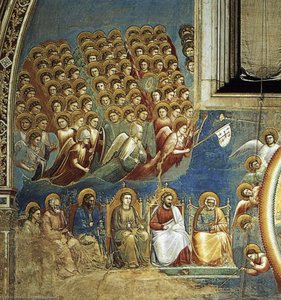
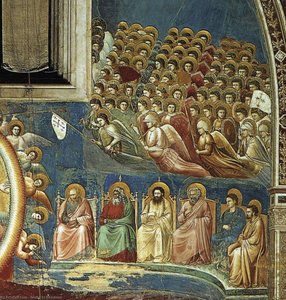
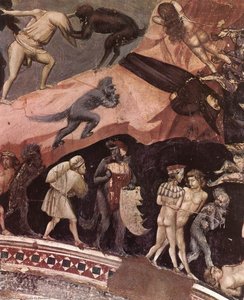
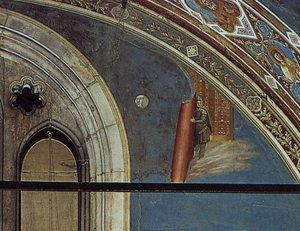
Last Judgment (detail 3) (Cappella Scrovegni (Arena Chapel), Padua) - Giotto di Bondone
Imagine standing in the hushed, cool air of a 14th-century chapel, where the flickering candlelight dances across walls that seem to breathe with divine life. This is the atmosphere Giotto di Bondone captures in his breathtaking Last Judgment detail from the Scrovegni Chapel. As one of the most significant pieces in our collection of the top 25 artworks of Giotto di Bondone, this fresco marks the profound moment where art stepped out of the flat, golden shadows of the Byzantine era and into the weight of human reality.
Giotto’s genius lies in his ability to give the celestial a sense of gravity. Through a masterful use of deep, espresso tones and luminous blues, he creates a hierarchy of angels and saints that feel physically present, as if they occupy the very space around you. This work is a cornerstone of the Proto-Renaissance, moving beyond mere symbolism to explore the raw, spiritual emotion of the divine. Bringing a piece of this mystical grandeur into a modern living room offers more than just decor; it invites a sense of timeless serenity and profound contemplation into your home, bridging the gap between the earthly and the eternal.
Stigmatization of St Francis - Giotto di Bondone
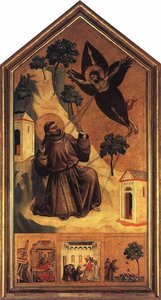 Stigmatization of St Francis - Giotto di Bondone
Imagine standing before a scene of profound mystical energy, where the earthly and the divine collide in a breathtaking display of spiritual weight. In this masterpiece, Giotto di Bondone captures the transformative moment of the Stigmatization of St Francis, a work that stands as a cornerstone among the top 25 artworks of Giotto di Bondone. Moving away from the flat, golden icons of the past, Giotto introduces a revolutionary sense of human gravity and emotion. Through a delicate interplay of light and shadow, he gives St. Francis a tangible presence, surrounded by the gentle movement of birds and the celestial presence of Christ.
This piece is a quintessential example of Giotto’s genius, marking the dawn of the Proto-Renaissance by prioritizing naturalism and deep, soulful storytelling. At Mus3ums.com, we believe such profound moments of beauty should be more than just museum treasures; they should be part of your personal sanctuary. Whether you are looking to add a sense of historical depth to a living room or a touch of spiritual calm to an office, our high-quality reproductions bring the timeless, textured essence of Giotto’s vision into your modern home.
No. 19 Scenes from the Life of Christ: 3. Presentation of Christ at the Temple - Giotto di Bondone
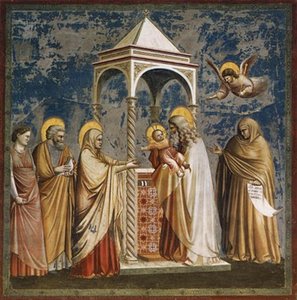 No. 19 Scenes from the Life of Christ: 3. Presentation of Christ at the Temple - Giotto di Bondone
Step into the serene, golden light of the Scrovegni Chapel and witness the moment that changed art history forever. In this breathtaking scene from the Scenes from the Life of Christ, Giotto di Bondone breaks away from the flat, rigid icons of the past to introduce a world of weight, emotion, and human presence. As Mary presents the infant Jesus at the Temple, we see more than just a biblical event; we see the birth of the Proto-Renaissance. Giotto’s mastery of chiaroscuro creates a sense of three-dimensional volume, making the figures feel as though they truly occupy the space around us.
The palette, rich with warm ochres and driftwood tones, evokes a spiritual tranquility that transforms a simple wall into a sacred sanctuary. This work is a cornerstone of the top 25 artworks of Giotto di Bondone because it captures the very essence of his genius: the ability to marry divine symbolism with profound human emotion. At Mus3ums.com, we believe such timeless beauty should be part of your daily life. Whether as a centerpiece in a living room or a quiet corner in a home office, bringing this masterpiece into your space invites a sense of historical grace and soulful reflection into your modern world.
Navicella (mosaic fragment) - Giotto di Bondone
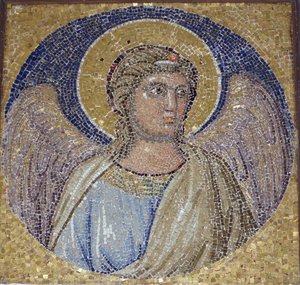 Navicella (mosaic fragment) - Giotto di Bondone
Imagine standing in the quiet, hallowed shadows of the Vatican Grotto, where a single fragment of history whispers of a revolution. The Navicella (mosaic fragment) is more than a relic; it is a breathtaking glimpse into the soul of Giotto di Bondone. In this exquisite piece, we see the very moment art began to breathe. Through the striking gaze of a winged figure—likely the Virgin Mary—Giotto breaks away from the flat, golden icons of the past, introducing a sense of weight, three-dimensional presence, and profound spiritual serenity.
This fragment earns its place among the top 25 artworks of Giotto di Bondone by showcasing his mastery of light and human emotion. The rich interplay of deep blues and shimmering golds, paired with the delicate symbolism of a perched bird, creates a mood of quiet prestige. At Mus3ums.com, we believe such transformative beauty shouldn't be confined to ancient vaults. Whether through a museum-quality print or a custom commission, we bring this Proto-Renaissance elegance into your personal sanctuary, turning a piece of history into living, soulful decor for your home.
Ognissanti Madonna (detail) - Giotto di Bondone
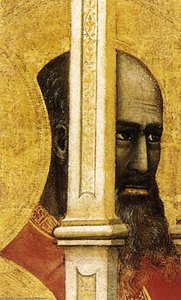 Ognissanti Madonna (detail) - Giotto di Bondone
In this intimate detail from the Ognissanti Madonna, we witness the quiet, profound shift that defined the Proto-Renaissance. While the full masterpiece is a grand display of divinity, this specific view captures the soulful, human weight that makes Giotto di Bondone a true pioneer. Moving away from the flat, golden icons of the Byzantine era, Giotto introduces a sense of mystery and introspection through a sophisticated use of light and shadow.
The composition, characterized by a serene and reflective mood, uses a rich bronze palette to ground the figures in a believable, three-dimensional space. This detail exemplifies Giotto’s genius; he doesn't just paint a figure, he paints a presence. The way the subject interacts with the architectural elements creates a sense of depth that was revolutionary for the 1310s. For the modern collector, this work represents the birth of naturalism—a timeless aesthetic that brings a sense of dignity and emotional depth to any curated living space. It is more than a religious icon; it is a masterclass in the humanizing power of art.
Descent into Limbo - Giotto di Bondone
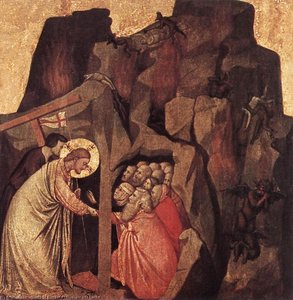 Descent into Limbo - Giotto di Bondone
In this profound masterpiece from around 1320, you can almost feel the weight of the divine. As you gaze upon Descent into Limbo, the eye is immediately drawn to the dramatic, sculptural quality of the figures—a hallmark of Giotto di Bondone’s revolutionary approach. Moving away from the flat, golden icons of the Byzantine era, Giotto uses light and shadow to grant Jesus and the surrounding figures a tangible, three-dimensional presence. The deep, espresso tones and the solemnity of the rocky landscape create a spiritual atmosphere that feels both heavy with history and light with the hope of redemption.
This work is a cornerstone of the top 25 artworks of Giotto di Bondone because it captures the very moment art began to embrace human emotion and physical reality. At Mus3ums.com, we believe such profound narratives deserve to be felt, not just seen. Our handmade oil reproductions are meticulously crafted to honor this tactile legacy, using layered brushstrokes that mimic the original's depth and texture, bringing the soul of the Proto-Renaissance directly into your living space.
View of the Church of San Francesco - Giotto di Bondone
 View of the Church of San Francesco - Giotto di Bondone
In this breathtaking vista, a serene palette of putty and earthy tones anchors the composition, casting a tranquil, meditative mood over the entire scene. This mastery of color is a primary reason why this work stands among the top 25 artworks of Giotto di Bondone; he moves away from the flat, heavy golds of the Byzantine era to embrace a more naturalistic, atmospheric light that breathes life into the Umbrian landscape. By capturing the Basilica di San Francesco not just as a monument, but as a living part of the world, Giotto bridges the gap between the medieval and the Renaissance.
For the modern home, this piece offers a sophisticated way to curate a peaceful atmosphere. The muted, organic hues make it a perfect centerpiece for a living room or a quiet dining area, providing a sense of historical depth and spiritual calm. It is a quintessential example of Giotto’s genius, showcasing his ability to use architectural scale and human presence to create a sense of profound, three-dimensional reality.
No. 32 Scenes from the Life of Christ: 16. Christ before Caiaphas - Giotto di Bondone
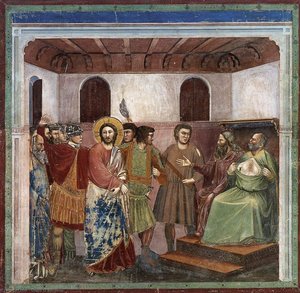 No. 32 Scenes from the Life of Christ: 16. Christ before Caiaphas - Giotto di Bondone
To own a piece of art history is to hold a fragment of the soul of the Renaissance, and Christ before Caiaphas stands as a profound testament to that legacy. As one of the most significant works in our curated selection of the top 25 artworks of Giotto di Bondone, this fresco from the Scrovegni Chapel represents a monumental shift in Western art. Giotto breaks away from the flat, golden icons of the Byzantine era, instead introducing a revolutionary sense of weight, human emotion, and three-dimensional space that changed the course of art forever.
The scene is a masterclass in dramatic tension. Bathed in a somber, espresso-toned atmosphere, the composition uses light and shadow to pull you into the claustrophobic chamber where Christ stands in stoic resignation. You can almost feel the heavy drapery of the robes and the palpable tension in the air. For the modern collector, a high-quality reproduction of this masterpiece brings an unparalleled aesthetic authority to a luxury interior, offering a sophisticated focal point that bridges the gap between medieval devotion and contemporary elegance.
Scrovegni - [05] - Joachim's Dream - Giotto di Bondone
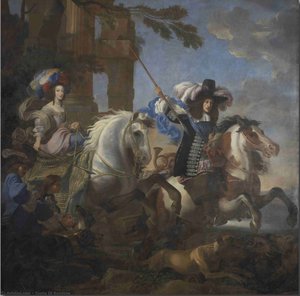 Scrovegni - [05] - Joachim's Dream - Giotto di Bondone
What if I told you that Scrovegni - [05] - Joachim's Dream was born from a moment of rebellion—a stroke of defiance against the ordinary? This is not merely a painting; it is a manifesto of human emotion. As one of the most significant works in our collection of the top 25 artworks of Giotto di Bondone, this fresco marks the exact moment art broke free from the flat, golden icons of the Byzantine era to embrace the weight of real life.
Imagine the scene: a quiet, serene moment of divine intervention. Giotto captures Joachim in a state of vulnerable hope, his form imbued with a newfound sense of gravity and three-dimensional presence. Through a masterful play of light and shadow, the artist moves away from rigid symbols to explore the profound psychological depth of a man receiving a miraculous promise. The palette, anchored by soothing Phthalo Green tones, creates a mood of tranquil anticipation. To own a reproduction of this masterpiece is to bring a piece of the Renaissance into your own home, turning a simple wall into a profound statement of hope and historical revolution.
No. 31 Scenes from the Life of Christ: 15. The Arrest of Christ (Kiss of Judas) - Giotto di Bondone
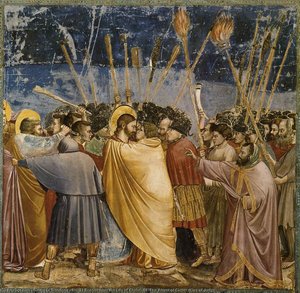 No. 31 Scenes from the Life of Christ: 15. The Arrest of Christ (Kiss of Judas) - Giotto di Bondone
Imagine standing before a masterpiece that captures the very moment human history shifted toward realism; this is the profound gravity of Giotto di Bondone’s The Arrest of Christ. As one of the most significant pieces in our collection of the top 25 artworks of Giotto di Bondone, this fresco from the Scrovegni Chapel is a masterclass in emotional intelligence. Giotto moves beyond the flat, golden icons of the Byzantine era, instead using a dramatic, shadowy palette of rosy browns and deep ochres to sculpt figures with actual weight and presence.
The composition is a whirlwind of tension, centered on the heartbreaking intimacy of the kiss between Judas and Jesus. You can almost feel the chaotic energy of the crowd and the heavy, nocturnal atmosphere through his revolutionary use of light and shadow. For the modern collector, this work offers more than just a biblical scene; it provides a sophisticated, dramatic focal point that brings a sense of timeless legacy and profound narrative depth to a refined living space. It is not just art; it is the dawn of the Renaissance captured in pigment.
No. 20 Scenes from the Life of Christ: 4. Flight into Egypt - Giotto di Bondone
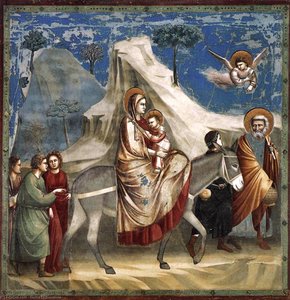 No. 20 Scenes from the Life of Christ: 4. Flight into Egypt - Giotto di Bondone
Imagine a young Giotto, perhaps still carrying the observant eye of a shepherd boy, translating the weight of human emotion onto the damp, fragile plaster of the Scrovegni Chapel. In this breathtaking fresco, Flight into Egypt, we witness the moment Giotto broke the shackles of the flat, golden Byzantine tradition to give art a soul. This work is a cornerstone of the top 25 artworks of Giotto di Bondone because it captures a profound sense of movement and quiet resolve.
The scene is bathed in a serene, muted palette of ochres and soft creams, where the interplay of light and shadow—early chiaroscuro—gives Mary and Joseph a tangible, three-dimensional presence. As they journey through a simplified, mountainous landscape, the donkey serves as a humble symbol of their pilgrimage, guided by the subtle presence of a soaring angel. This masterpiece exemplifies Giotto’s revolutionary naturalism, turning a biblical narrative into a deeply human experience. Much like the focused ambition required to paint such a monumental cycle, bringing a piece of this Proto-Renaissance calm into your modern study can foster an atmosphere of profound reflection and sophisticated productivity.
View of the Peruzzi and Bardi Chapels (from right) - Giotto di Bondone
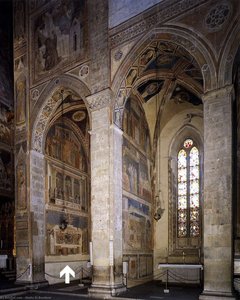 View of the Peruzzi and Bardi Chapels (from right) - Giotto di Bondone
Imagine stepping into the quiet, sacred hum of a 14th-century Florentine church, where the air feels heavy with devotion and the soft murmur of prayer. Giotto’s View of the Peruzzi and Bardi Chapels is more than a mere architectural sketch; it is a breathtaking window into a lost world. Through his revolutionary use of space, Giotto invites us to wander past grand, ornate arches and observe figures caught in moments of quiet contemplation or lively social connection. This work is a cornerstone of his legacy, marking the profound shift from the flat, golden icons of the past to a world of tangible weight, human emotion, and believable three-dimensional depth.
As one of the top 25 artworks of Giotto di Bondone, this piece exemplifies his genius for naturalism, capturing the very essence of the Proto-Renaissance. At Mus3ums.com, we believe such spiritual and historical beauty should be accessible to all. Our master artists can recreate this elegant scene as a handmade oil reproduction, preserving the rich textures and the serene, spiritual atmosphere that makes Giotto’s vision so timeless. Bring a piece of Florence’s soul into your own living room and experience the dawn of the Renaissance every day.
Daedalus - Giotto di Bondone
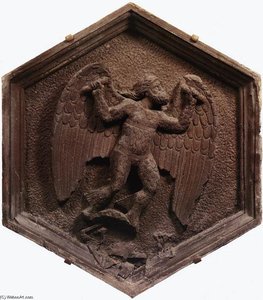 Daedalus - Giotto di Bondone
Look closer. The lines in Daedalus aren't merely carved; they are choreographed. This is not a static relief, but a dance frozen in time. As one of the most profound works in our collection of the top 25 artworks of Giotto di Bondone, this piece captures the very moment where the rigid traditions of the medieval era dissolve into the human warmth of the Renaissance.
Giotto masterfully transforms heavy, textured wood into a vessel of raw emotion. The figure of Daedalus, with wings poised for flight, carries a weight that is both physical and spiritual. You can almost feel the tension in the musculature and the desperate yearning for freedom etched into his posture. It is a dramatic masterpiece that moves away from flat, symbolic icons toward a world of three-dimensional gravity and soul. For those seeking to bring a sense of historical rhythm and dramatic depth to a living space, this work serves as a powerful reminder of how art can make chaos feel like perfect, breathtaking harmony.
No. 38 Scenes from the Life of Christ: 22. Ascension - Giotto di Bondone
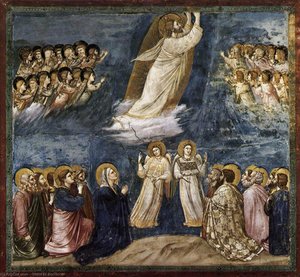 No. 38 Scenes from the Life of Christ: 22. Ascension - Giotto di Bondone
In the sacred stillness of the Scrovegni Chapel, Giotto di Bondone captures a moment that bridges the earthly and the divine. His 1304 masterpiece, Ascension, is more than a biblical scene; it is a profound study of human emotion meeting spiritual transcendence. As Christ ascends, Giotto breaks away from the flat, rigid icons of the Byzantine era, instead introducing a revolutionary sense of weight and volume. You can almost feel the gravity of the apostles below, their faces etched with a mixture of awe and reverence, as they gaze upward toward the ethereal light.
This work stands as a cornerstone among the top 25 artworks of Giotto di Bondone because it marks the dawn of the Renaissance. By using chiaroscuro to model the folds of drapery and the contours of the human form, Giotto invites us into a three-dimensional world. Today, this sense of dramatic movement and emotional depth resonates in modern curated spaces, where the interplay of light and shadow creates a soulful, sophisticated atmosphere. It is a timeless testament to the power of storytelling through art.
The Stefaneschi Triptych (recto) - Giotto di Bondone
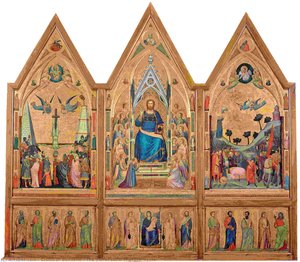 The Stefaneschi Triptych (recto) - Giotto di Bondone
Bathed in a palette of warm, grounding clay and rich earth tones, The Stefaneschi Triptych (recto) radiates a quiet, spiritual prestige. This masterpiece, one of the most significant works in our collection of the top 25 artworks of Giotto di Bondone, marks the dawn of naturalism. While the shimmering gold leaf backgrounds evoke the celestial light of the Byzantine tradition, it is Giotto’s revolutionary use of shadow and weight that truly captivates. He moved away from flat icons, instead using color to define the heavy folds of fabric and the tangible presence of the human form.
For the modern decorator, this triptych offers a sophisticated blueprint for creating an atmosphere of elegant serenity. The interplay of deep reds and muted ochres can serve as a soulful anchor in a living room or a dignified centerpiece in a dining room, providing a sense of historical depth and warmth. As a cornerstone of the Early Renaissance, this work exemplifies Giotto’s genius in bringing the divine down to earth, making it an essential piece for anyone looking to curate a space filled with meaning and timeless grace.
No. 6 Scenes from the Life of Joachim: 6. Meeting at the Golden Gate, detail - Giotto di Bondone
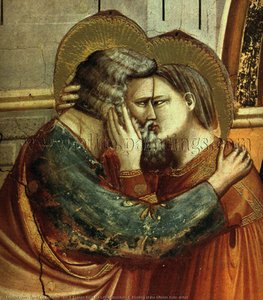 No. 6 Scenes from the Life of Joachim: 6. Meeting at the Golden Gate, detail - Giotto di Bondone
In this breathtaking detail from the Scenes from the Life of Joachim, Giotto di Bondone captures a moment of profound, quiet intimacy that changed the course of art history. This isn't just a religious icon; it is a masterclass in human emotion. As Joachim and the Virgin Mary meet at the Golden Gate, their tender embrace and gentle kiss move us away from the rigid, flat traditions of the Byzantine era toward a new, soulful naturalism. This piece earns its place among the top 25 artworks of Giotto di Bondone because it introduces a sense of weight and physical presence that was revolutionary for 1304.
The palette, rich with warm driftwood tones and luminous golds, creates a serene, spiritual atmosphere that feels both ancient and deeply personal. For the modern collector, this work offers more than just decoration; it brings a sense of timeless grace and sacred connection into a living space. It invites us to reflect on the beauty of devotion and the quiet strength of human connection, making it a cornerstone of any curated collection of Proto-Renaissance masterpieces.
Crucifix (17) - Giotto di Bondone
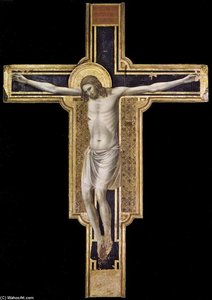 Crucifix (17) - Giotto di Bondone
There is a profound, melancholic weight to Giotto’s Crucifix (17) that transcends the centuries. Looking at this masterpiece, one doesn't just see a religious icon; one feels the heavy, human gravity of sorrow. Created around 1310, this work is a cornerstone of the Proto-Renaissance, marking the moment art stepped away from the flat, golden abstractions of the Byzantine tradition and embraced the tangible reality of human emotion. Giotto’s genius lies in how he uses light and shadow to give the central figure a sense of physical presence and vulnerability, turning a divine event into a deeply relatable human moment.
As one of the most significant pieces among the top 25 artworks of Giotto di Bondone, this Crucifix exemplifies his revolutionary shift toward naturalism. The dramatic composition and rich, espresso tones create a soulful atmosphere that commands attention in any space. At Mus3ums.com, we believe such transformative beauty should be accessible to all. Our master artists recreate this profound emotional depth through 100% hand-painted oil reproductions, ensuring the visible brushstrokes and spiritual essence of Giotto’s vision are preserved for your own home.
The Stefaneschi Triptych. Martyrdom of Peter - Giotto di Bondone
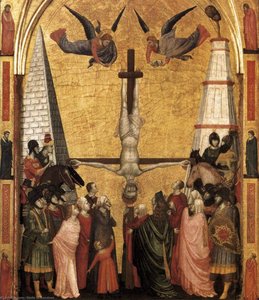 The Stefaneschi Triptych. Martyrdom of Peter - Giotto di Bondone
In the Stefaneschi Triptych, specifically the poignant scene of the Martyrdom of Peter, Giotto di Bondone invites us into a world of quiet prestige and profound gravity. The composition is anchored by deep, grounding tones of Walnut, a shade that evokes a sense of ancient, earthen stability and serene contemplation. This mastery of a rich, muted palette is a primary reason this piece stands among the top 25 artworks of Giotto di Bondone; he moves away from the flat, golden icons of the Byzantine era to embrace a tangible, three-dimensional reality.
By capturing the weight of human emotion and the physical presence of his subjects, Giotto pioneered the naturalism that would define the Renaissance. For the modern decorator, this work offers a sophisticated way to curate a room. The tranquil, soulful atmosphere and deep wood-toned hues make it a perfect centerpiece for a hotel lobby or a formal dining room, providing a sense of historical depth and calm. It is more than a painting; it is a window into the dawn of human-centric art.
Bóveda de la cubierta - Giotto di Bondone
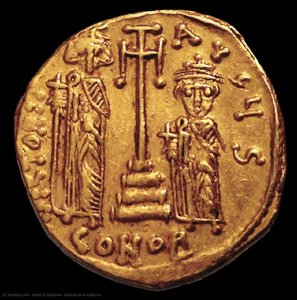 Bóveda de la cubierta - Giotto di Bondone
Imagine looking upward and seeing the heavens not as a flat, golden void, but as a living, breathing space. The Bóveda de la Cubierta is a breathtaking testament to why Giotto di Bondone is celebrated as the father of the Renaissance. In this Gothic masterpiece, Giotto moves beyond the rigid, two-dimensional icons of the Byzantine tradition, instead composing a scene that feels heavy with spiritual presence and physical reality.
The artwork features a striking winged figure, a celestial being draped in a hat and holding both a shield and a cross—symbols of divine strength and sacred protection. Surrounded by a delicate dance of angels and elements of nature, the composition creates a serene, spiritual atmosphere. It is this ability to invent light and shadow, giving weight to the ethereal, that makes this work a cornerstone of his legacy. For those seeking to bring a sense of timeless, soulful depth into a modern home, this piece serves as a portal to the very dawn of Western naturalism.
Nativity (North transept, Lower Church, San Francesco, Assisi) - Giotto di Bondone
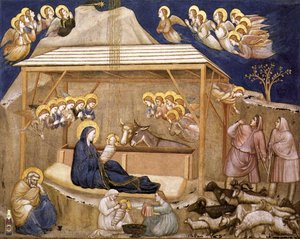 Nativity (North transept, Lower Church, San Francesco, Assisi) - Giotto di Bondone
In this breathtaking fresco from 1311, Giotto di Bondone invites us into a moment of profound, tranquil stillness. As you gaze upon the Nativity in Assisi, the eye is immediately drawn to the tactile weight of the figures; there is a palpable sense of gravity in the way Mary rests upon her simple bed, her form defined by soft, earthly tones and a newfound sense of three-dimensional volume. This is the genius of Giotto—the man who broke away from the flat, golden icons of the Byzantine tradition to give humanity a physical, emotional presence. The scene is a masterclass in Proto-Renaissance naturalism, where the warm, clay-colored hues of the stable and the gentle gestures of shepherds and animals create a harmonious, living world.
At Mus3ums.com, we strive to capture this very essence. Our high-end handmade oil reproductions are designed to honor the soul of Giotto’s work, translating his revolutionary brushwork and the deep, tonal richness of his frescoes into a centerpiece for your own home. We bring the profound peace of the Assisi Nativity to your living space, ensuring the spirit of this masterpiece remains a tangible, beautiful reality.
No. 35 Scenes from the Life of Christ: 19. Crucifixion - Giotto di Bondone
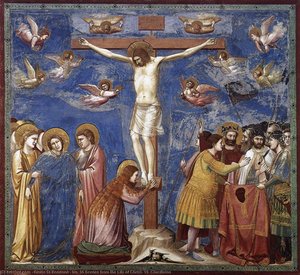 No. 35 Scenes from the Life of Christ: 19. Crucifixion - Giotto di Bondone
There is a profound, heavy silence that settles over a room when confronted with true human sorrow. In this masterpiece from the Scrovegni Chapel, Giotto di Bondone captures a moment of divine tragedy that feels startlingly real. As you gaze upon the Crucifixion, you aren't just looking at a religious icon; you are witnessing a visceral, emotional encounter. The somber espresso tones and the weight of the mourning figures break away from the flat, golden traditions of the past, introducing a revolutionary sense of gravity and three-dimensional space that changed art history forever.
This work stands among the top 25 artworks of Giotto di Bondone because it marks the dawn of humanism, where angels descend with celestial grace to meet the earthly grief of those below. At Mus3ums.com, we believe such transformative beauty should be accessible to every home. Our hand-painted oil reproductions meticulously recreate the dramatic brushstrokes and deep tonal ranges of Giotto’s frescoes, allowing you to bring this timeless, soulful atmosphere into your own living space with the dignity it deserves.
The Stefaneschi Triptych: St Peter Enthroned (detail) - Giotto di Bondone
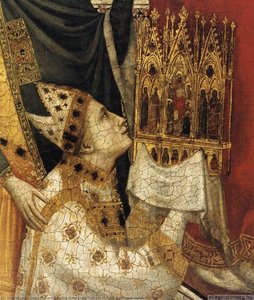 The Stefaneschi Triptych: St Peter Enthroned (detail) - Giotto di Bondone
In this breathtaking detail from the Stefaneschi Triptych, we witness the very moment art began to breathe. Giotto di Bondone, the father of the Renaissance, moves us away from the flat, golden icons of the past and into a world of weight, shadow, and profound human presence. As you gaze upon St. Peter enthroned, you aren't just looking at a religious figure; you are encountering a sense of quiet dignity and contemplative gravity that feels startlingly modern.
The palette, anchored in soft, driftwood tones, creates a calm and reflective atmosphere that transforms a sacred scene into an intimate encounter. Notice the subtle use of perspective and the way the drapery seems to hold real weight—this is Giotto’s signature, a masterful leap toward naturalism. There is a gaze here that follows you, not with judgment, but with a deep, silent understanding. It is a piece that reminds us that even in the most divine subjects, the human soul is the true center. To own a reproduction of such a masterpiece is to invite a piece of history's heartbeat into your own living space.
No. 21 Scenes from the Life of Christ: 5. Massacre of the Innocents - Giotto di Bondone
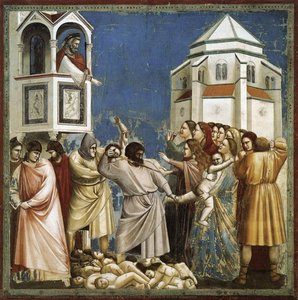 No. 21 Scenes from the Life of Christ: 5. Massacre of the Innocents - Giotto di Bondone
Imagine a sudden, chilling silence broken only by the echoes of frantic cries and the heavy, rhythmic footsteps of soldiers. In this harrowing fresco from the Cappella Scrovegni, Giotto di Bondone captures a moment of profound human tragedy: the Massacre of the Innocents. This is not the flat, symbolic art of the Byzantine era; it is a visceral, three-dimensional explosion of grief. Through his revolutionary use of chiaroscuro, Giotto breathes weight and palpable sorrow into every contorted face and desperate gesture, marking a definitive shift toward the naturalism that would define the Renaissance.
As one of the most powerful entries in our collection of the top 25 artworks of Giotto di Bondone, this piece exemplifies his ability to transform a religious narrative into a deeply human experience. He moves beyond mere storytelling to explore the raw textures of despair and the vulnerability of innocence. Bringing such a masterpiece into your home—perhaps as a meaningful focal point in a study or living room—invites a sense of historical depth and a profound connection to the enduring complexities of the human spirit.
The Stefaneschi Triptych: Christ Enthroned - Giotto di Bondone
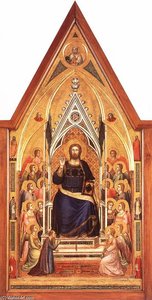 The Stefaneschi Triptych: Christ Enthroned - Giotto di Bondone
There is a profound, quiet gravity in the gaze of Christ as he sits enthroned in this 1330 masterpiece. As you stand before the Stefaneschi Triptych, you aren't just looking at a religious icon; you are witnessing the birth of human emotion in art. Giotto di Bondone breaks away from the flat, golden rigidity of the Byzantine era, instead using soft shading and a rich, rosy-brown palette to give his figures a tangible, three-dimensional weight. This sense of physical presence and psychological depth is exactly why this work remains one of the top 25 artworks of Giotto di Bondone.
The composition, framed by an elegant architectural niche, creates a sacred space that feels both monumental and intimate. The interplay of divine gold and deep, soulful tones offers a sense of quiet prestige, making it a perfect centerpiece for a living room intended for reflection. Bringing a reproduction of this Early Renaissance treasure into your home transforms a simple wall into a sanctuary of calm, inviting a timeless, spiritual energy into your personal space.
St. Francis of Assisi Preparing the Christmas Crib at Grecchio - Giotto di Bondone
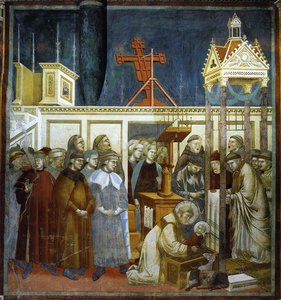 St. Francis of Assisi Preparing the Christmas Crib at Grecchio - Giotto di Bondone
There is a profound, quiet prestige in this fresco that transcends the centuries. In St. Francis of Assisi Preparing the Christmas Crib at Grecchio, Giotto di Bondone invites us into a moment of serene devotion. This isn't just a religious scene; it is a masterclass in the human connection that defined the Proto-Renaissance. As you gaze upon the scene, you feel the weight of the moment—the calm, earthy atmosphere of a church setting, the soft presence of a resting dog, and the gentle interaction of figures gathered around the manger.
This work exemplifies why Giotto is considered the father of Renaissance art. He moves away from the flat, golden icons of the past, instead using light and shadow to give St. Francis a tangible, three-dimensional presence. The deep, espresso tones and the balanced composition create a sense of gravity and peace, making the divine feel intimately reachable. It is a piece that doesn't just decorate a room; it anchors it with a sense of history and soulful, quiet beauty.
Conclusion
As we step away from the profound narratives of Giotto’s brush, we are left with more than just a list of historical milestones; we are left with the feeling of a world coming into focus. Giotto did more than just paint; he taught us how to see the weight of a gesture, the sorrow in a gaze, and the quiet dignity of the human form. His work serves as a bridge between the ethereal heavens of the medieval era and the tangible, breathing reality of the Renaissance, reminding us that even centuries later, art remains a powerful vessel for our most deeply felt emotions.
These masterpieces are not merely relics to be viewed behind velvet ropes in silent halls; they are living presences that possess the power to transform a modern space into a sanctuary of reflection. Whether it is the dramatic movement of a sacred scene or the soft, earthly light of a Tuscan landscape, Giotto’s legacy offers a way to bring history’s soul into the intimacy of your own home. It is about finding that connection between the ancient and the everyday, turning a blank wall into a window through time.
At Mus3ums.com, we believe that such beauty should be felt, not just observed. We invite you to explore our full collection, where the spirit of Giotto is reborn through the hands of our master artists. Each of our hand-painted oil reproductions is crafted with a deep reverence for the original's texture and tonal depth, ensuring that the brushstrokes and the very essence of the artist's vision are preserved on canvas. We invite you to discover which of these timeless treasures speaks to your own story, and let us help you bring that piece of history home.