


Introduction
Imagine standing on the edge of a wooden vessel, the salt spray stinging your skin, as a towering, claw-like wave looms above you, frozen in a moment of terrifying, beautiful tension. This is the visceral, breathtaking world of Katsushika Hokusai, a master who didn't just paint landscapes, but captured the very soul of movement and the sublime power of nature.
Born in the bustling streets of Edo, Hokusai was a man of restless energy, a spirit who changed his name over thirty times as he constantly reinvented his artistic identity. He was a pioneer of ukiyo-e—the art of the "floating world"—transforming the genre from simple depictions of urban life into profound meditations on the geometry of the natural world. Through his revolutionary use of Prussian blue and his obsession with the delicate balance between human fragility and the immense scale of the cosmos, he bridged the gap between ancient tradition and a startlingly modern visual language.
His influence knows no borders. When Japan opened its doors to the world, Hokusai’s bold lines and unconventional perspectives sparked the Japonisme movement in Europe, leaving an indelible mark on the masters of Impressionism and beyond. Today, his work remains as vibrant and relevant as ever, speaking to our shared human experience of awe, wonder, and the eternal dance of life and change.
As we guide you through this curated journey, we invite you to discover the essence of a genius. From the iconic surges of the sea to the intricate, whimsical sketches of his legendary manga, we have gathered the most transformative pieces of his legacy. Prepare to lose yourself in the top 25 masterpieces that define the vision of Katsushika Hokusai.
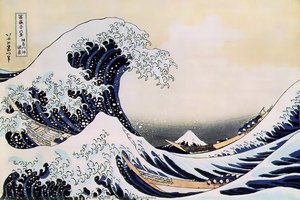
The Great Wave off Kanagawa - Katsushika Hokusai
Imagine standing on the edge of a wooden vessel, the air thick with salt spray, as a towering, claw-like wall of water looms above. This is the visceral tension of Katsushika Hokusai’s 1831 masterpiece, The Great Wave off Kanagawa. As part of his iconic Thirty-six Views of Mount Fuji, this ukiyo-e print is more than a landscape; it is a dramatic confrontation between the ephemeral power of the ocean and the silent, snow-capped permanence of Fuji.
Hokusai’s genius lies in his bold, decisive lines and the revolutionary use of Prussian blue, which lends the crashing foam a startling, modern depth. The composition pulls you into a rhythmic dance of curves and tension, capturing a fleeting moment of sublime chaos. Whether displayed as a striking focal point in a modern living room or a quiet source of reflection in a study, this work brings a sense of movement and profound natural energy to any space. It remains the ultimate testament to Hokusai’s ability to capture the very soul of the floating world.
Fuji, Mountains in clear Weather (Red Fuji) - Katsushika Hokusai
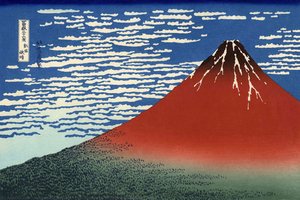 Fuji, Mountains in clear Weather (Red Fuji) - Katsushika Hokusai
There is a quiet, profound gaze in Fuji, Mountains in Clear Weather (Red Fuji) that seems to follow you—not with judgment, but with a deep, ancient understanding. This 1831 masterpiece from Hokusai’s iconic Thirty-six Views of Mount Fuji series is more than a landscape; it is a mirror reflecting the sublime power of the natural world. As one of the top 25 artworks of Katsushika Hokusai, it captures the very essence of the ukiyo-e movement through its bold, decisive lines and striking, flat planes of color.
Imagine this serene beauty in your own living room. The way the warm, earthy reds of the mountain's slopes contrast against the cool, ethereal clouds creates a visual harmony that invites contemplation. Hokusai’s ability to simplify the complex geometry of nature into something both minimalist and monumental is what makes this piece a cornerstone of Japanese art. It serves as a tranquil reminder of endurance and strength, transforming any space into a sanctuary of serene beauty and spiritual grace.
Kingfisher and Bulrushes - Katsushika Hokusai
 Kingfisher and Bulrushes - Katsushika Hokusai
What story does the quiet rustle of reeds and the sudden stillness of a bird tell us about the world of the Edo period? In Kingfisher and Bulrushes, Hokusai invites us into a moment of absolute equilibrium, a serene fragment of the "floating world" that captures the very essence of nature's delicate mechanics. This masterpiece stands among the top 25 artworks of Katsushika Hokusai because it showcases his unparalleled ability to find the sublime in the minute. Rather than the crashing power of his famous waves, here we find a study in poised tension, where the bird's soft feathers contrast against the sharp, vertical spears of the bulrushes.
For the modern collector seeking a curated escape, this piece offers a tranquil sanctuary. Its rhythmic, organic lines and flattened ukiyo-e perspective create a decorative harmony that brings a sense of historical depth and calm to any hallway or living space. It is a masterful display of Hokusai’s signature bold, decisive line work, transforming a simple observation of a kingfisher into a timeless meditation on life's fleeting, beautiful moments.
Kinoe no komatsu - Katsushika Hokusai
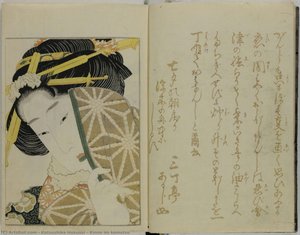 Kinoe no komatsu - Katsushika Hokusai
Imagine stepping into the intimate, candlelit world of Edo-period Japan, where every glance carries a hidden meaning and every gesture tells a story of longing. While many recognize Katsushika Hokusai for the thunderous power of his landscapes, Kinoe no Komatsu (1814) reveals a much more delicate, human side of his genius. This exquisite trilogy moves away from the crashing waves to explore the quiet, intense rhythms of human connection and desire.
Through his mastery of ukiyo-e woodblock printing, Hokusai captures the allure of the "floating world" with a serene yet provocative grace. The work features stunning ōkubi-e (large-head portraits) of beautiful courtesans, blending psychological depth with a soft, rosy-brown warmth. It earns its place among the top 25 artworks of Katsushika Hokusai by showcasing his incredible versatility; he was not just a painter of nature, but a storyteller of the soul. Bringing such a piece into a modern home—perhaps as a curated accent in a living room—adds a layer of sophisticated mystery and historical texture, inviting a sense of reflective calm and timeless beauty into your daily life.
Cranes on pine tree - Katsushika Hokusai
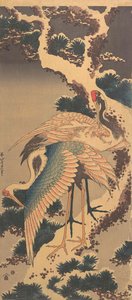 Cranes on pine tree - Katsushika Hokusai
In Cranes on Pine Tree, Hokusai moves away from the crashing fury of his famous waves to compose a visual sonata of absolute stillness. This vertical masterpiece is a profound meditation on longevity and harmony, capturing two elegant cranes in a moment of mid-courtship. Rather than simply depicting a scene, Hokusai invents a sense of atmosphere, using the delicate bokashi technique to create misty, tonal gradations that make the rosy-brown hues of the landscape feel as soft as a whispered secret.
The artwork exemplifies Hokusai’s mastery of the Ukiyo-e style, where bold, decisive lines define the organic grace of the birds against the steadfast silhouette of the pine. It is a study in Zen symbolism; the crane and the tree act as timeless anchors in a world of shifting clouds. For those seeking to bring a sense of tranquil energy into a living space, this piece serves as a portal to the Edo period, offering a serene connection to the enduring rhythms of the natural world.
Fuji Musume, the Wisteria Maid - Katsushika Hokusai
 Fuji Musume, the Wisteria Maid - Katsushika Hokusai
Look closer at Fuji Musume, the Wisteria Maid. The lines here aren't merely drawn; they are choreographed. In this breathtaking monochrome ink wash, Hokusai captures a moment of suspended animation, where a single female figure emerges from the textured grain of the paper like a memory of a Kabuki dance. This is not just a composition; it is a dance frozen in time.
What makes this one of the top 25 artworks of Katsushika Hokusai is his masterful ability to balance the heavy, structural weight of a traditional kimono with the ethereal, delicate grace of the maiden's features. Using the rhythmic precision of Sumi-e techniques, he plays with varying ink densities—from midnight blacks to translucent grays—to create a sense of depth and movement without traditional perspective. It is a study in tranquil elegance, where the organic, flowing shapes of wisteria blossoms frame a silhouette of pure poise. If you seek to bring a sense of rhythmic harmony and classical Japanese beauty into your home, this piece offers a window into the very soul of the Edo period.
Chinese Boy - Katsushika Hokusai
 Chinese Boy - Katsushika Hokusai
In the quiet, monochromatic dance of Chinese Boy, there is a profound sense of youthful curiosity that transcends the centuries. As you gaze upon this delicate woodblock print, you are met with the expressive gesture of a young boy, his attention captured by the mysteries held within a sacred scroll. This piece is a quintessential example of the Ukiyo-e mastery that defines the top 25 artworks of Katsushika Hokusai, showcasing his ability to find the sublime in the simplest of human moments. Through bold, decisive lines and a serene, putty-toned palette, Hokusai captures a narrative of storytelling and discovery that feels remarkably intimate.
Unlike his tempestuous waves, this work offers a calm, meditative energy. Bringing this piece into your home can transform a quiet corner or a living room into a sanctuary for reflection. It serves as a gentle reminder of the beauty found in learning and the endless stories waiting to be unrolled, making it a timeless cornerstone for any collection of Katsushika Hokusai's most evocative masterpieces.
Two Wrestlers - Katsushika Hokusai
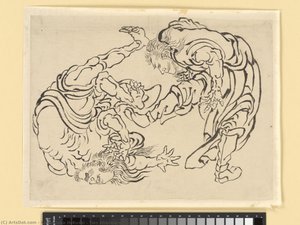 Two Wrestlers - Katsushika Hokusai
In Two Wrestlers, Hokusai moves away from the vastness of landscapes to explore the raw, concentrated energy of human struggle. This piece is a masterclass in the use of light and shadow to define form; through meticulous hatching and a sophisticated play of chiaroscuro, the artist carves out the straining musculature and the palpable tension of the combatants. The monochrome palette, accented by the deep, tonal richness of Prussian blue, creates a dramatic atmosphere that captures a moment of suspended motion. This ability to translate physical exertion into a visual rhythm is a hallmark of his genius, securing this work's place among the top 25 artworks of Katsushika Hokusai.
For the modern collector, a high-quality reproduction of this Edo-period masterpiece offers more than just historical insight; it brings a sense of dramatic, sculptural depth to a contemporary space. The interplay of light and shadow creates a sophisticated focal point, adding a layer of intellectual luxury and movement to any curated wall.
Femenine wave - Katsushika Hokusai
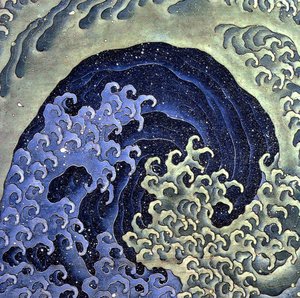 Femenine wave - Katsushika Hokusai
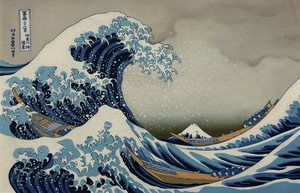
Acquiring a piece inspired by “Feminine Wave” is more than a design choice; it is an investment in a global legacy of taste, securing a connection to one of the most influential masters in art history. As a cornerstone of the top 25 artworks of Katsushika Hokusai, this masterpiece exemplifies his ability to capture the sublime through the lens of ukiyo-e. The composition is a breathtaking study in motion, where the deep, tranquil grays and striking Prussian blues of the ocean meet the soaring freedom of a single bird. Hokusai’s decisive, bold lines transform a crashing seascape into a meditative dance of light and spray, bridging the gap between the raw power of nature and an ethereal, calm grace.
For the discerning collector, a high-quality reproduction of this work brings an unparalleled aesthetic authority to a modern luxury interior. Whether placed in a serene living room or a sophisticated study, it serves as a soulful focal point that commands attention, offering the same timeless prestige as the original while breathing life into your curated space.
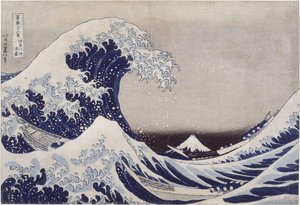
The Great Wave off Kanagawa, 1830 - Katsushika Hokusai
Owning The Great Wave off Kanagawa isn't merely a purchase; it is an inheritance of a global legacy. As a cornerstone of the ukiyo-e tradition, this masterpiece from Hokusai’s iconic Thirty-six Views of Mount Fuji series captures a profound confrontation between the sublime power of nature and human fragility. The composition is a masterclass in tension, where the towering, claw-like crests of the ocean—rendered in a striking, deep Prussian blue—threaten to swallow the very sky, while the distant, serene silhouette of Mount Fuji remains a steady anchor amidst the chaos.
This work exemplifies the genius of Katsushika Hokusai through his ability to blend bold, decisive lines with a sense of ephemeral movement. The spray of the crashing waves and the delicate dance of birds in the sky create a dramatic, immersive experience that bridges the gap between the seen and the felt. It is more than a print; it is a lineage of taste, bringing the restless spirit of the Edo period directly to your living room walls.
Daruma (Buddhist Saint) - Katsushika Hokusai
 Daruma (Buddhist Saint) - Katsushika Hokusai
In the vast collection of the top 25 artworks of Katsushika Hokusai, few pieces capture the artist's playful, human side quite like the 1799 portrait of Daruma (Buddhist Saint). Moving away from his legendary landscapes, this monochrome woodblock print offers a startlingly intimate encounter with the divine. Hokusai strips away the ethereal to reveal a saint caught in a moment of raw, almost grotesque humanity—depicted with a needle or toothpick in a gesture that is as humorous as it is unexpected.
The visual language here is a masterclass in the Ukiyo-e style, defined by bold, calligraphic lines and dramatic tonal contrasts. The heavy, sweeping strokes of the beard and the exaggerated, expressive features create a sense of movement that feels incredibly modern. For the contemporary collector, this piece brings a sense of dramatic playfulness to a curated space, bridging the gap between sacred tradition and the whimsical reality of the human condition. It is a testament to Hokusai's restless genius that he could find such profound character in a single, uninhibited moment.
Sakata Kintoki - Katsushika Hokusai
 Sakata Kintoki - Katsushika Hokusai
At Mus3ums.com, we believe that the profound energy of a masterpiece should be accessible to everyone, transforming a simple living space into a curated sanctuary of culture. This philosophy is perfectly embodied in Sakata Kintoki, one of the most captivating entries in our collection of the top 25 artworks of Katsushika Hokusai. Created in 1804, this striking monochrome woodblock print captures the legendary 'Golden Boy' in a moment of explosive, muscular tension. Hokusai’s signature bold, decisive lines define the hero’s fierce expression and the heavy, rhythmic folds of his garments, bridging the gap between myth and raw human vitality.
What makes this work a quintessential example of Hokusai’s genius is his ability to render such immense physical power through a sophisticated grayscale palette. The subtle tonal gradients create a sense of three-dimensional volume that feels startlingly modern, even centuries later. By choosing a high-fidelity reproduction of this energetic ukiyo-e treasure, you can bring this transformative, heroic presence into your own home or office, adding a touch of timeless Japanese strength to your personal gallery.
Bamboo - Katsushika Hokusai
 Bamboo - Katsushika Hokusai
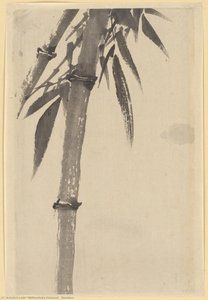
In this exquisite ink wash painting, Hokusai moves away from the crashing waves of his most famous landscapes to capture a moment of profound, quietude. Bamboo is a masterclass in the art of the essential, where the restless spirit of the artist finds stillness. Through a series of swift, decisive brushstrokes, he distills the bamboo into its purest essence—a study of verticality, grace, and the strength found in flexibility. The monochromatic palette of deep blacks and soft grays creates a rhythmic dance between form and empty space, embodying the very heart of Zen aesthetics.
This piece stands as one of the top 25 artworks of Katsushika Hokusai because it reveals his ability to find the sublime in the simple. It is not merely a depiction of a plant, but a visual metaphor for resilience and integrity. Bringing this serene work into your home can transform a quiet corner or a living room into a personal sanctuary for reflection, offering a tranquil connection to the natural world through the timeless elegance of Japanese minimalism.
Turtles - Katsushika Hokusai
 Turtles - Katsushika Hokusai
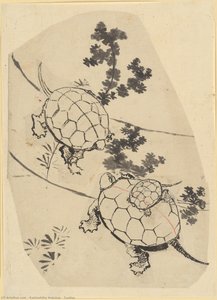
While Hokusai is world-renowned for the roaring power of his waves, his Turtles offers a breathtaking glimpse into the quieter, more meditative side of his genius. This exquisite ink drawing is a masterclass in the ukiyo-e tradition, trading dramatic landscapes for a serene, minimalist study of nature. Through delicate, flowing lines and nuanced monochromatic shading, Hokusai captures the textured shells and graceful forms of these creatures with a precision that feels both intimate and eternal.
In Japanese culture, the turtle is a profound symbol of longevity and resilience, and here, Hokusai uses the Zen aesthetic to invite a sense of profound tranquility into the viewer's space. It is a piece that celebrates the beauty of the small and the steady, proving that even a master of the grandest vistas can find immense power in a single, quiet moment of harmony. For the collector seeking a piece that balances contemplative mood with technical mastery, this work is an essential testament to Hokusai's restless, evolving spirit.
Court Lady - Katsushika Hokusai
 Court Lady - Katsushika Hokusai
At Mus3ums.com, we believe that the profound beauty of a masterpiece should be accessible to everyone, turning any living space into a curated sanctuary of culture. This philosophy is perfectly embodied in Court Lady, a serene work from 1799 that secures its place among the top 25 artworks of Katsushika Hokusai. While many recognize Hokusai for his thunderous waves, this piece reveals his mastery of the "floating world" through a lens of quiet dignity and refinement.
The composition is a masterclass in balance and movement; positioned asymmetrically, the figure’s voluminous robes flow gracefully across the frame, creating a sense of tranquil weight. The intricate patterns of the kimono—a blend of organic floral motifs and geometric lattices—are rendered with the bold, decisive linework that defines Hokusai’s genius. In this grayscale study, the focus shifts from color to the sheer elegance of silhouette and texture. It is this ability to capture the ephemeral essence of a moment that makes this work a timeless treasure. Through our high-fidelity reproductions, you can bring this transformative presence and the tranquil spirit of the Edo period into your own home or office.
Benten (Goddess of Love) - Katsushika Hokusai
 Benten (Goddess of Love) - Katsushika Hokusai
In this serene 1799 woodblock print, Hokusai invites us into a moment of spiritual grace, capturing the essence of the goddess Benten. As one of the female form in his early mastery, the goddess is depicted with an elegant, upright posture, cradling a biwa against her flowing robes. This piece is a vital inclusion in our collection of the ukiyo-e style masterpieces, showcasing the decisive, fluid lines that would later define his legendary landscapes.
The composition relies on a sophisticated interplay of organic shapes and high-contrast monochrome tones, creating a sense of depth through the delicate layering of silk and embroidery. For the modern decorator, this artwork offers a tranquil, spiritual ambiance, making it a perfect centerpiece for a living room seeking a touch of Zen. It exemplifies Hokusai’s ability to bridge the gap between the mythological and the human, turning a symbolic icon into a timeless study of movement and poise.
Sword Dancer - Katsushika Hokusai
 Sword Dancer - Katsushika Hokusai
In Sword Dancer, Hokusai captures a moment of breathless, ritualistic intensity that transcends the boundaries of time. A single figure, poised atop a high wooden pedestal, is frozen in a dance of profound discipline and spiritual energy. Through a masterful use of a monochromatic palette, Hokusai employs varying shades of black, grey, and white to sculpt the fluid motion of flowing garments and the sharp, decisive lines of the blade. This work is a quintessential example of the top 25 artworks of Katsushika Hokusai because it showcases his unparalleled ability to balance the organic, rhythmic curves of the human form against rigid, geometric structures.
The low-angle perspective invites the viewer to look upward, instilling a sense of awe and reverence for the dancer's trance-like movement. Bringing this energetic yet mystical piece into your home can transform a quiet corner or a hallway into a sanctuary for reflection. It serves as a powerful reminder of the grace found in strength, making it a cornerstone of any collection dedicated to the sublime beauty of the ukiyo-e tradition.
Cock - Katsushika Hokusai
 Cock - Katsushika Hokusai
In this striking 1804 ink wash masterpiece, we witness the restless spirit of Katsushika Hokusai distilled into a single, energetic gesture. While many recognize him for his monumental waves, Cock reveals the artist's profound ability to capture the very essence of life through the minimalist suibokuga technique. This isn't merely a depiction of a bird; it is a dance of ink and intention.
Using the traditional sumi-e method, Hokusai employs a dramatic grayscale palette to breathe life into the rooster's form. Bold, calligraphic brushstrokes define the heavy, textured plumage of the tail, while delicate, translucent washes suggest the subtle play of light and volume. The composition possesses a powerful upward diagonal energy, pulling the viewer's eye through the sweeping curves of the feathers. For those looking to transform a living space into a soulful gallery, this work exemplifies the precision and passion that define the top 25 artworks of Katsushika Hokusai, offering a window into the vibrant, breathing world of the Edo period.
Sazai hall - 500 Rakan temples - Katsushika Hokusai
 Sazai hall - 500 Rakan temples - Katsushika Hokusai
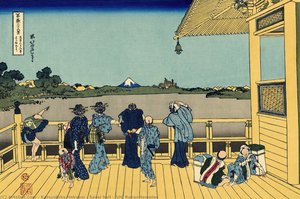
To encounter Sazai hall – 500 Rakan temples is to step into a tranquil, suspended moment of Edo-period life, a true jewel in the crown of Katsushika Hokusai’s vast legacy. This masterpiece earns its place among the top 25 artworks of Hokusai by masterfully blending the human experience with the sublime scale of the natural world. Rather than just a landscape, it is a beautifully composed tableau of quiet observation, where a group of figures gathers on a wooden balcony, their presence anchored by the serene presence of a companion animal and a drifting boat below.
Hokusai’s signature bold, decisive lines guide the eye from the intimate details of the foreground toward the misty, distant mountains, creating a sense of depth that feels both expansive and deeply personal. The palette, anchored by soothing rosy brown tones, evokes a sense of warmth and timelessness. For the modern collector, this piece offers more than mere decoration; it brings a sense of meditative peace and sophisticated cultural history into a living space, serving as a window into the "floating world" that continues to inspire refined, global aesthetics.
Bullfinch And Weeping Cherry - Katsushika Hokusai
 Bullfinch And Weeping Cherry - Katsushika Hokusai
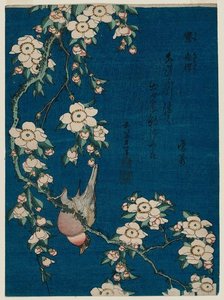
Have you ever wondered how a single, quiet moment can capture the entire essence of nature? In Bullfinch And Weeping Cherry, Hokusai invites us away from the crashing waves of his famous landscapes and into a serene, intimate sanctuary. This masterpiece is a quintessential example of why this piece belongs among the top 25 artworks of Katsushika Hokusai; it showcases his incredible mastery of kachoga (bird and flower painting), proving he was as much a poet of the minute as he was a chronicler of the grand.
Set against a calming backdrop of deep Prussian Blue, the composition features a delicate bird perched amidst cascading white blossoms. It is a visual symphony of tranquility, embodying the Japanese concept of mono no aware—the bittersweet beauty of impermanence. For the modern collector, this work offers a perfect, soulful escape. Whether placed in a sunlit living room or a quiet reading nook, its soft textures and balanced rhythm bring a sense of historical elegance and meditative calm to any curated home.
Guan Yu, Chinese God of War - Katsushika Hokusai
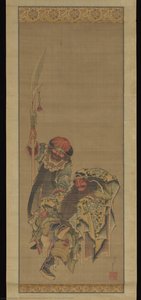 Guan Yu, Chinese God of War - Katsushika Hokusai
What story does the quiet, dignified presence of a legendary warrior tell when captured through the lens of the Edo period? In Guan Yu, Chinese God of War, Hokusai moves away from his famous turbulent waves to explore the profound stillness of mythology. This masterpiece, rendered on silk, serves as a meditative tribute to honor and martial prowess, marking a significant moment in the artist's diverse career. By utilizing the delicate bokashi technique, Hokusai achieves a luminous, ethereal quality, where soft tonal gradations meet bold, decisive lines.
The palette is a soothing harmony of driftwood and earthy ochres, creating a tranquil atmosphere that offers a sophisticated sense of historical escape for the modern collector. This work is a quintessential example of the top 25 artworks of Katsushika Hokusai because it showcases his ability to blend spiritual reverence with technical precision. For those looking to curate a home filled with meaning, this piece brings a sense of quiet prestige and timeless serenity to any space.
Hermit with a Staff - Katsushika Hokusai
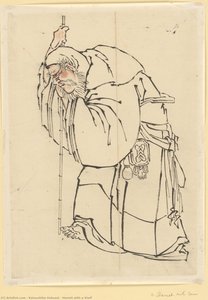 Hermit with a Staff - Katsushika Hokusai
In Hermit with a Staff, Hokusai invites us into a moment of profound, quiet vulnerability. The central figure, a man etched with the weight of sorrow, bows his head in a posture of deep introspection, his staff serving as both a physical support and a symbol of his weary journey. Through the masterful use of sumi-e ink wash, Hokusai achieves a remarkable tonal range, using delicate hatching and varying shades of black to breathe life into the man’s weathered features and flowing robes. The presence of two birds—one perched to the side and another drifting above—adds a layer of spiritual grace, perhaps suggesting a sense of freedom that exists even amidst human distress.
This piece is a quintessential example of why Hokusai remains a titan of the top 25 artworks of Katsushika Hokusai; it captures the ephemeral essence of the human condition with a precision that feels both ancient and timeless. Bringing this serene yet reflective masterpiece into your home can transform a quiet corner or a living room into a personal sanctuary, offering a space for calm contemplation and a connection to the soulful beauty of the Edo period.
Goddess Riding A Dragon - Katsushika Hokusai
 Goddess Riding A Dragon - Katsushika Hokusai
To gaze upon Goddess Riding A Dragon is to be swept away by an ethereal current, transported to a realm where divinity meets the raw, swirling power of nature. In this breathtaking composition, a serene Buddhist goddess—evocative of the compassionate Avalokiteśvara—is poised atop a magnificent, stylized dragon. This piece perfectly exemplifies the genius of Katsushika Hokusai, showcasing his ability to master the ukiyo-e tradition through fluid, gestural lines and a profound understanding of organic movement.
The artwork breathes with a tranquil energy, utilizing a palette of muted rosy browns and soft beiges that create a peaceful, almost meditative atmosphere. Hokusai’s signature touch is evident in the way the billowing drapery and celestial clouds merge into a single, harmonious visual poem, guiding the eye upward in a sense of divine ascension. Owning a piece of this legacy is more than a design choice; it is an inheritance of taste. It brings the spiritual depth of 19th-century Japanese art directly into your living space, turning a simple wall into a window to the sublime.
Mishima pass in Kai province - Katsushika Hokusai
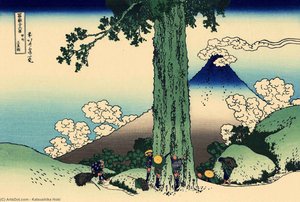 Mishima pass in Kai province - Katsushika Hokusai
In the vast and storied oeuvre of Katsushika Hokusai, few works capture the quiet majesty of the Japanese landscape as intimately as Mishima Pass in Kai Province. This exquisite composition invites you to step onto a winding mountain path, where the air feels thick with the scent of pine and the stillness of a high-altitude morning. At the heart of the scene stands a commanding, ancient tree, its gnarled branches serving as a silent witness to the travelers passing beneath its canopy.
This piece is a masterclass in the ukiyo-e tradition, showcasing Hokusai’s ability to balance the monumental scale of nature with the delicate presence of human life. Through a serene palette of phthalo greens and soft, hazy tones, he creates a sense of profound depth, drawing the eye from the rugged, textured foreground toward the ethereal, receding mountains. Owning a piece of this legacy is more than a design choice; it is an inheritance of taste, bringing the tranquil, meditative spirit of the Edo period directly into your living space.
Untitled (D2X86B) - Katsushika Hokusai
 Untitled (D2X86B) - Katsushika Hokusai
Owning Untitled (D2X86B) by Katsushika Hokusai isn't merely a purchase; it is an inheritance. This exquisite black and white ink drawing serves as a quiet, profound handshake across centuries, offering a window into the serene beauty of Edo-period Japan. While many recognize Hokusai for his thunderous waves, this piece reveals the master’s ability to capture the delicate rhythm of daily life. It is a masterclass in the Ukiyo-e aesthetic, where flowing lines and simplified forms transform a simple domestic scene into a study of harmony and connection.
The artwork portrays a tender moment of familial grace, with a mother and her children moving through space with a rhythmic, organic elegance. Hokusai’s signature decisive line work—varying from dense, textured strokes in the folds of robes to loose, expressive gestures—creates a sense of movement that feels both spontaneous and perfectly composed. To bring this piece into your home is to embrace a lineage of taste, inviting the calm, meditative spirit of the "floating world" to grace your living space. It is not just art; it is a legacy of grace for your walls.
Conclusion
As the light softens and the museum halls grow quiet, we are left with the lingering sensation that Hokusai’s world hasn't truly vanished; it has simply transitioned from the paper of the Edo period into the very fabric of our modern imagination. To look upon his work is to witness a restless spirit attempting to capture the uncapturable—the sudden crest of a wave, the silent majesty of a mountain, and the fleeting, beautiful chaos of human life. These are not merely historical artifacts tucked away in archives; they are living, breathing forces of nature and emotion that continue to whisper to us across the centuries.
Whether it is the terrifying, rhythmic power of his oceans or the delicate, precise lines of his sketches, Hokusai reminds us that there is a profound geometry in the world around us, waiting to be discovered. His influence has traveled far beyond the borders of Japan, flowing through the veins of modern design and finding a permanent home in the hearts of collectors who seek more than just decoration. They seek a connection to the sublime.
As you step away from these masterpieces, may you carry a piece of that restless curiosity with you. Whether you are looking to bring the calming blue of a mountain landscape into your sanctuary or the dramatic energy of a crashing wave into your living space, we invite you to continue this journey of discovery. Explore the full collection and find the piece that speaks to your own story, turning a moment of historical wonder into a timeless presence in your home.


