The Genesis of Surreality: Defining the Movement and André Breton’s Manifesto
SurrealismSurrealism is an art and cultural movement that developed in Europe in the aftermath of World War I in which artists aimed to allow the unconscious mind to express itself, often resulting in the depiction of illogical or dreamlike scenes and ideas. I...
To understand the profound impact of Surrealism, one must first look back to the heavy shadows cast by the First World War. In the aftermath of such unprecedented global trauma, the traditional structures of logic and reason appeared not only insufficient but fundamentally broken. From this wreckage emerged a revolutionary impulse to seek truth elsewhere—not in the observable world, but within the hidden recesses of the human psyche. The movement was officially codified in 1924 by André Breton, whose Surrealist Manifesto sought to resolve the seemingly contradictory conditions of dream and reality into an absolute super-reality. This was not merely a new aesthetic style; it was a philosophical rebellion. Influenced heavily by the burgeoning field of psychoanalysis, particularly the theories of Sigmund Freud, the Surrealists aimed to bypass the rational mind's censorship through techniques like pure psychic automatism. They sought to tap into the primal, the repressed, and the irrational, creating a cultural bridge between our waking existence and the boundless, often unsettling, landscapes of our dreams.
Architectures of the Unconscious: The Dreamscapes of Salvador Dalí
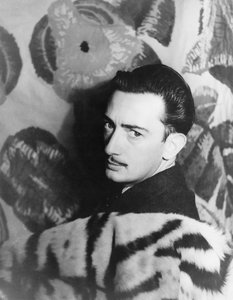 Salvador Dalí
A Life Submerged in Dreams: The World of Salvador Dalí Salvador Domingo Felipe Jacinto Dalí i Domènech, a name synonymous with surrealism, was born on May 11, 1904, in the sun-drenched town of Figueres, Spain. His existence was destined to be anythin...
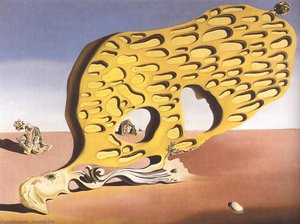
No name is more inextricably linked to this era than Salvador Dalí, an artist whose very existence was a meticulously crafted performance of the surreal. Born in Figueres, Spain, Dalí’s life was permeated by themes of duality and loss, elements that would later manifest in his startlingly technical imagery. His work does not simply sit upon the canvas; it breathes, melts, and distorts, inviting the viewer to witness the precise moment where reality fractures. Through his celebrated paranoiac-critical method, Dalí developed a way to induce a self-induced state of paranoia, allowing him to translate the chaotic imagery of the subconscious into hyper-realistic, almost photographic, depictions. To gaze upon his 1935 masterpiece,
Poster Project, is to step through a threshold where the boundaries of the rational world dissolve into fluid architecture. In this work, Dalí masterfully uses the technique of illogical juxtaposition—placing a delicate wine glass alongside a fragmented human figure and a high-heeled shoe—to create a sense of profound disorientation. His ability to render the impossible with such academic precision makes his paintings feel less like mere art and more like windows into a living, breathing hallucination. For those seeking to bring this level of psychological depth into their own surroundings, our hand-painted oil reproductions capture every meticulous detail and shadow, ensuring the transformative power of Dalí’s vision remains intact on 100% cotton canvas.
The Logic of Illogic: Exploring Unexpected Juxtapositions in Surrealist Masterpieces
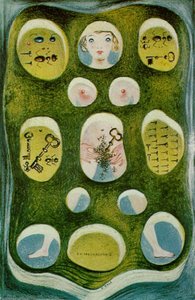
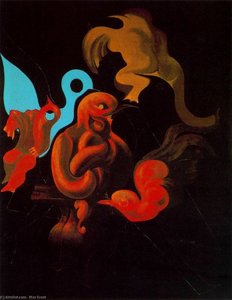 Tras nosotros, la maternidad
A Surreal Echo of Maternal Instinct Max Ernst’s “Tras Nosotros, La Materinidad” (After Us Motherhood), completed in 1927, stands as a cornerstone of Dadaism and a testament to the artist's unwavering commitment to challenging conventional artistic bo...
The true magic of Surrealism lies in its ability to find meaning within the meaningless, utilizing the element of surprise and the non sequitur to provoke deep contemplation. This is achieved through a deliberate disruption of expectation. Consider the works of Max Ernst, particularly his 1927 piece
Tras Nosotros, La Maternidad (After Us Motherhood). In this work, Ernst seamlessly blends realism with fantastical elements, creating an unsettling juxtaposition that challenges the viewer's perception of maternal instinct and biological reality. By utilizing meticulous detail to depict a dreamscape solidified onto paper, he explores subconscious anxieties through the placement of disparate objects—a baby face bathed in blue, perched amidst scattered figures and birds. Similarly, the Bulgarian pioneer Georges Papazoff utilized a distinctive blend of figurative and abstract elements to capture the subconscious realm. His landscapes, often bathed in an ethereal, melancholic light, serve as portals into inner visions, where familiar symbols are stripped of their certainty. This mastery of unexpected connection is what defines the movement's aesthetic; it is a language of desire and fear, spoken through the medium of the unexpected. At Mus3ums.com, we honor this tradition of technical excellence by employing artists trained in prestigious academies, ensuring that every reproduction maintains the profound tonal range and textural complexity required to convey such intricate symbolism.
Beyond the Canvas: The Influence of Surrealism on Modern Visual Culture and Pop Surrealism
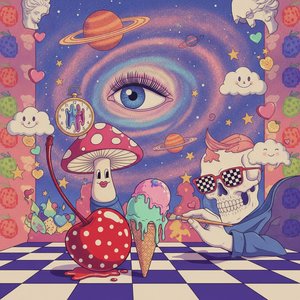 Pop Surrealism Unveiled: The Sophisticated Intersection of Vibrant Pop Art and Dreamlike Subconscious Landscapes
The Genesis of a Movement: From Post-War Optimism to Underground Rebellion Pop Surrealism: A Collision of Culture, Dreams & the Subconscious in Post-War Art The Roots of Rebellion: From Post-War Optimism to Underground Expression 100 Sources of Pop A...
While the original Surrealist movement was rooted in the early 20th-century avant-garde, its DNA continues to mutate and thrive within contemporary culture. As we moved into the post-war era, a new collision occurred between the vibrant, consumerist optimism of Pop Art and the deep, psychological excavations of Surrealism. This gave rise to "Pop Surrealism," or Lowbrow art, a movement that emerged from the underground cultures of the late 1960s. Unlike the high-minded intellectualism of Breton’s circle, Pop Surrealism often embraces a sense of humor—sometimes impish, sometimes sarcastic—and utilizes the recognizable icons of mass media to explore dreamlike landscapes. It is a sophisticated intersection where street art meets dream logic, proving that the fascination with the subconscious is not a relic of the past but a persistent human impulse. This evolution demonstrates that the tools of Surrealism—fragmentation, distortion, and the recontextualization of reality—are infinitely adaptable, capable of transforming everything from mid-century advertisements to modern digital imagery into profound explorations of identity and culture.
Preserving the Dream: Collecting and Curating Surrealist Reproductions for the Modern Home
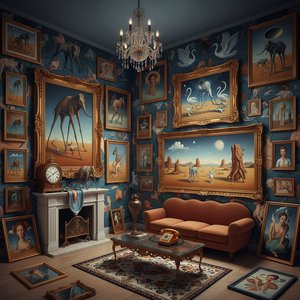 Salvador Dalí's Masterpieces: 25 Surrealist Visions for Your Home | Mus3ums
Introduction To embark on a journey through the top 25 artworks of Salvador Dalí is to enter a realm where dreams and reality intertwine, logic dissolves into absurdity, and the subconscious takes breathtaking form. These paintings are not merely ima...
Integrating the profound beauty of Surrealism into a modern interior requires more than mere decoration; it requires curation. To display a piece of such psychological weight is to invite conversation and contemplation into one's living space. For the classic art enthusiast, the challenge lies in finding reproductions that respect the integrity of the original brushwork and the depth of the artist's intent. Mass-produced prints often fail this test, offering only a flat, computer-printed appearance that lacks the "soul" of the movement. In contrast, a hand-painted oil reproduction offers the tactile depth of visible brushstrokes and a rich tonal range that mimics the original masterpiece. Whether you are looking to feature a large-scale multi-panel set across a wide wall or a singular, intimate portrait, the choice of medium is paramount. Our service allows for true "remixing" of art history; we can even apply an aged and cracked (craquelure) finish to your chosen piece to evoke the venerable character of a museum artifact. By choosing a bespoke, hand-painted work, you are not just decorating a room—you are preserving a dream, ensuring that the unsettling, beautiful, and revolutionary spirit of Surrealism continues to breathe within the architecture of your home.