The Dissolution of Form: Moving Beyond Monet’s Luminosity
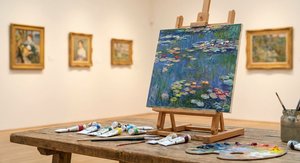
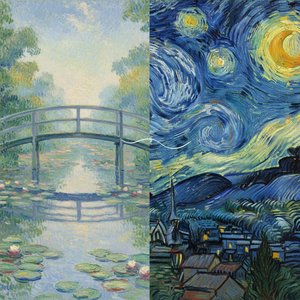
To understand the profound shift that occurred at the twilight of the nineteenth century, one must first acknowledge the brilliance of the Impressionist dawn. The movement, pioneered by masters such as Claude Monet, had successfully captured the ephemeral dance of light upon water and the fleeting atmosphere of a Parisian afternoon. Yet, as the sun began to set on the traditional Impressionist era, a new generation of artists felt a growing restlessness. They found that while the capture of light was revolutionary, it often lacked the structural permanence and psychological depth required to express the complexities of the human condition.
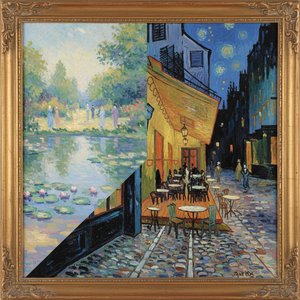
This period, often referred to as Late Impressionism or Post-Impressionism, marked a deliberate departure from mere optical accuracy. Where Monet sought to record how the eye perceives a landscape in a single moment, the subsequent masters sought to record how the heart feels about that landscape. The edges of the world began to soften, not through a loss of clarity, but through an infusion of meaning. The dissolution of form was not an act of destruction, but an evolution; artists began to prioritize the underlying essence of their subjects over the transient effects of sunlight, paving the way for a more profound, symbolic language in Western art.
Chromatic Emotion: The Psychological Weight of Post-Impressionist Color
In the hands of the Late Impressionists, color ceased to be a descriptive tool and became a primary vehicle for emotion. This was a radical departure from the naturalistic palettes of the past. Artists began to utilize color with a newfound autonomy, employing bold, often non-naturalistic hues to evoke specific psychological states. The canvas became a stage where color could act independently of reality to stir the viewer's soul.
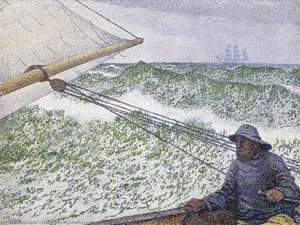
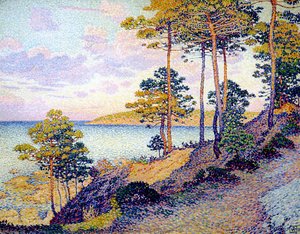
Consider the vibrant, sun-drenched landscapes of Theo van Rysselberghe, such as his Olive Trees near Nice. Here, the colors are not merely reflections of the Mediterranean sun; they are saturated with a vitality that feels almost tactile. The interplay of warm ochres and deep greens does more than depict a grove; it communicates a sense of enduring life and warmth. Similarly, the use of complementary colors was no longer just about optical vibration, but about creating a tension that mirrors human conflict and passion. Through this chromatic experimentation, color became a language capable of articulating the unspoken nuances of joy, melancholy, and spiritual longing.
Subjectivity and Soul: Capturing Intimate Moments through Gauguin and Van Rysselberghe
As the focus shifted from the external world to the internal landscape, the subject matter of art underwent a poignant transformation. The Late Impressionists turned their gaze inward, seeking intimacy in the most mundane or deeply personal moments. This era embraced subjectivity, allowing the artist's personal perspective and spiritual convictions to permeate every brushstroke.
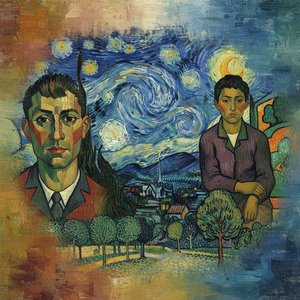
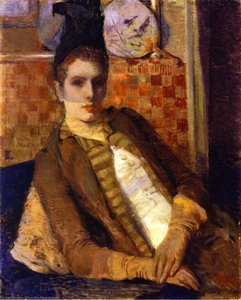
Paul Gauguin’s work serves as a monumental testament to this shift toward the soulful. In pieces such as Aube the Sculptor and His Son, we witness more than a mere depiction of fatherhood; we encounter a deeply moving exploration of lineage, creation, and the quiet gravity of familial bonds. Gauguin utilized flattened planes and symbolic color to elevate a private moment into something mythic and universal. This ability to imbriate the personal with the profound is what defines the era. Whether through the rhythmic patterns of a landscape or the tender gaze of a portrait, these artists invited the viewer to participate in a shared emotional experience, bridging the gap between the observer and the observed.
Structural Resonance: The Emergence of Dynamic Form in Late Impressionism
While the era is often celebrated for its expressive freedom, it was also characterized by a renewed interest in structure and composition. Having moved away from the purely atmospheric, artists began to reintegrate a sense of weight and permanence into their works. This was achieved through a sophisticated use of line, shape, and rhythm, creating compositions that felt both dynamic and grounded.
This structural resurgence can be seen in the works of Maurice Brazil Prendergast, whose 1912 masterpiece Summer, New England utilizes vibrant colors and simplified, almost mosaic-like forms to capture the energy of park life. His approach demonstrates how movement can be achieved through the careful arrangement of geometric shapes and rhythmic color blocks. This era proved that art could be both emotionally fluid and structurally rigorous. The tension between the soft, expressive brushwork and the underlying architectural strength of the composition provided a sense of stability that allowed the more radical emotional elements to resonate more deeply with the viewer.
The Legacy of Expression: How Late Impressionism Paved the Way for Modernity
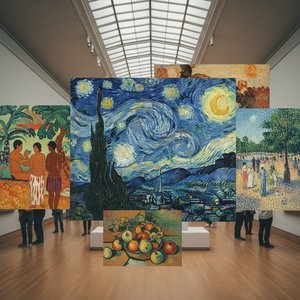
The ripples of the Late Impressionist movement extended far beyond its chronological boundaries, acting as the foundational tremors for the birth of modern art. By breaking the shackles of naturalism and establishing color and form as independent expressive forces, these artists liberated future generations to explore even more radical territories, from Fauvism to Expressionism.
The legacy of this period lies in its courage to prioritize truth over appearance. The movement taught us that art is not a mirror held up to nature, but a window into the human psyche. The techniques developed—the emotive use of impasto, the symbolic palette, and the structural simplification—remain vital components of the artistic vocabulary today. As we look back on this era, we see the moment when art truly became modern: when the artist’s internal vision finally took precedence over the external light, forever changing our understanding of what a painting can achieve.
At Mus3ums.com, we celebrate this enduring legacy of human creativity. Our mission is to make the profound beauty of these historical movements accessible to collectors worldwide. Whether you are drawn to the textured, impasto brushstrokes of a Post-Impressionist landscape or wish to transform a personal memory into a masterpiece through our custom oil reproduction services, our master artists are dedicated to preserving the soul of art history. From museum-quality hand-painted oils on cotton canvas to sophisticated digital transformations, Mus3ums brings the emotional power of the masters into your contemporary home.