



The Florentine Renaissance: An Era of Intellectual and Rebirth
To walk through the streets of Florence is to traverse a living museum, where every cobblestone seems to whisper the secrets of a transformative epoch. The Renaissance was not merely a period of aesthetic refinement; it was a profound intellectual awakening that sought to reconcile the classical wisdom of antiquity with the spiritual fervor of the Christian era. In this cradle of art, the concept of Humanism emerged as a guiding light, shifting the focus from the purely divine to the dignity and potential of the human experience. This movement breathed new life into the arts, demanding that painters look closer at the anatomy, the emotion, and the very physics of the world around them.
The Florentine landscape served as the perfect crucible for this rebirth. Under the patronage of powerful families like the Medici, art became a language of prestige, devotion, and political identity. It was an era where the boundaries between science and art dissolved; a painter was often also a mathematician, an anatomist, and an engineer. This synergy allowed for a level of realism that had been absent from Western art for centuries, creating a visual vocabulary that continues to define our understanding of beauty and truth today. As we look back at these masterpieces, we are not just observing paint on canvas, but witnessing the birth of the modern individual.
The Architects of Light: Analyzing the Techniques of Da Vinci and Botticelli
At the heart of this technical revolution were masters who manipulated light and shadow to breathe life into two-dimensional surfaces. Sandro Botticelli, a titan of the early Renaissance, utilized graceful, flowing lines and a luminous palette to evoke a sense of ethereal beauty. His works, such as the iconic Birth of Venus, rely on rhythmic contours that guide the eye through a dreamlike mythological landscape. While his figures possess a certain poetic weightlessness, there is an underlying structural elegance that speaks to the Florentine obsession with proportion and classical grace.
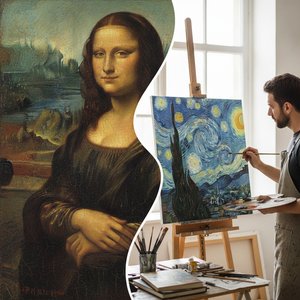
In stark contrast stands the profound scientific inquiry of Leonardo da Vinci. Leonardo moved beyond mere line and color to pioneer sfumato—a technique of incredibly fine shading that allows tones to merge into one another like smoke. By eliminating harsh outlines, he captured the subtle transitions of light across skin and the mysterious depths of the human gaze. This mastery of atmospheric perspective and chiaroscuro allowed him to create a sense of volume and psychological depth that remains unparalleled. To study his work is to understand how the manipulation of light can reveal the very soul of the subject, turning a portrait into an eternal dialogue between the viewer and the seen.
Sacred Narratives and Humanism: The Evolution of Religious Iconography
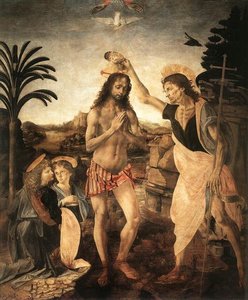
While the Renaissance celebrated human achievement, it remained deeply rooted in the sacred. However, the way religious stories were told underwent a radical transformation. In the preceding Gothic era, religious figures often appeared as flat, symbolic icons, detached from earthly reality. In Florence, the divine began to inhabit the human realm. The Virgin Mary was no longer just a distant queen of heaven; she became a tender mother, her face reflecting the recognizable joys and sorrows of motherhood. This infusion of Humanism into iconography made the sacred accessible and emotionally resonant.
Artists utilized the burgeoning knowledge of perspective to place biblical scenes within recognizable, three-dimensional environments. The use of linear perspective allowed for the creation of architectural settings that felt as though one could step directly into the painting. This spatial realism served a theological purpose: it brought the miraculous into the physical world, suggesting that the divine presence was woven into the very fabric of our daily existence. Through these evolving narratives, the Florentine masters bridged the gap between the celestial and the terrestrial, creating a visual theology that was as much about the beauty of the earth as it was about the glory of heaven.
From Fresco to Canvas: The Materiality and Legacy of Florentine Masterpieces
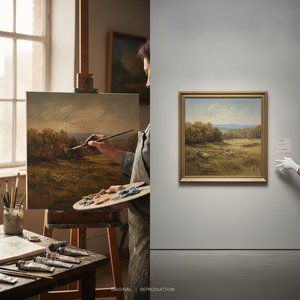
The physical medium through which these visions were expressed played a crucial role in their enduring legacy. Much of the early Renaissance brilliance was captured in fresco, where pigments were applied directly onto wet plaster. This method required immense skill and speed, as the artist had to work while the surface was still receptive, effectively bonding the art to the very architecture of the building. The result was a monumental, integrated form of storytelling that transformed cathedrals and palazzos into immersive spiritual environments.
As the era progressed, the shift toward oil on canvas offered artists unprecedented flexibility and a richer tonal range. Unlike fresco, which dries quickly, oil paint allows for slow, meticulous layering—a process known as glazing. This technique enables the artist to build up translucent layers of color, creating a depth of light and a richness of texture that fresco cannot replicate. The ability to manipulate shadows and highlights with such precision paved the way for the dramatic textures we admire in later periods. Today, when we encounter high-quality reproductions of these works, it is this tactile depth—the visible brushstroke and the interplay of light through pigment—that allows us to connect with the original artist's hand.
Bringing History Home: Curating Renaissance Art for the Modern Collector
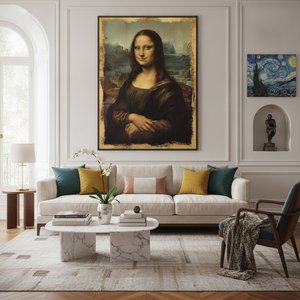
For the modern enthusiast, the desire to surround oneself with the grandeur of the Renaissance is a pursuit of cultural continuity. Collecting these masterpieces is not merely about decoration; it is about curating an atmosphere of intellectual depth and timeless elegance. Integrating such profound works into a contemporary space requires a thoughtful approach to scale, color, and composition. A single, well-placed reproduction of a Botticelli or a Da Vinci can serve as a focal point that anchors a room, providing a window into a period of unparalleled human achievement.
Whether you are a seasoned collector or a newcomer seeking to honor your love for history, the availability of museum-quality reproductions allows the spirit of Florence to reside within your home. At Mus3ums.com, we specialize in preserving this legacy through meticulous, hand-painted oil recreations. Our artists, trained in the rigorous traditions of fine arts academies, use the same dedication to light and texture found in the masters themselves. By choosing a handmade reproduction over a simple print, you invite the physical soul of the Renaissance—the impasto, the depth, and the artistry—into your personal sanctuary, ensuring that the flame of Florentine brilliance continues to burn brightly for generations to come.