Introduction
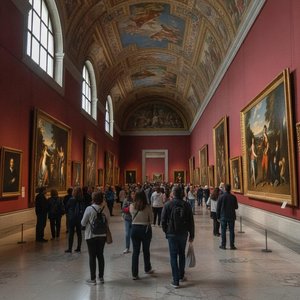
To step across the threshold of the Museo Nacional del Prado is to leave the modern bustle of Madrid behind and enter a sanctuary where time itself seems to pause. This is not merely a museum; it is a grand, breathing chronicle of the human spirit, housed within Juan de Villanueva’s Neoclassical masterpiece—a palace designed to let light dance upon the very soul of Spanish history. As you wander through its hallowed galleries, you are walking through a royal legacy, moving from the ambitious visions of Ferdinand VII to the profound, silent dialogues between canvas and viewer that have unfolded here for centuries.
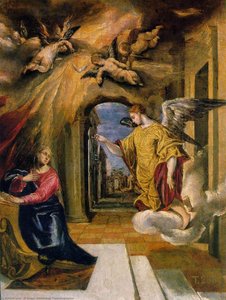
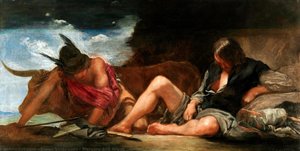
The collection within these walls represents one of the most significant artistic lineages in existence. Here, the dramatic shadows of the Baroque era collide with the ethereal, elongated figures of El Greco, and the regal dignity of Velázquez meets the haunting, psychological depth of Goya. It is a place where the textures of oil on canvas tell stories of power, piety, tragedy, and triumph. Each masterpiece serves as a window into a bygone era, yet they remain startlingly contemporary in their emotional resonance; the tension in a brushstroke or the subtle glow of light on a subject’s skin speaks to universal truths that transcend the centuries.
In this curated journey, we invite you to explore twenty-five of the most profound works that define the Prado’s incomparable identity. From the monumental canvases that once graced royal halls to the intimate portraits that capture the fleeting essence of life, these selections represent the pinnacle of European and Spanish mastery. As we prepare to delve into this list, prepare to encounter art that does more than decorate a wall—it transforms the space it inhabits, much like a hand-painted oil reproduction can bring the majesty of a museum directly into the intimacy of your own home.
Prepare yourself for a voyage through light, shadow, and legend as we unveil the crown jewels of the Prado.
The Surrender of Breda (Las Lanzas) - Diego Velázquez
 The Surrender of Breda (Las Lanzas) - Diego Velázquez
To stand before The Surrender of Breda by Diego Velázquez is to witness a rare moment where the brutality of war is eclipsed by profound human dignity. As one of the most significant works in the Museo del Prado, Madrid , this masterpiece transcends mere historical documentation of the Eighty Years’ War; it serves as an eternal study in grace and magnanimity.
Velázquez employs a masterful Baroque technique, using a muted palette of ochres, grays, and earthy tones to create a scene that feels remarkably immediate. Through his alla prima brushwork, the texture of steel armor and the soft movement of flags emerge with lifelike vitality. The composition is anchored by the respectful exchange between the Spanish General Spinola and the Dutch commander, a symbolic gesture that avoids the typical triumphalism of the era in favor of mutual respect. For the discerning collector, this painting offers more than historical insight; its sophisticated interplay of light and shadow provides a timeless aesthetic that brings a sense of gravitas and intellectual depth to any refined interior.
The Triumph of Death - Pieter Bruegel the Elder
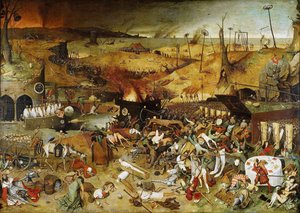 The Triumph of Death - Pieter Bruegel the Elder
In the vast, somber corridors of the Museo del Prado, few works command the air with such chilling authority as The Triumph of Death by Pieter Bruegel the Elder. This 1562 masterpiece serves as a harrowing meditation on the fragility of existence, presenting an apocalyptic landscape where an army of skeletons relentlessly pursues humanity across a desolate terrain. Bruegel’s visual language—a chaotic tapestry of muted ochres, bone-whites, and sudden, violent splashes of crimson—transcends its 16th-century origins to speak to the universal anxieties of our own era.
As you observe the indiscriminate destruction of kings, cardinals, and peasants alike, the painting’s philosophical depth becomes clear: death is the ultimate equalizer. This profound sense of inevitable mortality makes it a cornerstone among the top 25 artworks in Museo del Prado, Madrid. For those seeking to bring this level of dramatic intensity into a modern collection, our museum-quality oil reproductions capture every meticulous brushstroke and skeletal detail, preserving the haunting, textured soul of Bruegel’s Northern Renaissance vision.
The Annunciation - Fra Angelico
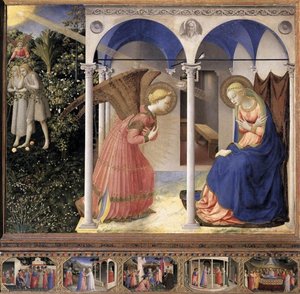 The Annunciation - Fra Angelico
In The Annunciation by Fra Angelico, the viewer is met with a profound geometric serenity that defines the pinnacle of Early Renaissance devotion. The composition is anchored by a rhythmic series of architectural arches and columns, creating a structured, balanced framework that guides the eye toward the sacred encounter between the Archangel Gabriel and the Virgin Mary. This meticulous use of linear perspective and mathematical order creates a sense of timeless perfection, making it an essential highlight among the top 25 artworks in Museo del Prado, Madrid.
The painting’s internal equilibrium—the way light dances across soft drapery and settles within the quiet portico—mirrors the principles of modern minimalist design. Its clean lines and purposeful use of space offer a grounding, sophisticated aesthetic that integrates seamlessly into contemporary interiors. As you contemplate the vibrant yet restrained palette of blues and golds, you feel the weight of history. For those seeking to bring this quiet prestige into their own homes, our hand-painted oil reproductions capture every delicate brushstroke and divine glow, preserving the spiritual depth of Fra Angelico's masterpiece.
Las Meninas (The Maids of Honor) or the Royal Family - Diego Velázquez
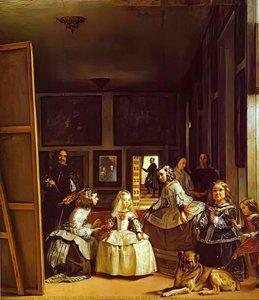 Las Meninas (The Maids of Honor) or the Royal Family - Diego Velázquez
Step into the dim, sun-drenched studio of 1656, where the air feels thick with the scent of oil paint and royal intrigue. In Las Meninas , Diego Velázquez does not merely paint a portrait; he captures a breathing moment of Spanish court life. The Infanta Margaret Theresa stands as a luminous focal point, her silken gown catching the soft light, while surrounding figures—maids of honor, dwarves, and watchful chaperones—create a complex, rhythmic composition of shadows and warmth.
Velázquez’s mastery of the Baroque style is evident in the way light dances across textures, from the heavy drapery to the subtle, silvery reflections in the background mirror. This interplay of reality and illusion invites you to become part of the scene, blurring the line between observer and participant. Such profound depth and atmospheric prestige make this masterpiece an unparalleled inspiration for any collection. Bringing a high-quality oil reproduction of this work into your home does more than decorate a wall; it introduces a sense of historical gravity and quiet, intellectual elegance that transforms a modern space into a sanctuary of culture.
Deposition - Rogier van der Weyden
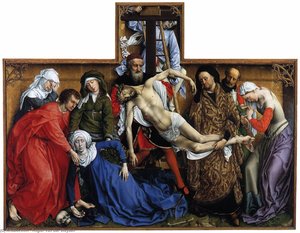 Deposition - Rogier van der Weyden
In the hallowed halls of the Museo del Prado, few works command the room with such visceral, heart-wrenching gravity as Rogier van der Weyden’s Deposition . Created around 1435, this Northern Renaissance masterpiece is a profound study in human sorrow. Van der Weyden employs a breathtakingly precise technique, using thin oil glazes to achieve a luminous depth that makes the rich crimsons and deep blues of the mourners' garments appear almost tactile. The composition is intentionally compressed, a tight arrangement of figures that forces the viewer into the center of the grief. Note the haunting visual echo between the slumped body of Christ and the swooning Virgin Mary; it is a masterful use of parallelism to convey shared suffering.
Owning a reproduction of this Deposition isn’t merely a purchase; it is an inheritance of Northern European tradition. At Mus3ums.com, our artists hand-paint this scene on 100% cotton canvas, capturing every meticulous detail and emotional nuance of the original. To bring this lineage of taste to your own collection, we offer bespoke oil recreations that allow the profound pathos of the 15th century to breathe life into your modern space.
Triptych of Garden of Earthly Delights (detail) (23) - Hieronymus Bosch
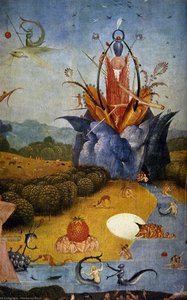 Triptych of Garden of Earthly Delights (detail) (23) - Hieronymus Bosch
To gaze upon the Triptych of Garden of Earthly Delights is to lose oneself in a fever dream of the human soul. Hieronymus Bosch does not merely paint; he conjures a universe where the boundaries between divine grace and demonic chaos dissolve into a surreal landscape of impossible creatures and profound moral mystery. This detail, capturing a woman poised amidst lions and dragons, embodies the very essence of why this work is a cornerstone of the top 25 artworks in Museo del Prado, Madrid . It possesses an unparalleled emotional resonance, challenging the viewer to find meaning within its labyrinthine symbolism and unsettling beauty.
The meticulous Netherlandish precision—the way light catches a single egg or the texture of a mythical beast—is so vivid that it transcends the centuries. At Mus3ums.com , we strive to preserve this tactile magic. Our handmade oil reproductions are meticulously crafted on cotton canvas, utilizing visible brushstrokes and deep tonal ranges to ensure that the haunting atmosphere and intricate textures of Bosch’s vision can be brought into your own space, serving as a window into the infinite mysteries of art history.
Christ Washing the Feet of His Disciples - Jacopo Tintoretto
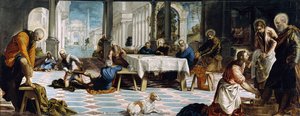 Christ Washing the Feet of His Disciples - Jacopo Tintoretto
In the grand narrative of the Museo del Prado , Jacopo Tintoretto’s Christ Washing the Feet of His Disciples (1547) serves as a profound meditation on humility and the divine intersection with the human condition. As one of the top 25 artworks in Madrid's most prestigious collection, this Venetian masterpiece transcends its religious subject matter through an unparalleled mastery of chiaroscuro . Tintoretto, often called Il Furioso for his energetic brushwork, uses dramatic light to sculpt figures from deep shadows, drawing the viewer into a sacred, atmospheric ritual.
The composition is a masterclass in movement; the stark white linen against earth tones and the radiant illumination of Christ’s figure create a spiritual tension that remains palpable centuries later. This work invites us to reflect on the beauty found in selfless service and the quiet dignity of devotion. For the discerning collector, bringing the essence of this Venetian Baroque energy into a modern space—perhaps through a hand-painted oil reproduction —creates a timeless dialogue between historical grandeur and contemporary interior elegance, anchoring a room with profound emotional depth.
The Seven Deadly Sins - Hieronymus Bosch
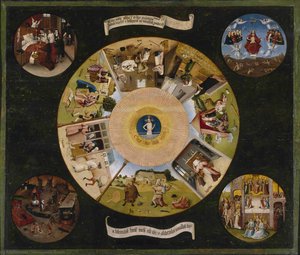 The Seven Deadly Sins - Hieronymus Bosch
To stand before The Seven Deadly Sins by Hieronymus Bosch is to confront a fever dream of medieval morality. This intricate masterpiece, a cornerstone of the top 25 artworks in Museo del Prado, Madrid , functions as a complex moral compass, utilizing the 'Wheel of Fortune' to illustrate the volatile nature of human existence. Bosch masterfully weaves a tapestry of vice and virtue, where every miniature vignette serves as a visual sermon on the consequences of earthly desire.
The composition is a sensory marvel; vibrant reds and golds pulse against a profound, shadowy void, drawing the eye into a labyrinth of symbolic detail. In an era of modern digital saturation, Bosch’s ability to layer dense, narrative complexity within a singular circular form feels strikingly contemporary—a precursor to the hyper-detailed aesthetics we navigate today. For collectors seeking to bring this level of intellectual depth to their homes, our hand-painted oil reproductions capture every meticulous brushstroke and symbolic nuance, preserving the haunting, atmospheric tension that makes this Bosch classic an eternal cultural talking point.
Landscape with St Jerome - Joachim Patenier
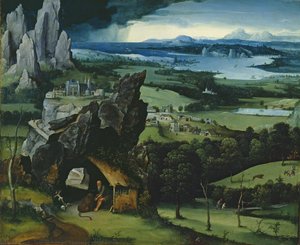 Landscape with St Jerome - Joachim Patenier
Imagine standing before a window into the infinite. In Joachim Patinier’s Landscape with St Jerome , the boundaries of the frame dissolve, replaced by an expansive, breathing world of Flemish Renaissance mastery. The scene opens with the intimate, tactile reality of St Jerome beneath a weathered rocky overhang, tending to a lion—a moment of profound quietude amidst a vast, unfolding cosmos. Patinier, a pioneer of the "world landscape," guides your eye through layers of atmospheric perspective: from the vibrant, mossy textures of the foreground to mountains that recede into a soft, ethereal blue haze.
The painting is a symphony of light and spiritual scale, where the low horizon line emphasizes the grandeur of creation. This sense of immense depth and tranquil solitude offers more than historical interest; it provides a meditative escape. Bringing a high-quality oil reproduction of this masterpiece into your home allows you to invite that same sense of panoramic peace and intellectual depth into your daily environment, transforming a modern wall into a gateway for reflection and timeless beauty.
St Cecilia - Nicolas Poussin
 St Cecilia - Nicolas Poussin
To encounter St. Cecilia by Nicolas Poussin is to witness the precise moment where Baroque movement meets the eternal stillness of classical antiquity. As one of the most profound highlights among the top 25 artworks in Museo del Prado, Madrid , this 1627 masterpiece functions as a visual symphony, capturing the patron saint of music in a moment of divine harmony. Poussin masterfully orchestrates a scene where the saint plays her organ, surrounded by a celestial gathering of children whose innocent gazes draw the viewer into a state of serene contemplation.
The composition is a triumph of balance; grand architectural columns provide a sense of monumental stability, while the interplay of light and shadow evokes a deep, spiritual texture. For the discerning collector, this work represents more than historical significance—it embodies a timeless aesthetic of grace and order. Whether admired in its original halls or honored through a hand-painted oil reproduction , the painting’s ability to infuse a refined interior with classical dignity makes it an enduring icon of cultural legacy.
Portrait of a Woman Revealing Her Breasts - Jacopo Tintoretto
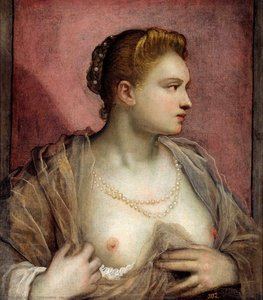 Portrait of a Woman Revealing Her Breasts - Jacopo Tintoretto
In the grand halls of the Museo del Prado , few works command attention with such provocative intimacy as Portrait of a Woman Revealing Her Breasts by the Venetian master Jacopo Tintoretto . Painted around 1570, this work serves as a profound window into the Renaissance's complex dialogue between humanism, sensuality, and the gaze. Tintoretto, famously known as "Il Furioso," utilizes his signature rapid, energetic brushstrokes to breathe life into the subject, creating a palpable sense of movement that transcends the stillness of the canvas.
The painting’s placement among the top masterpieces in Madrid is earned through its masterful use of chiaroscuro ; the dramatic interplay of light against a soft, roseate background elevates the figure from a mere portrait to an exploration of vulnerability and confidence. As the subject gazes outward, she invites us to reflect on the eternal nature of beauty and the raw honesty of human emotion. For the modern collector, possessing a high-quality oil reproduction of this Tintoretto allows one to bring this era of dramatic intensity and sophisticated light into a contemporary space, fostering a timeless conversation between historical grandeur and modern interior elegance.
The Story of Nastagio degli Onesti (second episode) - Sandro Botticelli
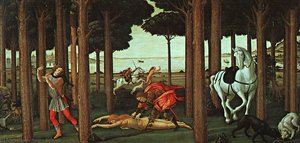 The Story of Nastagio degli Onesti (second episode) - Sandro Botticelli
Imagine standing on the edge of a sun-drenched Florentine banquet, where the air is thick with the scent of fine wine and the polite murmur of nobility, yet beneath this elegance lies a chilling, supernatural dread. In The Story of Nastagio degli Onesti (second episode) , Sandro Botticelli captures a moment of profound dramatic irony. As guests dine in splendor, they remain blissfully unaware of the spectral violence lurking in the shadows—a knight being eternally pursued and slain by those who once rejected him.
This masterpiece earns its place among the top 25 artworks in Museo del Prado, Madrid through its masterful tension between Renaissance grace and Gothic haunting. Botticelli uses delicate, rhythmic lines and vibrant tempera to weave a tale of unrequited love and psychological warfare. It is a profound meditation on how we use spectacle to influence the human heart. Bringing such a narrative into a modern home allows one to surround themselves with the complex beauty of history, transforming a living space into a gallery of deep, evocative storytelling.
Man with a Golden Lace - Jacopo Tintoretto
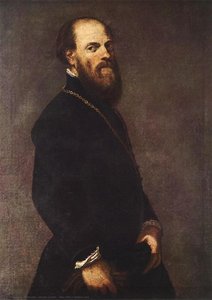 Man with a Golden Lace - Jacopo Tintoretto
In the quiet depths of Jacopo Tintoretto’s Man with a Golden Lace , one does not merely observe a portrait; one enters into a profound dialogue with the Venetian Renaissance. The painting is defined by a masterful command of chiaroscuro , where a dramatic light source from the upper left sculpts the subject's features against a velvety, mysterious darkness. This interplay of light and shadow breathes life into the intricate textures of the golden lace collar and the heavy weight of the gold chain, creating a sensory experience that transcends the canvas.
As one of the most captivating works within the Museo del Prado, Madrid, this masterpiece secures its place among the museum's top 25 artworks through its sheer psychological intensity and technical brilliance. The subject’s direct, commanding gaze establishes an intimate connection that bridges centuries. For those seeking to infuse a contemporary space with historical gravity, a high-quality oil reproduction of this piece offers unparalleled luxury. The visible brushstrokes and luminous depth of a hand-painted version allow the dramatic light and opulent textures to add a sophisticated, soulful dimension to any modern interior.
Descent from the Cross 1 - Rogier van der Weyden
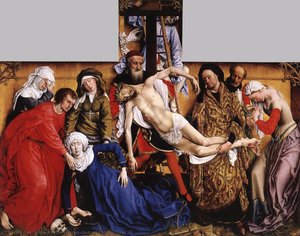 Descent from the Cross 1 - Rogier van der Weyden
To stand before Rogier van der Weyden’s Descent from the Cross is to witness a profound symphony of human grief. Completed around 1435, this Early Netherlandish masterpiece transcends mere religious iconography; it is an immersive study of sorrow and sculptural precision. As you approach the panel, the palpable weight of Christ’s body and the rhythmic, agonizing postures of the mourners create a sense of breathless intimacy. Van der Weyden utilizes a striking palette of deep crimsons, luminous whites, and celestial blues to guide the eye through a complex arrangement of figures, where every tear and fold of heavy drapery feels tangibly real.
The painting’s mastery lies in its ability to evoke empathy through meticulous detail—a quality that continues to captivate those exploring the top 25 artworks in Museo del Prado, Madrid. This profound emotional depth offers a unique opportunity for modern collectors; possessing a high-quality oil reproduction of such a monumental work can bring a sense of historical gravity and contemplative calm to any sophisticated interior, serving as a timeless focal point for reflection.
Triptych of Haywain (central panel) - Hieronymus Bosch
 Triptych of Haywain (central panel) - Hieronymus Bosch
To stand before the central panel of Hieronymus Bosch’s Triptych of the Haywain is to witness a microscopic universe of Northern Renaissance mastery. The texture of the original oil on wood reveals an incredible density of detail; one can almost feel the dry, bristling weight of the hay and the grotesque, slick surfaces of the demonic entities emerging from the periphery. Bosch’s revolutionary technique lies in this very ability to marry sweeping, panoramic landscapes with a feverish, symbolic precision that anticipates Surrealism by centuries. Every brushstroke serves a narrative purpose, weaving a complex tapestry of human avarice and spiritual chaos.
At Mus3ums.com, we strive to preserve this profound tactile depth for the discerning collector. While many are content with flat prints, our hand-painted oil reproductions capture the true three-dimensional soul of Bosch’s work, recreating the visible impasto and the dramatic interplay of light and shadow found in the Museo del Prado. We bring the unsettling magnetism of this masterpiece into your home, ensuring the intricate textures and vibrant, nightmarish colors remain as impactful on your wall as they are in the halls of Madrid.
Judith and Holofernes (detail) - Jacopo Tintoretto
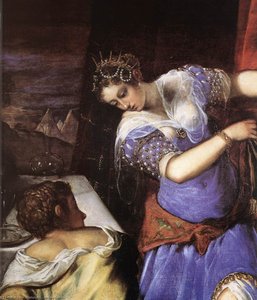 Judith and Holofernes (detail) - Jacopo Tintoretto
In the detail of Judoch and Holofernes by Jacopo Tintoretto, the viewer is confronted with a masterclass in Mannerist geometry. The composition is anchored by a striking diagonal tension; the sharp, decisive lines of Judith’s posture intersect with the heavy, slumped form of the fallen commander, creating a structural balance that feels both volatile and eternally poised. This arrangement of shapes—the curve of a jewel-adorned neck against the starker, darker voids of shadow—achieves a rhythmic harmony that is central to why this piece remains one of the top 25 artworks in Museo del Prado, Madrid.
There is a profound, almost modern resonance in how Tintoretto manages this space. Much like the principles of contemporary minimalist design, where every element serves a structural purpose, the painting strips away peripheral distraction to focus on the essential interplay of light and form. The dramatic chiaroscuro creates a sense of depth that grounds the theatricality, offering a clean, impactful aesthetic that continues to captivate collectors. For those seeking to bring this museum-grade intensity into a modern home, our hand-painted oil reproductions capture every energetic brushstroke and emotional nuance of this Venetian masterpiece.
Self-Portrait (detail) - Titian
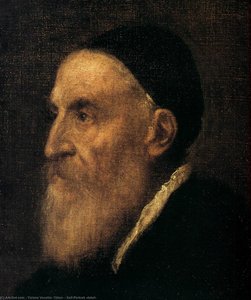 Self-Portrait (detail) - Titian
At the venerable age of over seventy, when many artists would have long since laid down their brushes, Tiziano Vecellio—the legendary Titian—undertook a profound act of vulnerability. In this 1566 Self-Portrait (detail) , he eschewed the idealized perfection of his youth to present an unflinching study of mortality. The painting is a masterclass in Venetian color, utilizing a muted palette of deep ochres and somber blacks that allow his cascading white beard to emerge like a luminous monument to experience.
The technical genius lies in his use of sfumato and layered glazes, which soften the weathered lines of his face, creating an atmospheric depth that feels almost breathing. This transition from mere likeness to psychological realism marks it as one of the most significant works among the top 25 artworks in Museo del Prado, Madrid. There is a quiet, commanding authority in his direct gaze—a presence that can transform a modern study or home office into a space of profound contemplation and intellectual gravity, much like the artist's own enduring legacy.
The Cure of Folly (Extraction of the Stone of Madness) - Hieronymus Bosch
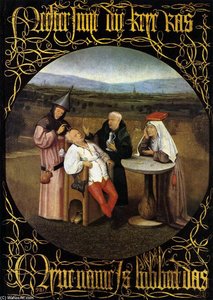 The Cure of Folly (Extraction of the Stone of Madness) - Hieronymus Bosch
In the shadows of the Museo del Prado, Hieronymus Bosch’s The Cure of Folly emerges as a fever dream of late medieval anxiety. This oil-on-panel masterpiece invites us into a world where the boundaries between medical science and surrealist nightmare dissolve. The scene captures a grotesque surgical procedure: the extraction of a 'stone' from a patient's skull, a biting allegory for the removal of madness to achieve enlightenment.
Bosch’s brushwork meticulously renders a landscape populated by monks, nuns, and commoners, all gathered around this unsettling ritual. The atmosphere is thick with symbolic tension; even the presence of a flower on the table serves as a subtle, ironic critique of intellectual pretension. To possess such a work is to invite profound contemplation into one's own home. For those seeking to surround themselves with the genius of the Northern Renaissance, our museum-quality, hand-painted oil reproductions allow you to transform your private space into a gallery of the soul, capturing every visceral detail and haunting shadow of Bosch’s unparalleled imagination.
Paradise and Hell - Hieronymus Bosch
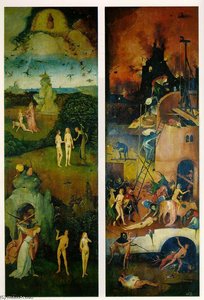 Paradise and Hell - Hieronymus Bosch
There is a gaze in Paradise and Hell by Hieronymus Bosch that follows you—not with judgment, but with a profound, unsettling understanding . This double-sided masterpiece does not merely depict a scene; it acts as a mirror to the human soul, capturing the eternal struggle between divine grace and infernal chaos. As one of the most significant works among the top 25 artworks in Museo del Prado, Madrid, it invites you to witness the transition from the lush, Edenic tranquility of Adam and Eve to a nightmarish panorama of fire, smoke, and grotesque torment.
Bosch’s mastery lies in the sensory contrast: the soft, vibrant greens and delicate blossoms of Paradise clashing against the suffocating reds and abyssal blacks of Hell. To possess such a vision in your own home is to invite a powerful reminder of history into your space. Whether you seek a museum-quality hand-painted oil reproduction to capture these intricate brushstrokes or a high-fidelity Giclée print, this work ensures that the profound psychological depth of the Dutch Renaissance remains a living part of your story.
Virgin and Child (Durán Madonna) - Rogier van der Weyden
 Virgin and Child (Durán Madonna) - Rogier van der Weyden
To stand before the Virgin and Child , famously known as the Durán Madonna , is to witness a moment where light becomes a divine language. Painted around 1440 by the Early Netherlandish master Rogier van der Weyden , this work does not merely reflect illumination; it composes it with the precision of a musical sonata. Through sophisticated oil glazing, Van der Weyden creates an ethereal glow that seems to emanate from within the Virgin’s porcelain skin and the heavy, crimson folds of her robes.
Every detail—from the sacred books resting before the figures to the protective architectural niche—is imbued with profound theological symbolism. The artist’s mastery over texture and light invites you into a hallowed, intimate space that feels less like a painting and more like a living encounter. This masterpiece is a cornerstone of the Museo del Prado collection, offering a window into the spiritual soul of the 15th century. For those seeking to bring this sense of timeless grace into their own lives, our museum-quality oil reproductions allow this luminous history to spill into your home, turning your walls into portals of eternal inspiration.
Pietà - Rogier van der Weyden
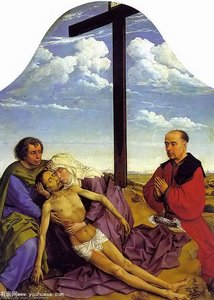 Pietà - Rogier van der Weyden
In the Pietà by Rogier van der Weyden, the composition is anchored by a profound geometric intimacy. The artist utilizes a series of descending, curvilinear lines—the limp, heavy limbs of Christ and the cascading folds of the Virgin’s drapery—to guide the eye in a continuous, sorrowful loop. This structural harmony creates a sense of timeless perfection, where the weight of the figures is balanced by an ethereal, almost weightless light. As one of the most poignant highlights among the top 25 artworks in Museo del Prado, Madrid, its enduring appeal lies in this ability to marry physical gravity with spiritual grace.
Interestingly, the painting’s internal balance mirrors the principles of modern minimalist design; the focus on essential forms and the reduction of distracting backgrounds create a clean, focused aesthetic that grounds contemporary interiors. For those seeking to bring this museum-grade elegance home, our hand-made oil reproductions capture every meticulous detail and textured brushstroke of Van der Weyden’s mastery, offering a soulful centerpiece for any sophisticated collection.
St Andrew and St Francis - El Greco
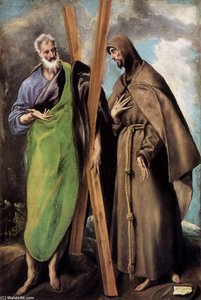 St Andrew and St Francis - El Greco
To encounter St Andrew and St Francis by El Greco is to witness the profound intersection of Byzantine spirituality and the dramatic energy of the Spanish Baroque. As one of the most significant works within the Museo del Prado, Madrid, this 1595 masterpiece commands attention through its ethereal, elongated figures and a celestial atmosphere that seems to vibrate with divine presence.
El Greco masterfully employs a palette of deep ochres, somber blues, and earthy greens, utilizing dramatic chiaroscuro to pull the viewer into the sacred space shared by these two saints. The heavy use of impasto on the weathered wooden cross and the flowing drapery provides a tactile, sculptural quality that transcends the flat plane of the canvas. This painting does not merely depict history; it captures an emotional intensity that predates Expressionism by centuries. For the discerning collector, possessing a high-quality oil reproduction of such a work brings a sense of historical gravity and timeless elegance to a refined interior, serving as a window into the very soul of the Spanish Golden Age.
Birth of St John the Baptist - Artemisia Gentileschi
 Birth of St John the Baptist - Artemisia Gentileschi
In The Birth of St John the Baptist by Artemisia Gentileschi, the composition achieves a breathtaking structural harmony that anchors its place among the top 25 artworks in Museo del Prado, Madrid. The arrangement of figures follows a rhythmic, circular geometry; the placement of the seated women and the attentive onlookers creates a balanced flow that directs the eye toward the luminous center of the miracle. This masterful use of tenebrismo —the dramatic interplay of deep shadows and radiant light—provides a sense of timeless perfection, where every limb and gaze contributes to a cohesive, monumental whole.
Interestingly, this Baroque equilibrium finds a surprising resonance with modern minimalist design. The way Gentileschi strips away peripheral distractions to focus on essential forms and stark tonal contrasts mirrors the clean, grounded aesthetic sought in contemporary interiors. For collectors looking to bring museum-grade prestige home, a hand-painted oil reproduction of this masterpiece offers more than just historical depth; it introduces a sophisticated architectural weight, turning any wall into a profound dialogue between 17th-century drama and modern elegance.
Blind Musician - Georges de la Tour
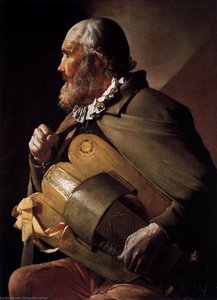 Blind Musician - Georges de la Tour
In the quietude of the Museo del Prado, one finds a profound moment of stillness within Georges de La Tour’s Blind Musician . The scene unfolds with a cinematic intimacy; a man, his eyes obscured by darkness, cradles his instrument with a sensitivity that transcends sight. De La Tour, a master of the French Baroque, utilizes his signature chiaroscuro to pull the subject from a deep, velvety void into a soft, localized glow. The rich, earthy tones of his coat and the subtle textures of his beard are illuminated by an unseen, flickering light source, creating a sense of heavy, contemplative silence.
This masterpiece does more than depict a musician; it captures the essence of internal rhythm and spiritual focus. The deep reds and muted browns evoke a somber yet dignified atmosphere that can transform a modern interior into a sanctuary of reflection. Bringing a hand-painted oil reproduction of this work into your home allows you to invite this same sense of calm, scholarly prestige and timeless mystery into your daily environment.
Battle between Turks and Christians - Jacopo Tintoretto
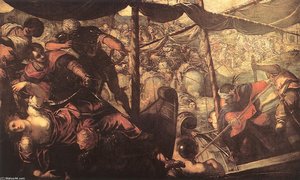 Battle between Turks and Christians - Jacopo Tintoretto
In Battle between Turks and Christians by Jacopo Tintoretto, the viewer is not merely an observer but a witness to a tempest of light and shadow. The Venetian Master, often called Il Furioso , employs a masterful chiaroscuro that pierces through the chaotic carnage of the 1588 scene. Sudden, dramatic pools of illumination strike fallen warriors and charging soldiers, creating a rhythmic tension between the deep, earthy ochres of the battlefield and flashes of divine, blinding white light. This command of illumination does more than depict conflict; it elevates the historical struggle between the Ottoman and Christian forces into a spiritual drama, securing its rightful place among the top 25 artworks in Museo del Prado, Madrid.
The visceral energy of Tintoretto’s brushwork, characterized by its movement and emotional depth, offers a profound opportunity for collectors. When captured in a high-quality handmade oil reproduction, the painting's complex tonal range and textured impasto can transform a contemporary space, adding a layer of historical gravity and cinematic luxury to any curated wall.
Conclusion
To wander through the halls of the Museo del Prado is to realize that these masterpieces are far more than static relics of a bygone era; they are living, breathing presences that continue to pulse with the same intensity as the day the paint first dried. As we conclude our journey through these twenty-five icons, we find that the shadows cast by Velázquez and the profound emotional depths of Goya do not remain confined to the stone walls of Madrid. Instead, they follow us home, quietly shaping the way we perceive light, emotion, and the very fabric of our daily lives.
These works exist in a perpetual dialogue with the modern world, offering a sanctuary of beauty and a mirror to the human condition. When we bring the spirit of the Prado into our own spaces—whether through a meticulously hand-painted oil reproduction or a carefully curated print—we are not merely decorating a room; we are inviting an eternal conversation into our homes. We allow the tactile depth of visible brushstrokes and the rich, historical resonance of the Spanish Baroque to anchor our contemporary surroundings in something much deeper and more permanent.
As the sun sets on this virtual gallery tour, let us carry forward the wonder found within these frames. Whether you are moved by the ethereal light of El Greco or the dramatic chiaroscuro of the masters, we invite you to explore our full collection and find the piece that speaks to your own story, ensuring that the magnificent legacy of the Prado continues to inspire, move, and transform your world for generations to come.