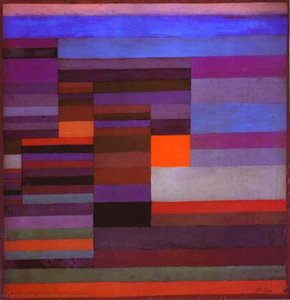

Introduction
The rhythmic patterns found in To Parnassus grew from the visual memories of a journey to Egypt taken years before the artist began teaching at the Dusseldorf Academy. These twenty-five selections span from 1914 to 1940, showcasing a transition from early geometric experiments to complex symbolic compositions. While In the Style of Kairouan focuses on the bright light of North Africa, works like Twittering machine 1 or Legend of the Nile demonstrate how his approach to shape and color evolved across different decades and locations. These pieces remain significant because they document the development of a unique visual language that redefined abstraction in the twentieth century.
Paul Klee used specific shapes and colors to build his worlds. In Remembrance of a Garden, the composition relies on delicate lines, while Black prince uses dark tones to define its form. Whether through the mechanical precision of Twittering machine 1 or the organic structures in Flora on rocks Sun, his work remains a cornerstone of modern art history.
New Angel - Paul Klee
 New Angel - Paul Klee
Greyish beige tones establish a reflective mood that anchors the composition. By utilizing an innovative oil transfer method on wax-coated paper, the artist achieved a textured, layered surface that differs from the flat application found in traditional painting. This technique allows for subtle tonal variations that create a physical depth beneath the surface. A bird's head occupies the center, looking upward with an intelligent, curious gaze. This motif appears frequently in the artist's repertoire, signaling a move toward the rhythmic abstraction for which Paul Klee is celebrated. The work functions as a monoprint, ensuring the specific impression remains unrepeatable. This piece offers a unique visual language where form and light take precedence over literal representation. It provides a compelling focal point for a modern living space or a curated gallery wall.
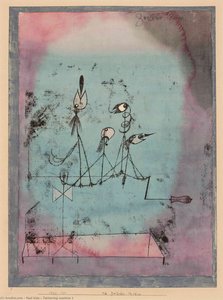
Twittering machine 1 - Paul Klee
Modernity often feels like a collision between the organic and the mechanical, a tension captured perfectly in this whimsical assembly of birds perched on a wire. This piece by Paul Klee uses a delicate mix of watercolor, gouache, and pen-and-ink to explore how technology attempts to replicate the rhythms of nature. A hand-crank connects the birds to a mechanical structure, suggesting an automated way of producing sound. Is it a triumph of art over the machine, or a depiction of the artist's own helplessness in a changing world? The muted palette of pinkish brown and soft tones creates an ethereal atmosphere, making the scene feel like a dream rather than a blueprint. While some see a playful melody in these lines, others find a certain melancholy in the way the birds are tethered to a device. This work is currently kept at the Museum of Modern Art.
Legend of the Nile - Paul Klee
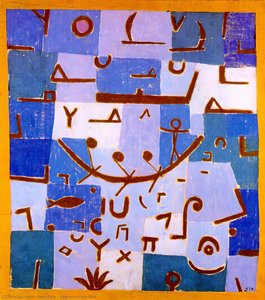 Legend of the Nile - Paul Klee
Geometric shapes and layered textures converge to build a mysterious atmosphere that the title alone cannot fully explain. While the name suggests a specific geography, the artist focuses instead on a rhythmic, symbolic language that strips away literal representation. This approach is a hallmark of the Paul Klee style, where the visual world is distilled into a series of musical, abstract notations. By utilizing a scientific understanding of color theory, he constructs a composition that feels both ancient and modern. The work relies on a delicate balance of form to create a sense of mystery, moving away from the physical world toward an internal, spiritual landscape. Currently held at the Kunstmuseum Bern, this piece demonstrates how a painter can use simple lines and color to evoke a complex, hidden narrative.
To Parnassus - Paul Klee
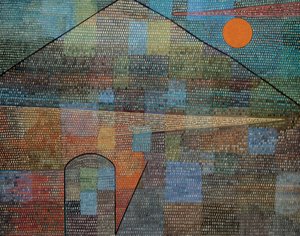 To Parnassus - Paul Klee
A bright orange circle hangs above the pyramid like a sun, casting a celestial glow over the geometric landscape. This luminous orb and the central triangular structure suggest a journey toward a higher peak, perhaps echoing the spiritual ascent of Mount Parnassus or the ancient pyramids of Egypt. Paul Klee achieved this rhythmic effect through a meticulous pointillist technique, first applying large squares of muted color on unprimed canvas before stamping smaller, diluted squares of white and various hues across the surface. This method creates a textured, mosaic-like quality that defines his unique approach to color theory. The composition relies on bold, stamped lines to outline the mountain, which might also represent a house roof or a natural peak. Such precision in abstraction shows how the Swiss-born artist transformed simple shapes into a complex, enigmatic world. This work is currently kept at the Kunstmuseum Bern.
Landscape with Yellow Birds - Paul Klee
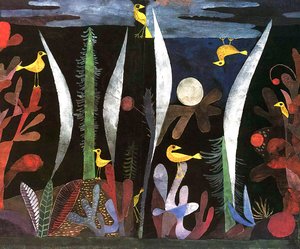 Landscape with Yellow Birds - Paul Klee
The stylized yellow birds in this landscape suggest a turbulent storm, their sharp forms cutting through the composition like sudden gusts of wind. This rhythmic movement reflects the scientific approach to color theory that defined the career of Paul Klee, where shapes function as musical notes on a visual staff. Rather than depicting a literal scene, the artist uses these bright accents to create a sense of tension within the abstraction. His background as a musician often translated into these staccato visual rhythms, turning a simple landscape into a complex arrangement of energy. The composition relies on the interaction between these small, vivid shapes and the surrounding space to establish a quiet, yet charged, atmosphere. The painting is kept at the Zentrum Paul Klee.
Fish Image - Paul Klee
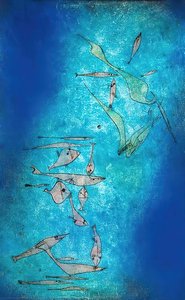 Fish Image - Paul Klee
The fish motif in this work acts as a vessel for the concepts of life, movement, and transformation. Rather than using color to mimic the physical world, the artist treats it as an independent force, a departure from the descriptive traditions of earlier painters. This rhythmic abstraction is a hallmark of the Swiss-German Bauhaus artist, whose scientific approach to color theory allowed him to build complex visual languages from simple shapes. In Fish Image, the subject becomes a symbol of fluid existence, stripped of literal detail to focus on the energy of being. A subtle, melancholic tone emerges from the composition, creating a serene atmosphere that feels both delicate and structured. This piece is part of the vast creative legacy of Paul Klee, a man whose understanding of form was as precise as it was imaginative. The work is kept at the Zentrum Paul Klee.
In the Style of Kairouan - Paul Klee
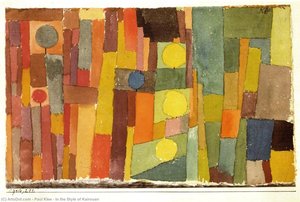 In the Style of Kairouan - Paul Klee
Visitors seeking a deep dive into the Swiss-German artist's evolution often find their way to the Zentrum Paul Klee, where his rhythmic approach to abstraction comes to life. This particular piece, In the Style of Kairouan, marks a pivotal moment in his career following his 1914 journey to North Africa. It was during this trip that he stopped using color to describe physical objects and began using it as an independent, expressive force. The geometric shapes and simplified forms act as visual symbols of a world stripped of its literal details, reflecting a shift toward the internal imagination. His scientific understanding of color theory, which he later taught at the Bauhaus, is evident in the way these hues interact without the need for traditional perspective. This work remains a key part of the collection kept at the Zentrum Paul Klee.
Rose Garden - Paul Klee
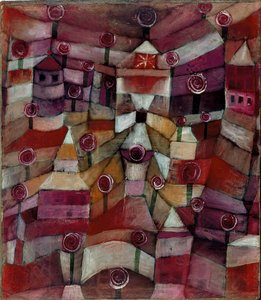 Rose Garden - Paul Klee
Soft, circular motifs resembling roses sit atop a complex network of sharp-edged blocks, creating a map-like perspective of a stylized landscape. Paul Klee uses this arrangement to explore the intersection of organic life and rigid geometry. The composition is dominated by a spectrum of pink, red, and purple hues, interspersed with touches of white that punctuate the colorful blocks. This rhythmic structure reflects the musicality often found in the work of Paul Klee, where color and shape function like notes in a score. Rather than a literal garden, the piece presents a fractured, Cubist-inspired view of space, where the roses are connected by linear elements that suggest pathways or trellises. This delicate balance of angularity and soft forms provides an intimate look at how abstraction can reorganize the natural world into a structured, visual melody.
Schoolhouse - Paul Klee
 Schoolhouse - Paul Klee
The oil medium allows for a textured, rhythmic application that defines this particular piece within the Art Institute of Chicago. Paul Klee utilized his scientific understanding of color theory to construct a composition that feels both structured and mystical. His background in music often translated into a visual sense of tempo, and here, the geometric arrangement creates a somber, meditative atmosphere. Rather than focusing on literal representation, the artist employs a language of symbols and shapes that reflects his move toward abstraction. This approach allows the work to exist as a personal, internal vision rather than a direct imitation of the physical world. The careful layering of pigment provides a tactile quality that distinguishes his hand-painted works from mere graphic reproductions. For those looking to bring a touch of modern history into their own space, this piece offers a sophisticated way to explore the intersection of geometry and emotion.
Prestidigitator (Conjuring Trick) - Paul Klee
 Prestidigitator (Conjuring Trick) - Paul Klee
Shapes perform a silent, conjured act across a landscape of symbols. Paul Klee utilized the tension between geometric precision and organic movement to influence how later generations approached the rhythm of abstraction. A dark navy blue accent cuts through a warm background of oranges and soft pinks, providing a sharp contrast to the lighter tones. The composition features a cluster of shapes that refuse to settle, including a dark circular orb set against a mottled reddish brown and pink field. Thin, black lines trace skeletal structures across the surface, connecting rigid rectangles to fluid silhouettes. This arrangement functions like a musical score, where every line acts as a note in a visual arrangement. The texture suggests layers of oil and watercolor applied to fabric and cardboard, creating the appearance of aged parchment. This work is kept at the Philadelphia Museum of Art.
Comedians' Handbill - Paul Klee
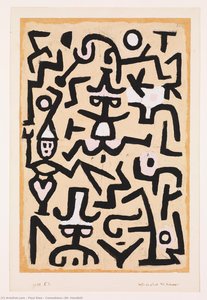 Comedians' Handbill - Paul Klee
The velvety texture of gouache on board allows for a deliberate, opaque layering that gives this 1938 work a distinct, graphic presence. By treating color as a structural element rather than a descriptive tool, the artist provided a blueprint for the Abstract Expressionists who would later seek to liberate form from reality. This playful composition reflects the rhythmic, almost musical approach that defined the career of Paul Klee, echoing the disciplined yet improvisational spirit of his upbringing in a musical household. Small, geometric shapes and whimsical lines suggest a hidden language, a hallmark of his unique visual vocabulary. The Metropolitan Museum of Art holds this piece, where its subtle textures and playful spirit remain intact. It offers a glimpse into a mind that viewed the canvas as a space for both scientific precision and spontaneous joy.
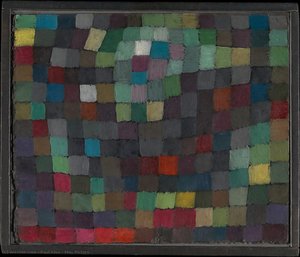
May Picture - Paul Klee
Color becomes a rhythmic force in this playful composition, where the landscape is fractioned into a mosaic of interlocking squares and rectangles. This approach to abstraction, which grew out of a trip to Tunisia, allows the shapes to seem as though they extend far beyond the edges of the board. Each geometric form acts like an odd-shaped stone assembled into a larger pattern, creating a visual language that feels both structured and spontaneous.
The palette uses at least thirteen distinct hues, including shades of red, green, blue, and yellow, which distribute across the surface in a way that reflects a deep preoccupation with color theory. This scientific yet imaginative approach to pigment was a hallmark of the artist's teaching years. By treating color as an independent power rather than a tool to describe physical objects, the work achieves a tranquil, musical quality. The Metropolitan Museum of Art holds this oil on board, a piece that demonstrates how a simple grid can transform a scene into a vibrant, geometric arrangement.
Analysis of Various Perversities - Paul Klee
 Analysis of Various Perversities - Paul Klee
Stepping into the rhythmic, abstract world of Paul Klee feels like entering a dream where logic and mystery overlap. This 1922 composition, titled Analysis of Various Perversities, utilizes a delicate interplay of India ink and watercolor to create a textured, parchment-like surface. The palette relies on muted tones of violet, magenta, and deep blue, grounded by patches of pale cream and gray. Geometric shapes and organic forms collide, featuring mask-like faces and mechanical-looking apparatuses that suggest a complex, internal machinery. Arrows point in conflicting directions—some descending and others rising—while a clock sits amidst the arrangement, marking the passage of time. This work reflects the artist's fascination with the intersection of structured design and the unpredictable pulse of human emotion. Through precise lines and translucent layers, the piece explores a symbolic vocabulary of gears, pulleys, and spiritual symbols, creating a visual tension that holds the observer's attention.
Untitled - Paul Klee
 Untitled - Paul Klee
A rhythmic pulse emerges from the way overlapping rectangular patches intersect across the surface. For the early modernist audience, these geometric arrangements functioned as a visual language, breaking away from traditional representation to explore the fundamental mechanics of sight. This playful composition reflects the unique spirit of Paul Klee, whose work often mirrored the structured yet spontaneous nature of musical notation. His scientific approach to color theory allowed him to treat the canvas like a musical score, where each shape acts as a note in a visual melody. The Metropolitan Museum of Art holds this intriguing piece, which highlights the artist's ability to find joy in pure abstraction. By stripping away the need to depict recognizable objects, the work focuses entirely on the interaction of form and space.
La Kash-Ne - Paul Klee
 La Kash-Ne - Paul Klee
Semi-gloss opaque paint layered with traces of graphite creates a rugged, sculptural landscape across the paper, where the medium itself becomes the subject. This textured surface relies on thick, impasto-like applications that catch the light, turning a flat plane into a relief of raised edges and deliberate scrapes. Paul Klee utilized these heavy, black bars and interlocking geometric shapes to build a composition that feels both architectural and totemic. The palette remains somber, favoring a grayscale range of greyish beige that emphasizes the physical weight of the pigment. Rather than using color to describe a recognizable scene, the artist focused on the rhythmic interplay of organic forms and sharp, structural lines. This approach highlights the artist's fascination with the tension between order and abstraction, where the very texture of the paint provides the primary visual language. The resulting work carries a heavy, psychological gravity through its fragmented, interlocking shapes.
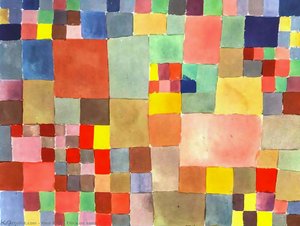
Flora on rocks Sun - Paul Klee
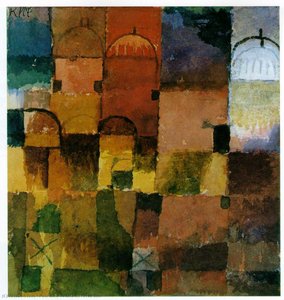 Flora on rocks Sun - Paul Klee
Layered washes of color create a rhythmic, mosaic-like surface where the materiality of the medium becomes part of the composition. This approach allowed the artist to treat the canvas like a musical score, using color as an independent force rather than a tool for literal description. By applying pigment in interlocking rectangular blocks, the work achieves a structured, geometric abstraction that feels both organized and spontaneous. Deep green tones anchor the piece, providing a grounded contrast to the warmer, sun-drenched elements that suggest life emerging from a rigid grid. This tension between organic shapes and mathematical precision is a hallmark of the Paul Klee style, where nature is distilled into its most essential, rhythmic components. The result is a serene arrangement of forms that suggests a landscape through symbol and color rather than traditional perspective. For those looking to bring a touch of modern abstraction into their home, this piece offers a sophisticated way to introduce color and structure to any wall.
Botanical Theater - Paul Klee
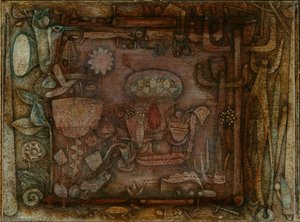 Botanical Theater - Paul Klee
A central rectangular area acts as a stage, framing a whimsical performance that unfolds within the composition. For those observing this surrealist expressionist vision, these staged elements represent a playful departure from the rigid rules of the physical world. Paul Klee often approached his canvases with the precision of a musician, and this piece reflects that rhythmic, structured abstraction. The composition relies on a delicate balance of shapes that feel both organic and carefully choreographed. The Lenbachhaus currently holds this work. By treating the canvas as a theatrical space, the artist creates a dreamlike environment where botanical forms take on a life of their own, stripped of their natural duties to simply exist as symbols in a private, ethereal play.
Hot Pursuit - Paul Klee
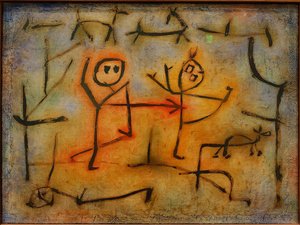 Hot Pursuit - Paul Klee
The playful, almost primitive line work in this 1939 piece reveals a sophisticated understanding of rhythmic abstraction, stripping away the complexities of the visible world to find a more essential truth. Emerging from a period of intense global upheaval, the work breaks away from traditional representation, favoring a visual language that feels both ancient and modern. This approach is a hallmark of the Paul Klee style, where the artist uses a scientific grasp of color theory to build a mystical atmosphere. Instead of mimicking reality, the composition relies on a sense of mystery to engage the mind. The Fogg Museum holds this intriguing example of the artist's ability to balance delicate, childlike gestures with a structured, intellectual depth. It remains a compelling study of how simple marks can suggest a much larger, unseen movement.
Dancing Girl - Paul Klee
 Dancing Girl - Paul Klee
By laying a monogrammed handkerchief over the cloth before the first stroke of paint, the artist left a physical imprint of his own identity within the very texture of the work. This playful, tactile gesture defines the character of this piece, where a dark, skeletal figure glides across a field of ochre, mossy green, and deep brown. The impasto layers create a heavy, rhythmic surface that feels as though the colors were pressed directly into the fabric. Even as political pressures and personal exile in Switzerland shifted his style toward a more somber and symbolic vocabulary, the artist maintained a remarkable sense of humor through such unconventional methods. This work, currently kept at the Art Institute of Chicago, uses stippled textures and dappled patches of dusky pink to create a shallow, atmospheric space. It remains a striking example of how Paul Klee could transform a simple, gestural line into a powerful expression of movement and life.
Woman Knitting - Paul Klee
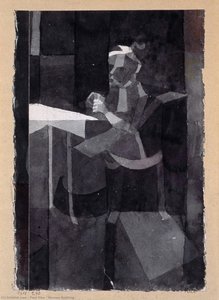 Woman Knitting - Paul Klee
A simple domestic scene unfolds through a series of intersecting lines and muted tones. This watercolor and charcoal work emerged from the shifting artistic landscape of 1915, a period when the boundaries of representation were being actively dismantled. Paul Klee uses a restrained palette of gray, black, and white to strip away the clutter of the everyday, focusing instead on the subject's rhythmic movement. The woman is rendered through overlapping geometric shapes that suggest her form without relying on traditional perspective. This flattening of space reflects a move away from realistic illusionism toward a more symbolic, structural language. By prioritizing these essential shapes, the artist transforms a mundane moment of knitting into a rhythmic arrangement of form. The composition relies on the tension between the dark charcoal strokes and the delicate washes of color to create a sense of balance. It is a precise, thoughtful construction that favors clarity and structural harmony over descriptive detail.
Black prince - Paul Klee
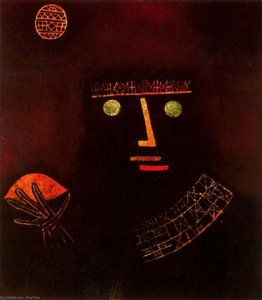 Black prince - Paul Klee
Paul Klee’s Black prince reflects the artist's unique approach to rhythmic abstraction. This work highlights his scientific fascination with how shapes and lines interact on a surface. The composition relies on a dramatic tension that mirrors his transition toward purely symbolic, non-representational forms. He uses a structured, almost musical arrangement to organize the visual elements, moving away from the need to describe the physical world.
Strong Dream - Paul Klee
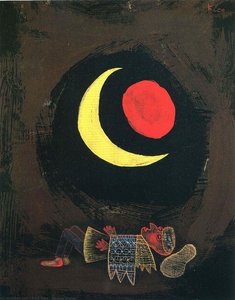 Strong Dream - Paul Klee
The soft, matte texture of gouache allows the artist to layer pigment with a precision that feels both delicate and deliberate. While the title suggests a nocturnal vision, the composition relies on a rhythmic, almost musical arrangement of shapes that suggests a structured internal logic rather than a chaotic slumber. This 1929 work demonstrates the Swiss-German artist's fascination with how simple geometric forms can communicate complex ideas. His scientific approach to color theory is evident here, as he uses subtle shifts in tone to build depth without relying on traditional perspective. The piece reflects the expressive, abstract language he developed during his years at the Bauhaus, where he explored the relationship between line and space. Instead of depicting a literal dream, he constructs a visual vocabulary of symbols that feels both personal and universal. This work is kept at the Zentrum Paul Klee.
Temple Gardens - Paul Klee
 Temple Gardens - Paul Klee
Three distinct perspectives unfold across these panels, offering a rhythmic exploration of space. This work highlights the unique approach of Paul Klee, where abstraction meets a structured, almost musical logic. By breaking the composition into separate views, the artist moves away from traditional representation toward a more symbolic language. The arrangement creates a tranquil atmosphere through its balanced, geometric precision.
Seventeen - Paul Klee
 Seventeen - Paul Klee
Seventeen distinct elements or forms appear to inhabit this composition, each contributing to a rhythmic, almost musical arrangement of shapes. This watercolor reflects the scientific precision Paul Klee applied to his theories of color and design, treating the page like a musical score where every mark carries a specific weight. His background as a trained violinist often informed how he structured these visual notes, turning a simple surface into a complex, ethereal landscape of geometry. The work relies on a delicate balance of shapes that feel both spontaneous and carefully calculated. While many associate his name with the Bauhaus, this piece highlights his ability to use abstraction to create a mysterious, dreamlike atmosphere. It remains a vital example of how he could transform a limited number of components into a complete, self-contained world. This piece is currently kept at the Zentrum Paul Klee.
Remembrance of a Garden - Paul Klee
 Remembrance of a Garden - Paul Klee
A clock rests within this garden scene, marking the steady passage of time amidst the greenery. This symbolic element introduced a rhythmic, musical structure to abstraction, influencing how later painters organized visual space. Through this work, the unique approach of Paul Klee emerges, using geometric forms to suggest a landscape. The composition relies on a nostalgic, reflective quality that transforms a simple memory into a structured, expressive arrangement.
Conclusion
Temple Gardens (1920) presents a rhythmic arrangement of geometric shapes and structured greenery. These twenty-five works, including "Twittering machine 1", reveal how Klee used color and symbol to build a private visual language between 1914 and 1940. Every brushstroke carries a conversation between artist and admirer, bridging centuries and souls. Explore our full collection.