


Introduction
Imagine stepping into a space where time seems to slow, where the very air feels heavy with the whispers of kings, saints, and the profound complexities of the human soul. To walk through the halls of the Museo del Prado in Madrid is not merely to visit a museum; it is to embark on a journey through the heart of Spanish history and the evolution of Western emotion. From its humble beginnings as a 18th-century Natural History Cabinet to its grand transformation into a sanctuary for the Spanish Crown’s most precious treasures, the Prado has become a vessel for the sublime.
The architecture itself tells a story of enlightenment and order. Designed by Juan de Villanueva, the neoclassical halls were crafted to invite natural light to dance across stone and canvas, creating an atmosphere of openness that invites deep contemplation. Within these symmetrical, grand interiors, you find the soul of the Spanish Baroque—a period defined by psychological depth, dramatic light, and a raw, unfiltered look at the human condition. Whether it is the ethereal grace of a Renaissance masterpiece or the intense, swirling shadows of a Baroque drama, the collection captures the essence of what it means to be alive.
Why do these works still move us centuries later? Because they speak a universal language. They capture the triumph of life, the inevitability of death, and the quiet divinity found in a single glance. These are not just relics of the past; they are living mirrors of our own passions and fears. As we prepare to wander through the gallery, we have curated a selection of the most breathtaking pieces that define this institution—from the masterful brushwork of Velázquez to the haunting visions of Bosch.
Get ready to lose yourself in our curated list of the top 25 artworks in the Museo del Prado. Each piece is a doorway into another era, waiting to transform your understanding of art and history forever.
The Garden of Earthly Delights - Hieronymus Bosch
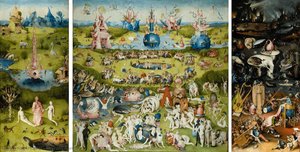 The Garden of Earthly Delights - Hieronymus Bosch
Stepping before Hieronymus Bosch’s The Garden of Earthly Delights is less like viewing a painting and more like entering a fever dream. This Northern Renaissance masterpiece, a cornerstone of the top 25 artworks in Museo del Prado, Madrid, captures a profound sense of tension through its surreal, bustling landscapes. From the lush, primordial Eden on the left to the chaotic, fruit-laden celebrations of the center, and finally the dark, haunting architecture of Hell on the right, Bosch invites us into a universal mirror of human desire and consequence.
The psychological depth of this triptych is staggering; every oversized strawberry and grotesque demon serves as a symbol of the fleeting nature of earthly pleasure. Its intricate, mystical atmosphere makes it a quintessential treasure of the Museo del Prado, Madrid, showcasing the era's fascination with the divine and the damned. Bringing a reproduction of this complex work into your home can transform a quiet corner into a space for deep reflection, offering a conversation piece that is as intellectually stimulating as it is visually overwhelming.
Las Meninas (The Maids of Honor) or the Royal Family - Diego Velázquez
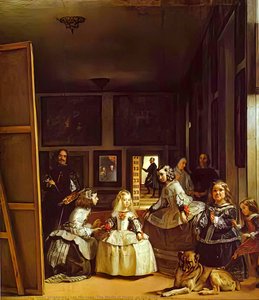 Las Meninas (The Maids of Honor) or the Royal Family - Diego Velázquez
Imagine stepping into a sun-drenched studio where time seems to hold its breath. There is a profound sense of being watched, a quiet tension between the viewer and the viewed. This is the magic of Las Meninas, the crown jewel of the Museo del Prado, Madrid. In this 1656 masterpiece, Diego Velázquez invites us into the intimate, opulent world of the Spanish royal court, capturing Infanta Margaret Theresa and her entourage in a moment of fleeting, lived reality.
As one of the top 25 artworks in 'Museo del Prado, Madrid', this painting transcends mere portraiture; it is a philosophical puzzle of light and perspective. Through masterful Baroque brushwork and a rich palette of walnut and gold, Velázquez blurs the line between art and life. It belongs in our collective memory because it challenges how we perceive reality itself. Bringing the soul of the Spanish Baroque into your own living room can transform a space, turning a simple wall into a window of profound reflection and timeless elegance.
Saturn Devouring His Son - Francisco Goya
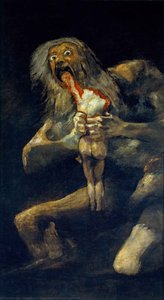 Saturn Devouring His Son - Francisco Goya
Few works in the Museo del Prado, Madrid command a room with such visceral, haunting authority as Francisco Goya’s Saturn Devouring His Son. A cornerstone of the museum's profound Spanish Baroque and Romantic collections, this masterpiece transcends mere mythology to touch the rawest nerves of the human psyche. Painted during Goya's most turbulent years, it is a dark, espresso-toned descent into madness, where the lines between myth and political allegory blur into a terrifying study of time and consumption.
Its placement among the top 25 artworks in 'Museo del Prado, Madrid' is earned through its sheer emotional gravity. Goya’s use of thick, expressive impasto and a somber, dramatic palette creates a sense of movement and despair that feels startlingly modern. For the contemporary collector, this piece serves as a powerful conversation starter—a reminder of the sublime and the shadows that exist within the human experience. It is not merely a painting; it is a profound encounter with the sublime, making it an essential pillar of the Prado's storied legacy.
The Third of May 1808 (Execution of the Defenders of Madrid) - Francisco Goya
 The Third of May 1808 (Execution of the Defenders of Madrid) - Francisco Goya
For the discerning collector, owning a piece of history like The Third of May 1808 is an investment in profound emotional legacy and timeless taste. As one of the most significant works in the top 25 artworks in 'Museo del Prado, Madrid', Francisco Goya’s masterpiece transcends mere decoration; it is a visceral, haunting cry against the brutality of war. This painting exemplifies the soul of the Museo del Prado, Madrid, capturing the raw, psychological depth of the Spanish Baroque and Romanticism through its stark, dramatic chiaroscuro.
Goya’s brushwork is electric, using expressive strokes to illuminate the defiant white shirt of a condemned man against a somber, dark palette of deep blues and earthy tones. The tension between the faceless, mechanical soldiers and the raw human suffering creates a cinematic intensity that remains unparalleled in art history. For those curating a modern luxury interior, a high-quality, hand-painted reproduction of this masterpiece brings an unmatched aesthetic authority and a sense of historical gravity to a living room, turning a wall into a window into the human spirit.
The Triumph of Death - Pieter Brueghel the Elder
 The Triumph of Death - Pieter Brueghel the Elder
To stand before The Triumph of Death is to witness the raw, unfiltered power of the Northern Renaissance, a moment of profound realization that secures its place among the top 25 artworks in Museo del Prado, Madrid. Pieter Bruegel the Elder does not merely paint a scene; he orchestrates an apocalyptic symphony of human fragility. This masterpiece captures the very essence of the Spanish Baroque's psychological depth, offering a somber, dramatic vision that transcends time.
The canvas is a whirlwind of chaotic movement, where a skeletal army sweeps across a desolate landscape, reminding us of the inevitable transience of life. Bruegel’s mastery is felt in the rich, earthy palette of walnuts and ochres, punctuated by startling flashes of crimson that command your attention. For the discerning collector, this work brings a sense of profound legacy and intellectual weight to a space, turning a room into a sanctuary of contemplation. It is a hauntingly beautiful testament to the human condition, making it an indispensable jewel of the Prado’s storied collection.
The Surrender of Breda (Las Lanzas) - Diego Velázquez
 The Surrender of Breda (Las Lanzas) - Diego Velázquez
Acquiring a piece inspired by The Surrender of Breda (Las Lanzas) is an investment in a legacy of profound taste, offering a discerning collector a window into the soul of the Spanish Golden Age. As one of the most significant works in the top 25 artworks in 'Museo del Prado, Madrid', this 1634 masterpiece by Diego Velázquez transcends mere military history. It is a masterful study of dignity and grace, capturing the moment of surrender not through violence, but through a solemn, respectful exchange of flags.
Velázquez’s Baroque genius is on full display through his sophisticated use of chiaroscuro and a muted, earthy palette of ochres and deep shadows that create an incredible sense of atmospheric depth. The painting’s commanding presence and psychological complexity make it a cornerstone of the Museo del Prado, Madrid collection. For the modern home, a high-quality oil reproduction of this scale brings an air of historical authority and quiet luxury to a space, serving as a sophisticated focal point that bridges the gap between museum-grade history and contemporary interior elegance.
The Seven Deadly Sins - Hieronymus Bosch
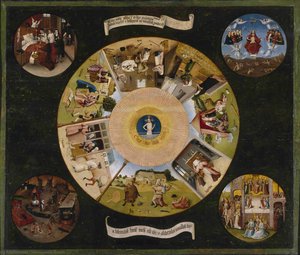 The Seven Deadly Sins - Hieronymus Bosch
There is a haunting, mystical quality to Hieronymus Bosch’s The Seven Deadly Sins that stops you in your tracks. Looking into this intricate, circular vision of the Wheel of Fortune, you feel the dizzying, unpredictable pulse of human existence—the sudden rise of a king, the swift fall of a beggar. It is a profound meditation on fate and morality, wrapped in a dark, enigmatic atmosphere that feels as much like a dream as it does a warning. This masterpiece is a cornerstone of the top 25 artworks in 'Museo del Prado, Madrid' because it captures the very essence of the Northern Renaissance: a blend of meticulous detail and surreal, psychological depth.
As a highlight of the Spanish national treasure, this work exemplifies the museum's ability to house art that is both intellectually complex and emotionally resonant. At Mus3ums.com, we believe such profound beauty shouldn't be confined to a gallery. Through our hand-painted oil reproductions, you can bring this sense of mystery and history into your own living space. Our artists meticulously recreate the rich textures and symbolic colors of Bosch’s original, ensuring the soul of the masterpiece is preserved for your home.
Deposition - Rogier van der Weyden
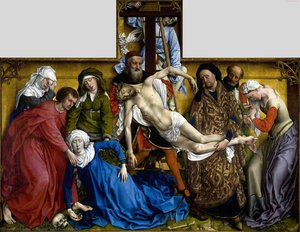 Deposition - Rogier van der Weyden
Stepping into the presence of Rogier van der Weyden’s Deposition is to encounter a masterclass in human emotion. This 1435 masterpiece is a cornerstone of the top 25 artworks in 'Museo del Prado, Madrid', captivating visitors with its profound, melancholic beauty. As a pivotal work of the Early Netherlandish school, it transcends mere religious iconography through its staggering psychological depth and meticulous detail. Van der Weyden uses a somber, sophisticated palette of muted blues and earthy tones to frame a scene of exquisite grief, where the sculptural grace of the figures seems to vibrate with life despite the tragic subject matter.
The painting’s ability to capture such intense, dramatic stillness is why it remains a jewel of the Spanish national collection. At Mus3ums.com, we believe such transformative power should not be confined to museum walls. Whether you are seeking to bring a sense of historical reverence to a quiet corner of your home or a sophisticated focal point to a modern living room, our hand-painted oil reproductions allow you to invite this timeless, soulful energy into your own personal sanctuary. Experience the intersection of Renaissance mastery and contemporary living with a piece that speaks directly to the heart.
The Annunciation - Fra Angelico
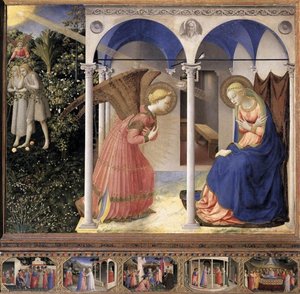 The Annunciation - Fra Angelico
Step into a realm of profound serenity with Fra Angelico’s The Annunciation, a cornerstone of the Museo del Prado, Madrid’s unparalleled collection. This isn't merely a painting; it is a dance frozen in time, where the lines of the architecture are choreographed to guide your soul toward the divine. Created around 1430, this masterpiece captures the breathtaking moment the Archangel Gabriel enters the life of the Virgin Mary, turning a sacred encounter into a visual symphony of grace.
The composition is a masterclass in Early Renaissance harmony, utilizing a sophisticated portico of arches and columns to create a sense of rhythmic depth. You will find yourself mesmerized by the luminous palette—rich blues and soft, earthy tones that seem to breathe with a life of their own. Every detail, from the symbolic lily representing purity to the dramatic, celestial light cascading from above, invites a moment of quiet contemplation. For those seeking to bring this sense of spiritual balance and architectural elegance into a home, this work exemplifies the timeless beauty that makes the Prado a global sanctuary for art lovers.
The three graces, prado - Peter Paul Rubens
 The three graces, prado - Peter Paul Rubens
For the discerning collector, owning a piece inspired by Peter Paul Rubens’ The Three Graces is an investment in a legacy of unparalleled taste and Baroque dynamism. As one of the crown jewels within the top 25 artworks in 'Museo del Prado, Madrid', this masterpiece exemplifies the museum's profound Spanish and Flemish heritage through its celebration of classical idealism and human vitality. Rubens orchestrates a joyful, rhythmic dance of three figures, their luminous skin bathed in an ethereal glow that contrasts beautifully against deep, espresso-toned shadows. This masterful use of light and movement captures the very essence of the Baroque era, making it a cornerstone of the Prado's collection.
In today’s world of high-end design, this composition brings a sense of dramatic elegance to modern luxury interiors. Whether placed in a grand hotel lobby or a curated private study, a high-quality reproduction of this Rubens classic carries the same aesthetic authority and status, transforming any space into a sanctuary of timeless, sophisticated beauty.
Saturn - Peter Paul Rubens
 Saturn - Peter Paul Rubens
Stepping into the presence of Peter Paul Rubens’ Saturn is not merely an observation; it is a visceral encounter. As one of the most profound masterpieces within the top 25 artworks in 'Museo del Prado, Madrid', this Baroque powerhouse captures the terrifying momentum of time itself. Rubens, the Flemish master of dynamic movement, uses a dramatic, tenebristic palette of deep espresso shadows and stormy grays to frame the muscular, contorted figure of the Titan. A celestial, golden light pierces the gloom, casting harsh highlights across the pale, vulnerable flesh of the infant and the strained anatomy of Saturn.
There is a gaze in this work that follows you—not with judgment, but with a heavy, ancient understanding. It acts as a mirror to the human condition, reflecting the raw, primal emotions that define our existence. This painting exemplifies the soul of the Museo del Prado, representing the peak of Spanish Baroque intensity through its psychological depth and masterful use of light. To witness it is to feel the weight of history and the beautiful, turbulent nature of life itself.
David and Goliath - Cecco del Caravaggio
 David and Goliath - Cecco del Caravaggio
What if I told you that David and Goliath by Cecco del Caravaggio was born from a moment of rebellion—a stroke of defiance against the ordinary? This is not merely art; it is a manifesto of the Baroque spirit, and its place among the top 25 artworks in the Museo del Prado is not just earned; it is demanded by history. As you stand before this masterpiece, you are witnessing the raw, visceral tension of the early modern era, where light and shadow engage in a life-or-death struggle.
The scene captures the breathless, heavy silence following the giant's fall. Using a masterful application of tenebrism, Cecco pulls the figures out of an impenetrable, midnight darkness, illuminating the textures of skin and steel as if by a single, dramatic spotlight. The massive, slumped form of Goliath creates a sense of earthbound tragedy that contrasts sharply with the focused, heroic energy of young David. It is a profound meditation on vulnerability and divine providence, making it a cornerstone of the Prado’s legendary Spanish Baroque collection. Imagine this dramatic intensity in your own home; it is more than decor—it is a statement of power and grace.
Self-Portrait - Albrecht Dürer
 Self-Portrait - Albrecht Dürer
Owning a piece inspired by the Albrecht Dürer Self-Portrait isn't merely a purchase; it is an inheritance. This 1498 masterpiece stands as a cornerstone of the Northern Renaissance, representing a profound handshake across centuries. In the context of the top 25 artworks in the Museo del Prado, Madrid, Dürer’s work exemplifies the museum's dedication to capturing the psychological depth of the human spirit.
The portrait is a masterclass in reflection and elegance. Dürer gazes at the viewer with a quiet, contemplative intensity, his features sculpted by a sophisticated play of light and shadow. The subtle, phthalo green tones and the soft light filtering through a distant window create a mood of serene introspection. Every detail, from the delicate texture of his robe to the individual strands of his hair, speaks to a lineage of impeccable taste. For those looking to bring a sense of historical gravity and intellectual warmth into a living room, this work offers a timeless connection to the masters, turning a simple wall into a window into the Renaissance.
The Bacchanal of the Andrians - Titian
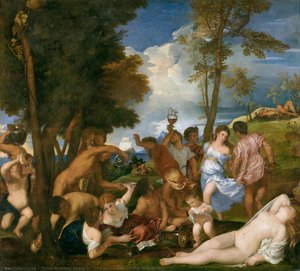 The Bacchanal of the Andrians - Titian
Step into a world of vibrant revelry with Titian’s The Bacchanal of the Andrians, a masterpiece that captures the very essence of the High Renaissance. This breathtaking work is a cornerstone of the Museo del Prado, Madrid, representing the pinnacle of Venetian splendor. As you stand before it, you aren't just looking at a painting; you are witnessing a celebration of life, movement, and the divine.
Titian masterfully orchestrates a lush, verdant landscape where phthalo greens and deep, rich tones create a sense of infinite depth. The scene is alive with a joyful, almost rhythmic energy, as figures in classical attire dance and drink amidst rolling hills and meandering rivers. Through his legendary use of colorito, Titian uses light and shadow to breathe life into the human form, turning a mythological feast into a sensory experience. It is this profound ability to blend human emotion with atmospheric beauty that makes this work a true jewel of the Prado, inviting you to transform your own surroundings into a gallery of the soul.
Immaculate Conception of Soult - Bartolomé Esteban Murillo
 Immaculate Conception of Soult - Bartolomé Esteban Murillo
Bathed in a soft, golden radiance that seems to emanate from within the canvas, the Immaculate Conception of Soult is a masterclass in the ethereal. Murillo’s use of a luminous, celestial palette—dominated by heavenly golds and serene, divine blues—creates a sense of profound spiritual peace. This mastery of light and color is precisely why this work remains one of the top 25 artworks in 'Museo del Prado, Madrid'; it captures a moment of divine grace that feels both monumental and intimately tender.
For those looking to bring a touch of quiet prestige into their own home, this masterpiece offers incredible inspiration. The painting’s warm, glowing atmosphere can transform a modern living room or a formal dining area, providing a sophisticated focal point that evokes a sense of calm and timeless elegance. As a cornerstone of the Spanish Baroque collection at the Museo del Prado, Murillo’s work invites you to experience the same breathtaking beauty and emotional depth that has captivated viewers for centuries.
Adam And Eve - Giuseppe Cades
 Adam And Eve - Giuseppe Cades
In the hallowed halls of the Museo del Prado, Madrid, Giuseppe Cades’ Adam and Eve offers a breathtaking departure from the heavy drama of the Spanish Baroque, leaning instead into a graceful, Neo-classical elegance. Look closer; the lines in this composition aren't merely drawn—they are choreographed. This is not a static scene, but a dance frozen in time, capturing a fragile moment of intimacy and tension beneath the sprawling, structural limbs of a central tree.
Cades, a master of the Roman sensibility, uses light and shadow to sculpt the human form, creating a sense of movement as the man reaches for the woman’s hand. The composition is a masterclass in balance, where secondary figures emerge from the periphery to witness this primal encounter. It is this ability to make profound chaos feel like perfect harmony that earns its place among the top 25 artworks in the Museo del Prado. For those seeking to bring a sense of rhythmic grace and classical soul into a living space, this work serves as a timeless reminder of the beauty found in delicate, human connection.
Landscape with Charon Crossing the Styx - Joachim Patinir
 Landscape with Charon Crossing the Styx - Joachim Patinir
A quiet, heavy stillness settles over the water, where the boundary between the earthly and the eternal becomes a shimmering, liquid line. In Landscape with Charon Crossing the Styx, Flemish Renaissance pioneer Joachim Patinir invites us to witness a profound moment of transition. This masterpiece, a cornerstone of the top 25 artworks in 'Museo del Prado, Madrid', is a breathtaking example of the "world landscape" style, utilizing a bird's-eye view to stretch the horizon into a vast, layered expanse of mystical beauty.
The composition is a spiritual map: a central river divides the destiny of souls, winding from earthy browns toward ethereal, pale blues. As Charon paddles his boat through the current, the scene feels both intimate and infinite, populated by delicate birds and celestial figures that dance within the atmosphere. For the modern collector, this painting offers a sense of deep, contemplative calm. Its rich, espresso tones and sweeping vistas provide a sophisticated, spiritual anchor for a living room, turning a wall into a window into the sublime. It is this unique ability to blend grand scale with intimate storytelling that makes it an essential treasure of the Museo del Prado.
Joanna The Mad Accompanying The Coffin Of Philip - Francisco Pradilla y Ortiz
 Joanna The Mad Accompanying The Coffin Of Philip - Francisco Pradilla y Ortiz
To stand before Joanna The Mad Accompanying The Coffin Of Philip is to witness a masterclass in dramatic storytelling, a piece that commands the quiet reverence typical of the top 25 artworks in 'Museo del Prado, Madrid'. Francisco Pradilla y Ortiz, a titan of 19th-century academic realism, crafts more than a historical scene; he captures a soul in transit. The painting follows the tragic figure of Doña Juana through a desolate, grey Castilian expanse, her mourning mirrored by the stark, somber landscape that stretches toward the horizon.
The composition is a profound study in light and shadow, where the heavy, dark hues of the funeral procession contrast against the muted, earthy tones of the terrain. This work exemplifies the essence of the Museo del Prado, Madrid by bridging the gap between historical grandeur and raw, human vulnerability. For the discerning collector, this piece offers a timeless aesthetic of solemnity and grace, making it a breathtaking focal point for a refined, modern living space where history and luxury meet.
Artemisia - Rembrandt
 Artemisia - Rembrandt
Imagine stepping into a space where light does not merely illuminate, but breathes, carving form out of deep, velvety shadows. This is the essence of the Dutch Golden Age, and few works capture this dramatic chiaroscuro as masterfully as “Artemisia” by Rembrandt. As one of the essential pieces to experience when exploring the top 25 artworks in 'Museo del Prado, Madrid', this portrait is a breathtaking study of regal poise and intellectual depth.
The scene unfolds with a calm, elegant intensity. A woman, adorned in royal attire and a crown, sits with effortless grace, her hands resting upon an open book—a silent testament to wisdom and erudition. Rembrandt’s brushwork creates a tactile richness, from the shimmering textures of her garments to the delicate glint of glassware on the table. The palette, dominated by sophisticated blacks and warm, glowing highlights, creates a mood of profound serenity. This masterpiece exemplifies the spirit of the Prado by showcasing the psychological complexity and technical brilliance that define the era, offering a timeless sense of dignity that continues to transform any space it inhabits.
The Crucifixion - El Greco
 The Crucifixion - El Greco
Stepping into the presence of El Greco’s 1594 masterpiece, The Crucifixion, is less like viewing a painting and more like witnessing a spiritual vision. As one of the crown jewels of the Museo del Prado, Madrid, this work captures the very essence of the Spanish Baroque—a profound intersection of intense emotion and dramatic movement. El Greco does not merely depict light; he composes it, using it as a divine language to pierce through a somber, atmospheric darkness.
The composition is a masterclass in Mannerist tension, featuring the elongated, ethereal figures that became the artist's signature. You can almost feel the weight of the sacrifice in the rich, saturated palette of deep reds and blues, contrasted against a heavy, shadowy backdrop that evokes a sense of sacred gravity. The verticality of the cross draws your gaze upward, pulling you into a moment of profound transcendence and sorrow. It is this ability to turn pigment into pure, soaring emotion that makes this piece an essential pillar of the Prado’s collection, inviting every viewer to find a moment of quiet, soulful reflection.
Las Meninas (after Velazquez) - John Singer Sargent
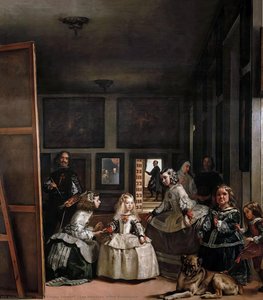 Las Meninas (after Velazquez) - John Singer Sargent
In this breathtaking homage, John Singer Sargent captures the very essence of the Spanish Baroque through the lens of 19th-century Academic Realism. This piece earns its place among the top 25 artworks in 'Museo del Prado, Madrid' by acting as a bridge between eras, translating the complex social hierarchies of the 17th century into the fluid, elegant brushwork of the Gilded Age. Sargent’s interpretation of Velázquez’s iconic composition invites us into a quiet, reflective moment of domesticity and artistic creation.
The palette is a sophisticated dance of deep blacks, muted greens, and warm, luminous skin tones, creating a somber yet captivating mood that breathes life into the studio setting. As you contemplate the interplay of light and shadow, the painting transcends mere portraiture, becoming a meditation on perception and the timeless relationship between the artist and the subject. For the modern collector, this work offers more than just decor; it brings a sense of historical grandeur and intellectual depth to a living room, turning a wall into a window into the soul of art history.
The Triumph of Death - Jan Brueghel the Elder
 The Triumph of Death - Jan Brueghel the Elder
Acquiring a piece inspired by The Triumph of Death is an investment in a profound legacy, a choice for the discerning collector who seeks art that commands the room with intellectual weight. As one of the most significant works within the top 25 artworks in 'Museo del Prado, Madrid', this masterpiece by Jan Brueghel the Elder serves as a haunting cornerstone of the Spanish Baroque collection, capturing the era's intense preoccupation with mortality and divine reckoning.
The composition is a breathtaking, chaotic panorama where skeletal horsemen relentlessly pursue humanity across a desolate, walnut-toned landscape. Through meticulous Northern Renaissance realism, Brueghel uses dramatic chiaroscuro and layered oil glazes to create a scene of unsettling beauty. The somber palette of ochre and grey, punctuated by violent flashes of red, evokes a sense of cosmic upheaval that is both terrifying and deeply moving. For the modern connoisseur, a high-quality reproduction of this work brings a sense of historical authority and dramatic texture to luxury interiors, transforming a living space into a sanctuary of deep, contemplative storytelling.
The Death of the Virgin - Andrea Mantegna
 The Death of the Virgin - Andrea Mantegna
In Andrea Mantegna’s The Death of the Virgin, a profound sense of serenity is anchored by a palette of rich, earthy tones—deep reds and warm ochres—that ground the spiritual gravity of the scene. This masterful use of color, contrasted against the soft, atmospheric blues of a distant cityscape, creates a visual depth that has secured its place among the top 25 artworks in Museo del Prado, Madrid. Mantegna’s ability to balance the heavy, tactile textures of drapery with a luminous, divine light exemplifies the very essence of the Renaissance spirit housed within the Prado’s walls.
For the modern decorator, this masterpiece offers a blueprint for creating a soulful atmosphere. The sophisticated interplay of warm espresso tones and muted neutrals can be used to curate a dining room that feels both historic and intimate. By drawing inspiration from Mantegna’s sculptural precision and his harmonious integration of landscape and sacred emotion, you can bring a sense of timeless, spiritual grace into your own living space, turning a simple room into a sanctuary of contemplation.
The Story of Nastagio degli Onesti (second episode) - Sandro Botticelli
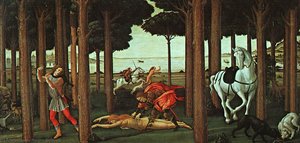 The Story of Nastagio degli Onesti (second episode) - Sandro Botticelli
Step into a world where lines aren't merely drawn; they are choreographed. In this captivating panel from 1483, Sandro Botticelli transforms a chilling episode from Boccaccio’s Decameron into a rhythmic, visual dance. As part of the prestigious collection of the Museo del Prado, Madrid, this masterpiece captures a moment of profound dramatic irony: a lavish banquet set against a backdrop of spectral violence.
The composition is a marvel of the Early Renaissance, where the chaos of a medieval battle in the forest meets the graceful, lyrical poise of Botticelli’s signature style. Notice how the deep, earthy tones and phthalo greens of the dense woodland create a stage for the unfolding drama. It is a scene of both elegance and terror, where the light catches the flowing contours of the figures, making the entire canvas feel like a heartbeat frozen in time. For those seeking to bring a sense of storied depth and rhythmic balance to a living space, this work exemplifies the very soul of the top 25 artworks in 'Museo del Prado, Madrid'—turning a moment of human conflict into a harmonious, breathtaking spectacle.
The Last Supper - Juan de Juanes
 The Last Supper - Juan de Juanes
In the hallowed halls of the Museo del Prado, Madrid, Juan de Juanes’ The Last Supper stands as a masterclass in Renaissance harmony. This 1560 masterpiece captures a sacred gathering with a breathtaking sense of structural balance. The composition is anchored by a rhythmic geometry; the long, elegantly appointed dining table creates a steady horizontal line that guides your eye through the intimate, whispered exchanges of Christ and his apostles. This deliberate arrangement of figures and decorative elements—from delicate glassware to subtle vases—creates a visual equilibrium that feels both monumental and deeply human.
There is a quiet prestige in this work that transcends its era. The way Juan de Juanes balances the divine drama with such orderly, intentional placement mirrors the principles of modern minimalist design, where clarity and space allow the subject to breathe. For those seeking to bring a sense of calm and timeless perfection into a contemporary living room, this piece exemplifies the soul of the Prado’s collection, offering a sophisticated bridge between historical grandeur and a clean, modern aesthetic.
Conclusion
As the golden light of a Madrid sunset fades behind the neoclassical grandeur of the Villanueva Building, we are left with a profound sense of what it means to truly see. The masterpieces of the Museo del Prado are far more than static relics behind velvet ropes; they are living, breathing windows into the human soul. From the psychological depth of the Spanish Baroque to the ethereal light of the Renaissance, each canvas serves as a bridge across centuries, turning a silent conversation between a long-passed master and a modern admirer into a shared moment of wonder.
To bring these treasures into your own home is to invite that timeless dialogue into your daily life. Whether it is the dramatic tension of a Velázquez or the intricate, surreal visions of Bosch, these works possess a unique ability to transform a room from a mere space into a sanctuary of meaning and inspiration. They remind us that beauty, when captured with such passion and precision, never truly fades; it simply waits to be rediscovered in the quiet corners of our lives.
We invite you to continue your own journey of discovery and find the piece that speaks to your heart within our full collection. Let these storied brushstrokes become part of your story, adding a touch of history, warmth, and soul to the places you call home.