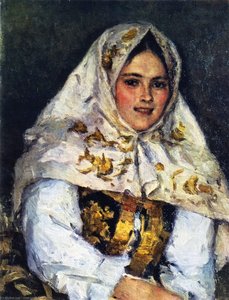


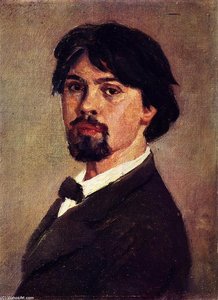

The Rebellion of Truth: Breaking from Academic Perfection
 Beyond the Surface: The Raw Power and Grit of Russian Realism
The Rebellion of Truth: Breaking Away from Academic Perfection Russian Realism: The Soulful Power of Truth and the Unyielding Spirit of the Peredvizhniki The Essence of Truth: Defining the Russian Realist Movement To understand the profound impact of...
To step into the world of Russian Realism is to embark on a profound journey through the very heart of a nation in transition. Long before the soft, light-drenched whispers of Impressionism captured the French countryside, a different kind of revolution was brewing within the hallowed, stifling halls of the Imperial Academy of Arts in Saint Petersburg. For decades, the art world was dominated by an academic perfection that sought to elevate subjects to the ethereal and the idealized, often ignoring the heavy, breathing reality of the world outside the palace gates. This movement was not merely a change in technique; it was a visceral, unanchored pursuit of truth that refused to look away from the complexities of human existence.
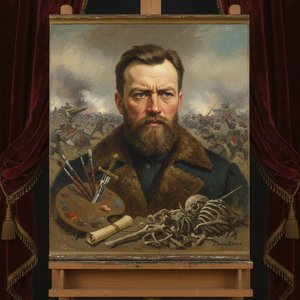
While Western traditions often sought an idealized or even otherworldly beauty, the Russian Realists emerged with a gaze that was unyielding and grounded. They rejected the polished, often artificial aesthetics of the Academy in favor of something far more raw. This rebellion was a departure from the exotic subject matter and exaggerated emotionalism of Romanticism, moving instead toward a depiction of contemporary people and situations with an uncompromising accuracy. It was an art form that sought to capture the very essence of life—not as it wished to be seen in a dream, but as it was felt in the marrow of the bone.
The Peredvizhniki: The Wanderers Who Brought Art to the People
 Peredvizhniki
Peredvizhniki (Russian: передви́жники, IPA: [pʲɪrʲɪˈdvʲiʐnʲɪkʲɪ]), often called The Wanderers or The Itinerants in English, were a group of Russian realist artists who formed an artists' cooperative in protest of academic restrictions; it evolved int...
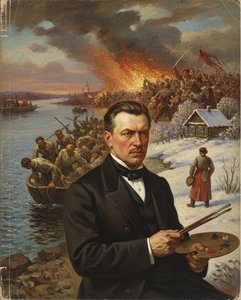
In 1863, a pivotal moment in art history unfolded when fourteen courageous students decided to break away from the rigid constraints of the Imperial Academy. These rebels, known to history as the Peredvizhniki, or "The Wanderers," formed an artists' cooperative that would forever alter the cultural landscape of Russia. Their mission was as much social as it was artistic; they sought to take art out of the aristocratic salons and bring it directly to the people through traveling exhibitions. This was a movement of profound social conscience, driven by a desire to bridge the gap between the canvas and the lived experience of the masses.
The Peredvizhniki were more than just painters; they were itinerant storytellers of the Russian soul. By organizing exhibitions that moved across the vast reaches of the empire, they ensured that the struggles, triumphs, and quiet dignities of the common person could be witnessed by a wider audience. This group of visionaries challenged the strict separation between "high" and "low" art, insisting that the life of a peasant or the toil of a worker held as much monumental significance as the legends of antiquity. Their very name, signifying their nomadic nature, serves as a beautiful testament to their dedication to accessibility and truth.
Earthy Palettes and Human Resilience: The Visual Language of the Soil
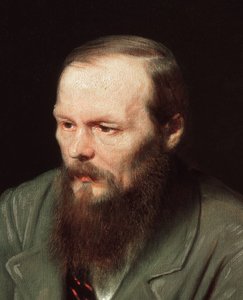 vasily semyonovich bogatyryov
Vasily Semyonovich Bogatyryov: A Voice of the Russian Landscape Born in Kazan, Russia, in 1857, Vasily Semyonovich Bogatyryov emerged as a significant figure within the vibrant and politically charged world of late 19th-century Russian art. His life,...
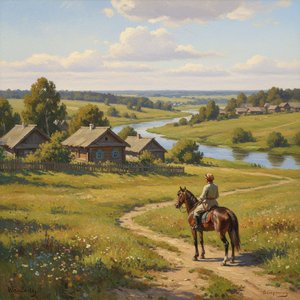
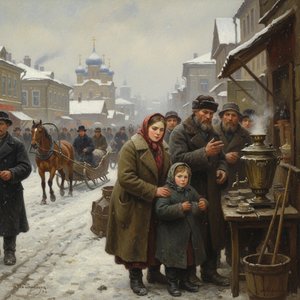
There is a palpable weight to the works of this era, a sense that the paint itself is infused with the very dust and grit of the Russian landscape. To understand the visual language of Russian Realism, one must observe the palette—a masterful use of earthy, muted tones that mirror the rugged terrain of the motherland. These artists did not shy away from the somber; instead, they found a haunting beauty within the melancholy. Through layered oil paints and expressive brushwork, they captured the heavy air of a changing social landscape, breathing life into scenes of rural hardship and quiet domesticity.
In the works of artists like Vasily Semyonovich Bogatyryov, we see a dedication to capturing the essence of the Russian landscape and its people with a quiet, observant intensity. His journey, much like the movement itself, was rooted in the soil. The textures of the canvas often reflect the ruggedness of the subject matter—the coarse fabric of a peasant's tunic or the frozen, unforgiving surface of a mountain pass. This technique allows the viewer to feel the physical reality of the scene, creating an intimate dialogue between the observer and the observed. It is an art of resilience, where even in the most downtrodden subjects, one finds an indomitable spirit that refuses to be extinguished.
Monumental Legacies: From Historical Heroism to Social Commentary
 Russian Troops under Suvorov Crossing the Alps
Captivating Subject and Historical Significance This monumental painting vividly captures the heroic moment of Russian troops under the command of General Suvorov as they courageously cross the treacherous Alps. Set during a pivotal military campaign...
Beyond the quiet observations of rural life, Russian Realism reached heights of epic grandeur through its portrayal of historical and military significance. Consider the powerful works of Vasili Ivanovich Surikov, whose monumental paintings transport us to pivotal moments of national identity. In his depictions of legendary feats, such as the crossing of the Alps by General Suvorov’s troops, we see a masterful blend of meticulous realism and intense emotional energy. The sweeping, turbulent skies and the steep, treacherous mountain slopes serve as symbols of the formidable obstacles faced by the Russian spirit.
These large-scale compositions do more than just document history; they embody themes of leadership, sacrifice, and national pride. Surikov’s ability to use dynamic lines and varied textures evokes the chaos and triumph of war, making the viewer a participant in the struggle. Yet, even within these grand historical narratives, the social commentary remains present. The movement consistently used the stage of history to reflect upon the human capacity to overcome adversity, ensuring that every brushstroke served as a mirror to both the triumphs and the tragedies of a people in flux.
Preserving the Soul: The State Russian Museum and the Living Chronicle
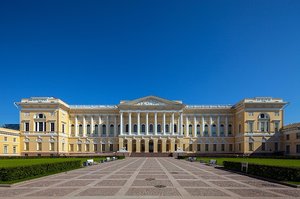 The State Russian Museum
A Chronicle Woven in Color: Exploring the State Russian Museum Nestled within the breathtaking grandeur of Mikhailovsky Palace – a Neoclassical masterpiece that once housed Imperial dreams – lies the State Russian Museum, an institution far more than...
The legacy of this profound movement finds its most magnificent sanctuary within the State Russian Museum in Saint Petersburg. Nestled within the breathtaking grandeur of the Mikhailovsky Palace, the museum is far more than a mere repository of art; it is a living testament to Russia's soul and a sprawling chronicle of its identity. Founded by Emperor Alexander III as a safeguard against the homogenizing currents of modernization, the museum preserves a vast tapestry of artistic expression, from the shimmering icons of the Orthodox faith to the revolutionary fervor of the Realists.
Walking through its halls is a pilgrimage through centuries of cultural evolution. The museum’s collection allows us to trace the threads of history as they are woven into color and form, offering an unparalleled panorama of a nation's journey. It stands as a monumental achievement in preservation, ensuring that the unyielding spirit of the Peredvizhniki and the raw, unfiltered essence of Russian life continue to inspire generations. In these galleries, the art remains alive, whispering tales of power, patronage, and the enduring, beautiful truth of the human condition.