The Genesis of Zero: Kazimir Malevich and the Rejection of Reality
 Kazimir Malevich
Kazimir Malevich: A Pioneer of Abstract Art Early Life and Influences Born in Kyiv Oblast, Ukraine in 1878 to a Polish family, Kazimir Severinovich Malevich’s early life was shaped by the rural Ukrainian landscape and its rich folk culture. His upbri...
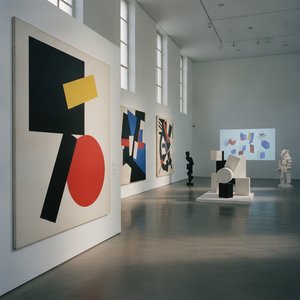
To understand the seismic shift that occurred in the early twentieth century, one must look beyond the soft, dappled light of the Impressionists and into the stark, uncompromising void of the Russian avant-garde. While we often find solace in the familiar textures of a Monet or the emotive brushstrokes of Van Gogh, there arose a moment in history where art sought to strip away the very skin of reality. At the heart of this revolution stood Kazimir Malevich, a visionary born in the rich, folk-infused landscapes of Ukraine. His journey was not a sudden departure but a radical evolution; having navigated the complexities of Cubism and Fauvism, Malevich found himself yearning for a language that did not merely reflect the world, but transcended it entirely.
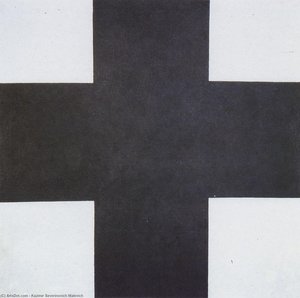
The birth of Suprematism around 1915 represented a decisive break from the centuries-old tradition of representational painting. It was an era of profound upheaval, where the boundaries of human existence were being redrawn by revolution and social transformation. Malevich’s quest led him to what he termed "the zero of form," a state where the artist abandons the burden of depicting objects—trees, faces, or landscapes—to embrace the absolute. This was not an act of destruction, but one of liberation. By rejecting the "illusionism" of the visible world, Male quite literally cleared the canvas to make room for something much more profound: a pure, unadulterated visual experience that exists independently of any earthly reference.
The Language of Pure Feeling: Decoding Geometric Symbolism
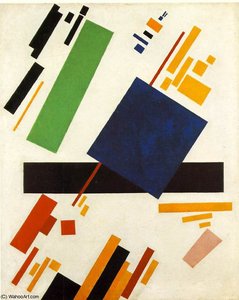
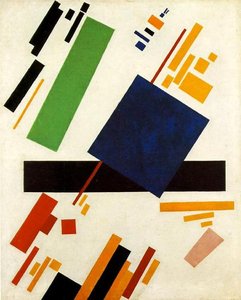 Suprematist Painting 7
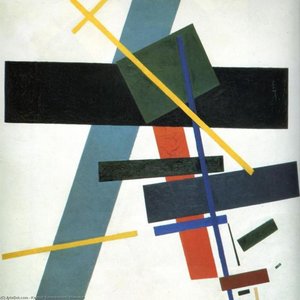
Kazimir Malevich’s Suprematist Painting 7: A Bold Declaration of Pure Form Kazimir Malevich’s “Suprematist Painting 7” stands as a cornerstone of abstract art, embodying the radical principles of Suprematism – a movement spearheaded by Malevich himse...
In the realm of Suprematism, a square is never merely a square, and a line is far more than a geometric boundary. For the discerning collector, these forms represent a sophisticated vocabulary of emotion. When we gaze upon works such as
Suprematist Painting 7, we are not looking at a simple arrangement of shapes, but a carefully orchestrated manifesto of color and weight. Malevich utilized a restrained yet potent palette to communicate his cosmic vision. A dominant blue might evoke the infinite, breathless expanse of space, while a strategic strike of yellow serves as a beacon of divine illumination.
This movement prioritized what Malevich called
the supremacy of pure feeling. In masterpieces like
Guard, the interaction between a prominent yellow square and its surrounding simpler shapes creates a tension that is felt rather than seen. There is no narrative to follow, no recognizable character to empathize with; instead, there is only the rhythmic vibration of color against form. This approach challenges the viewer to move past intellectual recognition and enter a state of sensory contemplation. It is an encounter with radical simplicity, where the weight of a black rectangle or the lightness of a floating white shape can evoke a sense of spiritual depth that traditional realism often struggles to capture.
Beyond the Canvas: The Architectural Legacy of Suprematist Vision
 Lazar Markovich Khidekel
A Visionary of Form: The Life and Legacy of Lazar Markovich Khidekel Lazar Markovich Khidekel, born in Vitebsk, Belarus in 1904, was more than just an artist; he was a philosophical architect, a daring designer, and a devoted disciple of Kazimir Male...
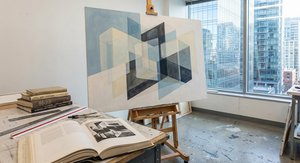
The brilliance of Suprematism lay in its refusal to remain confined to the two-dimension plane. While the movement found its most potent expression in oil on canvas, its philosophical ripples extended into the very fabric of our built environment. This is perhaps most beautifully illustrated through the work of Lazar Khidekel, a devoted disciple of Malevich and a true visionary of form. Khidekel did not merely paint abstraction; he sought to materialize it, translating the ephemeral language of Suprematist shapes into three-dimensional realities that challenged conventional notions of space and urban planning.
Through the concept of
architectons, the movement began to influence the way we perceive structure and volume. We see this legacy in the breathtaking projections of floating structures and integrated urban designs that seem to defy gravity. The boundary between painting, architecture, and design begins to dissolve, leaving behind a blueprint for a future where art and life are seamlessly intertwined. For the modern connoisseur, appreciating Suprematism means recognizing its influence not just in a gallery setting, but in the very way we conceptualize the modern, geometric elegance of contemporary architecture and spatial design.
Spiritual Geometry: The Philosophical Depth of Non-Objective Art
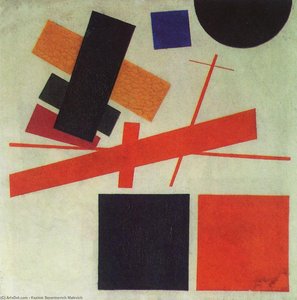
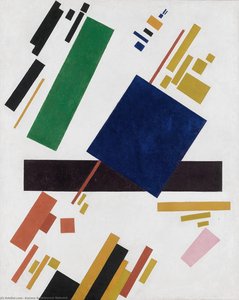
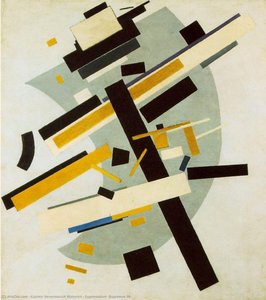 Suprematism (Supremus 58)
Suprematism (Supremus 58): A Bold Leap into Pure Feeling Kazimir Malevich’s Supremus 58 stands as a cornerstone of abstract art, encapsulating the revolutionary spirit of Suprematism – a movement that irrevocably altered the trajectory of artistic ex...
To approach Suprematism without acknowledging its spiritual undertones is to miss its very soul. Despite its stark, mathematical appearance, the movement was deeply imbued with a quest for universal truth. Malevich’s work was heavily influenced by the iconographic traditions of his youth, seeking to create a new kind of "icon" for a modern age—one that did not depict saints or martyrs, but rather the fundamental energies of the universe. This is why works like
White on White are so profoundly moving; they push abstraction to its absolute limit, exploring the nuances of light and purity until the subject almost vanishes into the infinite.
This non-objective approach serves as a window into a new consciousness. It invites us to contemplate the fundamental questions of existence through the lens of geometry. There is a mathematical purity here that resonates with the order of the cosmos, yet it remains deeply human in its emotional resonance. The movement was an attempt to find a universal language—one that could be understood across cultures and eras because it relied on the most basic elements of human perception: color, shape, and balance. It is art stripped of all ego and ornament, leaving only the essential vibration of being.
From Avant-Garde to Modern Interior: Curating Suprematist Energy
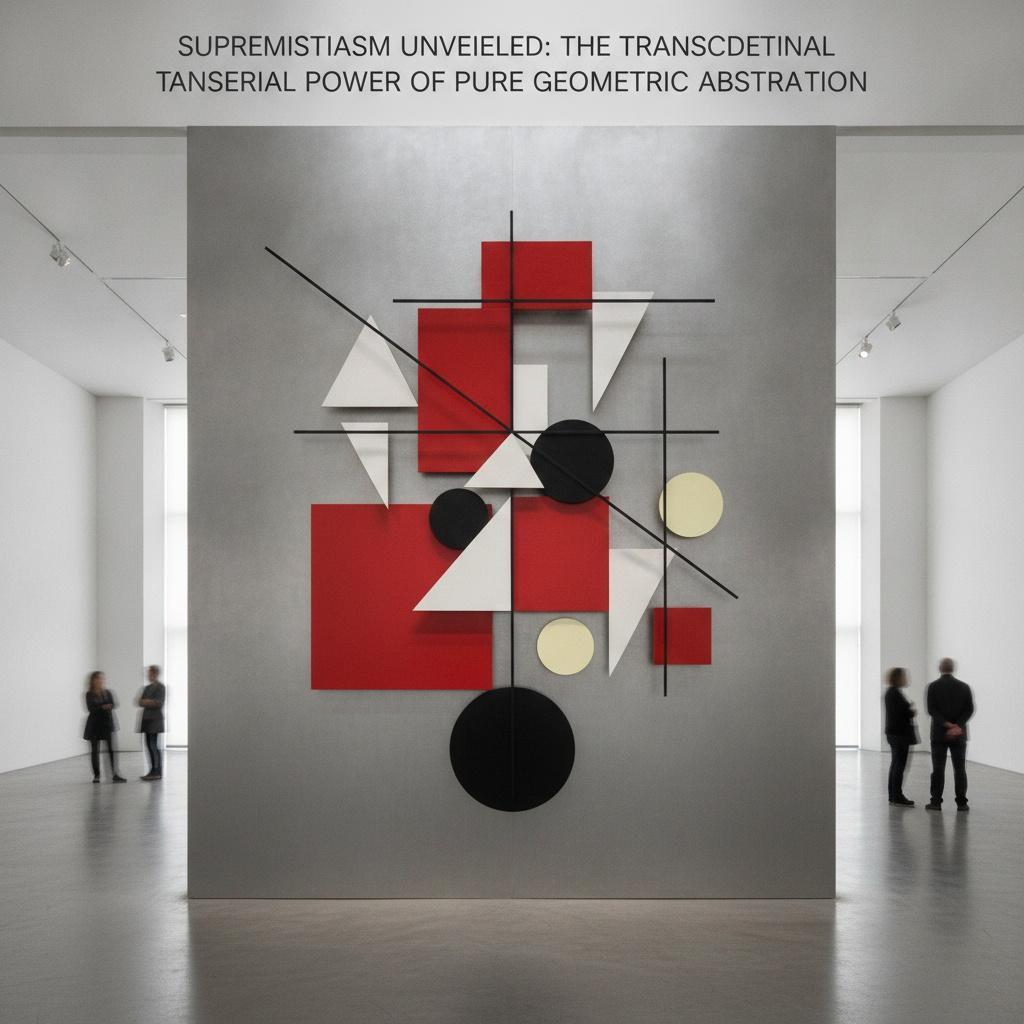
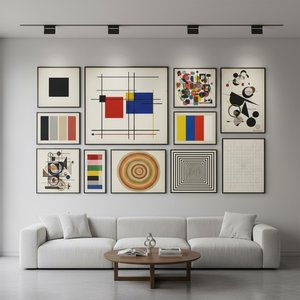 Geometric Abstraction's 10 Defining Masterpieces | Art for Your Home - Mus3ums
Introduction Imagine a world stripped bare to its essential forms – lines, colors, and shapes resonating with an almost mathematical purity. This is the realm of Geometric Abstraction, a movement that dared to abandon representational art in favor of...
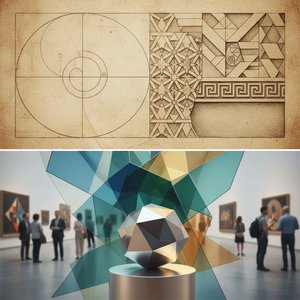
For the contemporary collector, integrating the energy of Suprematism into a modern living space offers an unparalleled opportunity for sophisticated curation. The bold, geometric silhouettes of the early twentieth century find a natural home in minimalist and contemporary interiors, where they can act as powerful focal points. A well-placed piece of geometric abstraction can provide a sense of structural integrity and intellectual depth to a room, acting much like a silent, commanding presence that anchors the surrounding decor.
Whether through the acquisition of museum-quality reproductions or the commissioning of custom works that "remix" historical styles, bringing this movement into the home is about more than decoration; it is about atmosphere. One might imagine a large-scale, multi-panel Suprematist composition spanning a grand staircase, its colors flowing seamlessly across the walls to create a sense of dynamic motion. By embracing the radical simplicity of these forms, we allow our personal spaces to reflect a timeless appreciation for the power of pure, unadulterated beauty.
For those seeking to bring the profound textures and historical weight of the masters into their own collections, Mus3ums.com offers unparalleled access to exquisite hand-painted reproductions and bespoke commissions that honor the true spirit of art history.