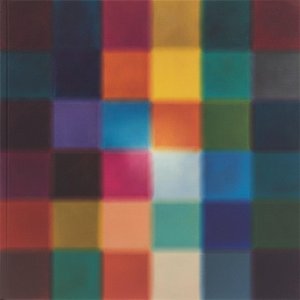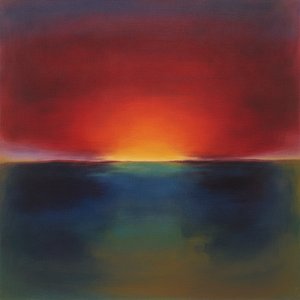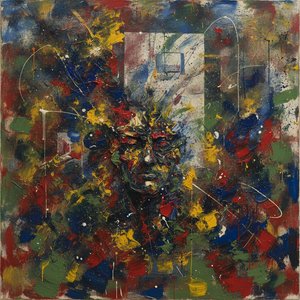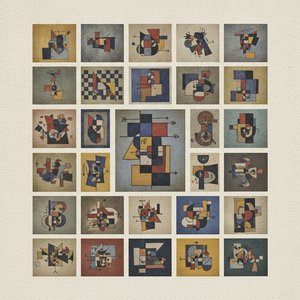
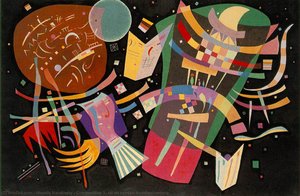
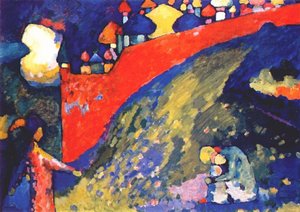
Introduction
Imagine, if you will, standing before a canvas where the boundaries of the physical world simply dissolve, leaving only the pure, rhythmic pulse of color and form. To step into the world of Wassily Wassilyevich Kandinsky is to embark on a spiritual pilgrimage through the very soul of modern art. It is an experience that transcends sight, inviting us to hear colors and see melodies.
Born in Moscow amidst the rich, vibrant traditions of Russian folk art, Kandinsky’s journey was one of profound metamorphosis. He did not begin his life as a painter, but as a scholar of law and economics; yet, it was a chance encounter with the light-drenched landscapes of Claude Monet and the overwhelming emotional swell of Wagner’s music that awakened a dormant, irrepressible calling. This intersection of visual impressionism and auditory grandeur became the heartbeat of his revolution. He moved beyond the mere depiction of trees, mountains, or faces, seeking instead to capture what he called 'inner necessity' —that invisible, spiritual truth that resides beneath the surface of all things.
As we wander through this curated selection, we trace his evolution from the expressive, textured landscapes of his early years to the breathtakingly complex, non-objective abstractions that redefined the limits of human perception. His works remain deeply meaningful today because they speak a universal language; in an age of noise, Kandinsky’s compositions offer a sanctuary of pure emotion, reminding us that art can communicate the profoundest depths of the human spirit without needing a single recognizable word.
In the following pages, we invite you to linger with twenty-five of his most transcendent masterpieces. Each piece is a window into a different dimension of thought and feeling, a carefully orchestrated dance of geometry and emotion that continues to illuminate the halls of our collective imagination.
Composition VIII - Wassily Wassilyevich Kandinsky
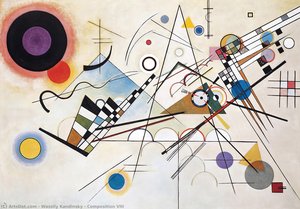 Composition VIII - Wassily Wassilyevich Kandinsky
To gaze upon Composition VIII is to witness a visual symphony where the boundaries between sound and sight dissolve into pure emotion. Created in 1923 during Kandinsky’s transformative Bauhaus years, this masterpiece stands as a cornerstone of our Top 25 collection because it represents the very moment art broke free from the shackles of the physical world. It is not merely a painting; it is a rhythmic dance of geometric precision—sharp triangles, floating circles, and intersecting lines that pulse with an almost musical energy.
Kandinsky masterfully orchestrates bold, contrasting hues against a pale, luminous background, guiding the eye through a landscape of spiritual resonance and mathematical harmony. For the discerning collector, bringing this work into your sanctuary offers more than decoration; it introduces a profound sense of intellectual movement and cosmic order. At Mus3ums.com, we believe such transformative energy should live within your home, turning a quiet corner into a space of deep reflection and modern elegance.
Improvisation. Gorge - Wassily Wassilyevich Kandinsky
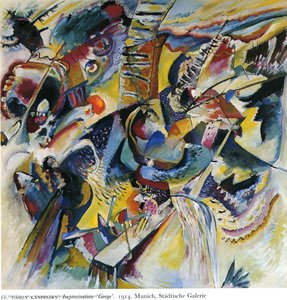 Improvisation. Gorge - Wassily Wassilyevich Kandinsky
To stand before Improvisation. Gorge is to witness the very moment the visible world dissolves into pure, spiritual vibration. In this 1914 masterpiece, Wassily Kandinsky invites us into a landscape not of earth and stone, but of emotion and inner necessity . The painting functions as a visual symphony, where the chaotic dance of sharp triangles and fluid, organic curves evokes the raw energy of a mountain pass in flux.
As one of the most profound entries in our collection of the top 25 artworks of Wassily Kandinsky , this work transcends mere abstraction. It captures a cosmic tension; notice how the fiery reds clash against deep, melancholic blues, creating a rhythmic pulse that feels remarkably modern. In today’s frenetic digital age, the painting’s ability to find order within chaos resonates deeply, offering a sanctuary of spiritual expressionism . Through thick, expressive impasto and a rejection of traditional perspective, Kandinsky transforms the canvas into a breathing, tactile experience that continues to challenge our perception of reality and the soul's hidden depths.
On White II - Wassily Wassilyevich Kandinsky
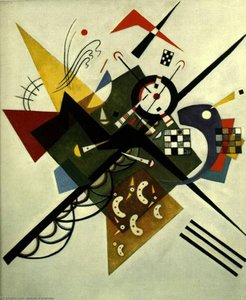 On White II - Wassily Wassilyevich Kandinsky
In On White II , we find ourselves standing before a breathtakingly rhythmic dance of geometry. As one of the most captivating entries in our collection of the top 25 artworks of Wassily Kandinsky , this 1923 masterpiece moves away from fluid expressionism toward a structured, celestial order. The composition is a delicate architecture of intersecting lines, sharp triangles, and floating circles that seem to vibrate against a luminous, pale cream void. There is a profound sense of structural harmony here; the way the bold, lance-like shapes pierce the space creates a tension that is both energetic and perfectly balanced.
This internal equilibrium offers a timeless perfection that continues to resonate with the modern soul. Much like the principles of modern minimalist design , the painting relies on the strength of essential forms to ground a space, making it an ideal anchor for a clean, contemporary aesthetic. To gaze upon this work is to experience a visual symphony where color and shape transcend the physical world, inviting us into a realm of pure, spiritual emotion.
First Abstract Watercolor, Collection of Mad - Wassily Wassilyevich Kandinsky
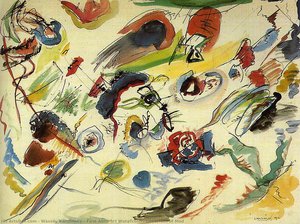
Imagine standing before a window into the soul, where the boundaries of the physical world simply dissolve. In 1910, Wassily Kandinsky captured this very transcendence in First Abstract Watercolor, Collection of Mad . It is not merely a painting; it is a visual symphony, a moment where color breaks free from the shackles of form to dance across the paper.
The piece breathes with a controlled chaos, utilizing fluid, wet-on-wet watercolor techniques that allow vibrant reds, deep blues, and sun-drenched yellows to bleed into one another like echoes in a cathedral. There is a profound sense of movement here—gestural lines and organic, swirling shapes create a rhythmic energy that feels both spontaneous and deeply spiritual. As you gaze upon these intersecting washes of light, you feel the pulse of his "inner necessity." Bringing such a pioneering work into your home offers more than decoration; it invites a spirit of boundless creativity and emotional reflection, transforming a quiet corner of your living space into a sanctuary of modern wonder and intellectual depth.
Improvisation 28 (second version) - Wassily Wassilyevich Kandinsky
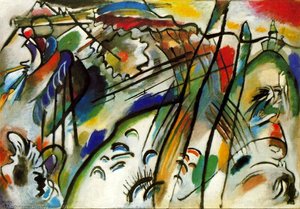 Improvisation 28 (second version) - Wassily Wassilyevich Kandinsky
To gaze upon Improvisation 28 (second version) is to step directly into the rhythmic pulse of a visual symphony. In this breathtaking masterpiece, Wassily Kandinsky transcends the boundaries of the physical world, inviting us into a realm where color and line dance with a spiritual autonomy. This work holds a sacred position among the top 25 artworks of Wassily Kandinsky because it captures the very moment when art broke free from representation to embrace pure, emotional truth.
The canvas is a whirlwind of kinetic energy; bold, intersecting geometries collide with fluid, organic shapes, creating a sense of profound movement. One can almost hear the echoes of Wagnerian drama within the vibrant, clashing hues and layered textures. In today’s modern interiors, where we seek pieces that offer both intellectual depth and sensory vitality, this painting serves as a powerful cultural touchstone. It remains a captivating conversation piece for the sophisticated collector, offering a window into the artist's inner necessity and a timeless celebration of the soul's spontaneous expression.
Yellow, Red, Blue - Wassily Wassilyevich Kandinsky
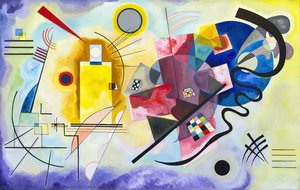
In Yellow, Red, Blue , there is a rhythm that follows you—not with the weight of a melody, but with the pulse of a heartbeat. This 1925 masterpiece does not ask you to recognize a landscape or a face; instead, it acts as a mirror for the soul . As one of the most vital entries in our collection of the top 25 artworks of Wassily Kandinsky , this piece captures that precise moment when color transcends sight to become pure emotion.
The canvas is a dance of geometric tension: assertive black lines intersect with vibrant, primary hues, creating a sense of cosmic movement. One can almost feel the energy of the Bauhaus era within its fragmented shapes and layered textures. To display this work in your home is to invite a constant, silent dialogue. It does not merely decorate a wall; it reminds you that even in chaos, there is a profound, underlying harmony. It is an invitation to find beauty in the abstract and resonance in the unseen.
All Saints day I - Wassily Wassilyevich Kandinsky
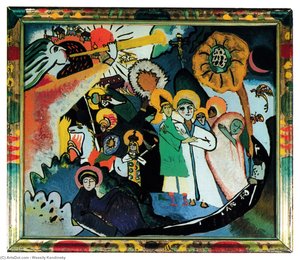 All Saints day I - Wassily Wassilyevich Kandinsky
In All Saints Day I , Wassily Kandinsky invites us into a rhythmic, kaleidoscopic world where the boundaries between the physical and the spiritual dissolve. This 1911 masterpiece stands as a cornerstone in our collection of his top works, capturing that breathtaking moment when he transitioned from the recognizable world toward pure, emotive abstraction. The canvas is a vibrant celebration, pulsing with an energy that feels almost musical; swirling brushstrokes and bold, non-naturalistic colors dance across overlapping planes, creating a sense of sacred chaos.
The composition is a sensory feast, utilizing impasto textures and geometric shapes—circles and triangles—that radiate from a central, sun-like light source. It is a work of profound inner necessity , where religious iconography meets the avant-garde. For the modern collector, this painting offers more than mere decoration; it brings a dynamic, soulful atmosphere to a contemporary interior. Its ability to evoke deep emotion through color alone makes it an essential piece for those seeking to infuse their homes with the transformative power of early Expressionism.
Arabs I (Cemetery) - Wassily Wassilyevich Kandinsky
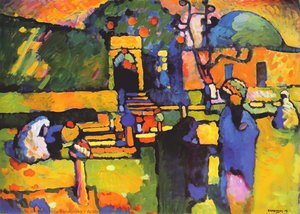 Arabs I (Cemetery) - Wassily Wassilyevich Kandinsky
In the quiet, sun-drenched threshold of Arabs I (Cemetery) , we witness a soul caught in the delicate act of transition. This 1909 masterpiece by Wassily Kandinsky serves as a breathtaking bridge between the recognizable world and the dawn of pure abstraction, making it an essential inclusion in our collection of the top 25 artworks of Wassily Kandinsky.
The painting vibrates with an almost spiritual energy; hues of rose, ochre, and lavender dance across the canvas in thick, emotive impasto strokes. While figures move through a landscape that feels both intimate and enigmatic, the true subject is the movement of light and the dissolution of form itself. It is a work of profound inner necessity , where color ceases to merely describe and begins to sing. This piece stands as a testament to Kandinsky's revolutionary ability to translate spiritual depth into visual rhythm.
Today, this transformative power is no longer confined to museum halls. Through our meticulous, hand-painted oil reproductions, you can invite this vibrant, expressive energy into your own sanctuary—bringing the profound emotional resonance of Kandinsky’s early Expressionism into your home, office, or personal gallery.
Interior (My dining room) - Wassily Wassilyevich Kandinsky
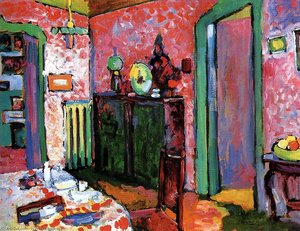 Interior (My dining room) - Wassily Wassilyevich Kandinsky
In Interior (My dining room) , Wassily Kandinsky captures a moment where the warmth of home meets the electric pulse of a soul awakening to color. This 1909 masterpiece stands among the top 25 artworks of Wassily Wassilyevich Kandinsky because it serves as a breathtaking bridge between the familiar world and the dawn of pure abstraction.
The canvas breathes with a rhythmic, almost musical energy; one can almost hear the soft clatter of dishes against the vibrant, rosy walls. Kandinsky employs a rich, post-impressionist palette where deep greens and fiery reds dance in a spirited, impasto embrace. The heavy, textured brushstrokes do more than depict a room—they evoke the very scent of domestic life, infused with an unexpected, dreamlike intensity. For the modern collector, this piece brings a sophisticated vitality to any dining space, offering a window into that pivotal era when light and form began to transcend reality. It is not merely a painting of a room, but a celebration of the emotional resonance found within our most intimate sanctuaries.
Glass Painting with the Sun (Small Pleasures) - Wassily Wassilyevich Kandinsky
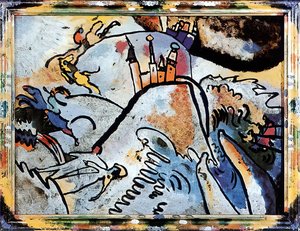 Glass Painting with the Sun (Small Pleasures) - Wassily Wassilyevich Kandinsky
In Glass Painting with the Sun (Small Pleasures) , we witness a breathtaking moment in art history where the boundaries of the visible world begin to dissolve. Created in 1910, this masterpiece captures Kandinsky at his most transformative, standing as a cornerstone in our collection of the top 25 artworks of Wassily Kandinsky . It is a work that breathes with an almost spiritual light, utilizing thick, expressive brushstrokes and a vibrant, chaotic palette of blues, yellows, and earthy browns to evoke a sense of inner necessity.
The painting transcends mere landscape; it is a rhythmic dance of fragmented shapes and heavy textures that suggests a mountain peak or a distant castle emerging from a dream. To gaze upon this piece is to reflect on the very nature of perception—how color can vibrate against the soul long after the eyes have moved away. For the discerning collector, bringing this energetic composition into a modern space offers more than just decor; it invites a timeless conversation between historical abstraction and contemporary elegance, turning any room into a sanctuary of emotional depth and light.
Gabriele Münter painting in Kallmunz - Wassily Wassilyevich Kandinsky
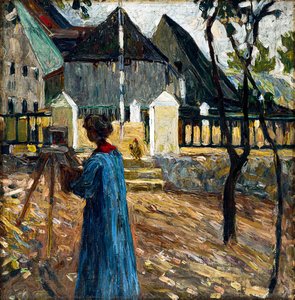 Gabriele Münter painting in Kallmunz - Wassily Wassilyevich Kandinsky
To encounter Gabriele Münter painting in Kallmunz is to step into a private, sacred moment of artistic genesis. This 1903 masterpiece by Wassily Kandinsky serves as a tender window into the soul of a burgeoning revolution, capturing his partner and fellow visionary, Gabriele Münter, lost in the quiet rhythm of plein air painting amidst the Bavarian countryside.
As one of the most evocative pieces in the top 25 artworks of Wassily Kandinsky, it possesses an emotional intelligence that transcends mere landscape. Before the world knew the abstract heights of Der Blaue Reiter , there was this: a profound, impressionistic dialogue between artist and earth. The palette is a soulful arrangement of muted grays and earthy browns, pierced by the striking, luminous blue of Münter’s robe—a precursor to the vibrant color theories that would later redefine modern art.
For the discerning collector, this work offers more than historical significance; it brings a sense of serene, intellectual luxury to a refined interior. Its thick, tactile impasto and soft, diffused light evoke a timeless beauty, making it an exquisite anchor for any space dedicated to the celebration of creativity and the enduring legacy of the human spirit.
Several Circles, Solomon R. G - Wassily Wassilyevich Kandinsky
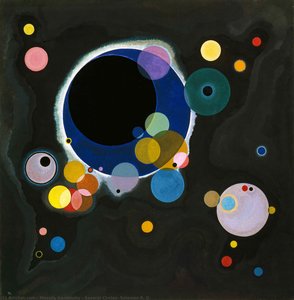 Several Circles, Solomon R. G - Wassily Wassilyevich Kandinsky
What story does the cosmic void within Several Circles, Solomon R. G by Wassily Kandinsky tell us about our place in the universe? Created in 1926, this masterpiece emerged from a period of profound geometric refinement following his influential years at the Bauhaus. As one of the most significant works among the top 25 artworks of Wassily Kandinsky, it marks a departure from expressive chaos toward a disciplined, spiritual abstraction. The painting presents a rhythmic dance of concentric rings—vibrant hues of primary colors layered with translucent grace against a deep, velvety darkness. It is a visual symphony where color and shape transcend the material world to touch the soul.
For the modern collector, bringing this piece into a home offers more than mere decoration; it provides a curated escape into a meditative, celestial realm. The interplay of light and shadow within the overlapping circles evokes a sense of infinite depth, making it an ideal focal point for those seeking a sanctuary of harmony and intellectual wonder in their personal living spaces.
Nine Elements of Chromatique Circle - Wassily Wassilyevich Kandinsky
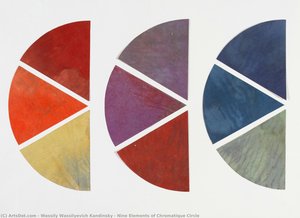 Nine Elements of Chromatique Circle - Wassily Wassilyevich Kandinsky
To gaze upon Nine Elements of Chromatique Circle by Wassily Kandinsky is to witness a silent symphony where color performs without the need for words. In this 1928 masterpiece, the artist strips away the distractions of the physical world, leaving us with a pure, rhythmic arrangement of nine distinct hues—from the fiery pulse of red to the tranquil depth of blue. It captures that universal moment of clarity when we realize that beauty does not require a subject; it only requires feeling.
This work earns its place among the top 25 artworks of Wassily Kandinsky because it serves as a fundamental blueprint for abstract expressionism, proving that geometry can hold profound spiritual weight. It is a delicate balance of mathematical precision and emotional resonance. At Mus3ums.com, we strive to preserve this very magic. Our hand-painted oil reproductions capture the intentionality of every segment, ensuring the vibrant pigments and structural harmony of Kandinsky’s vision are brought into your home with the same soulful intensity as the original masterpiece.
Abschied (small version) (Goodbye) - Wassily Wassilyevich Kandinsky
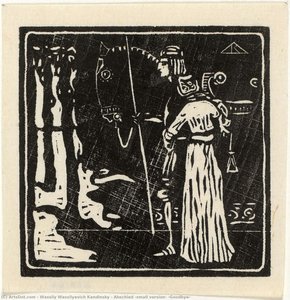 Abschied (small version) (Goodbye) - Wassily Wassilyevich Kandinsky
There is a profound, quiet ache in Abschied (small version) (Goodbye) by Wassily Kandinsky, a piece that captures the heavy, bittersweet moment when one chapter of life closes and another begins. Created in 1903, this evocative black and white drawing serves as a poignant window into the artist's soul during his transformative years, just as he was abandoning the law for the spiritual calling of art. It holds its place among the top 25 artworks of Wassily Kandinsky because it captures the very genesis of his symbolic language; before the explosion of color, there was this delicate, rhythmic arrangement of symbols—the watchful birds, the steady horse, and the ticking clock—all whispering of transition and the passage of time.
To hold a reproduction of such a seminal work is to invite a moment of deep reflection into your own sanctuary. At Mus3ums.com, our hand-painted oil reproductions strive to preserve this delicate emotional resonance, ensuring that every fine line and symbolic shadow is rendered with the soulful texture and depth that only a master's touch can provide, bringing the dawn of abstraction directly to your walls.
Untitled - Wassily Wassilyevich Kandinsky
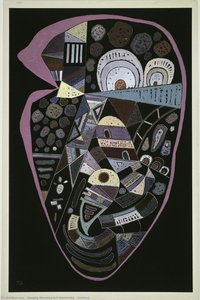 Untitled - Wassily Wassilyevich Kandinsky
In the twilight of his career, Wassily Kandinsky gifted us Untitled (1940), a work that feels less like a painting and more like a whispered secret from the soul. To encounter this piece is to step into a visual symphony where the boundaries between time and emotion dissolve. It stands as a profound pillar among the top 25 artworks of Wassily Kandinsky , capturing a moment where the artist’s lifelong quest for spiritual abstraction reaches a haunting, rhythmic maturity.
The composition is an arresting dance of geometry; vibrant, pulsing circles drift across a deep, nocturnal palette of purples and blacks, acting as emotional resonators. The inclusion of a delicate clock face introduces a poignant tension—a meditation on the fleeting nature of existence against the eternal movement of form. In today’s fast-paced, digital era, this masterpiece remains a vital cultural touchstone for curated modern interiors. It offers a sanctuary of introspection, inviting viewers to find stillness within its swirling, cosmic energy and to rediscover the beauty of pure, non-objective expression.
Model of Pannel for the Exhibit of Juryfreie: Wall B - Wassily Wassilyevich Kandinsky
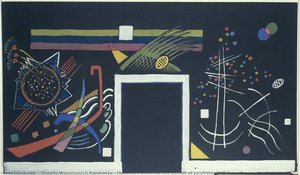 Model of Pannel for the Exhibit of Juryfreie: Wall B - Wassily Wassilyevich Kandinsky
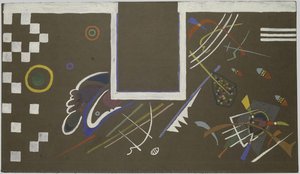
In the quiet depths of Model of Panel for the Exhibit of Juryfreie: Wall B , one finds a celestial dance of geometry suspended in an eternal, velvet void. This 1922 masterpiece by Wassily Kandinsky stands as a cornerstone among the top 2 .: artworks of Wassily Wassilyevich Kandinsky because it captures the very moment where color liberated itself from the burden of form. The work breathes with a rhythmic vitality; vibrant circles and structured squares float against a profound black background, creating a visual symphony that feels both cosmic and intimate.
The use of gouache lends a soft, matte texture to the composition, allowing the pigments to glow with an inner light that seems to pulse against the darkness. For the modern collector, this piece offers more than mere decoration; it brings a sense of profound intellectual harmony and sophisticated calm to a contemporary space. It is a window into the artist's soul, where every shape serves as a silent note in a grand, abstract composition that continues to inspire awe and contemplative stillness in the hearts of art lovers worldwide.
Park von Saint-Cloud, Waldlichtung (Saint-Cloud Park, clearing) - Wassily Wassilyevich Kandinsky
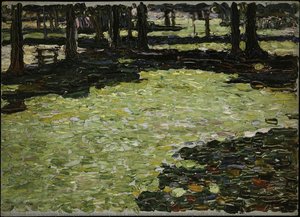 Park von Saint-Cloud, Waldlichtung (Saint-Cloud Park, clearing) - Wassily Wassilyevich Kandinsky
In Park von Saint-Cloud, Waldlichtung , one does not merely look at a landscape; one feels the warmth of a sun-drenched afternoon pressing against the skin. This 1907 masterpiece captures a profound sense of serenity, as if the forest itself is exhaling a quiet, golden breath. Kandinsky, standing at the threshold of his revolutionary abstraction, uses this clearing to explore the emotional weight of light. The scene is bathed in a luminous yellowish tint that evokes an almost childlike wonder, while deep emeralds and sapphire shadows dance through the trees, creating a rhythmic, musical vitality.
As one of the top 25 artworks of Wassily Kandinsky , this piece serves as a universal mirror for those seeking peace amidst life's complexities. The way the sunlight filters through the canopy to touch the shimmering water offers a psychological sanctuary of optimism and clarity. Hanging such a vibrant, light-filled work in your home can transform a quiet corner into a space for profound reflection, inviting the restorative energy of nature into your personal sanctuary.
Bild II. Gnomus (Painting II. Gnomus) - Wassily Wassilyevich Kandinsky
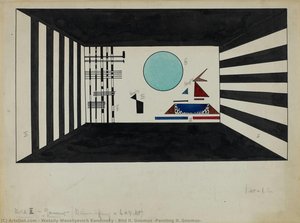 Bild II. Gnomus (Painting II. Gnomus) - Wassily Wassilyevich Kandinsky
In Bild II. Gnomus (Painting II. Gnomus) , we find ourselves standing within a sanctuary of pure geometry. As one of the most profound entries in our collection of the top 25 artworks of Wassily Kandinsky , this 1928 masterpiece orchestrates a delicate dance between architectural stability and spiritual wandering. The composition is anchored by precise vertical and horizontal lines that suggest a quiet, interior room, yet this structural order is beautifully disrupted by a singular, luminous blue circle floating at the heart of the work.
This interplay of stark black-and-white contrasts with sudden splashes of cool blue and sharp red creates a rhythmic tension, much like a silent melody. The balance achieved here—the way weightless shapes interact with rigid boundaries—offers a sense of timeless perfection that continues to captivate the modern soul. For the contemporary collector, this piece serves as a cornerstone of minimalist inspiration; its clean, geometric precision provides a grounding, sophisticated energy that seamlessly integrates into a modern, minimalist aesthetic, turning any space into a contemplative gallery.
Color Study of Squares and Circles - Wassily Wassilyevich Kandinsky
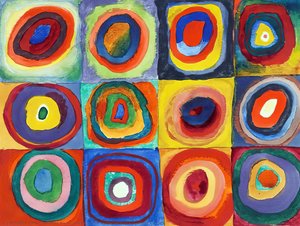 Color Study of Squares and Circles - Wassily Wassilyevich Kandinsky
To gaze upon Color Study of Squares and Circles is to witness a silent symphony where the soul finds its rhythm through geometry. In this 1913 masterpiece, Kandinsky transcends the physical world, inviting us into a rhythmic dance of concentric rings and vibrant hues that pulse with an almost musical vitality. It holds a sacred place among the top 25 artworks of Wassily Wassilyevich Kandinsky because it captures the very moment abstraction broke free from reality, turning color into a pure, spiritual language.
Each square acts as a window into a different emotional frequency, where deep blues and fiery yellows collide in a delicate, layered harmony. The visible, textured brushwork breathes life into these geometric forms, creating a tactile depth that invites the eye to wander through its kaleidoscopic layers. At Mus3ums.com, we strive to preserve this profound sensory experience. Our hand-painted oil reproductions meticulously recreate Kandinsky’s bold impasto and luminous transitions, allowing you to bring this revolutionary piece of modern art history into your own sanctuary, where its spiritual energy can resonate for generations.
Spannung nach oben (Tension in height) - Wassily Wassilyevich Kandinsky
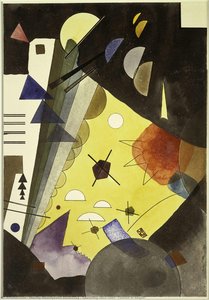 Spannung nach oben (Tension in height) - Wassily Wassilyevich Kandinsky
What story does the rhythmic dance of geometry in Spannung nach oben (Tension in Height) by Wassily Kandinsky tell us about the soul's ascent? Created in 1924 during his transformative tenure at the Bauhaus, this masterpiece emerges from a period where the artist moved beyond mere expressionism into a profound, structured abstraction. As one of the top 25 artworks of Wassily Wassilyevich Kandinsky , it captures a pivotal moment when color and form were stripped of their literal meanings to speak directly to the spirit.
The canvas vibrates with an almost palpable energy; sharp triangles pierce through soft, pulsating circles, creating a visual symphony of movement. Against a deep, grounding background, brilliant yellows and reds leap forward, evoking a sense of cosmic tension. For the modern collector, bringing this piece into a home offers more than just decor; it provides a curated escape into a world of pure emotion. It is an invitation to experience the Bauhaus legacy through a sensory journey of light and shape, turning any living space into a sanctuary of intellectual and spiritual depth.
Thirty - Wassily Wassilyevich Kandinsky
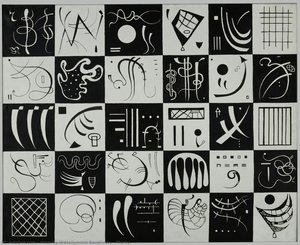 Thirty - Wassily Wassilyevich Kandinsky
In the vast, vibrant landscape of modern abstraction, few works possess the quiet, rhythmic intensity found in Wassily Kandinsky’s “Thirty.” Created in 1937, this masterpiece serves as a profound meditation on the intersection of visual geometry and musical thought. At first glance, the viewer is met with a deceptively austere arrangement: sixteen meticulously placed squares organized into a precise grid against a stark, monochrome backdrop. Yet, to look merely at the surface is to miss the soul of the piece; beneath this structured facade lies a complex tapestry of movement, where each cell acts as a single note in a silent, visual concerto.
There is a gaze in “Thirty” by Wassily Kandinsky that follows you—not with judgment, but with understanding . It does not seek to represent the world, but to act as a mirror for your own inner rhythm. As you contemplate the bold black lines and the dance of positive and negative space, the artwork reminds you that even within rigid structures, there is boundless energy. Its place among the top 25 artworks of Wassily Kandinsky is a testament to its power to make the invisible visible, inviting you to find harmony between order and chaos in your own life.
An Intimate Party - Wassily Wassilyevich Kandinsky
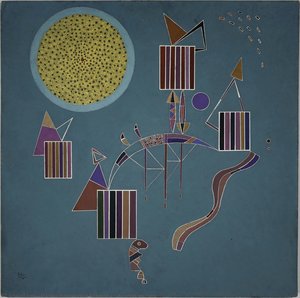 An Intimate Party - Wassily Wassilyevich Kandinsky
What story does the celestial dance within An Intimate Party by Wassily Kandinsky tell us about the soul's refuge during times of global shadow? Created in 1942, amidst the profound transitions of the mid-20th century, this masterpiece stands as a luminous pillar in our collection of the top 25 artworks of Wassily Wassilyevich Kandinsky. It marks a breathtaking moment where the artist transmuted external chaos into a rhythmic, geometric symphony.
The canvas envelops you in a sea of contemplative indigos and cerulean blues, punctuated by a radiant, golden sun-like circle that anchors the swirling energy. To gaze upon this work is to experience a private, cosmic celebration—a communion of shapes rather than people. For those seeking to curate an escape within their own homes, this painting offers more than mere decoration; it provides a window into a spiritual realm. Its textured, impasto-like depth and the interplay of sharp triangles and soft curves bring a sense of quiet prestige and movement, making it an essential piece for any collection dedicated to the transformative power of abstraction.
Cercle and Square - Wassily Wassilyevich Kandinsky
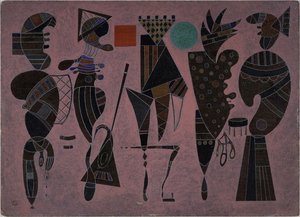 Cercle and Square - Wassily Wassilyevich Kandinsky
To step before Cercle and Square is to enter a sanctuary of quiet, geometric grace. Painted in 1943, amidst the heavy shadows of a world at war, Kandinsky composed a visual sonata that feels less like paint on canvas and more like light captured in its most distilled, spiritual form. The soft, luminous pink expanse acts as a gentle stage for nine rhythmic figures, where the infinite soul of the circle dances with the grounded stability of the square.
In this masterpiece, Kandinsky does not merely depict shapes; he composes emotion . Through the technique of automatism , he allows the subconscious to guide each stroke, creating a spontaneous movement that bypasses the analytical mind to touch the heart directly. There is an ethereal lightness here—a sense of weightless, floating geometry that invites the viewer into a realm of pure, abstract contemplation. For those seeking to bring a sense of cosmic balance and modern elegance to their homes, this work serves as a breathtaking portal, turning any wall into a window of profound, spiritual peace.
Impression III (Concert) - Wassily Wassilyevich Kandinsky
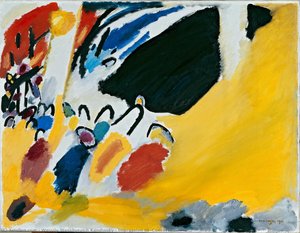 Impression III (Concert) - Wassily Wassilyevich Kandinsky
In Impression III (Concert) , Wassily Kandinsky achieves something truly miraculous: he allows us to see sound. As one of the most profound entries in our collection of the top 25 artworks of Wassily Wassilyevich Kandinsky , this 1911 masterpiece acts as a visual symphony, translating the rhythmic vibrations of music into a breathtaking dance of color and form. It is not merely a painting; it is a sensory experience where the boundaries between sight and hearing dissolve.
The composition pulses with an almost spiritual energy, anchored by a dark, stylized piano that radiates swirling arcs of vibrant yellow, deep blue, and emotive red. Kandinsky uses these hues not to describe objects, but to evoke the crescendo and decrescendo of a live performance. For the modern collector, this work offers an unparalleled way to introduce dynamic movement and intellectual depth into a contemporary interior. Its rhythmic, abstract language resonates beautifully with modern minimalist decor, providing a sophisticated focal point that brings a sense of cosmic harmony and emotional resonance to any curated space.
Im Kreis (In the Circle) - Wassily Wassilyevich Kandinsky
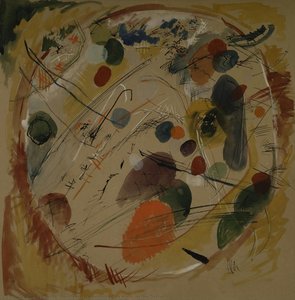 Im Kreis (In the Circle) - Wassily Wassilyevich Kandinsky
To gaze upon Im Kreis (In the Circle) is to witness a soul in flight, escaping the weight of the physical world to dance within pure emotion. In this 1914 watercolor, Kandinsky invites us into a rhythmic universe where the boundaries of objects dissolve, leaving only the pulse of color. It is a breathtaking moment of liberation; the vibrant red circles and dancing hues of blue, yellow, and green float across the canvas like notes from a silent symphony, capturing that rare, transcendent feeling of spiritual lightness.
This masterpiece holds its place among the top 25 artworks of Wassily Kandinsky because it represents the very dawn of abstraction—a courageous leap away from representation toward an "inner necessity." It is not merely a painting, but a visual poem of movement and light. At Mus3ums.com, we strive to preserve this delicate magic. Our hand-painted oil reproductions capture the energetic spirit and luminous transparency of Kandinsky’s vision, allowing you to invite this profound sense of cosmic harmony and abstract beauty into the sanctuary of your own home.
Conclusion
As we draw the curtain on this journey through Kandinsky’s vibrant universe, we find that his legacy is far more than a collection of shapes and pigments on canvas; it is an enduring invitation to feel. To look upon these masterpieces is to witness the moment where the visible world dissolves into the spiritual, leaving behind only the pure, rhythmic pulse of color and emotion. His works do not merely sit upon a wall; they breathe within a room, acting as windows into that "inner necessity" he so passionately pursued. They remind us that art is not a static relic of the past, but a living, breathing dialogue that continues to shape our modern sensibilities, our interior sanctuaries, and the very way we perceive the unseen harmonies of our lives.
Whether it is the bold, energetic strike of an abstract line or the soft, melodic resonance of a primary hue, Kandinsky’s vision remains a profound testament to the human spirit's desire for transcendence. Bringing these works into your own home allows that same transformative energy to settle into your everyday moments, turning a simple living space into a gallery of contemplation and joy. We invite you to continue exploring this celestial dance of form and feeling by wandering through our full collection , where each hand-painted stroke serves as a bridge between his revolutionary history and your personal sanctuary.